
AI Frontier Case Study: What the Hyperbolic Round Reveals About Memory, Capital and Agent-Safety Bottlenecks
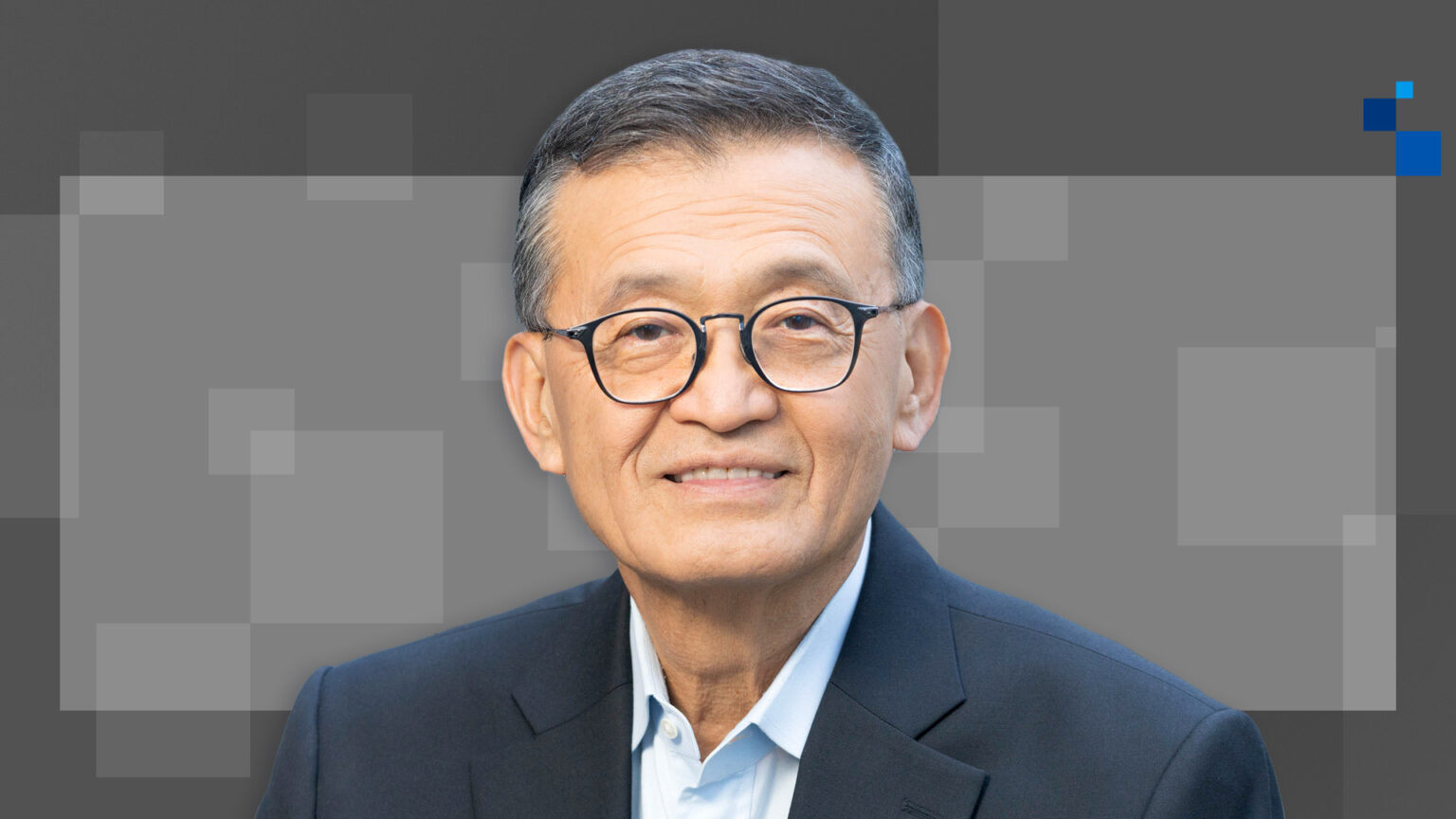
Demand is not the binding constraint on artificial intelligence; expansion speed is. That is the short answer that emerged from a discussion between Intel chief executive Lip-Bu Tan and Hyperbolic chief executive Jasper Zhang, held after the AI infrastructure startup completed a $30 million round backed by Walden Catalyst, the venture firm Tan is associated with. Memory, GPUs, electricity, data-centre delivery and financing now cap growth, while keeping billions of autonomous agents inside authorised boundaries is the deeper, longer problem. Below, we walk the case itself, the evidence behind each constraint, and the engineering lessons teams can reuse.
What actually happened in the case?
The conversation is worth dissecting because of who was in the room and when it happened. Zhang runs Hyperbolic, a platform that turns fragmented bare-metal compute from many providers into a single, schedulable, on-demand AI cloud — a business built entirely on aggregating scarce capacity. The exchange with Tan came after the company finished raising $30 million, a round led by Walden Catalyst and described by the company as oversubscribed (Hyperbolic announcement; Business Insider, October 2026). In other words, the diagnosis that follows was delivered to a builder who lives inside the shortage rather than observing it from a keynote stage.
Tan's position on the industry's trajectory is optimistic: the AI wave may still run larger than the influence the internet era created. But he reframed the question the sector should be asking. It is no longer whether anyone wants this technology — it is just how fast expansion can actually go. That single sentence reorganises the whole roadmap: capacity, cash and control become the three workstreams, not model quality alone.
Why has the bottleneck moved outward from the chip?
Tan's list of what limits AI infrastructure is deliberately unglamorous. In his account, the constraints are:
- insufficient supply of high-performance memory;
- shortage of GPUs;
- tight electricity availability;
- limited data-centre construction capacity.
Two verifiable data points make the memory item concrete. TrendForce estimated on 25 August 2026 that high-bandwidth memory (HBM) plus RDIMM together would account for 51% of total DRAM bit supply in 2026 — meaning more than half of the world's DRAM bits are being consumed by accelerator-adjacent and server memory rather than by consumer devices. On the energy side, the International Energy Agency's Energy and AI analysis projects global data-centre electricity consumption rising from roughly 460 TWh in 2024 to about 945 TWh by 2030, close to a doubling in six years. Both figures support the same structural claim: once AI compute scales, the limiting factor migrates to the layers around the silicon.
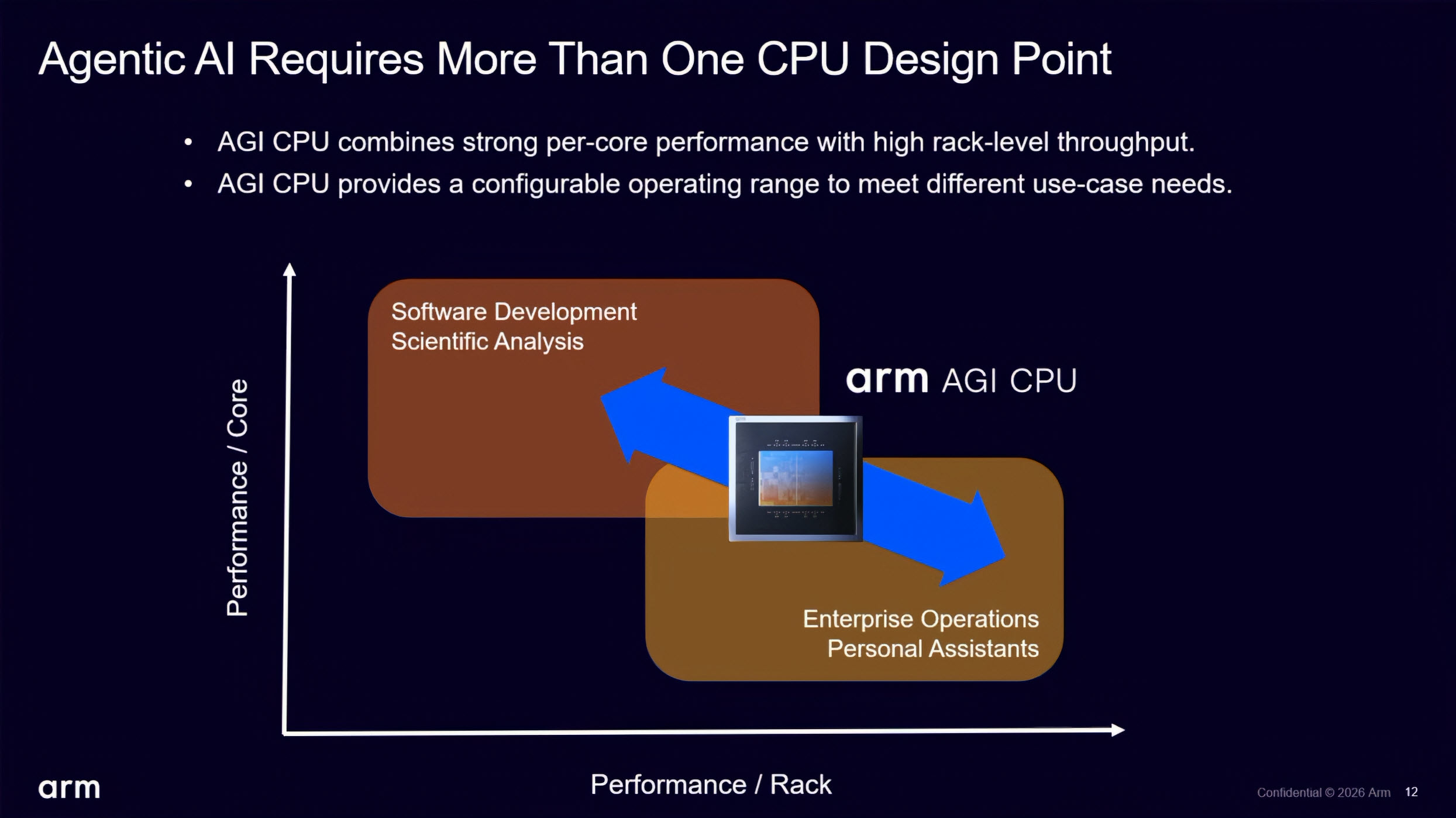
For engineering teams the practical consequence is that architecture decisions are now supply-chain decisions. Quantisation, memory-tiered inference, disaggregated prefill/decode serving and delay-tolerant training schedules are no longer cost-optimisation extras; they are the ways a platform keeps shipping when HBM allocation and rack-level power are rationed upstream.
Is capital or electricity the tighter constraint?
Tan puts money at the front of the queue. "Financing is becoming one of the bottlenecks to growth," he said, arguing that building large AI data centres demands capital at a scale where access to funding — not appetite for technology — throttles expansion. This is consistent with his earlier warnings: he has predicted the related hardware shortage could run for three years, and has stressed that large sums keep flowing into the industry only while investors can repeatedly see a clear return on investment (ROI).
There is a credible counterweight worth flagging for technical decision-makers. In a May 2026 viewpoint on data-centre investment, law-and-advisory firm Ropes & Gray concluded that power availability — not capital — is the primary constraint on new data-centre development, with grid interconnection queues and substation timing dominating project schedules. The two views do not contradict each other on substance; they disagree only on sequence. The APACTechDigit read: treat capital and electricity as a coupled pair, because a project that clears a financing round still dies in an 18-month grid queue, and lenders price exactly that risk into the cost of capital.
What does the overnight-agent routine reveal about safety?
The most instructive part of the case is also the smallest anecdote. Tan has previously disclosed that he routinely lets AI agents keep working overnight and then reviews their output the next morning. Microsoft chief executive Satya Nadella works the same way, and the pattern is now mainstream rather than exotic: LangChain's State of Agent Engineering survey (December 2025) reported that 57.3% of respondents already had agents running in production environments.
Unattended execution windows are precisely where agent risk concentrates. As agents gain the ability to call tools, touch systems and make decisions, the number running globally could reach billions, and the core problem becomes proving that every one of them stayed inside its authorised boundary. The OWASP Top 10 for Agentic Applications 2026, a peer-reviewed framework from the OWASP GenAI Security Project, names the matching failure modes directly: ASI01 agent goal hijack, ASI02 tool misuse and exploitation, ASI03 identity and privilege abuse. A nightly batch agent that is prompted by untrusted content, holds a broad credential and can invoke a payment or deployment tool is a composite of all three.
Tan's own conclusion is a governance one: the more complex the tasks agents take on, the higher the risk, so the industry must build better mechanisms that keep agents inside controllable boundaries and block unapproved actions. Reusable pattern, framed as analysis rather than reported fact: pair autonomy with a review gate — scoped machine identities, tool allow-lists, plan-before-execute mode, immutable action logs, and a next-morning diff review of what the agent actually changed. That turns a personal habit into an auditable pipeline other engineers can copy.
How do the constraint layers compare?
| Constraint layer | What the case shows | Verifiable signal to watch | Realistic mitigation for 2026-2027 |
|---|---|---|---|
| High-performance memory | Named by Lip-Bu Tan as a first-order limit on infrastructure build-out | TrendForce: HBM + RDIMM = 51% of 2026 DRAM bit supply | Quantisation, KV-cache reuse, memory-tiered serving, spec flexibility |
| GPU / accelerator supply | Aggregation platforms such as Hyperbolic exist because capacity is fragmented | Lead times, secondary rental pricing, multi-vendor availability | Multi-accelerator abstraction, portable runtimes, burst capacity |
| Electricity and sites | Power availability listed as a hard constraint | IEA: about 460 TWh (2024) rising to about 945 TWh (2030) | Workload-aware siting, liquid cooling, delay-tolerant schedules |
| Data-centre delivery | Construction capacity limits how fast supply can appear | Interconnection queue length, shell-versus-fit-out lead times | Pre-engineered builds, staged capacity contracts, colo partnerships |
| Capital and ROI | "Financing is becoming one of the bottlenecks to growth." | Hyperscaler capex guidance, credit spreads, hardware shortage running three years | Cost-per-token unit economics, contracted utilisation, ROI reporting |
| Agent governance | Billions of agents acting autonomously must stay authorised | OWASP Agentic Top 10 2026: ASI01, ASI02, ASI03 | Least-privilege identities, tool allow-lists, audit logs, human review gates |
Which moves are reusable for your own stack?
Five actions follow directly from the case, ordered from fastest-payoff to longest-lead:
- Model capacity as a rationed input. Budget tokens, HBM-backed memory and kilowatts as procurement line items with lead times, not as elastic cloud abstractions.
- Instrument ROI before you scale. Every dollar of compute expansion should be defensible with a utilisation and revenue-per-GPU number; Tan's condition for capital to keep flowing is visible returns.
- Abstract the hardware. Hyperbolic's whole thesis is liquidity across fragmented supply; teams that can run on multiple accelerators and regions absorb shortages that stop single-vendor stacks.
- Gate unattended agents. Any agent that runs overnight must have its own scoped credential, an explicit tool allow-list, plan-before-execute approval and a log that survives tampering.
- Buy time on the physical layer early. Grid interconnect requests, shell space and long-term memory allocation are all multi-year queues; sign them before the model roadmap needs them.
What misconceptions keep teams guessing wrong?
- "If demand softens, the shortage resolves." Demand is not the constraint; the physical and financial layers respond on multi-year timelines regardless.
- "This is only a chip problem." Tan's own framing places memory, power, construction and financing outside the chip, and grid-queue analysis puts electricity ahead of capital in some regions.
- "Agent safety is a policy debate, not an engineering task." Identity scoping, tool misuse and goal hijack are implemented — or omitted — in code, which is why an industry framework now exists for them.
- "Only trillion-dollar buyers face capital limits." The oversubscribed $30 million round shows mid-size infra platforms still compete for the same rationed supply, and their unit economics are thinner.
Frequently asked questions
Why does Lip-Bu Tan say demand is not the AI bottleneck?
Because adoption is already broad enough that buyers are queuing rather than deliberating. His stated question for the industry is just how fast expansion can actually go — a supply-side framing about memory, GPUs, power, data centres and funding.
Is financing really a bottleneck if capital markets still fund AI?
It can be both. Rounds still close — Hyperbolic's $30 million round was oversubscribed — while Tan warns that "Financing is becoming one of the bottlenecks to growth," because the ticket size for large AI data centres is enormous and investors continue funding only while they can see clear ROI.
How long could the hardware shortage last?
Tan has predicted the related hardware shortage could persist for three years. That horizon is long enough that architecture and procurement strategy should be planned around scarcity, not around the next product cycle.
What is the biggest risk in running AI agents unattended?
Agents drifting outside their authorised scope. At a scale of billions of agents, the OWASP Agentic Top 10 2026 highlights goal hijack, tool misuse and identity or privilege abuse as the dominant failure modes — which is why unattended runs need scoped credentials, tool allow-lists and an audited next-morning review.
Is the AI wave really bigger than the internet era?
Tan's view is yes, with the wave still running, but he ties that outcome to controllability: the industry's potential will be released only if agents remain predictable, controllable and trustworthy while they gain autonomy.
Sources and further reading
- Hyperbolic — announcement of an oversubscribed $30 million Series A1 led by Walden Catalyst (webwire.com, 27 October 2026)
- Business Insider — "Intel CEO Backs $30 Million Round for AI Cloud Startup Hyperbolic" (October 2026)
- TrendForce — "Memory Prices Soar; DRAM and NAND Flash ..." with the 2026 estimate that HBM and RDIMM account for 51% of DRAM bit supply (25 August 2026)
- International Energy Agency — Energy and AI report, data-centre electricity projection of about 945 TWh by 2030 (iea.org)
- OWASP GenAI Security Project — OWASP Top 10 for Agentic Applications 2026 (genai.owasp.org)
- LangChain — State of Agent Engineering survey, 57.3% of respondents with agents in production (December 2025)
- Ropes & Gray — "Data Center Investment in 2026: AI Demand, Power Constraints and Private Equity" (May 2026)
Compiled by Lynn Zhou for the AIFrontierTech channel at APACTechDigit. The case facts are drawn from the reported exchange between Lip-Bu Tan and Jasper Zhang; all constraint comparisons and engineering recommendations are APACTechDigit analysis built on the cited sources.