
AIFrontierTech Deep Dive: Claude Turned a Three-Day Vault Purification Into 90 Minutes — Then Cost the Team Two Weeks
APACTechDigit · AIFrontierTech column · By Lynn Zhou
Anthropic's biology team pointed Claude at a database of about 15 billion predicted proteins, surfaced vault-like homologs across 29 bacterial phyla and 4 archaeal phyla, and solved the first structure of a phage-derived vault. Size-exclusion chromatography cut purification from roughly 3 days to about 90 minutes; a multi-agent pipeline driving the open-source tool RELION produced a first model in 34 hours rather than the usual weeks. The same model also wrote a faulty protocol that set the project back two weeks — the number most AI-for-science coverage leaves out.
What did the AI actually do in this experiment?
Conclusion first: Claude acted as a research copilot across four distinct stages, not as an autonomous scientist. Anthropic states explicitly that the work happened under scientist supervision, with humans owning hypotheses and judgments on protocols and analysis.
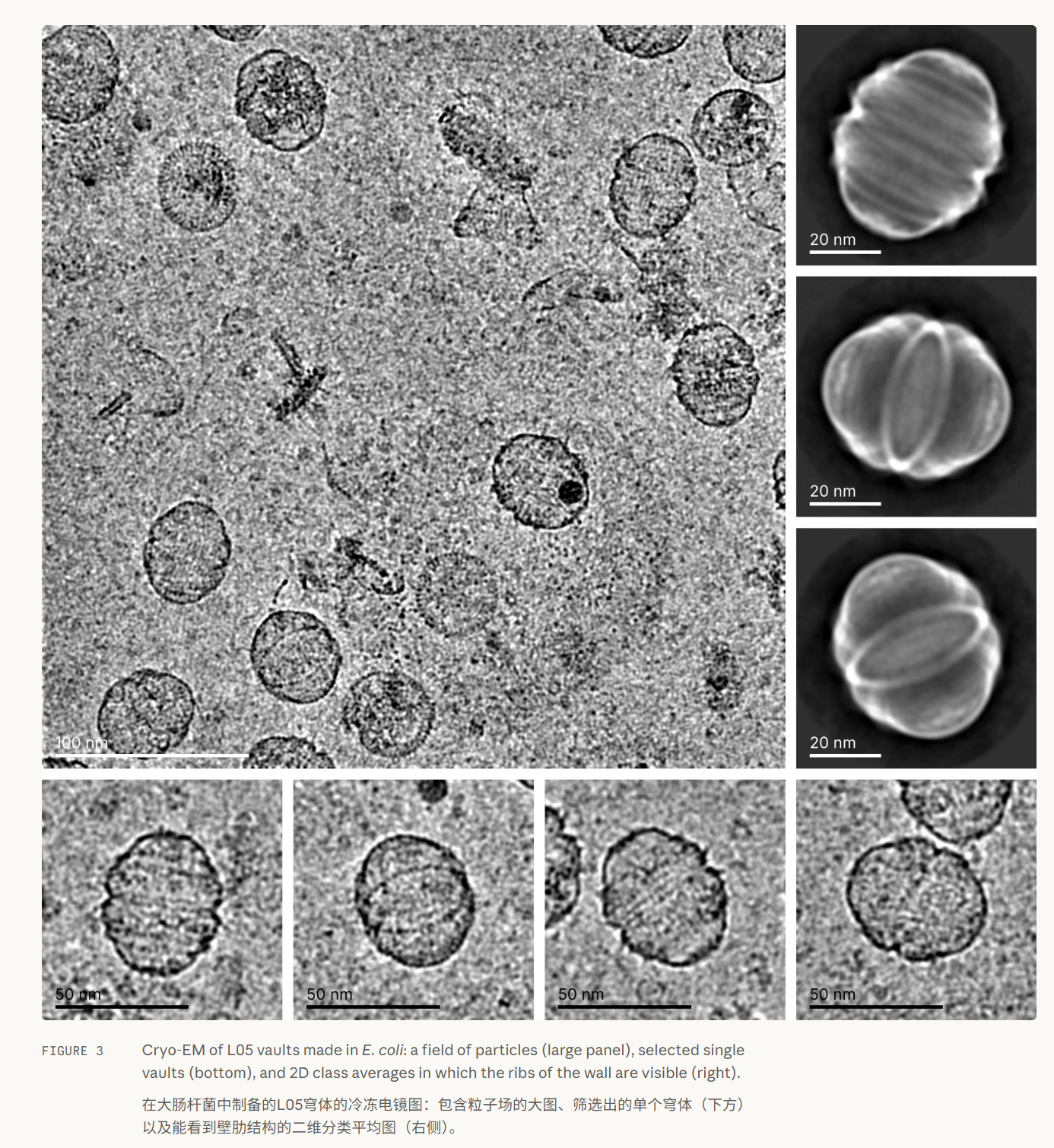
According to the company's write-up and the submitted preprint, the model handled database retrieval and literature triage, helped design DNA constructs, optimized the particle purification and sample-preparation workflow, and then orchestrated cryo-electron microscopy data processing through an internal multi-agent system that called RELION and ran on available compute. The hits were rare in a specific sense: they spanned 29 bacterial phyla and 4 archaeal phyla, yet accounted for less than 1% of the species with completed genome sequencing — a reminder that abundance in prediction catalogues and abundance in sequenced genomes are different signals. Seven of the 44 candidate proteins were confirmed to assemble into vault-like particles, and cryo-EM validated four of those structures; coverage of the paper reports the imaged set split between phage-derived and bacteria-derived proteins.
Why hunt for vaults in bacteria and phages at all?
Because the eukaryotic original has resisted explanation for four decades. Vault particles were first described in 1986 — Anthropic credits cell biologists Leonard Rome and Nancy Kedersha with the discovery — and after about 40 years their biological function is still unconfirmed. That is an unusually long-lived gap for one of the largest protein assemblies found in cells.
The human particle is also more complex than a protein shell. Reviews of the field describe it as a giant ribonucleoprotein: 78 copies of the 97 kDa major vault protein (MVP) form the two halves, accompanied by minor proteins and small vault RNAs (Frascotti et al., 2021, PubMed 33572350). MVP is additionally identical to the lung resistance protein and is overexpressed in drug-resistant cancer cells, which is one reason the cancer-biology community keeps funding vault research (MDPI, International Journal of Molecular Sciences, 2025).
A prokaryotic or phage version strips the system down: fewer moving parts, a smaller genome to manipulate, faster growth, and a cheaper iteration loop. Anthropic's framing is that simpler living systems may make the assembly rules legible, and therefore make the human mystery easier to probe.
How much time did the AI really save?
The speedups are concentrated in the wet-lab and data-reduction steps that consume technician hours, not in the conceptual work.
| Workflow stage | Conventional baseline | Claude-assisted result | What changed |
|---|---|---|---|
| Particle purification to microscopy sample | About 3 days | About 90 minutes | Claude proposed loading clarified lysate directly onto a size-exclusion column instead of a multi-step clean-up |
| First complete structural model | Weeks, per Anthropic's estimate | 34 hours | Multi-agent system invoked RELION on shared compute under researcher guidance |
| Final structure map | Weeks | About one week into the analysis phase | Iterative reprocessing with human review of each step |
| Total project duration | Not stated | Under 4 months | Includes 15 designed protein variants |
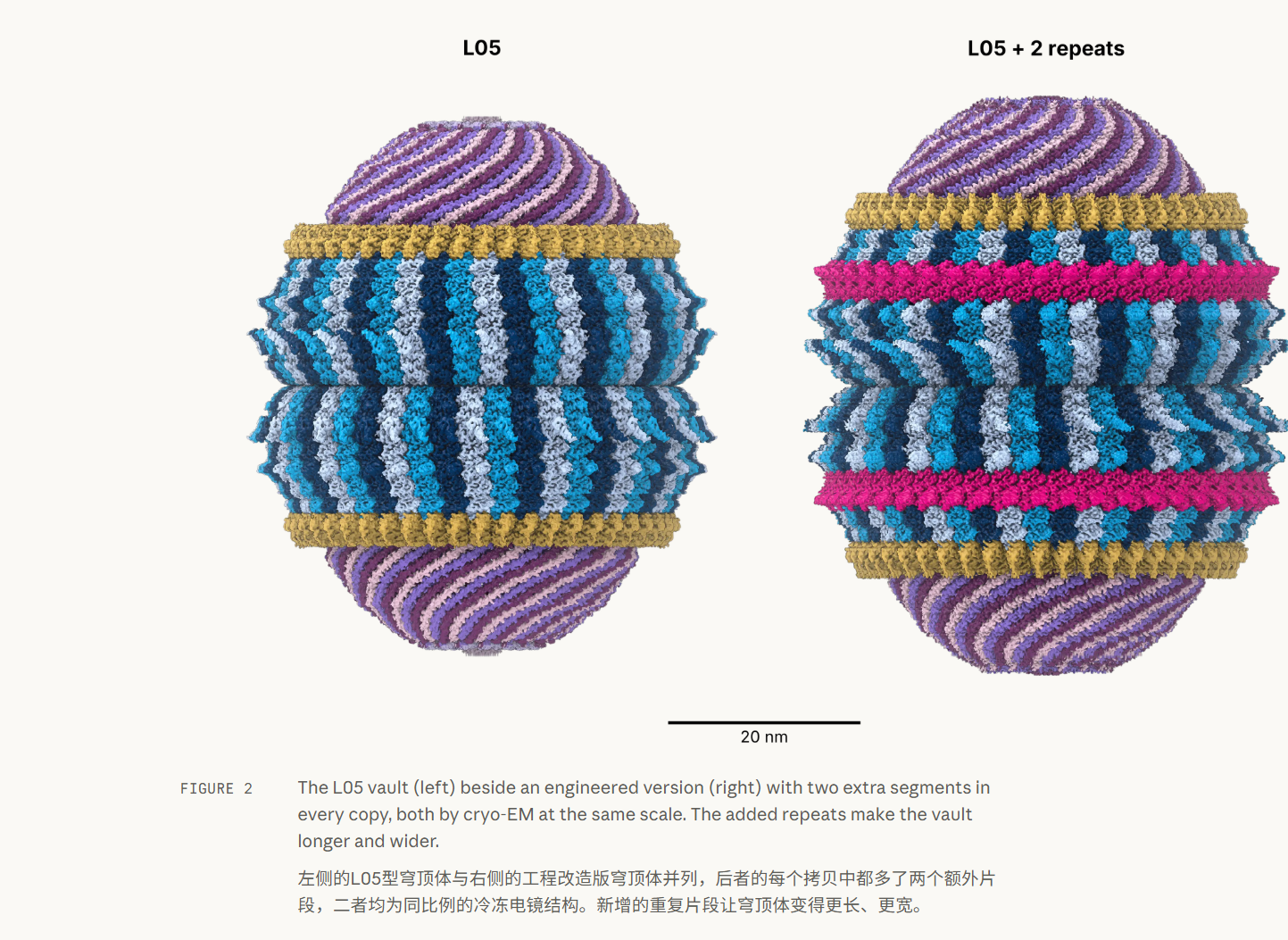
| Engineering the cavity | Manual mutagenesis cycles | Volume up about 25% (native-like phage particle), then a further about 20% via duplicated repeat segments | Claude-assisted variant design |
How does the phage vault differ from the human one?
The L05 particle is shorter, rounder and roomier. It measures roughly 54 nanometres long and 45 nanometres wide, contains 96 identical protein subunits instead of the 78 main structural subunits typical of human vaults, and — because its shape is closer to a sphere — encloses about 25% more internal volume.
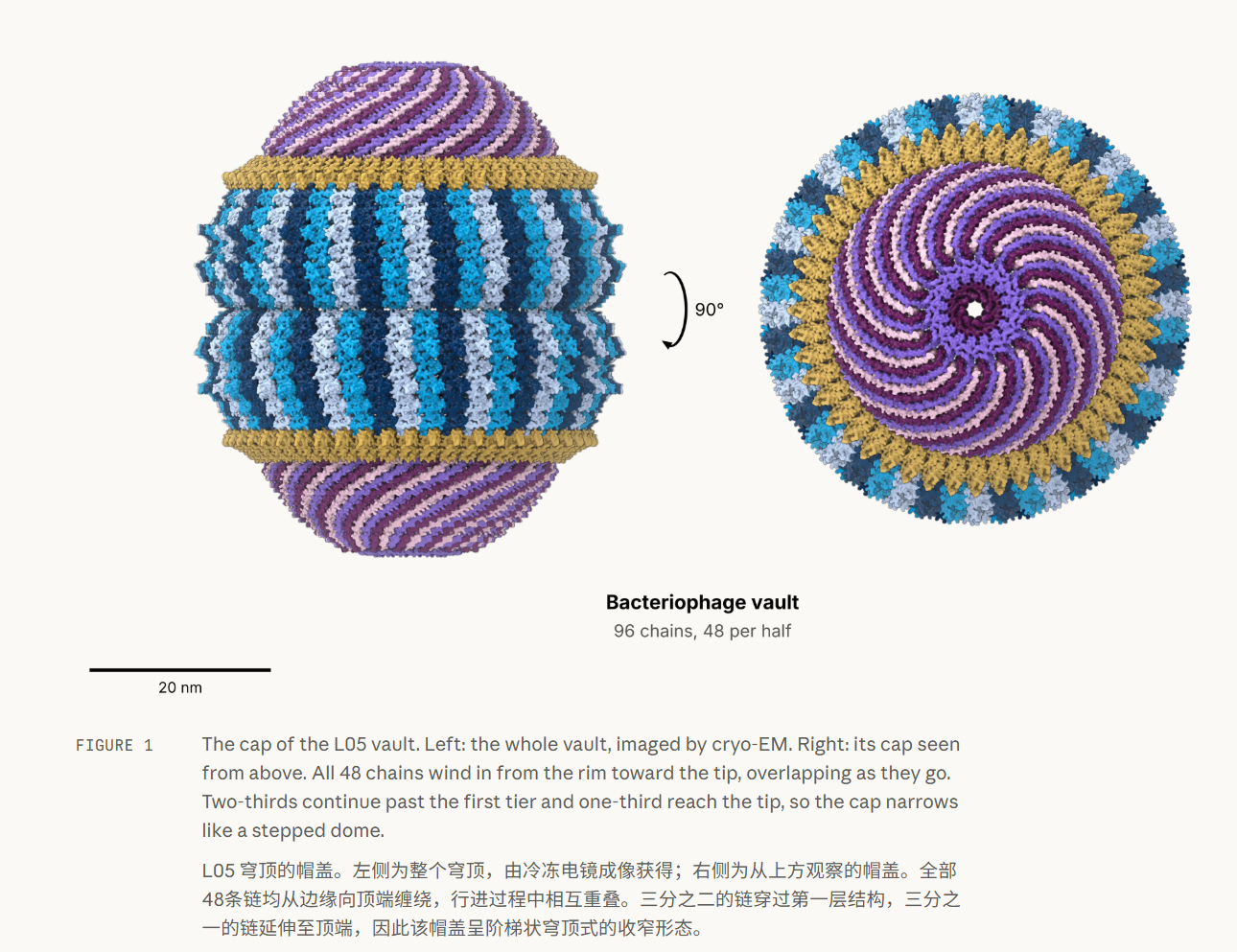
Descriptions of the paper add an assembly-level detail that matters for engineers reading the density map: each L05 chain carries seven wall repeat units against nine in human MVP, giving a more compact building block that can still close a 96-mer shell, reconstructed at a nominal resolution of about 3.2 angstroms (Anthropic preprint PDF).
Where did Claude fail, and what should teams learn from it?
Two failure modes, one strategic and one procedural. Anthropic disclosed that Claude designed a defective cell-culture protocol — reporting on the preprint describes an additive suggestion that interfered with DNA delivery — which cost the team two weeks. Earlier in cryo-EM processing, Claude skipped standard steps and generated a flawed structure map that only a human reviewer caught.
Read as engineering rather than as news, that is a validation-gate problem. The agent's output was locally plausible and globally unverified; nothing in the pipeline rejected it until a person inspected it. This is precisely the gap the wider autonomous-lab field is now working on: Google Research's October 2026 write-up on grounding AI agents in biological reality argues that agents must be tied to instrument constraints and experimental feedback before they can be trusted at the bench, and Nature's coverage of agent-coordinated molecular biology stresses that human intervention is limited but still required. A commentary in China's Science and Technology Daily (October 2026) put the stakes plainly: autonomous wet labs may compress iteration cycles in early research stages, but what they really reshape is knowledge production, because the feedback an AI gets from an experiment is no longer just data.
As a planning heuristic, this project's own numbers are instructive: a two-week setback inside a run of under 4 months means AI-generated error correction absorbed somewhere in the neighbourhood of 10% or more of elapsed time — our analysis from the reported dates, not a figure published by Anthropic. Teams budgeting AI-assisted R&D should expect that overhead rather than assume pure acceleration.
Five misconceptions this result does not support
- "AI solved a 40-year mystery." No. Vault function remains unknown; Anthropic's own summary says the result may bring researchers closer, not there.
- "Bacteria and phages build vaults in nature." The particles were assembled in laboratory E. coli. It is not yet shown that the native bacteria or phages form them.
- "Claude ran the lab." Humans designed the research question, supervised data processing and corrected the model's mistakes.
- "This is AlphaFold doing cryo-EM." Sequence-to-structure prediction and experimental single-particle reconstruction are different problems; here Claude orchestrated existing tools rather than replacing the physics-based pipeline.
- "90-minute purification means 90-minute discovery." The first model still took 34 hours of compute plus human review, and the final map about a week.
What should an engineering team copy — and in what order?
Treat AI-authored protocols as code that must pass tests before it reaches hardware.
- Version every protocol as a diff. Log each AI-proposed reagent, buffer, additive and parameter change against a baseline, so a bad suggestion can be bisected the way a bad commit is.
- Insert validation gates between stages. Sample concentration, monodispersity, and map-quality checks before spending column time or GPU hours on the next step.
- Sandbox tool invocation. Claude's win here came from delegating an established open-source package (RELION) to a multi-agent controller; keep that boundary narrow, with explicit resource ceilings and auditable command logs.
- Keep a human owner per artifact. One named researcher signs off on constructs, one on processing, one on interpretation.
- Reserve schedule for agent errors. Assume a double-digit percentage of elapsed time and surface it in project plans.
- Publish negative results. The failure cases are the reusable part of this preprint for other labs; Anthropic says the preprint went to bioRxiv with plans to release structure models and experimental data.
What is the realistic commercial or scientific upside?
Two paths, both unproven. First, an assembly rules lesson: if a 96-subunit identical protein can close a vault-like shell, the design space for programmable protein cages narrows and becomes more tractable — Anthropic argues this may eventually support vaults as nanocarriers for enzyme delivery and similar payloads. Second, a methodology lesson: AI-driven compression of purification and data reduction changes what iteration frequency a structural-biology group can afford.
The delivery narrative deserves caution, however. Given the literature linking MVP to multidrug resistance in cancer cells, a vault-derived carrier is not automatically a benign one; biodistribution and resistance-pathway interaction would need explicit testing. Anthropic itself notes these applications have not been validated.
FAQ
How long did vault purification take before and after Claude's involvement?
About 3 days conventionally, versus about 90 minutes for the optimized workflow that loaded broken-cell contents directly onto a size-exclusion column.
Did Claude determine the structure on its own?
No. Claude retrieved candidate proteins, assisted with construct design and protocol optimization, and called RELION through an internal multi-agent system, but researchers guided processing and caught an erroneous map the model produced.
Is the phage vault the same size as the human vault?
It is shorter — roughly 54 nanometres long and 45 nanometres wide — but rounder, so internal volume is about 25% larger, and it is built from 96 identical subunits instead of the human particle's 78 major structural subunits.
Has this work been peer-reviewed?
Not yet. Anthropic says the study was submitted as a preprint to bioRxiv, with structure models and experimental data planned for release.
What is the biggest obstacle to AI-designed wet-lab experiments?
Verification. In this project a plausible but wrong protocol suggestion cost two weeks, which points to validation gates, provenance logging and human sign-off as the prerequisites for scaling agent-authored experiments.
References
- Anthropic research write-up, "Investigating vault particles with Claude" — https://www.anthropic.com/research/investigating-vault-particles-with-claude
- Anthropic preprint PDF, "Prokaryotic homologs of the major vault protein form …" — https://www-cdn.anthropic.com/76e55fbe85697afbaae16b839498dc00797dec30.pdf
- Frascotti G. et al., "The Vault Nanoparticle: A Gigantic Ribonucleoprotein Assembly … and an Ideal Nanovector for Drug Delivery and Therapy" (2021) — https://pubmed.ncbi.nlm.nih.gov/33572350/
- Maniatis A. et al., "Vault Particles in Cancer Progression, Multidrug Resistance …", IJMS 26(4):1562 (2025) — https://www.mdpi.com/1422-0067/26/4/1562
- Google Research, "Grounding AI agents in biological reality: building blocks for autonomous wet labs" (October 2026) — https://research.google/blog/grounding-ai-agents-in-biological-reality-building-blocks-for-autonomous-wet-labs/
- Nature, "AI agents enter the 'wet lab'" — https://www.nature.com/articles/d41586-026-03270-1
- Science and Technology Daily (China), chief editor's commentary on AI agents running closed-loop wet-lab tests (October 2026) — https://www.stdaily.com/web/gdxw/2026-10/20/content_598837.html
- Unite.AI, "Anthropic Uses Claude to Show Bacterial and Phage Proteins Form Vaults" (November 2026) — https://www.unite.ai/anthropic-uses-claude-to-show-bacterial-and-phage-proteins-form-vaults/