
APACTechDigit AIFrontierTech Case Review: Google's Suncatcher and the 100x Cost Gap in Orbital Compute
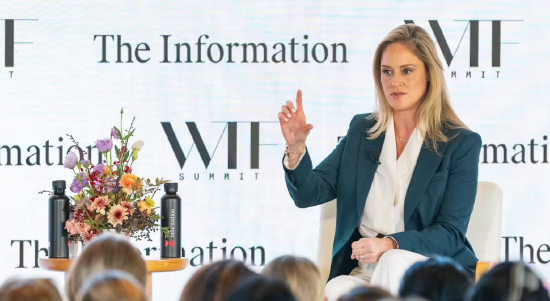
This week, at WTF Summit, Amanda Peterson Corio, Google's data center energy lead, placed a hard number on one of the most aggressive claims in frontier AI infrastructure: a space-based data center could cost as much as 100 times what it takes to build one on Earth. Her quote reframes the current orbital-compute race: “Before we rush to space, we should first explore all viable solutions on the ground.” For APACTechDigit's AIFrontierTech readers, the case is useful because it does not simply pit hype against skepticism. It shows where Google stands while SpaceX's orbital data center plan currently remains an important narrative supporting about $1.8 trillion in market value.
Case frame: a cost ceiling, a market narrative, and a governance problem
Peterson Corio did not deny that orbital compute is a real research direction. She did, however, separate three different layers that are often blended in frontier-technology coverage: engineering feasibility, unit economics, and community acceptance. In her view, part of the rising backlash against ground data centers in the United States comes from inexperienced new companies, and those companies should be held to higher regulatory standards. She noted that before the current AI compute boom, long-established data center builders “have been fairly disciplined,” and their projects rarely triggered major disputes.
That point matters because the AI infrastructure story is no longer only about chips and racks. It is also about land, electricity, water, local budgets, and political legitimacy. Google's own position is therefore cautious but not anti-space: the company is pursuing research while publicly arguing that Earth-based constraints are still being solved, not exhausted.
Why the 100x number is not the same thing as “impossible”
According to Peterson Corio, the launch bill is “extremely high, potentially up to 100 times the cost of ground construction.” That is a ceiling claim, not a single average. Independent research now fills in the missing range. Wood Mackenzie has modeled a hypothetical 1 GW orbital data center at about $170 billion, more than three times a comparable terrestrial facility. Barclays analysts have pegged orbital deployments at roughly $50 million per megawatt, while arguing that such projects are unlikely to threaten incumbent operators within ten years.
Those external estimates do not cancel the Google executive's warning. They make it more useful. If the upper bound is 100x and more mature third-party models cluster around 3x or more, the real lesson is that orbital compute currently faces a wide uncertainty band shaped by launch price, hardware radiation tolerance, maintenance logistics, and bandwidth economics.
Comparison table: what orbital compute buys, and what it does not
| Dimension | Ground data center | Orbital compute case | Editorial takeaway |
|---|---|---|---|
| Energy source | Grid, behind-the-meter generation, or hybrid supply | Continuous solar in orbit, but with spacecraft power conditioning and thermal limits | Solar abundance alone does not equal deployable AI power |
| Cost curve | Comparable per-megawatt build plus long-term utility costs | Launch cost could be “extremely high, potentially up to 100 times the cost of ground construction” in the pessimistic case | Unit economics depend on launch price and reuse cadence |
| Maintenance | Staff can replace servers, reroute links, and debug systems at any time | In-orbit upgrades depend on robotics, spare vehicles, and narrow launch windows | Operations complexity rises sharply once repair is not routine |
| Permitting pressure | Local zoning, grid interconnection, and community review | Launch licensing, spectrum coordination, debris rules, and satellite approvals | The regulatory bottleneck changes, but does not disappear |
| Usefulness for AI workloads | Best for latency-sensitive inference and large training clusters today | More plausible for selected continuous compute once cost parity improves | Orbit is a future niche before it is a replacement path |
Suncatcher case record: what Google is actually testing
Despite the cautious remarks, Google research team has continued advancing its own moonshot. This month, the team announced a collaboration with satellite imaging company PlanetLabs to use satellite observation to study the feasibility of large space data center clusters. Under the Suncatcher project framework, Google has already sent a compact orbital server prototype into space, equipped with a custom AI TPU co-designed with Broadcom.
The Suncatcher story became more concrete last autumn, when participating Google researchers, together with James Manyika, Google's chief researcher, published a paper arguing that if launch costs fall to $200/kg or below, space compute per unit of power could roughly match Earth-based costs. Google researchers believe that threshold could be reached around 2035, with the exact timing depending on Starship development and the speed at which launch frequency rises.
One extra signal from Google's own research communication is that the same break-even threshold is treated as a systems-design target, not pure speculation. Google Research's public explainer ties TPU-based orbital infrastructure to that cost curve, which is why the Suncatcher case is more informative than a generic “compute in space” concept note.
Rival timelines turn the case into a credibility test
Other leaders are much more optimistic. SpaceX CEO Elon Musk says the company could build a space data center as early as next year. Amazon founder Jeff Bezos, whose Blue Origin is a SpaceX rival, predicts that a 1 gigawatt space data center could appear within ten years. There are also reports that Google and SpaceX have discussed cooperation on orbital data center construction.
Peterson Corio did not fully dismiss that future. She described the direction as “very interesting,” and explained that Google keeps investing in such high-risk frontier projects because the company likes to “think 10 years, 20 years and 30 years ahead.” Still, she said plainly that this technology is “not coming soon.” OpenAI CEO Sam Altman was more direct, calling the idea of moving data centers to space “very unrealistic” under present conditions, while questioning the aggressive schedule offered by Musk.
The real bottleneck: approvals, interconnection, and idle capacity
When asked whether United States electricity supply is too limited for AI compute expansion, Peterson Corio answered: “Is power sufficient? Of course it is.” Her argument is that the binding constraint is interconnection review and long assessment studies, not the existence of generation itself. Alphabet's X Lab has launched the Tapestry project and is working with PJM, the largest grid operator on the U.S. East Coast, to use AI to accelerate some of the review process.
That reframing is one of the most practical insights in this case. Many frontier-AI articles treat power as a single macro variable, but engineers and developers encounter it as queues, transformers, substations, and local approval delays. In Texas, state power regulators have already slowed some data center project approvals and tightened oversight, aiming to keep new compute load from worsening grid stress and pushing up electricity prices.
Grid utilization adds another layer. Brian Janous, co-founder of data center land and power services provider Cloverleaf Infrastructure, said recently that, because utilities must design around peak demand, about 45% of grid capacity is idle on average. He also noted that for most of the day, the grid has surplus capacity that could absorb data center load. That is a useful correction to the “no power” narrative: the issue is not simply generation availability, but where, when, and under whose rules that power can be contracted and converted into reliable compute.
Google also holds an advantage in power usage effectiveness (PUE), a metric that shows how much compute can be obtained from the same electricity relative to its cloud peers. In other words, before it pushes frontier hardware into orbit, it is also competing on squeezing more useful output from terrestrial infrastructure.
Governance lessons: why the anti-data-center wave is also an engineering problem
Peterson Corio attributes part of the backlash to “many new entrants that lack accumulated industry experience when acquiring land and building compute projects,” although she did not name companies. In recent years, a large number of novice developers have flooded into AI data center construction. Not only startups have faced resistance; Oracle, a major established vendor, has also seen local residents protest its projects.
Her response is not simply to complain about regulation. She supports higher industry standards. She did not propose specific clauses, but Google offers examples: more investment in host communities and pre-designed contingency plans to avoid stranded project risk. That includes a commitment to continue paying grid upgrade costs for 15 to 20 years, so that communities are not “forced to pay the bill” if a project stops. This kind of upfront infrastructure-commitment model has already been adopted in more than nine states and is “expanding at an extremely fast pace.”
- Google says it is paying electricity bills and property taxes in full.
- It is posting bonds or deposits so abandoned sites can be restored.
- It is removing non-disclosure agreements with local governments, making project terms easier for residents and officials to scrutinize.
This is where the article becomes directly useful for developers, infrastructure leads, and digital transformation teams: frontier compute is no longer separated from local governance. A data center that cannot get through permitting is a compute cluster that does not exist.
Market context: new AI clouds, balance sheets, and third-party compute
Her remarks also arrived while investors re-examine the valuations and survival odds of emerging AI cloud providers. Many of those firms have become closely associated with heavy backing from Nvidia, while taking on substantial debt and launching data centers without a long operating record. In that setting, the companies Peterson Corio says should meet tighter standards likely include some of these newer cloud builders.
Google itself has signaled that a larger share of its compute demand will increasingly depend on third-party resources. It did not disclose partners in detail, but SpaceX is reportedly one of them. The reason is straightforward: Google's internal build pace is not fast enough to match rising compute demand. That single line complicates the public narrative. Google is skeptical of orbital economics in the short term, yet still exploring external capacity that may eventually include space-adjacent compute assets.
Common misconceptions about the orbital compute case
- “If solar is free, the economics must work.” Free sunlight in orbit does not eliminate spacecraft power conversion, thermal control, radiation shielding, or launch cost.
- “The main problem is only electricity.” The case shows interconnection approval and local review can matter more than raw generation capacity.
- “One prototype equals a data center roadmap.” A Suncatcher test satellite is a feasibility probe, not an industrial cluster.
- “100x cost means never.” It means the break-even condition is highly sensitive to launch cost and operational assumptions.
FAQ for technical decision-makers
Is space-based AI compute already investable as a replacement for ground data centers?
Not today. The strongest evidence from this case is that orbital compute remains a long-horizon option, while most current AI expansion bottlenecks are terrestrial: interconnection, site approval, and community acceptance.
What metric should developers and infrastructure buyers watch first?
Watch three variables together: cost per usable compute unit, PUE, and deployment lead time. Google's stance suggests all three can improve without sending hardware to orbit, especially if AI is used to shorten grid assessment work.
When could space become economically competitive for AI workloads?
Only if launch costs fall to $200/kg or below, and if hardware can survive and be serviced without excessive overhead. Google researchers have pointed to around 2035 as a possible threshold year, but that remains conditional on Starship progress and launch cadence.
Action recommendations from the case
- For AI platform teams: separate “frontier research” from “procurement thesis.” Treat orbital compute as a scenario, not a near-term substitute for capacity planning.
- For infrastructure managers: prioritize permitting pipelines, interconnection readiness, and community disclosure. These are the actual bottlenecks today.
- For investors: compare each orbital claim against third-party cost models and launch-cost sensitivity. A $50 million per megawatt assumption changes the story more than a vague “100x” headline.
- For policy-facing operators: use Google's commitments—long grid-cost obligations, site restoration deposits, and more transparent local agreements—as a practical template for reducing project rejection risk.
By the end of this case, the message for APACTechDigit's AIFrontierTech audience is not that space compute is fake. It is that the credible path runs through three checkpoints first: lower launch cost, easier maintenance, and better grid governance. Until those conditions line up, the frontier problem is still mostly on Earth.