
APACTechBriefing: Autonomous Delivery Vans in 2026 — What Neolix's Series E Signals for Asia-Pacific
Autonomous delivery vans are no longer a novelty act in 2026: the useful read is that slow legal access, falling vehicle cost, and postal-network proof of scale have turned them into constrained city-freight capacity. For Asia-Pacific operators, the question is not whether the small van exists, but where it can legally work, who owns an incident, and whether its monthly bill truly beats a human-driven vehicle.
The internet usually meets these vehicles as comedy first. A dog “detains” a parcel van; a clip shows the vehicle stopped in a lane while people argue; another shows a black dog running on three legs, prompting jokes that the van has started a gang war. That is the “show-off” layer. Underneath it is a logistics experiment that is now funded, licensed and scheduled.
Why these vans became impossible to ignore
It is tempting to say, as the original field notes by Shichao put it, that each vehicle's CPU has a Lu Xun moment: the writer once said, “Actually, there were no roads on the earth from the beginning; when enough people walk a path, it becomes a road.” The vans appear to be solving that sentence with sensors. Sometimes they enter motor lanes, sometimes non-motor lanes, sometimes crosswalks, sometimes sidewalks. Some even go against traffic.
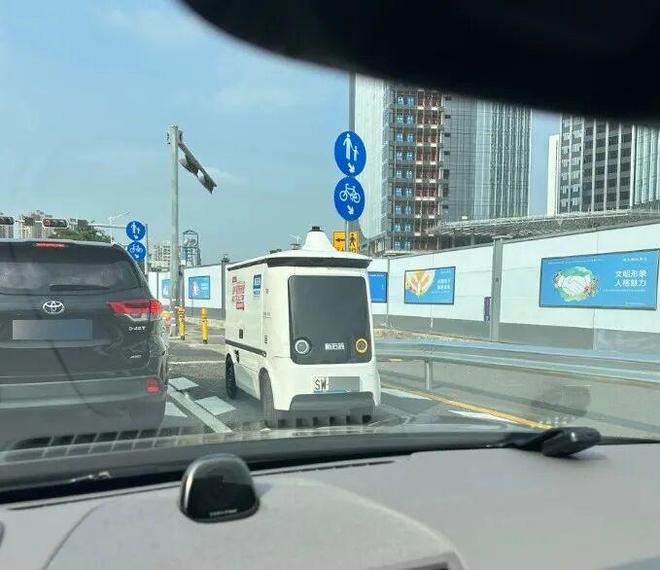
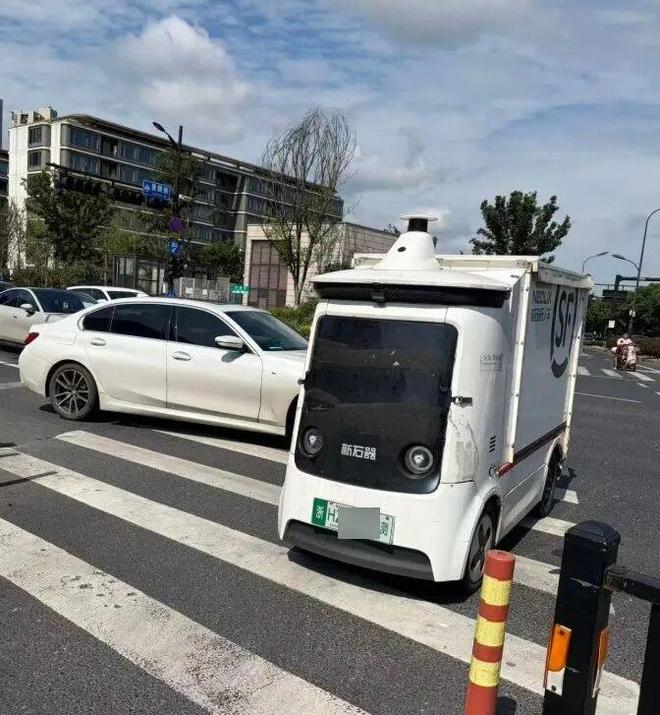
But “walk their own way” has an uncomfortable second half: they can block other people. A van stopped in the middle of the road during morning rush hour can ruin a commute. Recently, the signal from the market changed. In Hangzhou, the fleet has multiplied visibly. A few days ago, Neolix announced its Series E round of nearly US$400 million, taking cumulative funding above CNY 10 billion. Capital is betting that these small vehicles are not toys; they are city logistics capacity.
Readers naturally ask four hard questions:
- Can they use all roads now?
- What happens if one tips over?
- What if it hits a car or a person?
- Will it replace delivery workers?
How road access changed the industry
The short version is: almost 10 years ago, JD, Cainiao and Meituan were already developing autonomous delivery vans, but the vehicles mostly stayed inside schools, compounds and parks because technology and rules were not ready enough. The unlock came in 2021, when public-road rights appeared. Chinese local regulators later framed that as the first compliant “licensing” model for unmanned delivery vehicles; the Beijing municipal science-and-technology record, for example, places Neolix's first road-test notification in May 2021.
To date, the largest public operator appears to be China Post. According to its August-end disclosure, the group had deployed nearly 5,000 unmanned vehicles across 31 provinces and 263 cities by the end of July, carrying more than 130 million parcels. The company calls that network the country's largest unmanned-vehicle logistics operation. The same disclosure should be read with care: many “covered cities” are actually one district, one corridor or one permitted route — not open citywide access.
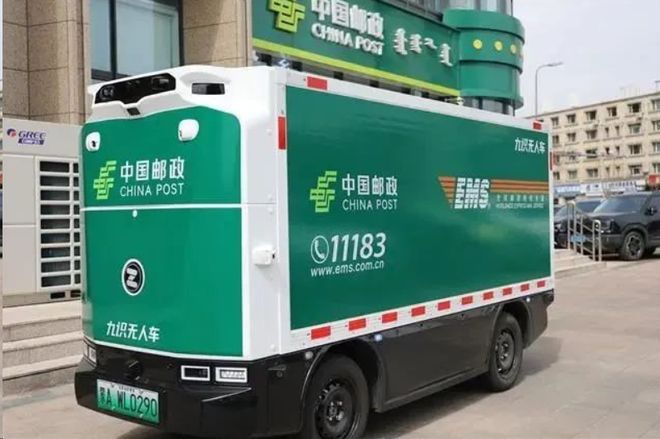
Two regional data points sharpen the picture. The State Post Bureau said in late August that more than 16,000 unmanned courier vans and more than 400 drones were being used for last-mile services nationwide. In Shenzhen, a China Post branch reported that by late August it had more than 200 approved routes and more than 100 operating vehicles across nine administrative districts.
These vans carry plates and obey traffic rules. Access is still “one city, one policy.” Typical local conditions cover vehicle dimensions, maximum speed, remote-operator ratios, insurance and sometimes minimum coverage at the million-level. If an accident happens, traffic police issue a liability determination, in the same way they would for a human-driven vehicle.
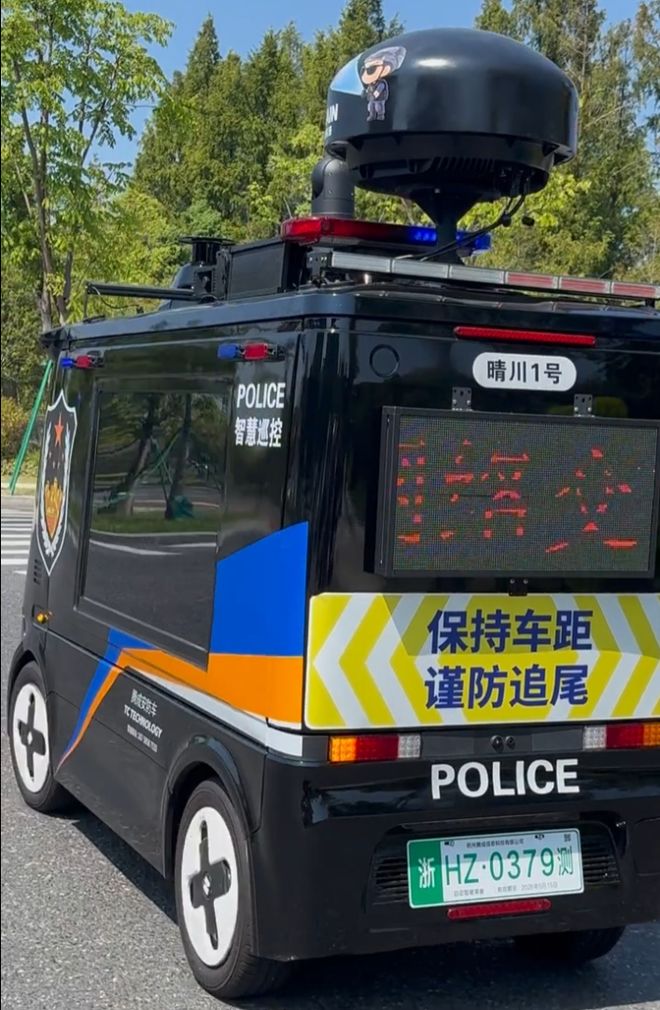
Shichao's advice remains practical: keep distance. If a van stalls, do not touch the vehicle, and do not improvise as if the machine were a person needing rescue.
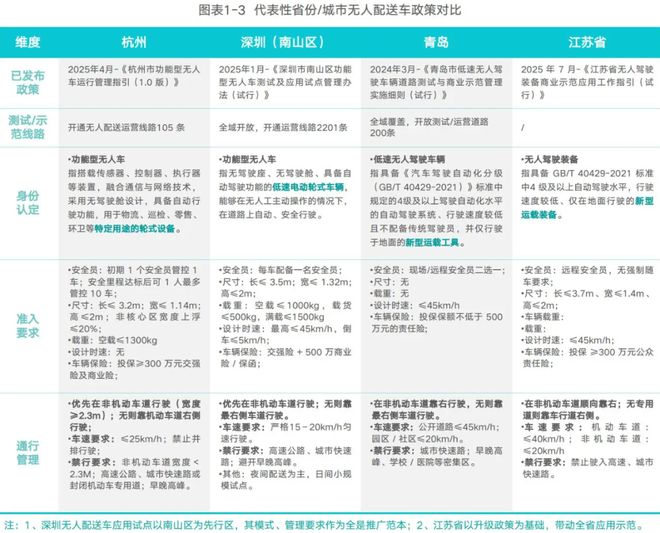
The difference between human driving and autonomous driving is behavioural: a van may stop hard or start suddenly. Liability is more complex than a normal fender-bender because the “driver” is absent. Zheng Xiang, cited in Chinese transport-press coverage, argues that traffic-accident rules should apply first; if a product defect is involved, the operator can then pursue the manufacturer. That does not erase the friction — it only clarifies where the claim may go.

The economics that make operators take it seriously
The fastest reason adoption spread is cost. In 2018, the usage cost of an unmanned logistics vehicle was still in the million-level category. Last year, a bare vehicle could be bought for CNY 20,000–30,000, while the annual service fee was a little more than CNY 20,000. Over five years, many users land around CNY 120,000.
Securities analysts have framed the monthly comparison this way: about CNY 2,500 for an unmanned logistics vehicle, including vehicle depreciation, FSD service fee and electricity. For a traditional logistics vehicle, the comparable monthly figure is CNY 7,700, including depreciation, driver salary and fuel. In a group such as SF Express, last-mile vehicles can number in the tens of thousands or even more than 100,000, so the arithmetic becomes impossible to ignore.
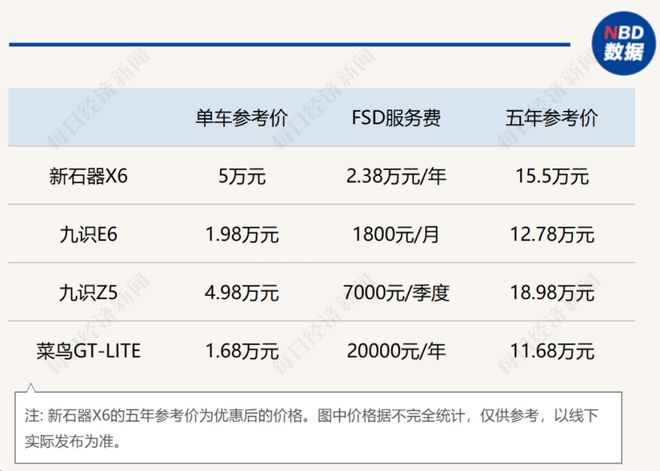
| Item | Unmanned logistics vehicle | Traditional logistics vehicle |
|---|---|---|
| Monthly cost | About CNY 2,500, including vehicle depreciation, FSD service fee and electricity | About CNY 7,700, including depreciation, driver salary and fuel |
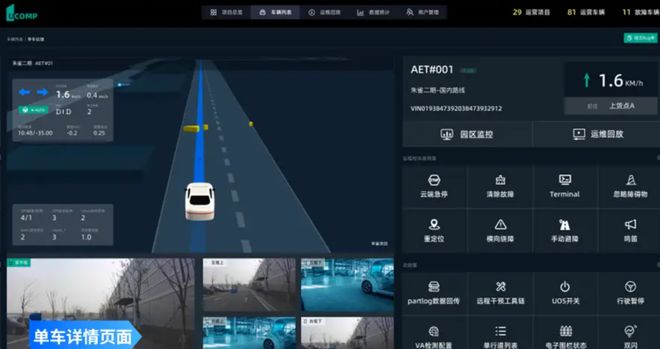
Most vehicles seen in public are entry-level units used for hub-to-hub transport. County-to-county or village-to-village work requires higher-spec vehicles and a different price line. Operationally, the logic is simple: routes are preset; parcels are loaded; the van departs. A remote safety operator monitors a few vehicles or a dozen-plus vehicles at once, intervening when the system detects an issue, an obstacle, a system fault or low battery.
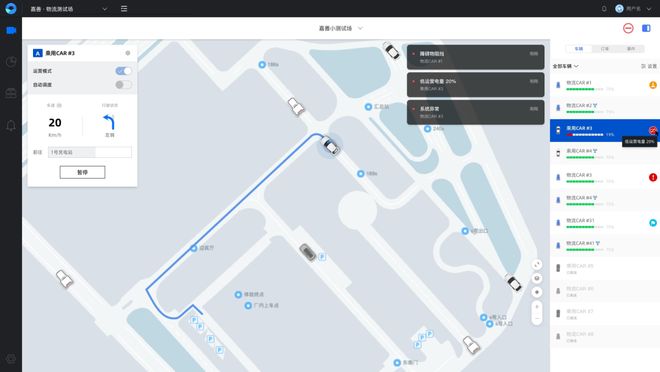
Each vehicle's backend can show location, task status, obstacles, faults and battery state — and yes, operators can manually activate features such as a horn.
Where the rollout still breaks down
Winning road rights is not the same as riding at full capacity. A courier told Shichao that a station once operated several vans, but traffic-police management later restricted early peak and evening peak use, as well as school drop-off and pick-up hours. In practice, many vans can run only on limited routes at limited times.
Another courier summed up the hidden labour with a simple line: “If it does not come back for a long time, you have to go and find it and see where it got stuck.” That is not a failure of hardware alone. It is an operating-system problem: a van can be legal in a city and still illegal on your most useful shortcut.
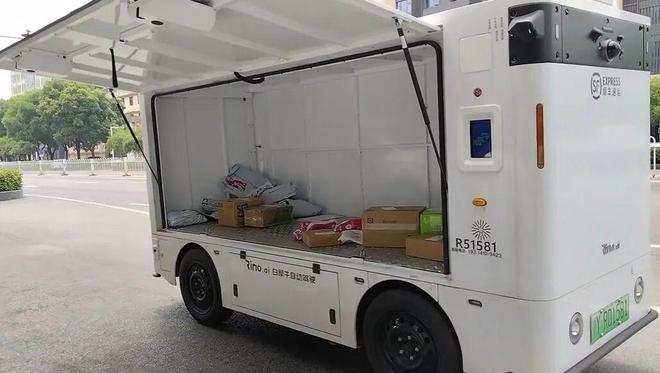
This is a density problem. When a few thousand vans are scattered across hundreds of cities, one stalled vehicle is a joke. When more than 16,000 vans are in service, as the State Post Bureau reported in late August, every stall becomes a public-road nuisance that traffic authorities must plan around. For APAC buyers, the lesson is blunt: route permission is the product, not the chassis.
From parcel delivery to urban capacity
Calling these vehicles “autonomous courier vans” is already too narrow. In the industry, the better term is unmanned logistics vehicle. Jiushi Intelligent said this year that parcel-delivery scenarios had fallen below 40% of its use cases, compared with about 50% in Q3 last year. The remaining 60% is something bigger: point-to-point cargo movement that makes the vehicle part of municipal capacity.
Once a robot cargo box can move goods from A to B, it can serve supermarket replenishment, instant logistics, short-haul freight and small-parcel work that people previously handled through ride-hailing or third-party delivery apps. In the old model, some users called a Didi-style delivery driver to move a small item. In the future, a compact autonomous van may be the default for that same short trip.
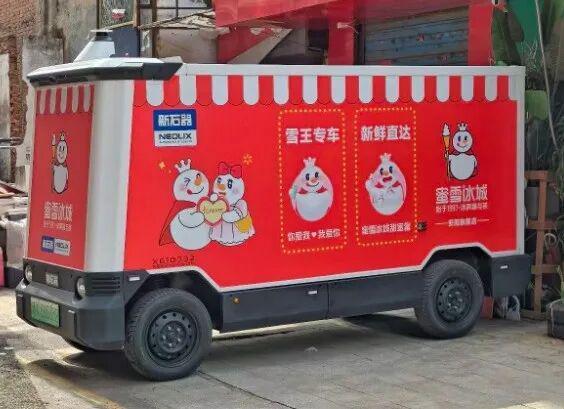
There are also jobs that are socially useful but commercially thin. Meal delivery for older residents may require more than 10 meal-service points every day. Hiring a dedicated driver is hard to justify; a van can run the fixed route, and volunteers distribute the food at the destination.
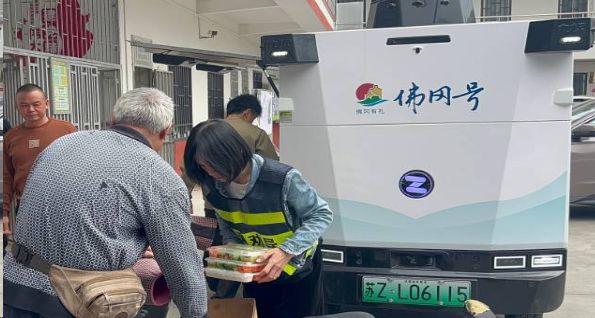
Some vehicles add retail: an onboard freezer can sell ice cream in parks or campuses, while a screen can run promotions. In other words, the chassis is becoming a mobile shop, a courier and a public-service endpoint at the same time.
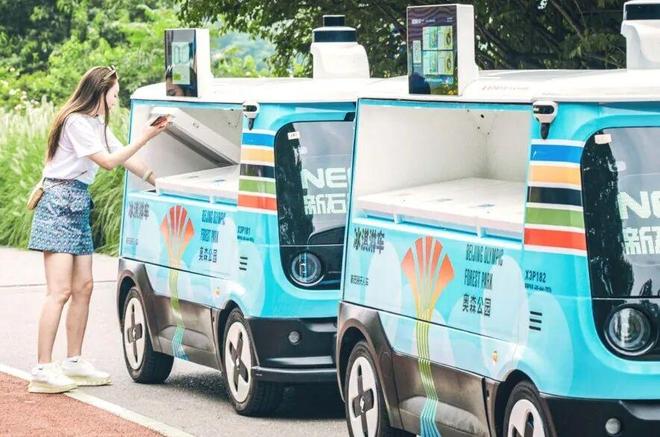
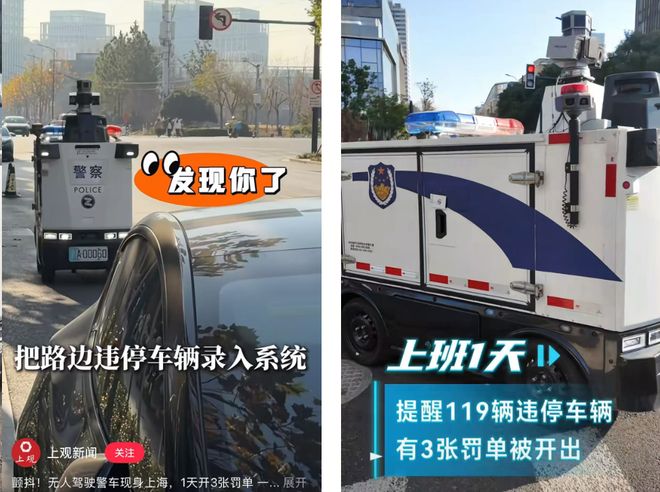
For residents of Hangzhou, one of the most conspicuous variants is the autonomous police vehicle, especially in Yuhang. It can recognise violations, photograph them and send images back to the police station for manual review. The body has a one-button alarm linked directly to the police station, and the storage compartment can hold emergency and firefighting supplies that officers can open remotely when needed.
What APAC digital-supply-chain teams should do now
Asia-Pacific has a different constraint set from mainland China: smaller jurisdictions, stricter building-access rules, higher labour costs and fragmented island-city logistics. That makes unmanned vans attractive for depot-to-hub shuttles, night transfer and estate-level delivery — but less attractive for chaotic dense streets without a digital-twin and clear liability stack. Chinese vendors are already testing that logic outside the mainland, including Singapore building-delivery pilots, South Korea resort shuttles and Gulf logistics routes.
For APAC managers, the decision framework should be checklist-driven:
- Start with fixed, repetitive legs: station-to-station, hub-to-locker, night transfer, campus or industrial-park shuttles.
- Price the vehicle with a realistic remote-operator ratio: one human watching a few vehicles or a dozen-plus vehicles is the operating assumption.
- Require data logging before purchase: every stall, takeover, fault and near-miss must be auditable.
- Do not assume courier headcount will disappear; in many early cases, staff stay but shift time toward collection, delivery and customer service.
- Treat local police and traffic rules as a deployment gate, not a paperwork delay.
Frequently asked questions
Can autonomous delivery vans use any road now?
No. Road rights are city-by-city and route-by-route. Even in permitted cities, vans may be blocked during morning and evening rush hours and during school drop-off and pick-up hours. Coverage figures can therefore overstate practical usability.
What happens when a van is stuck or involved in a collision?
Operators remotely monitor vehicles and may intervene. If an accident happens, traffic police assess responsibility, and insurance usually matters at the million-level. The tricky part is the missing human driver: insurers, operators, manufacturers and municipal rules still have to divide fault cleanly.
Will autonomous vans replace couriers?
The first wave is substitution of repetitive shuttle work, not door-to-door service. In some Shenzhen short-haul examples, a van runs several trips a day, carries roughly 300 parcels per trip and supports several couriers. The net effect is productivity, not simple elimination of the delivery worker.
Bottom line for APACTechDigit readers
Street comedy has made the technology legible, but the commercial story is narrower: 2026 is the year unmanned vans moved from novelty to regulated logistics capacity. For Asia-Pacific operators, the opportunity is real only where three conditions overlap — a stable route, a defensible cost ledger and a liability chain that does not depend on the public's patience. The algorithm must still improve; the road rights and rules must still mature. The goal should be less spectacle and more reliability.
Edited by Lynn Zhou for APACTechDigit.
Reference sources
- China Post Group: large-scale deployment of unmanned vehicles, with nearly 5,000 units covering 31 provinces and 263 cities by the end of July.
- State Post Bureau: more than 16,000 unmanned courier vans and more than 400 drones used in last-mile delivery.
- Beijing Municipal Science and Technology Commission: May 2021 road-test notification milestone for unmanned delivery.
- China Transportation News: liability logic for unmanned delivery vehicles.
- 21st Century Business Herald: overseas pilots for Chinese unmanned delivery vehicles, including Singapore and South Korea.