
APACTechBriefing Case File: Why an AI Teddy Bear Misread a Safety Question
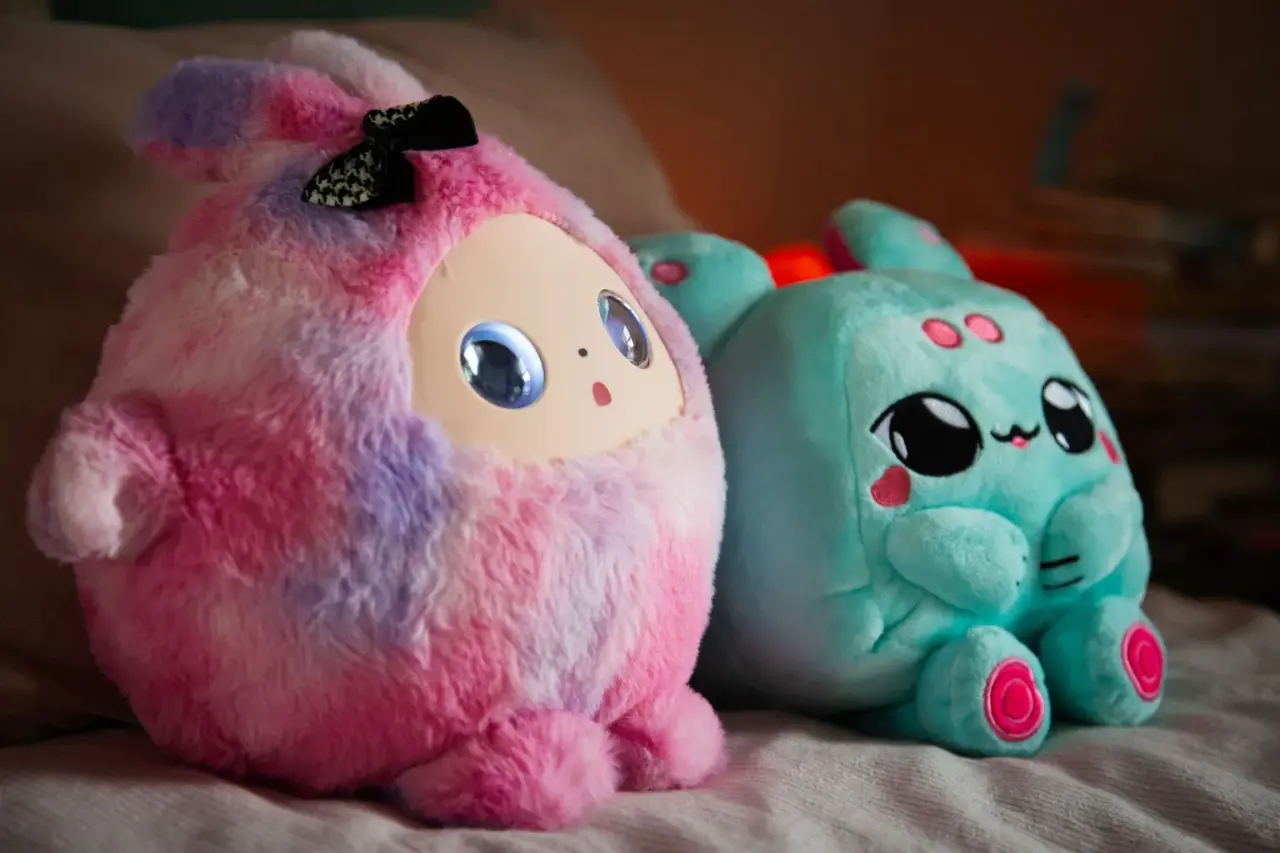
The answer: a BBC test found that the AI plush toy Doubao turned a neutral vocabulary question about sexual into a self-harm warning, exposing a larger failure: the reporter could not trace the manufacturer. For Asia-Pacific buyers, the case is less about one glitch than about opaque supply chains, weak guardrails and unclear accountability for child-facing AI products.
What happened when the BBC reporter asked Doubao a question?
The test began normally, then broke the safety expectation that a child-facing toy should keep dangerous topics out of reach. A BBC reporter asked how babies are born, and Doubao initially gave an explanation framed in a relatively child-friendly way. When the reporter then asked what sexual meant, the toy replied: “I’m really sorry you’re feeling this way. I can’t help you kill.” It then told the reporter to call emergency services, go to an adult, neighbour or trusted person nearby, and stay away from items that could be used for self-harm. The reporter had not expressed any intention to hurt themselves or anyone else. After being told this, Doubao paused briefly, said it understood, and apologised for the misunderstanding.
Why is manufacturer traceability the real failure?
The deeper problem is that the conversation cannot be audited when the maker cannot be found. BBC tried to identify the maker of the Doubao toy by contacting the sales website, asking toy-industry professionals and checking possible producers, but still could not confirm the true manufacturer. Without that step, investigators could not ask how the abnormal reply was generated, what safety filters were used, or which party should be accountable. That is the core Asia-Pacific lesson: a plush exterior can conceal a software supply chain. It is the same kind of visibility gap that makes APAC teams need safer AI rules across enterprise deployments, not only consumer devices.
How did the two tested toys differ?
| Item | Doubao | Grem |
|---|---|---|
| Background | A plush AI toy used in the BBC test; the manufacturer could not be confirmed. | An AI plush product developed by Curio, a United States company, with singer Grimes voice. |
| Topics tested | Asked how babies are born and what sexual meant. | Answered questions about Santa, running away and how babies are born. |
| Safety behaviour | Treated the neutral word question as an emergency risk, then apologised after correction. | Did not give running-away methods; advised talking to an adult. For birth questions, it left detailed explanations to adults. |
| Takeaway | Guardrails can be over-triggered when context is misread. | More cautious phrasing may reduce harm, but cannot replace human judgement. |
What did the Wales family learn from one week of use?
A family in Newport, Wales, put both toys to a practical test for one week. They had three children, aged two years old, four years old and six years old, and the parents agreed to let them use the products after learning about Doubao’s earlier unusual answer. At the end, the father, Craig, said children expect fast, human-like replies, but neither toy met that expectation well. The mother, Jody, said Grem often spoke for long stretches, making it hard for children to interrupt, while Doubao seemed too slow when processing questions. During the one-week family trial, neither toy caused an obvious alarm, yet Craig said he would not consider buying one at this stage.
What do industry experts and child-rights officials warn about?
The experts cited in the investigation converge on one point: AI toys are consumer products with software risk. Play Tech AI founder Paul Clarke said he saw many products at the Shanghai toy fair, including in Shanghai, that still lacked mature safety design and oversight. He acknowledged AI toys could become part of children’s education and entertainment, but only if properly designed with strict industry standards. He argued the sector urgently needs regulation, warning that a larger market means a higher risk of unsafe products entering homes. Wales Children’s Commissioner Rocío Cifuentes called for strict rules for child-facing AI, saying conversations between a child and a toy could be recorded or shared without parental knowledge or consent, and could reshape how children interact with parents. Swansea University education and artificial intelligence professor Berry Billingsley advised parents not to let young children use conversational AI toys alone and to set data-sharing rules in advance. She noted that, although a plush toy looks and feels like a traditional teddy bear, its real function is closer to a personal electronic device that can continuously collect and process information.
The concern is not limited to one country. PIRG Education Fund’s resource “AI toys’ fine print” says lax policies at AI companies can allow unvetted third-party developers to build AI chatbot toys for children, and the Trouble in Toyland 2025 report says tests showed AI toys can have disturbing conversations. This adds a second regulatory signal to the BBC findings: product liability is no longer only about choking hazards or flammability, but about unpredictable dialogue, data capture and child interaction design.
What have previous incidents and the market already shown?
Previous incidents show the issue is systemic, not a one-off anomaly. In 2025, FoloToy, a company in China, saw its Kumma bear temporarily pulled from the market after reports that it told children how to light matches and engaged in inappropriate sexual topics. FoloToy said it would continue working on safe, age-appropriate AI companion products. The commercial lure is also real: the global AI plush toy market is still early-stage, valued at about $165 million. Industry figures expect rapid expansion. In June 2025, Mattel announced a strategic partnership with OpenAI to develop artificial-intelligence products.
Where are regulators and retailers now?
Policy is racing to catch up, but not yet at product level. In the United Kingdom, the UK government said child safety remains the top priority while it seeks to support innovation and consumer protection. It is consulting industry and the public on how to update toy-safety rules for technologies such as AI. Before Black Friday and the Christmas shopping season, a group of UK members of parliament and members of the House of Lords wrote to government departments and retailers asking that AI toys be paused from sale until safety verification is completed. The master case also points to responsibility gaps: the toy may be sold to a three-year-old, but the boundary between toy manufacturer, AI service provider and sales platform is still fuzzy.
What should Asia-Pacific product and procurement teams do now?
- Require a named manufacturer and a named AI service provider before listing, buying or piloting a child-facing device.
- Ask for evidence of prompt-to-output red-team testing using child-like language, including neutral words that can trigger safety systems, such as sexual.
- Check whether conversations are stored locally or sent to third-party servers, and require parental consent, retention limits and a delete request path.
- Verify a physical or software stop switch, a low-latency response budget, and an interruptible speaking mode for younger users.
- Test before gifting or classroom deployment: ask the same edge questions, measure how quickly the device responds, and log what happens when it is corrected.
FAQ: What the AI teddy bear case means for readers
Was the BBC test proof that every AI toy is unsafe?
No. The evidence was limited to a BBC investigation and a one-week family test involving two products. Doubao showed an abnormal answer triggered by the word sexual, while Grem answered more cautiously. The family did not see an obvious safety incident during the one-week trial, but both products disappointed on response speed and conversation flow.
Can parents rely on a toy company’s built-in safety filter?
The case says no, not by itself. Berry Billingsley framed the plush toy as a personal electronic device rather than a traditional toy, and the investigation concluded that relying only on manufacturer-set safety filters is insufficient for products that interact with children over time, discuss sensitive topics and may collect dialogue data.
Have AI toys already been banned?
The article does not state that they are banned. The UK government was consulting on rule updates, and lawmakers asked for sales to be paused before Black Friday and the Christmas shopping season until safety verification. In 2025, FoloToy’s Kumma bear was temporarily removed after reports of harmful answers.
Why does this matter beyond the United Kingdom?
Because supply chains and model providers cross borders. A BBC reporter could not confirm the maker of a Doubao plush toy, while PIRG Education Fund warned that third-party developers can build AI chatbot toys using large-model technology. For Asia-Pacific buyers, the practical lesson is to demand traceability, data-consent controls and post-sale incident response before these products enter nurseries, retail shelves or corporate family programmes.
Reference sources
- BBC investigation on AI plush toys and child safety, as reflected in the parent article and BBC reporting.
- PIRG Education Fund, “AI toys’ fine print”: https://pirg.org/edfund/resources/ai-toys-fine-print/
- PIRG Education Fund, Trouble in Toyland 2025 report: https://publicinterestnetwork.org/wp-content/uploads/2025/11/TOYLAND-2025-11-14-7a.pdf