
APACTechBriefing Case File: Apple Keeps iPadOS and macOS Apart — Decision Notes for Asia-Pacific Device Teams
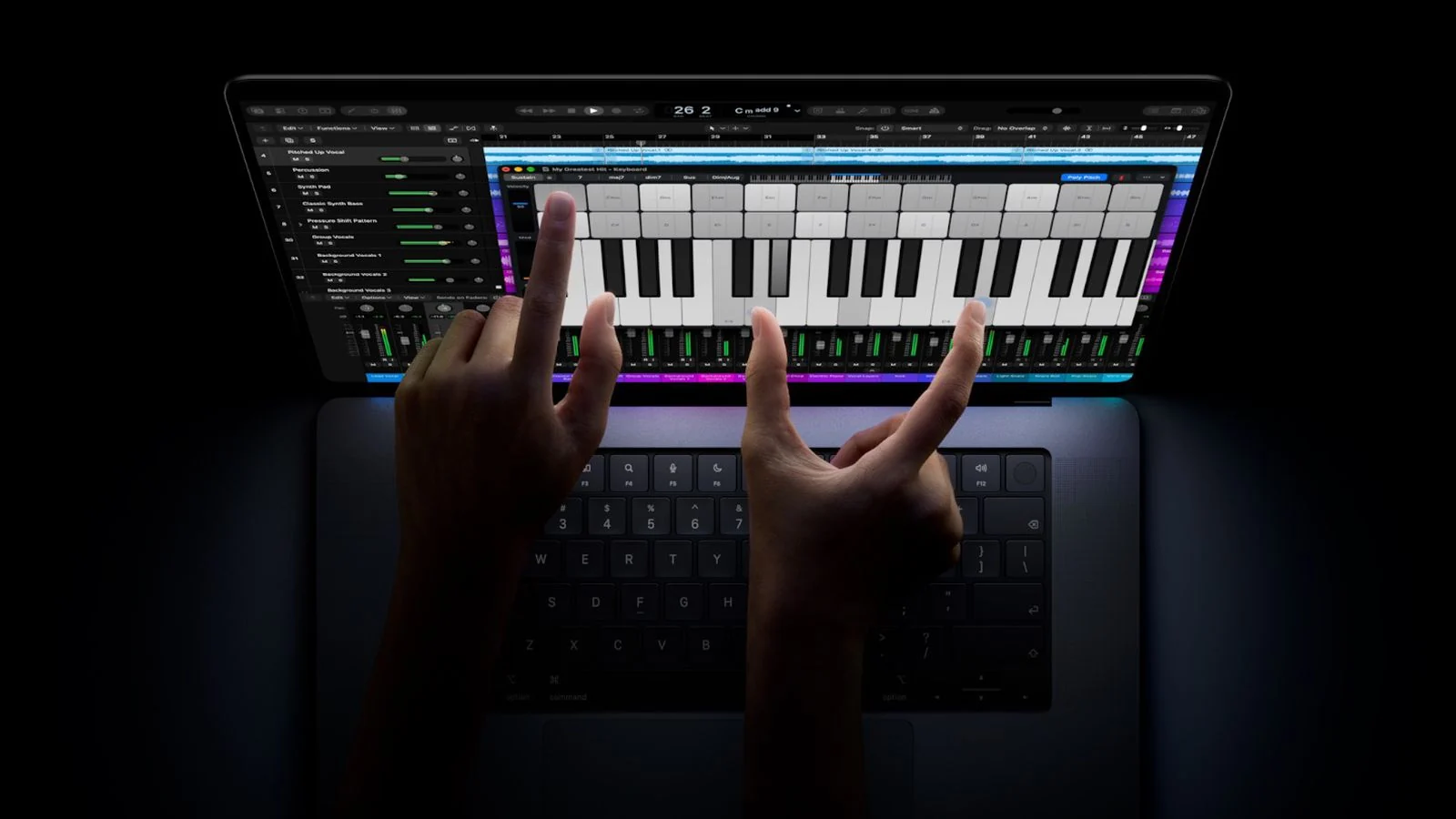
A hedged assumption inside dozens of regional device roadmaps has just been retired. Recently, during Apple's fiscal 2026 fourth-quarter earnings call, the company was asked point blank whether a MacBook Pro that now absorbs capabilities from iOS — touch input, the Dynamic Island, Siri intelligence — was the opening move toward one operating system shared with iPad. The answer was no, and John Ternus delivered it with unusual bluntness: "there are currently no plans for any fundamentally different change," adding that even if such plans existed, they would not be discussed in advance. For IT leads, resellers and product managers across Asia-Pacific, the value of this episode is not the denial itself but the evidence around it: a compressed launch sequence, a set of financial prints, and a developer toolchain that together show how the boundary will be managed rather than erased.
The case timeline: two launches, one call, one answer
- 27 October 2026 — Apple unveils a refreshed 14-inch MacBook Pro built on the M6 chip.
- 28 October 2026 — Apple introduces the MacBook Pro with PROLED XDR display, a tandem OLED panel that makes it the first Mac you can operate by touch, with the Dynamic Island bringing Spotlight, Live Activities and Siri onto the Mac screen (Apple Newsroom). Pre-orders open the same day.
- 2 November 2026 — fiscal 2026 Q4 results are published, followed by the earnings call that marks Ternus's first Q&A session as CEO.
- During the call — Richard Kramer of Arete Research asks whether macOS and iOS will keep converging, or eventually merge to simplify the software stack and cut cost.
- 6 November 2026 — the touchscreen MacBook Pro reaches retail shelves.
What Apple actually committed to
Ternus's reply has three load-bearing elements, and each carries a different consequence for buyers:
- Two lines, defended separately. Apple said it takes pride in Mac and iPad as distinct product families; the design principle is to bring every category to its own best form rather than fuse them.
- Feature sharing, not platform unification. Capabilities keep migrating across the ecosystem — the iPhone, iPad and Mac Handoff workflow is the standard example — while iPadOS and macOS remain independent systems.
- Touch as a supplement, not a new default. Apple positions the new input layer as an addition to keyboard-and-trackpad work. In practice the machine is "touch-friendly," not "touch-first," which is why a touchscreen checkbox no longer defines a device class.
The precedent: the "spork" doctrine of 2025
The current answer did not arrive out of nowhere. In a 2025 interview with MacStories editor Federico Viticci, Craig Federighi, Apple's senior vice president of software engineering, rejected merging iPad and Mac hardware concepts using cutlery as his analogy: if a spoon works well and a fork works well, welding them together produces something that is neither a good spoon nor a good fork — hence "we don't want to build sporks." He also argued that iPad can be inspired by Mac elements without running macOS. Read alongside the earnings-call reply, the continuity is the useful signal: the position has now survived a change of chief executive, which makes it a strategy rather than a phase.
The numbers that explain why the boundary holds
Transcripts circulated by Zhitong Finance and Tonghuashun, together with Apple's fiscal 2026 Q4 release for the quarter ended 26 September, supply the commercial logic behind the stance:
| Line item | FY2026 Q4 | Why it matters for the merge question |
|---|---|---|
| Total revenue | US$114.477B, up 12% year on year | Scale removes the cost-saving argument for one OS |
| iPhone | US$57.583B | Strongest September quarter on record for the line |
| Mac | US$10.792B | Management said full-year Mac sales hit a record high |
| iPad | US$6.229B | A separate, still monetising install base to protect |
| Services | US$31.573B, an all-time high | Cross-device continuity, not merger, is the revenue engine |
| Greater China | US$17.539B vs US$14.493B a year earlier | The analyst framing put full-year regional growth at a healthy 28%, the fastest of Apple's regions |
| December quarter outlook | Revenue +7% to +10%; services +8% to +9% | Hardware-led growth makes a disruptive platform reset expensive |
| Cost pressure | Higher memory costs flagged as ongoing | Margin defence pushes Apple to differentiate, not homogenise |
Set those figures side by side and the denial becomes arithmetic. A merged interface would put the iPad line and a record Mac year at risk to save engineering overhead that Apple can afford to carry, especially while services revenue compounds. What the company is doing instead — lifting interaction ideas across devices while keeping the software contracts separate — captures the marketing benefit of convergence without the cannibalisation cost.
Regional read-outs: price ladder and supply, where the divergence shows
Launch economics are not uniform across Asia-Pacific. The touchscreen model opens at US$2,899 in the United States with retail availability from 6 November; Australian listings were reported from A$4,599, while Taiwanese pricing was compiled at NT$97,900 for the 14-inch and NT$114,900 for the 16-inch, with pre-orders opening a day later than the M6-based sibling. For regional channel teams, that spread plus staggered pre-order dates is the operational detail worth logging: refresh cycles that assume a single global availability window will mis-sequence deployments in Japan, Australia and Southeast Asia.
The second-order effect is cost, not software. With memory inflation still working through the bill of materials, quote validity in H1 2027 is shorter than the procurement calendars many APAC enterprises still run on, and premium SKUs such as the PROLED XDR tier absorb that pressure first.
Developer evidence: the tell inside the toolchain
Where a company really stands on convergence is visible in its tooling. Alongside macOS 27, Apple published a "Touch on Mac" resource hub covering gestures, hit targets and Mac Catalyst guidance, and shipped Xcode 27.3 beta support so developers can tap and swipe inside an iPhone or iPad simulator directly on the MacBook Pro's own display (MacStories, 9to5Mac). Window controls enlarge for fingers, Safari gains pull-to-refresh, and touch targets expand even where button artwork stays the same.
Regional commentary was careful about what this proves: on-device touch testing is a debugging capability, not a merged runtime. The apps under test are still built and shipped as iPhone and iPad artifacts, and they do not become Mac apps by virtue of being touched.
Action notes for APAC technology leaders
- Write the merger assumption out of 2027 roadmaps. Two consecutive administrations have now declined to commit to a unified OS; rebuild any integration, licensing or training plan that quietly depended on one.
- Re-segment the device matrix by workload, not by hardware checkbox. With touch present on both categories, evaluate on software capability, peripheral workflow and manageability instead of "screen touches or not."
- Sequence refresh bids around the component cycle. Lock quotes before memory-cost pass-through, and treat regional list prices and pre-order dates as market-specific inputs.
- Run touch usability tests now on field applications. Use the simulator-on-touch-screen workflow to find thin hit targets in kiosk, retail and healthcare apps before hardware rollout.
- Monitor boundary signals rather than rumours. Watch the Mac-versus-iPad revenue split at each call, the reported next-generation touchscreen MacBook Pro cycle, and whether Apple repeats the "no fundamental change" line.
Bottom line
The case closes with a narrower but more useful question for the region. Apple has drawn the boundary explicitly, priced its new hardware differently market by market, and handed developers tools that make touch testable without making the platforms interchangeable. Decision-makers should therefore stop budgeting for convergence and start budgeting for coexistence: two operating systems, one ecosystem, and purchase criteria that have to be re-cut accordingly.