
APACTechBriefing Case File: Apple's Record Fiscal 2026 Close - and the Three Lessons APAC Tech Teams Can Reuse
A chief-executive handover, the company's first foldable and a once-a-cycle memory price spike all landed inside one reporting period. Apple published its fiscal 2026 fourth-quarter and full-year results today, November 3, and the call that followed is better read as an operating case than as a headline: it shows what a record year looks like while input costs climb underneath it. Below, the case runs in three passes - the scorecard, the pressure points, the reusable moves - for APAC hardware buyers, channel teams and digital leads who need the signal, not the commentary.
Pass 1: the scorecard
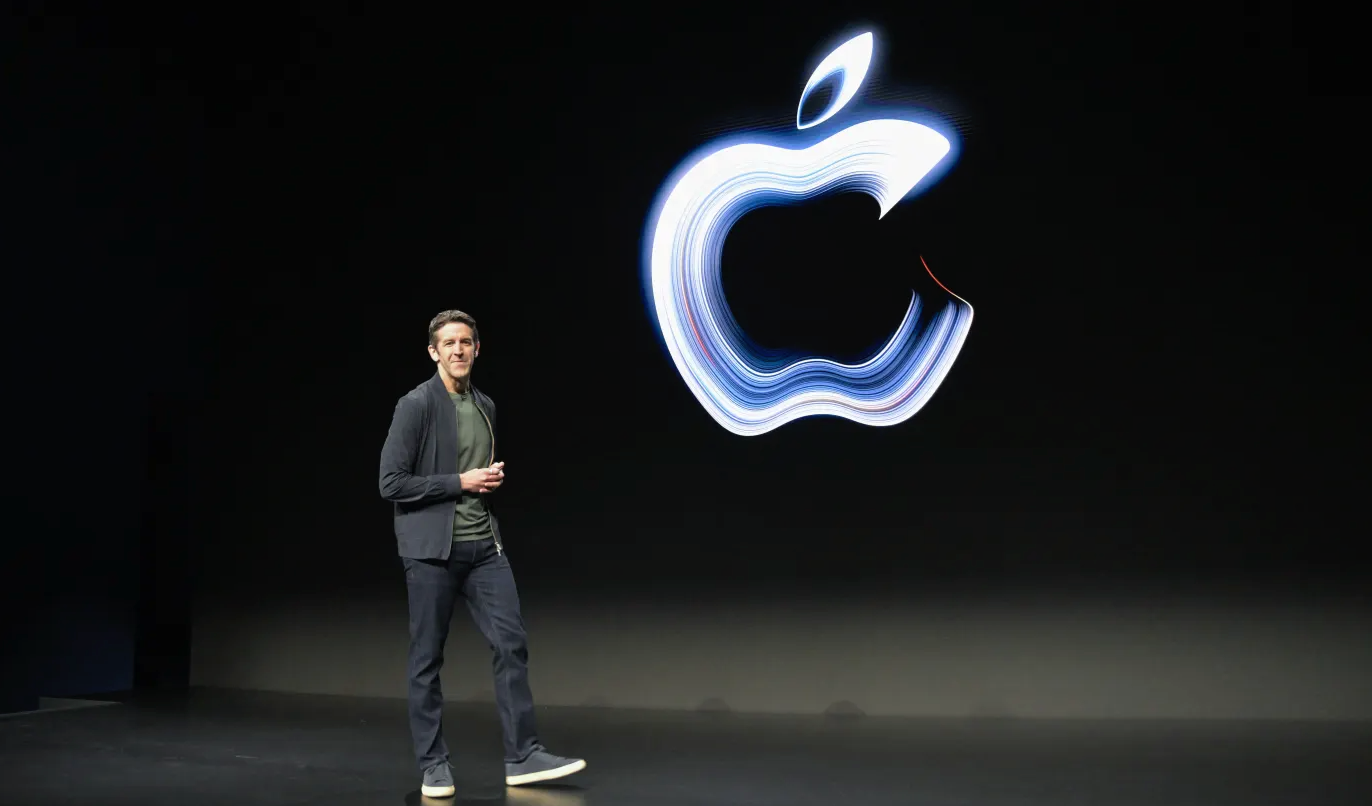
After the results release, Apple Inc.'s CEO John Ternus, CFO Kevan Parekh and COO Sabih Khan took analyst questions in a session Ternus hosted for the first time as CEO. The headline arithmetic: the Cupertino company booked total revenue of $114.477 billion in the fiscal fourth quarter, up 12% from $102.466 billion a year earlier, and net income of $30.711 billion versus $27.466 billion, also up 12%. Greater China - mainland China, Hong Kong and the Taiwan region - returned $17.539 billion, up 21% from $14.493 billion. Across fiscal 2026 as a whole, revenue reached $478.834 billion, up 15% on fiscal 2025's $416.161 billion, with net income up 18% to $132.175 billion from $112.010 billion.
| Metric | Fiscal 2026 reported | Fiscal 2025 / reference point |
|---|---|---|
| Fourth-quarter revenue | $114.477 billion, up 12% | $102.466 billion |
| Fourth-quarter net income | $30.711 billion, up 12% | $27.466 billion |
| Greater China revenue | $17.539 billion, up 21% | $14.493 billion |
| Full-year revenue | $478.834 billion, up 15% | $416.161 billion |
| Full-year net income | $132.175 billion, up 18% | $112.010 billion |
| Diluted EPS (Apple release) | $2.10, up 14% | includes roughly $0.05 from tariff refunds |
| Quarterly gross margin (Apple release) | 47.9% | includes about 1 percentage point of tariff-refund benefit |
| R&D expense (Apple release) | $11.730 billion in the quarter; $45.765 billion for the year | $8.866 billion and $34.550 billion respectively |
- Forward guidance from Parekh: first-quarter-of-fiscal-2027 revenue is expected to grow 7%-10% year on year, with services revenue up 8%-9% year on year.
- Cost direction from the call: management flagged a December-quarter gross margin of 45%-46% against the 47.9% just reported, per the transcript coverage from Cailianshe (cls.cn).
- Market verdict: as of publication, Apple shares were down 2.36% in after-hours trading.
Pass 2: three pressure points, in sequence
Supply - a launch that ran ahead of capacity
Ternus said the company is "working flat out to get iPhone Duo into consumers' hands as quickly as possible". Sabih Khan said Apple is very satisfied with the market reaction during the initial launch period, described the capacity ramp as "going smoothly", and then added the sentence that matters for every channel team in the region: "At present, we really find it very hard to predict when supply will match market demand." He also said more product lines are moving onto 2-nanometer silicon and that supply-chain constraints will keep easing.
Two supporting facts raise the stakes. First, iPhone 18 Pro and iPhone 18 Pro Max are also drawing demand, which Ternus attributed mainly to camera, thermal performance and chip upgrades; Mac volume for fiscal 2026, he added, exceeded any previous fiscal year. Second, the segment itself is the exception to a down cycle: IDC's August forecast put global smartphone shipments on a record 16.7% decline in 2026 under memory-cost pressure, with foldables the only category still expanding, at about 12.6% year on year, partly because Apple entered it in the second half (idc.com). Early noise came with the launch too: user reports of screen damage on iPhone Duo prompted Ternus to tell analysts that only "a very small proportion" of units came back with display faults and that Apple is replacing affected devices, according to Sina Finance's coverage of the call.
Cost - an "unprecedented" memory squeeze
Ternus called the increase in memory costs unprecedented, and warned that the first quarter will bring higher memory costs still. Independent pricing data supports the framing: TrendForce projected conventional DRAM contract prices to rise 10%-15% quarter on quarter in the fourth quarter of 2026 and NAND flash contract prices 15%-20% (trendforce.com). The offsets are visible in the numbers rather than in the narrative - inventory gains, cheaper non-memory components, and a deliberate price move: reports carried by Sina Finance and Cailianshe note that iPhone 17 was repriced $100 higher when iPhone 18 Pro launched, with some MacBook prices lifted in step.
The margin arithmetic is the part APAC finance leads should copy. Reported gross margin was 47.9%, but that includes roughly 1 percentage point from tariff refunds; strip it out and the memory inflation was already biting, which is why the guided range steps down to 45%-46%.
Region - Greater China back in front, on allocation
Ternus said Apple is very satisfied with Greater China's performance, that growth was driven mainly by iPhone and then Mac, and that the market is showing strong momentum; he pointed to the recent visits to China by Tim Cook and COO Sabih Khan. Third-party tracking adds the mechanism: Counterpoint Research estimated that the iPhone 18 Pro line's opening selling days in China ran about 12% ahead of the previous Pro generation and pushed Apple to the top of the weekly China shipment table with a 33% share, and later reported roughly 29% growth for the line in the country on better supply and competitor price hikes (counterpointresearch.com; guandian.cn). The tension to note: sell-side hopes for the region had been set even higher, so the rebound landed as a beat on trend but a miss on expectation (Sina Finance). In a supply-limited foldable era, holiday-quarter upside in China is an allocation question before it is a demand question.
Pass 3: AI, platform strategy and the spending curve
On agents, Ternus said Siri currently remains focused on responding to user instructions, that Apple sees a future opportunity to extend its capabilities step by step, and that protecting user data security is the most important thing. He also signalled that there is no plan to merge iOS and macOS. The quiet story is the cost base: the results release shows research and development spending of $11.730 billion in the quarter against $8.866 billion a year earlier, and $45.765 billion for fiscal 2026 against $34.550 billion, directed at on-device AI, new hardware form factors and the foldable. Pair that curve with the 8%-9% services growth guide - below the roughly 10.7% consensus cited in market reports - and the next two quarters hinge on whether AI investment converts into revenue faster than memory converts into cost.
Reusable playbook: six moves for APAC teams
- Hedge input inflation in the price ladder, not in contracts alone. A $100 lift on the prior flagship plus tiered MacBook pricing is the cheapest defence against a memory cycle; set the ladder before the component index moves, not after.
- Treat a capacity-limited hero SKU as a communications project. Publish allocation logic, realistic delivery windows and a replacement path for early quality noise, so resellers do not invent their own answers.
- Re-weight regional plans on supply, not on demand signals alone. Greater China's 21% rebound was led by iPhone availability, so regional forecasts should carry an allocation scenario.
- Model margin as a band, not a point. A guide that steps from 47.9% to 45%-46% is a decision trigger for channel discounts, mix and inventory terms.
- Book AI spend as a margin line. A 32%-plus year-on-year rise in R&D plus cloud inference cost lands on gross margin before it lands on revenue.
- Scrub one-off benefits before they flatter your KPIs. Roughly 1 point of margin and $0.05 of EPS came from tariff refunds; compare like-for-like when benchmarking vendor performance.
Risk register for the next two quarters
- Cost: memory inflation continues into the first quarter of fiscal 2027.
- Margin: guided 45%-46%, below the 47.9% just reported, with tariff-refund help non-recurring.
- Supply: no visible date when iPhone Duo supply balances demand.
- Services: 8%-9% growth guidance trails sell-side consensus while AI spend accelerates.
- Regional concentration: Greater China momentum depends on iPhone allocation in the holiday quarter.
Read this case for its structure, not its record numbers. A vendor can close the best fiscal year in its history and still guide margin down, still be unable to promise when its flagship reaches shelves, and still post 21% regional growth that lands short of expectation. For APAC buyers, integrators and channel owners, those three gaps - cost, capacity and expectation - are exactly where the negotiating room sits.