
APACTechBriefing: Apple Intelligence in China — Comparing What iOS 27.3 Opens and What It Withholds
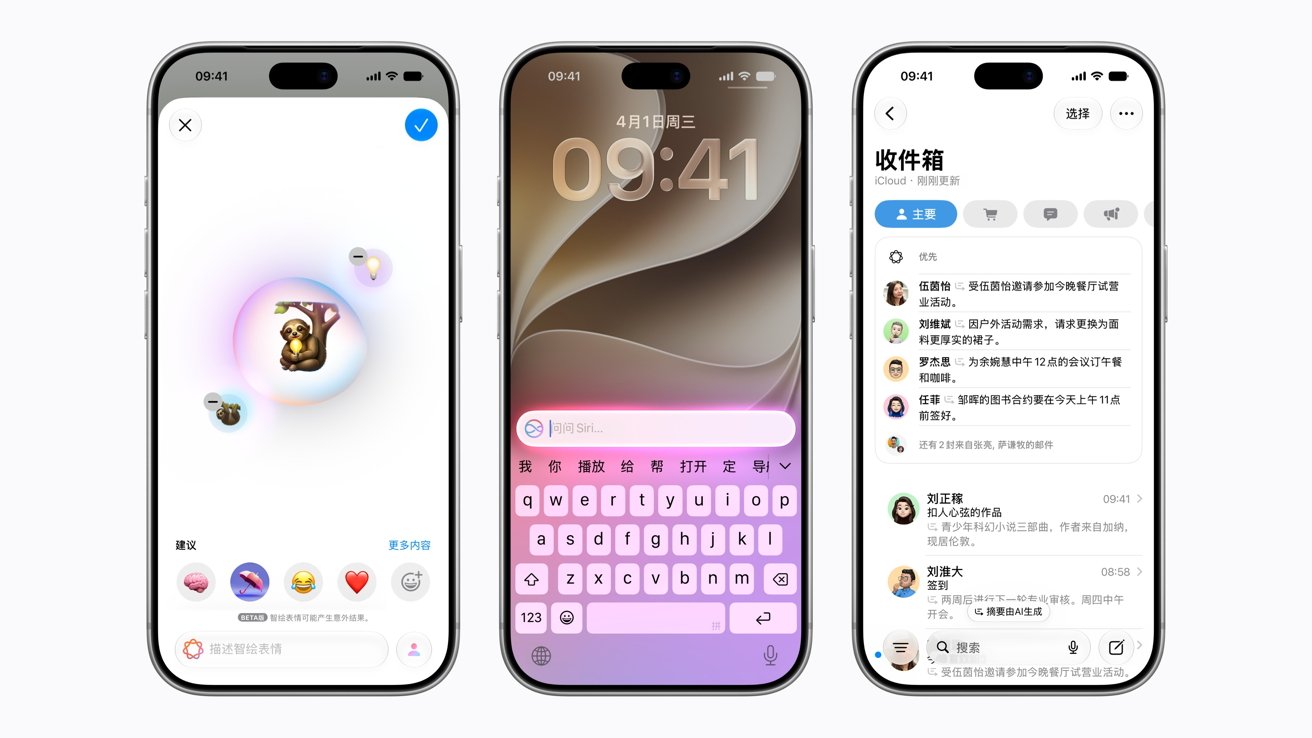
For APAC technology leaders tracking platform gaps, the update is best read as a phased entry rather than a finished assistant launch. Apple Intelligence is now supported in the China region through the iOS 27.3 developer beta, opening the first wave of features after the service became available in the United States in 2024. The practical question is not only availability. It is what workflow value can be tested now, what assistant capability is still withheld, and which device, language, and compliance constraints should shape decisions before the iOS 27.3 official release this December.
Compared with the full assistant picture, this first China package looks closer to the early international Apple Intelligence rollout than to a final regional parity release. Photo tools, text tools, message assistance, transcription, camera-based context, and smart emoji generation are available. The AI version of Siri is not, because that capability is still being opened gradually in other countries and regions in 2026. For buyers, that creates a clear comparison: Apple Intelligence now reduces routine information work; it does not yet replace an approved conversational assistant in every market.
Comparison: capability access versus assistant depth
The most useful lens for APAC digital teams is access versus depth. Apple has opened usable capabilities on iPhone in the China region, but it has not made every high-profile AI assistant capability part of the same release. The table below summarises the trade-off.
| Decision lens | Open in iOS 27.3 developer beta | Still constrained | APAC takeaway |
|---|---|---|---|
| Photo workflow | Clean Up, automatic Memories videos, natural-language photo search | Editing quality still needs professional review in media-heavy work | Helpful for mobile marketing and field content teams, not a replacement for studio pipelines |
| Visual context | Visual Intelligence through the iPhone camera | Usefulness depends on language, local objects, and regulated camera data | Good for retail, travel, service, and training pilots, but governance must be tested first |
| Text and messaging | Writing tools, notification summaries, email summaries, and Smart Reply in Messages | Summary accuracy requires human checks in high-risk communication | Can speed up support, sales, and compliance triage without changing approval rules |
| Transcription | Note transcription and call transcription with summaries | Audio quality and language coverage may vary by setting and device | Useful for meeting productivity, but consent and retention policy remain central |
| Conversational AI | Apple says the current system uses Apple-built generative AI models | The AI version of Siri is absent; Qianwen integration is planned rather than fully delivered here | Treat Siri as a future dependency, not the basis for this beta evaluation |
Data citations for rollout planning
Apple's China newsroom provides the key dates and device signals for decision makers. It states that the first core features open for testing with the latest iOS developer beta from 4 November, with the iOS 27.3 official release expected for China users in December. The same source lists supported devices including iPhone 16 and later, iPhone Duo, iPhone 15 Pro, iPhone 15 Pro Max, and iPhone Air, while Siri and device language need to be set to English or Simplified Chinese for the initial feature set.
- 2024: the reference point for the earlier United States launch, which highlights the regional delay before China-region support.
- 27.3: the iOS version that separates developer testing from formal availability.
- this December: the planned official-release window for broader user access in China.
- 2026: the year by which the AI version of Siri is still arriving gradually in other countries and regions, explaining why the first China beta focuses elsewhere.
- Device and language settings: supported iPhone models and required language conditions are gating factors for any APAC pilot group.
Compliance and model sourcing
The regulatory path is a second difference from the United States launch. Local compliance requirements make market entry more than a software translation exercise. Apple has built the first supported China-region generation capabilities with its own generative AI models, while also working with Alibaba to integrate Qianwen capabilities into Siri over time. For enterprises, that creates a layered model stack rather than a single architecture: near-term features are testable now, while deeper assistant intelligence remains linked to future approval and partner integration.
Action recommendations for APAC teams
- Pilot workflow tools first. Use Clean Up, Writing tools, notification summaries, email summaries, and Smart Reply in areas where teams already process images, long messages, or high-volume notifications.
- Separate transcription from legal review. Test Note transcription and call summaries for meeting efficiency, but keep consent, retention, and language rules inside the pilot design.
- Check readiness before judging experience. Confirm that test users have supported iPhone models, the iOS 27.3 developer beta, and required Siri and device-language settings.
- Do not budget this as full Siri AI. The AI version of Siri is not part of the first China release; Qianwen integration is a future dependency rather than a present replacement.
- Use December as the stable adoption checkpoint. The iOS 27.3 official release is the better baseline for broad user communication, training, and any production rollout decision.
The verdict is useful but narrow: Apple Intelligence enters the China region with enough capability to test AI-assisted work, yet not enough to treat the assistant layer as complete. APAC leaders should evaluate it as a staged platform change, with the near-term payoff in editing, summarisation, and message triage, and the longer-term decision point around Siri, model partners, and local compliance.