
Teardown Before Rumour: What Apple's Reclaimed Cubic Millimetres Say About the iPhone 18 Battery Plan
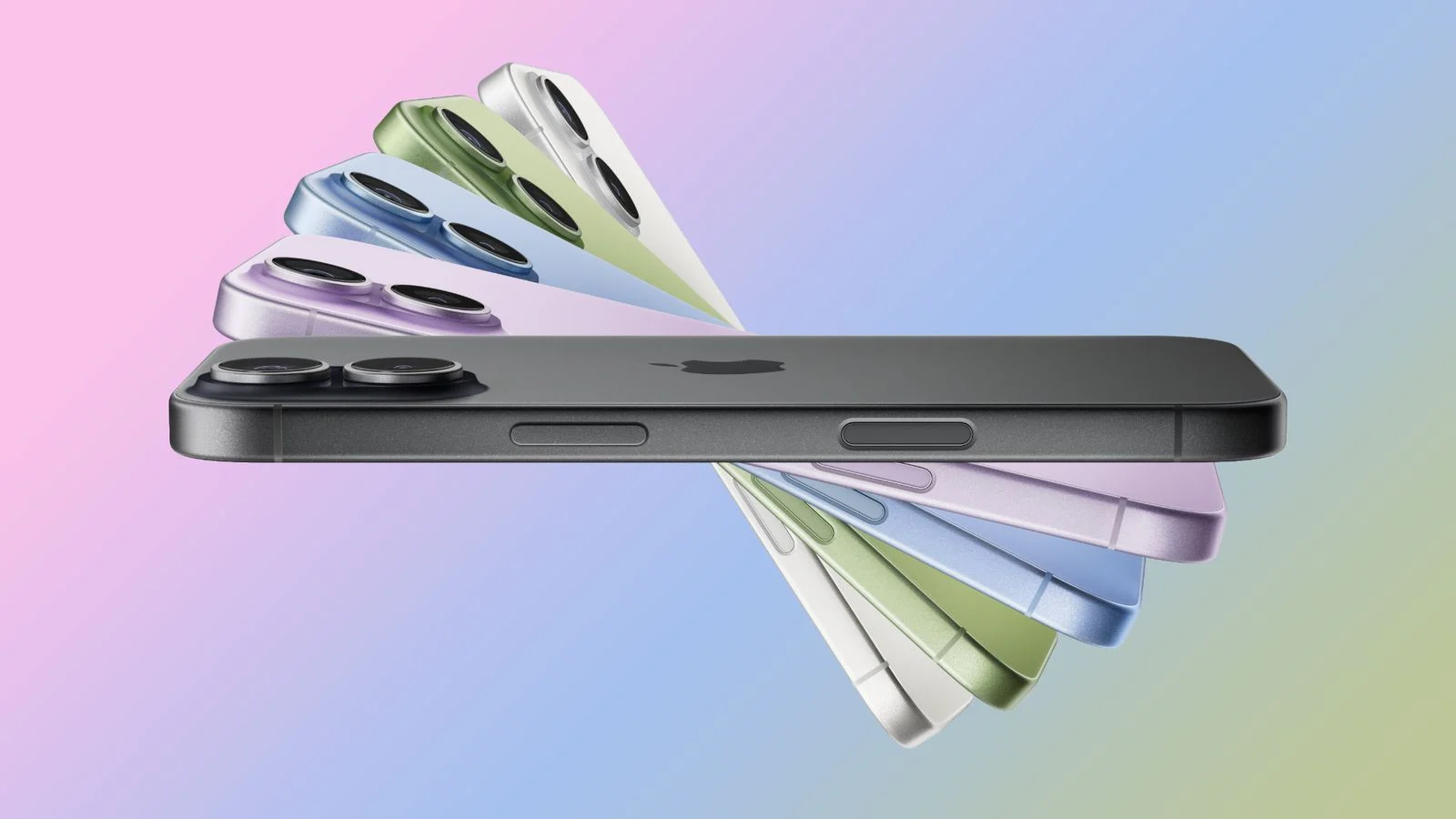
Start with the metal, not the spec sheet. Supply-chain analysts have been telling the market that Apple is weighing a revised interior layout for its handsets, one whose purpose is to reserve more volume for the battery pack, with those changes expected to surface first in the iPhone 18 series scheduled for 2027. Rather than chase a capacity figure Apple has not published, this APACTechBriefing case review works backwards from three documented projects in the same problem space — an Apple teardown, a greater-China cell-materials programme and a Korean carrier's inference-efficiency trial — to judge how much room the iPhone 18 line plausibly has, and what could quietly take it away.
The report on the wire: three facts and one caveat
- Trigger is design, not chemistry: the layout review is aimed at freeing interior volume so a larger cell can be fitted.
- Timing: the adjustment is expected to appear first in the iPhone 18 series, which the reporting places in 2027.
- Direction: battery capacity should rise against current models; no figure has been disclosed.
- Caveat: currently this remains rumour-grade information — Apple has not confirmed iPhone 18 battery specifications, enclosure changes or any runtime target, and by its own habit final configurations can still move during development.
Case 1 — the space Apple has already recovered
The most useful precedent is not hypothetical; it is already on the bench. Teardowns of the iPhone 17 Pro published in September 2025 by REWA Technology, and summarised by AppleInsider and MacRumors, showed that US-market iPhones had lost the physical SIM tray as early as the iPhone 14 generation, yet the cavity was simply plugged with a plastic filler. On the iPhone 17 that dead volume was converted into additional cell: the eSIM-only Pro was reported at 4,252 mAh against 3,988 mAh in the tray version, and the Pro Max at 5,088 mAh, roughly 8.6% above the iPhone 16 Pro Max. 9to5Mac separately noted that UK and European spec pages for the same Pro models list 28-hour and 33-hour video playback — two hours shorter than their US counterparts.
Read as an engineering case, the takeaway is blunt. A packaging decision, not a breakthrough, bought a double-digit percentage of capacity — and it also produced a regional split in published endurance, which is exactly the variable APAC fleet owners should be tracking.
Case 2 — the materials shortcut taken by greater-China OEMs
Apple's supply chain is not the only one studying the same cell. OPPO's own product note for the Find X8 series describes a silicon-carbon anode that lifted capacity from 5,000 mAh to 5,630 mAh at a typical energy density of 819 Wh/L, inside an unchanged body. Component-industry analysis from Neware puts the rise in silicon loading in phone anodes from roughly 6% initially to 15%. Counterpoint Research's 25 March 2026 update quantified the market effect: the average smartphone battery reached 5,291 mAh in January 2026, up about 400 mAh year on year — the largest annual jump since December 2021 — while handsets carrying 6,000 mAh or more climbed to 29% of global sales from 10%. All ten best-selling models above 6,000 mAh that month came from Chinese brands, six of them on silicon-carbon chemistry and six sold only at home; senior analyst Karn Chauhan expects growth to decelerate during 2026, with a key technology milestone in 2027 and mass production around 2028.
That is the uncomfortable comparison for Apple: regional market trackers have pointed out that Apple and Samsung flagships now sit below the global average cell size. Apple is unlikely to win by stacking more grams into a pocket device, so the realistic route is to out-pack its rivals — which is precisely what an interior layout review implies.
Case 3 — the Korean software brake on the same curve
Seoul offers the mirror-image experiment. LG Uplus said in late October 2026 that two of its AI-token optimisation papers were accepted at the NeurIPS 2026 on-device intelligence workshop; running a small language model for its call-service use case, the carrier reported inference about 4.5 times faster and battery consumption roughly 77% lower than its previous method, as covered by the Korea Times and Chosun. The lesson for any handset roadmap is that local AI runtime cost is partly a software variable: expanded Apple Intelligence features and always-on local inference can be mitigated on the inference path, not only with a bigger tank.
The constraint rarely quoted: 2027 is also the EU removability deadline
Under Article 11 of Regulation (EU) 2023/1542, from 18 February 2027 portable batteries built into products sold in the European Union must in principle be removable and replaceable by end users using commercially available tools. The European Commission announced additional exemptions to that requirement in July 2026, and testing bodies such as Intertek have been advising manufacturers on the design and documentation burden. For every APAC handset maker — Apple included — interior volume now carries two competing claims: extra cell, or screws, pull-tabs and mild adhesives that let an owner open the pack. A larger battery and a consumer-replaceable battery are not automatically compatible, and the overlap lands exactly on the year the iPhone 18 series is expected.
Three levers, three receipts
| Lever | Documented case | Reported outcome | Read-through for the iPhone 18 line |
|---|---|---|---|
| Interior re-packaging | iPhone 17 Pro eSIM cavity reused (REWA teardown, September 2025) | 264 mAh between versions; Pro Max about 8.6% above the previous generation | Lowest-risk path; already proven inside Apple's own product |
| Cell chemistry | OPPO Find X8 silicon-carbon anode (OPPO newsroom) | 5,000 mAh to 5,630 mAh at 819 Wh/L typical, same chassis | Matches the materials, energy-density and packaging work Apple's supply chain is reported to be studying |
| Workload efficiency | LG Uplus token optimisation (NeurIPS 2026 workshop) | About 4.5x faster inference, about 77% less battery in test | Software offset for AI load, complementary to A-series per-watt gains |
| Regulatory envelope | EU 2023/1542 Article 11, applying from 18 February 2027 | Battery must be user-removable unless a Commission exemption applies | Could consume part of the volume the layout review is trying to free |
Why the pressure keeps rising even as silicon improves
In recent years Apple has leaned on chip architecture optimisation, advanced process technology and software-level power management, with each generation of A-series chips raising performance per watt so that devices ran longer even when the cell barely changed. High-refresh-rate displays, on-device large-model inference and a widening set of AI features are now pushing demand upward faster than those efficiency gains can absorb, which is why a capacity increase looks less like a concession and more like arithmetic. As Apple Intelligence keeps expanding and iPhones take on more local AI tasks in the future, the extra volume would not only lengthen daily use but also underwrite services that stay awake in the background.
Action notes for APAC product, IT and procurement teams
- Anchor refresh models and TCO sheets to published datasheets and energy-label filings rather than leak volumes; treat any capacity number as provisional until Apple confirms it.
- Expect SKU-level endurance differences by SIM or eSIM policy in the APAC mix; the two-hour playback gap on the same Pro model is a support-ticket generator in mixed fleets.
- For EU-bound stock, request removability and battery-replacement documentation early, since the February 2027 rule bites before most 2027 procurement cycles close.
- Watch Apple's supply chain for silicon-carbon or new packaging signals — a chemistry change would arrive as a component qualification, months before any keynote.
- Put AI features into device-management power budgets now: on-device inference load, not screen size, is the variable most likely to erode stated endurance in field use.
Bottom line: the credible version of this story is not "Apple found a bigger battery", it is "Apple is running out of empty space". If the reporting holds, the iPhone 18 would become one of the few Apple phones in recent years to make added battery capacity the headline upgrade — and the more honest reading is a re-balancing act between performance, on-device intelligence and endurance, with regulation now holding a veto.