
APACTechBriefing: Apple May Fold Two iPhone Physical Buttons Into One in the Second Half of 2027
Apple is reportedly weighing a merger of the Action Button into the Camera Control key: a single press opens the camera, a long press fires user shortcuts such as silent mode, Focus, flashlight or Shortcuts automation. The plan, traced to a Weibo leaker, targets new iPhone models in the second half of 2027 — and it carries practical consequences for Asia-Pacific supply chains, app developers and IT teams well before any keynote confirms it.
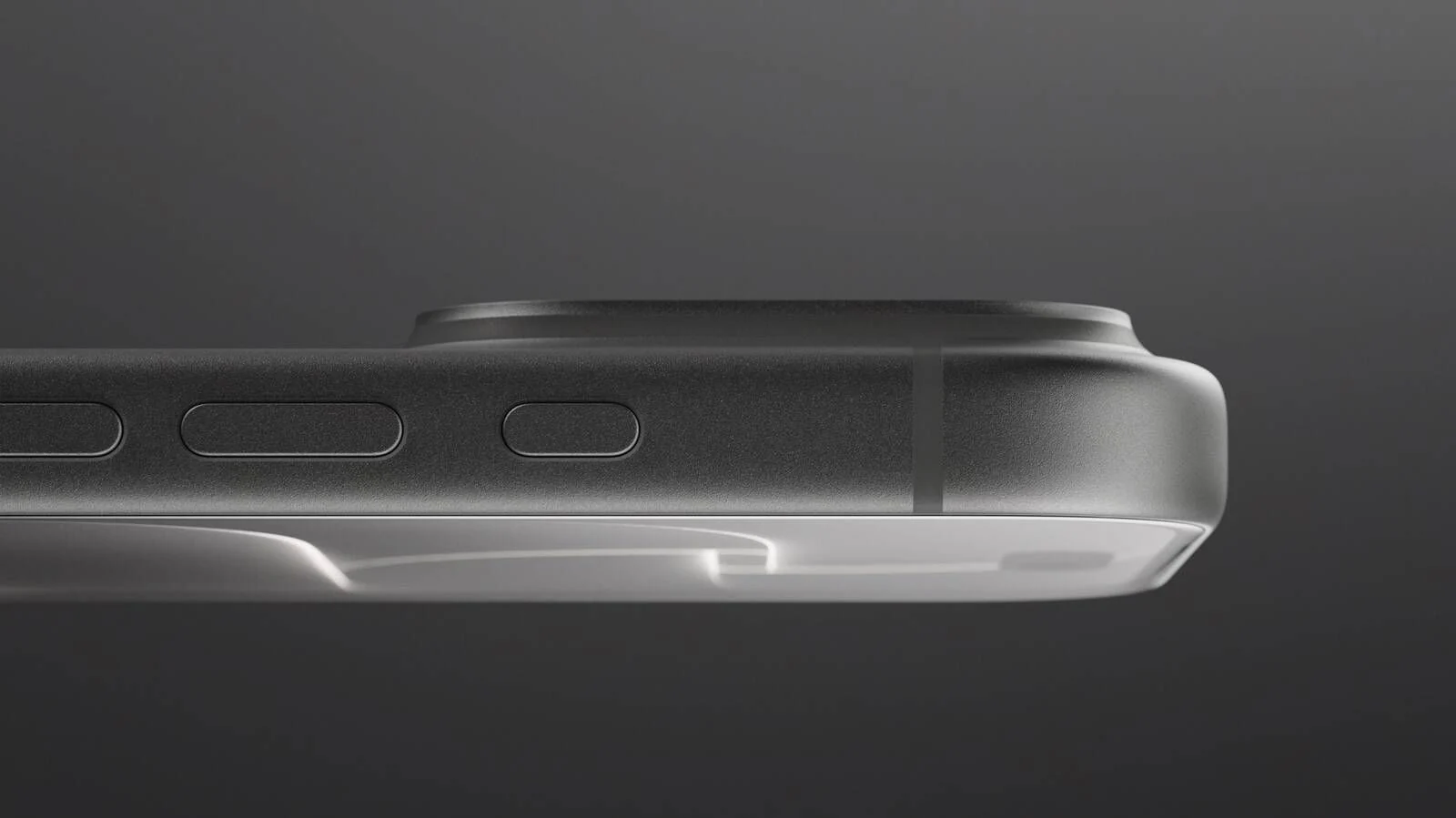
What exactly is being merged?
The report comes from Instant Digital, a Weibo-based leaker whose hardware claims have previously been picked up by tech media. According to that account, Apple is evaluating a design in which two physical buttons on the flank of an Apple iPhone collapse into one, with different press patterns mapped to different jobs.
- Single press — launches the Camera app, which is what the Camera Control key already does.
- Long press — calls up the custom actions the Action Button owns today: silent mode, Focus, flashlight, Voice Memos, Translate and Shortcuts.
- Hardware count — one fewer moving control in the frame, while the surviving key keeps its current position.
Nothing here is official. Apple has not confirmed the concept, and the behaviour split should be read as a supply-chain scenario rather than a shipping specification.
How did Apple reach this point?
The button history matters, because the merger would end a control that has existed for a very short time.
| Milestone | What changed |
|---|---|
| 2023 — iPhone 15 Pro series | The Action Button debuts, replacing the mute switch Apple had kept for years and adding user-customisable shortcuts. |
| One year later — iPhone 16 series | The Camera Control key arrives, pairing pressure sensitivity with a capacitive layer for zoom and settings gestures. |
| iPhone 18 series | Both keys persist; the internally simplified camera key that had been rumoured does not appear on this generation. |
| iPhone Duo | Apple's foldable ships with Camera Control but no separate Action Button — a working precedent for the merge. |
| Second half of 2027 | Rumoured switchover window, potentially overlapping the 20th anniversary cycle of the Apple iPhone; final naming is unclear — iPhone 19 Pro, iPhone 20 Pro or something else. |
If the timeline holds, the Action Button's run as a standalone physical key would total just four years — far shorter than the switch it replaced. Apple would not be cancelling customisation, but relocating it to a control with a broader remit.
Why would Apple collapse the two keys?
Cost and mechanical simplicity. Reporting carried by 9to5Mac in August 2025 said Apple was weighing a cheaper Camera Control design that would drop the capacitive sensing layer and keep only pressure detection. That simplification did not reach the iPhone 18 series, but it shows the direction of travel: the camera key is a component Apple is still trying to make cheaper and less error-prone, not more elaborate.
Camera Control is the button with a developer path. At WWDC25 Apple formalised the software surface around the key in session 253, "Enhancing your camera experience with capture controls", exposing AVCaptureEventInteraction and AVCaptureControl so third-party apps can bind launch, shutter and slider-style adjustments to the hardware. Apple's own guidance also sets a limit: Nick Lupinetti, a software engineer on Apple's camera experience team, told developers the control is meant to be used with the iPhone camera, and warned against introducing a capture session purely to adopt Camera Control, since running the camera carries power and privacy requirements. A merged button therefore inherits an API surface the Action Button never had — and inherits its constraints too (analysis).
A precedent has already shipped. The iPhone Duo demonstrates that a flagship can launch without a standalone Action Button while keeping the camera key, which lowers the risk of removing the second control elsewhere in the line-up.
Asia-Pacific production context (analysis). Bloomberg reported in March 2026 that about 25% of iPhones are now built in India, after production there rose roughly 53% the previous year. Deleting one frame button cuts part count, sealing work and assembly steps across newly scaled lines in India and Southeast Asia — an attractive saving while Apple re-engineers capacity into a soft premium market.
Who is exposed if the dedicated button disappears?
- Accessibility users. Apple's iPhone guide lets the Action Button open the Magnifier app or a chosen accessibility feature, with triple-click still used for accessibility shortcuts; a long-press-only path adds a step.
- Mobile photographers. Camera Control is the only side key third-party camera apps can hook into, and adoption across such apps remains patchy — a merger concentrates more system functions behind a control with uneven software support.
- Enterprise and field workflows. Warehouses, retail floors and clinics across Asia-Pacific use Action Button shortcuts to reach scanning, dictation or emergency automation without unlocking the handset.
- Resale and refurbishment channels. A hardware change timed near the 20th anniversary cycle reshapes residual values in APAC second-hand markets (analysis).
What does the rumour say about Asia-Pacific demand timing?
IDC's China tracker shows the market Apple is defending has cooled: total China smartphone shipments came in at 69.0 million units in the first quarter of 2026, down 3.3% year on year, per IDC's quarterly blog. In the September quarter of 2026, IDC put Apple's share of China shipments at 17.8%, up from 15.8% a year earlier even as iPhone units declined. Share is being won on premium demand, not volume.
Against that backdrop, a merger that trims cost while enlarging the camera key's role reads as a differentiation-and-bill-of-materials play rather than a pure experience decision (analysis). For Asia-Pacific readers the scheduling detail matters most: a change timed to the second half of 2027 lands near the anniversary window that historically triggers an upgrade wave — one that channel inventory plans and corporate refresh cycles need to absorb whether the device is called iPhone 19 Pro or iPhone 20 Pro.
What APAC teams should do before the second half of 2027
- Audit dependencies. Inventory every staff workflow that relies on the Action Button today and document an on-screen fallback for each.
- Test the camera-key path. If your app touches capture, evaluate AVCaptureEventInteraction and AVCaptureControl now, and respect Apple's rule against opening a capture session just to adopt the button.
- Rehearse a split roadmap. Build product and channel calendars that assume a late-2027 flagship cycle, and verify naming and windows against official statements before committing stock.
- Diversify supply assumptions. Model India and Southeast Asia build content when reviewing lead-time and pricing risk for regional SKUs.
- Discount unconfirmed leaks. Until Apple speaks, treat this as a single-source report and score it accordingly in forecasts and procurement plans.
FAQ: Apple's button merger, answered fast
Is the merger of the two physical buttons confirmed?
No. The claim originates from Instant Digital on Weibo and remains unverified; Apple has issued no statement on removing the Action Button.
When would the change take effect?
From new iPhone models in the second half of 2027, per the same report — a window that may coincide with the 20th anniversary of the Apple iPhone.
How long has the Action Button been around?
It arrived in 2023 on the iPhone 15 Pro series. If the merge ships, it will have survived just four years as an independent control.
Can third-party apps use the surviving key?
Partly. Apple's capture APIs let developers attach launch, shutter and adjustment controls, but many third-party camera apps still ignore the button, so function and habit now sit on a single, more contested input.
Sources
- IDC — "Huawei and Apple Support China Smartphone Market Resilience as Shipments Decline 3.3% in Q1 2026": https://www.idc.com/resource-center/blog/china-smartphone-market-q1-2026-huawei-apple/
- IDC — Smartphone Market Insights: https://www.idc.com/promo/smartphone-market-share/market-share/
- Apple Developer — WWDC25 session 253, "Enhancing your camera experience with capture controls": https://developer.apple.com/videos/play/wwdc2025/253/
- Apple Support — "Quickly turn accessibility features on or off on iPhone": https://support.apple.com/guide/iphone/iph3e2e31a5/ios
- Bloomberg — "Apple Now Makes About 25% of iPhones in India After China Pivot": https://www.bloomberg.com/news/articles/2026-03-10/apple-now-makes-about-25-of-iphones-in-india-after-china-pivot
- 9to5Mac — "Apple planning simplified version of the Camera Control for iPhone 18": https://9to5mac.com/2025-08-22/apple-planning-simplified-version-of-the-camera-control-for-iphone-18/
- Sina Finance — report on the Action Button retirement leak (November 2026): https://finance.sina.com.cn/tech/digi/2026-11-06/doc-inixvfes8742675.shtml
APACTechBriefing is APACTechDigit's fast-read column on Asia-Pacific technology and digital change. Written by Lynn Zhou. Editorial enquiries: contact@apactechdigit.com.