
Case Review: Apple's OLED iPad mini, M6 iMac and MacBook Pro Rollout — Field Notes for APAC Buyers
By Lynn Zhou · APACTechBriefing, APACTechDigit
On November 6, Apple started selling the OLED-screen iPad mini, the M6-chip iMac and the newest MacBook Pro line. The instructive part is not the spec sheet: it is how a premium display upgrade, a still-narrow panel supply base and an unusually expensive component year collide inside one retail window.
For Asia-Pacific IT and product teams, that collision is the real story. Refresh budget, delivery date and configuration trade-off were all repriced in the same week, and the pattern repeats across every market between Tokyo and Sydney.
What actually happened during the November 6 launch week?
The short answer: a single sales date carrying three different product strategies. From November 6, buyers could order through Apple's own website and the Apple Store app; the first reservation holders began receiving devices that same day, and Apple Store retail locations plus Apple's authorized reseller channel listed the hardware simultaneously. Timing had been signalled weeks earlier: in mid-October, Bloomberg reporter Mark Gurman pointed to November 6 as the shelf date for the OLED MacBook Pro, the M6-powered 14-inch models and the eighth-generation iPad mini.
Two features of the rollout deserve note. First, Apple shipped a portfolio, not a hero product — a tablet, a desktop and two laptop tracks on one calendar, which spreads channel attention but also splits scarce inventory. Second, the announcement-to-sale interval was compressed, which favours buyers who had already pre-ordered and disadvantages those who waited for local reviews.

Case one — the eighth-generation iPad mini: where a flagship upgrade met one hard trade-off?
Verdict first: this is the cleanest example in the batch of "almost everything, except the one thing". The eighth-generation iPad mini brings OLED display technology to Apple's smallest tablet for the first time, on an 8.5-inch Super Retina XDR display with peak brightness up to 1,200 nits, a contrast ratio of 2,000,000:1 and a minimum brightness down to 1 nit. The 256GB and 512GB models also offer nano-texture glass for the first time to cut reflections.
Inside, the device pairs the A20 Pro processor with Apple's N1 wireless chip, adding Wi‑Fi 7 and Bluetooth 6. At 5.4 millimetres thick and about 255 grams, it is Apple's thinnest and lightest iPad so far, and the first iPad rated to the IP67 dust- and water-resistance standard. Apple also moved the 12-megapixel front camera to the landscape bezel for video calls, kept support for Apple Pencil Pro and Apple Pencil (USB-C), and used its Acoustic Display sound solution so the screen itself produces audio, removing external speaker openings. The sticking point: refresh rate stays at 60Hz, with no ProMotion adaptive high-refresh-rate technology.
That omission dominated early coverage. Tech site MacRumors, summarising first-week reviews on November 3, found the missing 120Hz support to be the single recurring complaint — and noted that reviewers were unconvinced by Apple's explanation. For fleet decisions the lesson is segmentation, not cancellation: static reading, forms, note capture and field documentation lose little from 60Hz, while scrolling-heavy editorial work and high-frame mobile gaming expose it immediately.
On the price side of the ledger, U.S. market pricing starts at $699 for the 128GB Wi-Fi model, with 256GB at $799 and 512GB at $999. Nano-texture glass adds $100. Wi-Fi plus cellular versions start at $849, and education pricing begins at $649.
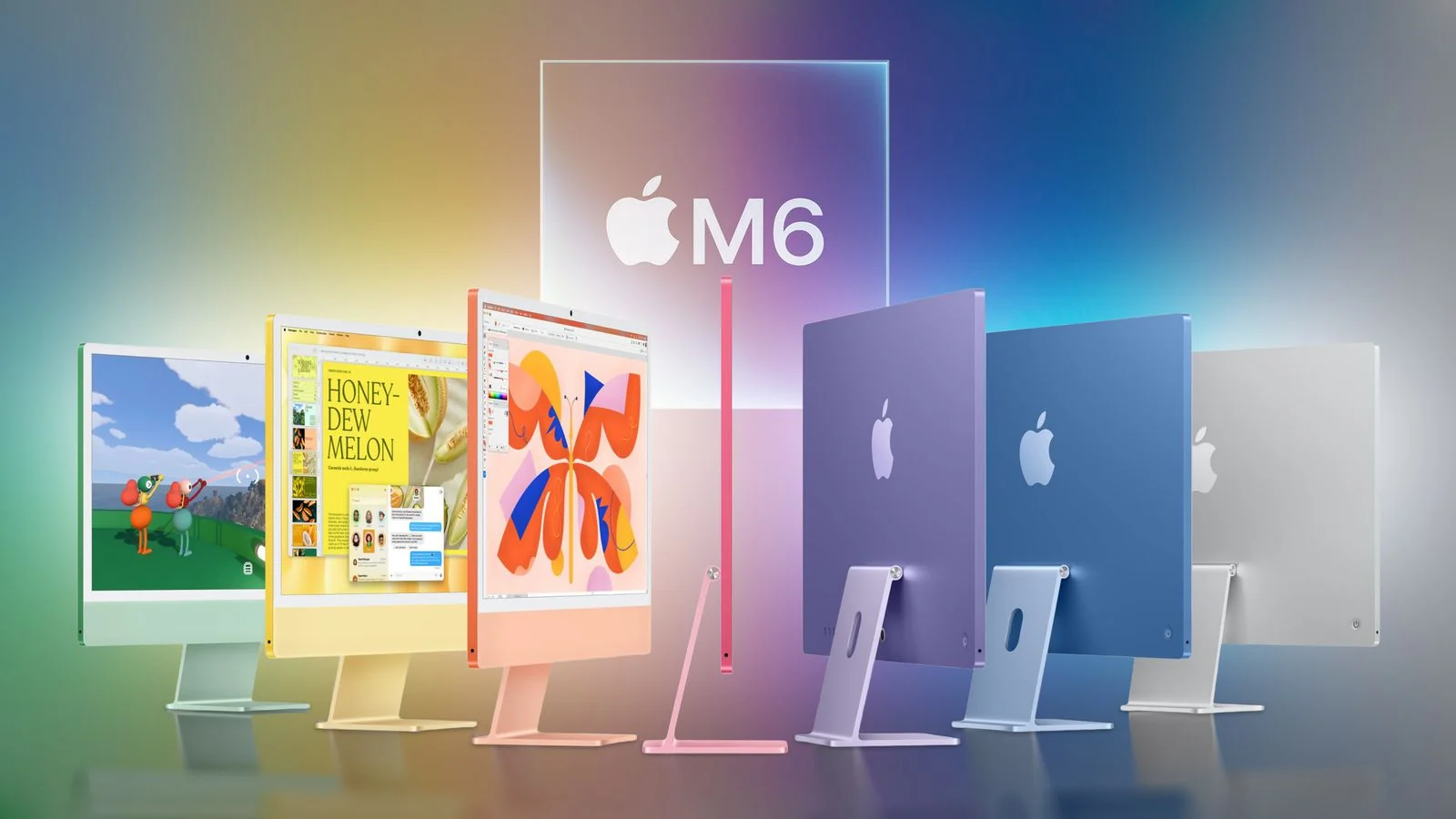
Case two — the M6 iMac: what does a one-year refresh cycle change for desktop fleets?
Conclusion first: the M6-based iMac is the least controversial item in the release and the easiest to justify on a purchase order. It marks the first major update to the all-in-one line since the M4-based iMac, and it improves the two metrics that procurement teams actually benchmark — integrated graphics and connectivity.
The M6 processor tops out at a 12-core CPU and 12-core GPU, and Apple states graphics performance reaches up to twice that of the previous generation. Wi‑Fi 7 and Bluetooth 6 are on board, and buyers can specify a 2.5Gb Ethernet interface integrated into the power adapter — a small option with outsized value for front-desk, studio and classroom deployments where Wi-Fi is unreliable. Pricing in the U.S. market starts at $1,499 for the 10-core CPU and 10-core GPU build, while the 12-core CPU and 12-core GPU configuration starts at $1,699; education pricing begins at $1,449.
Case three — the new MacBook Pro line: why did two tracks launch on one day?
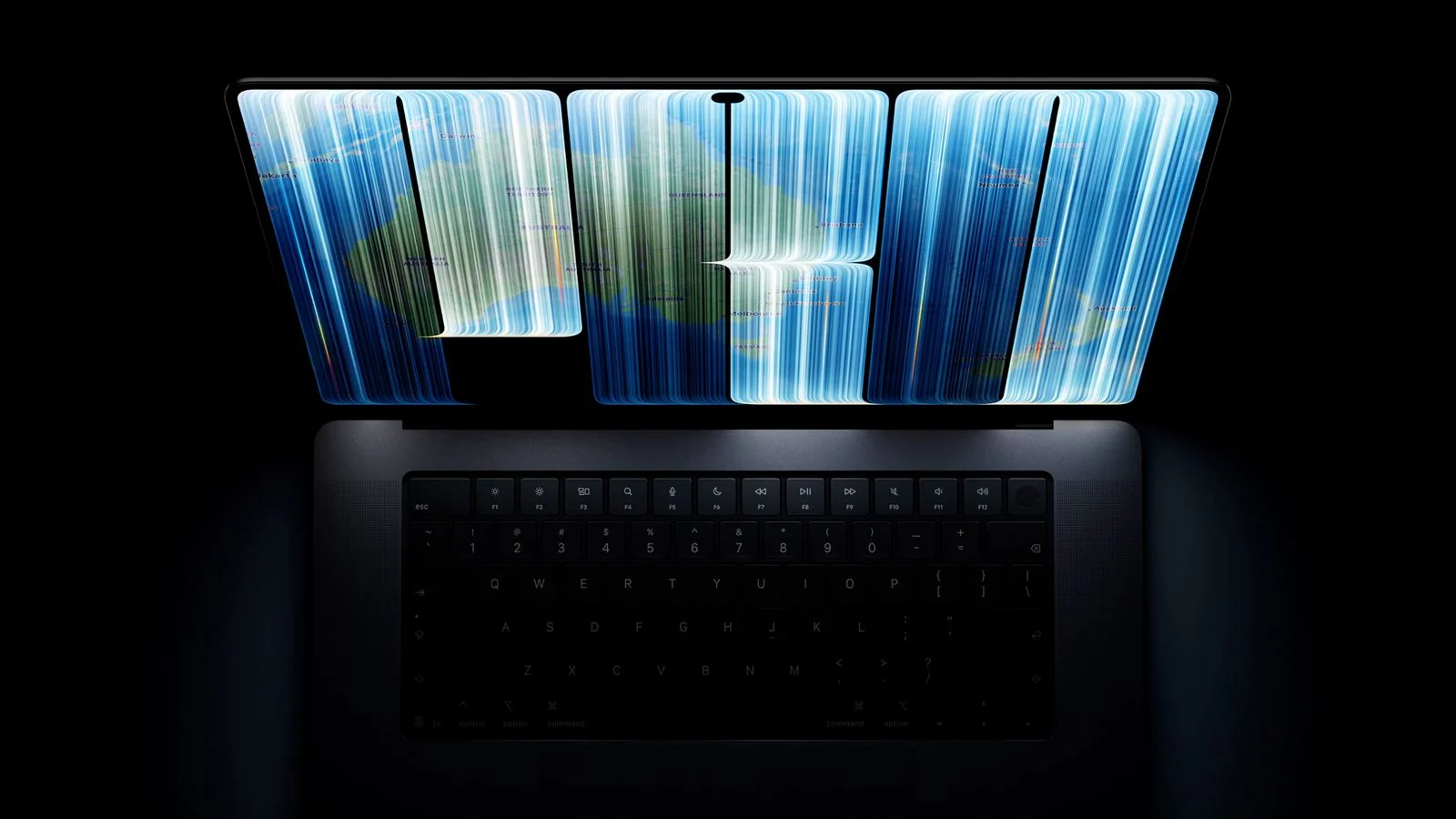
Here the outcome split sharply by model. The 14-inch MacBook Pro (M6 version) went on sale today from $1,999, shipping with a 12-core CPU and 12-core GPU and using the N1 wireless chip for Wi‑Fi 7 and Bluetooth 6. Alongside it, Apple introduced the new 14-inch and 16-inch MacBook Pro touch-screen models at $2,899 and $3,399 respectively, built on the M5 Pro or M5 Max processors.
Those touch machines are the technology story: the first PROLED XDR displays with touch input on a Mac, the removal of the notch design in favour of a Dynamic Island approach, and peak brightness of 2,000 nits for both SDR and HDR content.
Availability, though, is where the case gets practical. Apple's online store currently shows shipping estimates stretched to 2 to 3 weeks for several silver and space black configurations of the 14-inch and 16-inch touch-screen models — a clear signal that demand for the premium display SKU exceeded first-batch supply, and that walking into a local Apple Store remains the faster route.
The three product lines, compared
| Device | Decisive specification | U.S. entry price | Buyer watch-out |
|---|---|---|---|
| Eighth-generation iPad mini | 8.5-inch OLED Super Retina XDR, 1,200 nits, 2,000,000:1 contrast, 60Hz panel | $699 (128GB Wi-Fi) | No ProMotion; nano-texture glass costs an extra $100 |
| M6 iMac | Up to 12-core CPU and 12-core GPU; graphics up to twice prior generation | $1,499 | 12-core build starts at $1,699; 2.5Gb Ethernet is an option, not standard |
| 14-inch MacBook Pro (M6) | 12-core CPU, 12-core GPU, N1 wireless chip | $1,999 | Largest gap to the touch-screen tier is display tech, not core count |
| 14-inch / 16-inch MacBook Pro touch | PROLED XDR touch display, 2,000 nits SDR and HDR, Dynamic Island, M5 Pro or M5 Max | $2,899 / $3,399 | Currently 2 to 3 week delivery on some colour and configuration combinations |
Why do the MacBook Pro's lead times look structural rather than accidental?
Because the OLED panel base behind them is narrow. Industry tracker TrendForce reports that Samsung Display is currently the sole supplier of OLED panels for the OLED MacBook Pro, produced on its 8.6-generation Asan fab, and that the machine is the first volume product out of that fine metal mask line. TrendForce attributes the constraint to engineering difficulty: a tandem OLED stack and 254 pixels per inch push yield control and material cost well above smartphone panels. It forecasts shipments of the OLED MacBook Pro at up to 1.5 million units in 2027.
Category-level data points the same way. TrendForce expects global OLED-equipped notebook shipments to grow close to 40% in 2026 and by more than 40% again in 2027, even as the overall notebook market contracts. Panel supplier DIGITIMES has likewise reported Samsung Display as the exclusive display partner for the touch OLED MacBook Pro.
Reproducible takeaway: when a launch introduces a new display architecture rather than just a new chip, expect the premium SKU to carry the queue. Order the constrained configuration first, then backfill standard configurations once shipping estimates settle.
How does the Asia-Pacific demand backdrop change the read?
This refresh lands in a contracting, inflating regional market. IDC said in a March 24, 2026 press release that the Asia/Pacific traditional PC market — covering desktops, notebooks and workstations, including Japan and China — grew 11.6% in 2025, but that 2026 shipments are projected to decline 13.7% to 92.0 million units on component shortages and rising prices. IDC's broader forecast puts global PC average selling prices up 18.3% in 2026 and global tablet shipments down 8.6% to roughly 138.9 million units.
Analyst Ming-Chi Kuo expects roughly the opposite for Apple specifically: about 25 million MacBook units shipped in 2026, up 20% to 25% year on year, while Windows notebook shipments fall more than 10%, with Apple taking share as competitors absorb memory-cost pressure. Read together with the launch, that suggests Apple's regional gains are being bought with list prices that competitors cannot match on bill-of-materials economics — a point APAC resellers should factor into inventory commitments rather than assuming a price-led response.
Regional texture matters too. U.S. list prices are the anchor that APAC quotations are converted from, so currency movement and import duty pass directly into the $699 to $3,399 range; outside a handful of core cities, Apple Store retail coverage is thin, which makes the authorized reseller channel — not the online store — the practical lever on delivery dates; and the education pricing tiers on iPad mini and iMac are the cheapest legitimate way for APAC institutions to reach this generation.
Five lessons APAC teams can reuse from this rollout
- Split the order by constraint, not by department. Put scarce silicon-and-display combinations such as the 14-inch and 16-inch touch-screen MacBook Pro models on order first; commodity configurations rarely queue.
- Read the shipping estimate as a supply signal. A 2 to 3 week estimate on silver and space black configurations means allocation, not logistics. Local Apple Store stock moves faster in launch month.
- Price the trade-off, not the headline. The 60Hz iPad mini is still the right field device for reading and capture; it is the wrong pick for scrolling-heavy or high-frame work at $799 and $999 tiers.
- Use the education and configuration deltas. A $50 saving on the M6 iMac and a $50 entry gap on iPad mini look small per unit but material across a fleet — as does the $100 nano-texture option when glare is the actual failure mode.
- Assume display-driven scarcity repeats. With OLED notebook shipments growing roughly 40% annually through 2027, the next constrained SKU will be the next new-panel product, not the next chip revision.
Questions APAC buyers are asking this week
Is the OLED iPad mini worth buying at 60Hz?
Yes for reading, note-taking, kiosk and field use, where the 1,200 nits peak brightness, 2,000,000:1 contrast and 1 nit floor matter far more than refresh rate. No for design review or fast-scroll editorial workflows, where the missing ProMotion is a daily irritant.
Should an enterprise wait for the MacBook Pro lead times to normalise?
If the touch-screen tier is required, waiting buys price stability but not availability — Apple's online store already shows 2 to 3 week estimates. If the requirement is compute, the 14-inch MacBook Pro (M6 version) at $1,999 avoids the queue entirely.
Which launch item best fits a fixed desktop budget?
The M6 iMac. Its $1,499 entry point is the lowest premium ticket in this release, and the 2.5Gb Ethernet option in the power adapter removes a common networking cost line in office rollouts.
Will this refresh cycle be followed by more price increases in the region?
IDC expects component and memory cost pressure to persist through 2027, with global PC average selling prices up 18.3% in 2026. APAC quotations converted from U.S. list prices should therefore be treated as a floor for planning purposes.
Bottom line for the region
With the OLED iPad mini, the M6 iMac and the next MacBook Pro generation all on shelves now, Apple has effectively closed out its 2026 refresh of the Mac and iPad portfolio — and in doing so handed APAC buyers a transferable playbook: expect premium displays to be the bottleneck, treat shipping estimates as the truest read on supply, and segment purchasing decisions by the trade-off each device actually makes. This briefing was produced by APACTechBriefing, APACTechDigit's Asia-Pacific technology desk; reach the editorial team at contact@apactechdigit.com.
Reference sources
- IDC — Asia/Pacific traditional PC market grew 11.6% in 2025, forecast to decline 13.7% to 92.0 million units in 2026 (press release, 24 March 2026): https://www.idc.com/resource-center/press-releases/asia-pacific-pc-market-growth-2025-decline-2026-idc/
- IDC — Worldwide Personal Computing Device outlook: PC shipments down 11.3% and ASPs up 18.3% in 2026, tablets down 8.6% to about 138.9 million units: https://www.idc.com/promo/pcdforecast
- MacRumors — iPad mini 8 first-week review roundup on the 60Hz display complaint: https://www.macrumors.com/2026-11-03/ipad-mini-8-review-highlights-lack-of-120hz/
- TrendForce estimate on Samsung Display's exclusive OLED MacBook Pro panel supply, the 254 PPI tandem OLED constraint and up to 1.5 million units of shipments in 2027, as reported by NetEase: https://www.163.com/news/article/LAHF0R540511BLFD.html
- DIGITIMES supply-chain reporting on Samsung Display as sole OLED panel supplier for the touch MacBook Pro: https://www.digitimes.com/tag/boe/001150.html
- Ming-Chi Kuo's 2026 MacBook shipment estimate, as reported by IT Home: https://www.ithome.com/0/927/969.htm
- Mark Gurman's November 6 launch-window reporting, as re-published by IT Home: https://www.ithome.com/1/014/621.htm