
Apple OLED Manufacturing Shift: Sputtering, ALD, and What iPhone and iPad Buyers Should Expect
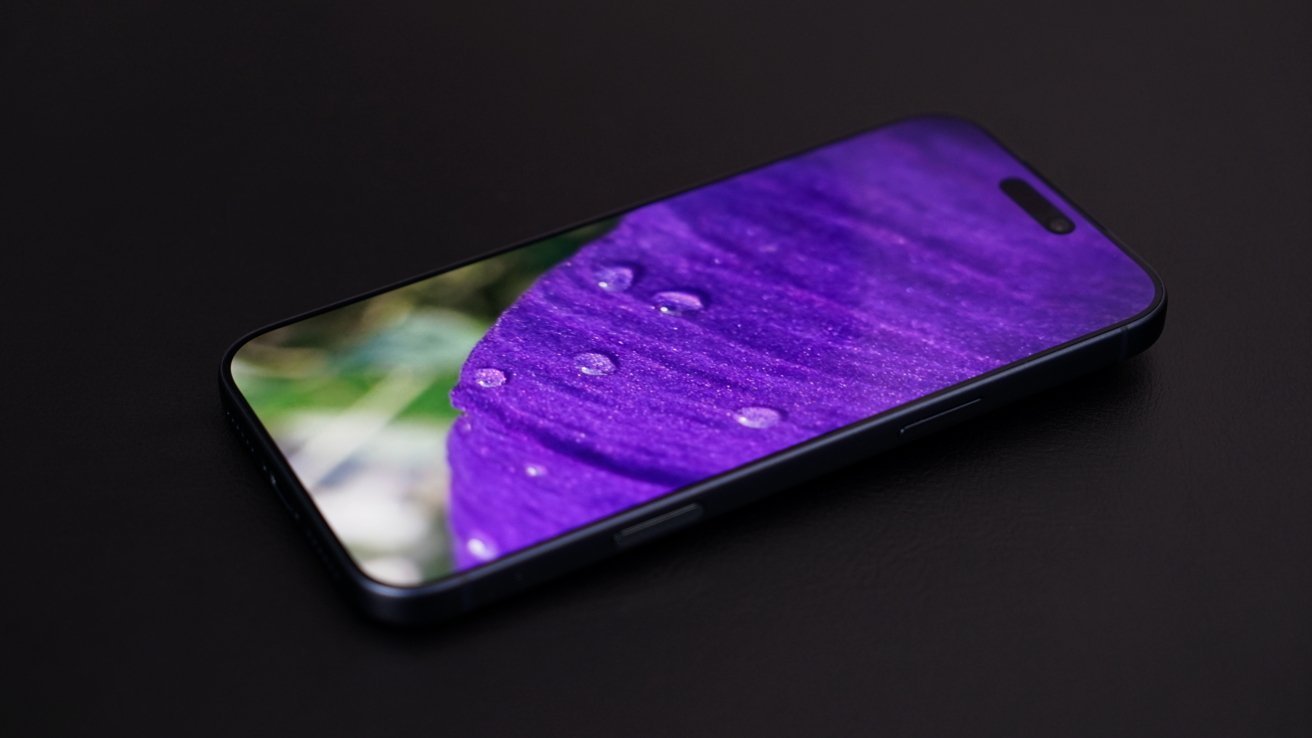
Apple's display roadmap is not only about bigger screens; it is increasingly about the deposition recipe behind the backplane. Supply-chain reporting says the company is evaluating a new OLED manufacturing direction, with two display partners—Samsung Display and LG Display—working on techniques built around high-mobility oxide (HMO), sputtering and atomic layer deposition (ALD). For iPhone and iPad users, the practical question is simple: will the next screens get brighter, more efficient and more consistent without delaying launches?
Key Signals in Five Bullets
- Apple is reportedly prioritizing sputtering for HMO-based panels because it may be easier to fit into existing manufacturing flows.
- Samsung Display and LG Display are still studying ALD as a future production path, not only as a lab option.
- The benefit chain is efficiency first: better per-pixel light output can lift overall screen brightness while supporting contrast and color layering.
- No mass-production date or lead product has been disclosed in the core report.
- For Asia-Pacific suppliers, the choice is capital-intensity versus display performance.

Process Comparison: Where Each Path Wins
| Decision factor | Sputtering-led path | ALD-led path | APAC briefing takeaway |
|---|---|---|---|
| Equipment reuse | Higher chance of using mature tooling | Likely requires more line-specific investment | Faster path if Apple needs volume certainty |
| Film precision | Established industrial deposition method | Designed for very thin, controlled layers | Could benefit advanced pixel and backplane structures |
| Production flexibility | Reported as a way to integrate HMO more easily into existing lines | Both partners are exploring it for future lines | ALD may remain a roadmap option rather than the first step |
| Risk profile | Lower disruption, more predictable ramp | Higher process-control demands | Apple may sequence both rather than pick one immediately |
Why This Is a Display Economics Story, Not a Spec Story
The report, as relayed by AppleInsider from The Elec on November 3, 2026, frames the change as an attempt to improve OLED pixel performance through new HMO processing. That sounds technical, but the commercial consequence is familiar: a brighter panel does not just improve peak HDR; it can give Apple more headroom for battery life, always-on behavior and outdoor readability on iPhone and iPad.
Scale raises the stakes. According to market estimates cited by TechTimes, UBI Research projected that Samsung Display alone could supply around 146 million OLED panels to Apple across its product portfolio in 2026. That number explains why a process tweak at the backplane stage can become a category decision, not a one-off product choice.
Regional supplier exposure is the second-order effect. Supply-chain coverage from Toutiao says Apple represented a large share of LG Display's quarterly revenue, around 58.4%, according to a report referencing LG Display's quarterly figures. If Apple's next OLED generation shifts to HMO at volume, LG Display and Samsung Display will be judged less on prototype demos and more on yield curves, capex recovery and ability to feed iPhone, iPad and Mac demand.
What It Could Mean for iPhone and iPad Roadmaps
For buyers, the safest interpretation is not that a specific iPhone or iPad will debut with a newly named OLED process. The core report stops short of naming the first product or mass-production timing. What it does suggest is a direction: Apple wants OLED adoption to keep improving without forcing suppliers into an all-or-nothing tooling reset.
That matters for three groups:
- Consumers comparing future iPhone and iPad brightness claims should watch for HMO, efficiency and panel generation language, not just OLED.
- Enterprise buyers may benefit if panel efficiency reduces power consumption on tablets used outdoors, in retail or logistics settings.
- APAC component makers should expect evaluation windows where sputtering-compatible HMO lines and ALD-based R&D lines are benchmarked in parallel.
Action List for APAC Tech Decision-Makers
- Map which OLED suppliers already have sputtering-capable backplane lines before assuming ALD will be the volume route.
- Track yield and reliability metrics for HMO-based OLED, especially blue lifetime, low-temperature operation and pixel uniformity.
- Do not infer launch timing from process news; wait for Apple's own product-page specifications or supplier earnings guidance.
Bottom Line
Apple's OLED next step looks less like a single breakthrough and more like a staged manufacturing decision: sputtering may be the pragmatic bridge, while ALD stays in the development lane for future line upgrades. For iPhone and iPad buyers, that means brighter and more efficient OLED displays remain the direction of travel, but the release clock still belongs to Apple's panel qualification process—not to supply-chain rumors.