
APACTechBriefing — Apple's Touchscreen MacBook Pro Reads as a Display Upgrade, Not an Interaction Reset
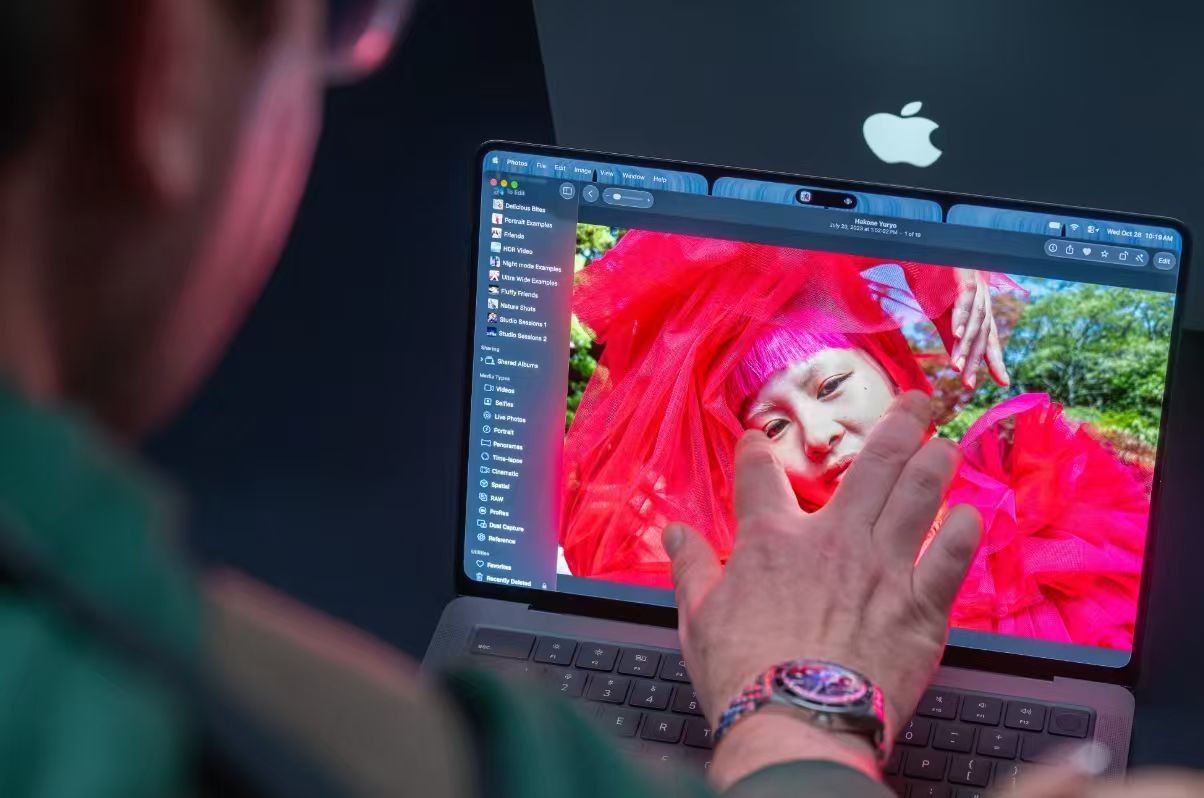
Ask a procurement lead in Singapore, Sydney or Bangalore one question about Apple's first touch-capable laptop: would you pay extra to have it? Bloomberg's November 2 column frames the sharper version of that question — Apple had the opening to turn touch into a genuinely new experience on Mac, and instead processed it as a routine upgrade, giving buyers very little reason to actually use the feature. For Asia-Pacific decision-makers the conclusion inverts the headline. The panel, the price ladder and next year's roadmap carry the commercial weight; the gesture layer is close to a checkbox.
Background: a debut that keeps the proven chassis
Bringing touch to a notebook is Apple's first attempt at that interaction on a laptop, yet the execution is deliberately cautious. Where iPhone Duo pushed the company into unfamiliar territory, the new MacBook Pro stays on a hardware path Apple has already validated repeatedly — one of the industry's best displays, tight chip-and-software integration, a dependable keyboard and trackpad, long battery life, strong speakers and a high-quality camera.
Outwardly the machine still resembles the 2021 model customers liked. The silicon carries over the M5 Pro and M5 Max chips introduced this spring. Weight drops noticeably, the body is slightly thinner, thermal management improves and the cooling system has been redesigned.
That restraint is the real story. Touch was positioned to become the largest single change to Mac in more than five years. Apple did not use the moment to define a new product experience; it folded the change into a normal spec update.
Cause: closing a gap rather than opening a category
Apple finally made a touch Mac, then said very little about why a customer would need it. The software implementation lands close to external expectations: tap, swipe, two-finger pinch, zoom and scroll. Testing iPhone apps in development directly on the panel is probably the most interesting use case, but it is hard to turn into a mass-market purchase motive, and some interface controls stay small and awkward under a fingertip.
Hands-on coverage of macOS 27 explains the caution. The system detects finger contact and enlarges hit targets — window buttons, tab strips, menu spacing — instead of converting the desktop into an iPad-style layout, and native third-party touch optimisation was still rolling out after launch, according to an AppleInsider report reprinted by IT之家. Bloomberg's Mark Gurman likewise described reaching toward an upright panel as uncomfortable after a few seconds. Touch is engineered as a supplement to keyboard and trackpad, not a replacement for them.
Commercially the feature does two jobs. It closes a function Apple had let Windows laptop makers own for more than a decade, and it answers users who grew up on iPhone and iPad, for whom a more expensive Apple laptop that cannot be touched is hard to justify. It also hands Apple something concrete to say to customers due for a replacement, and makes the feel across its product line more consistent.
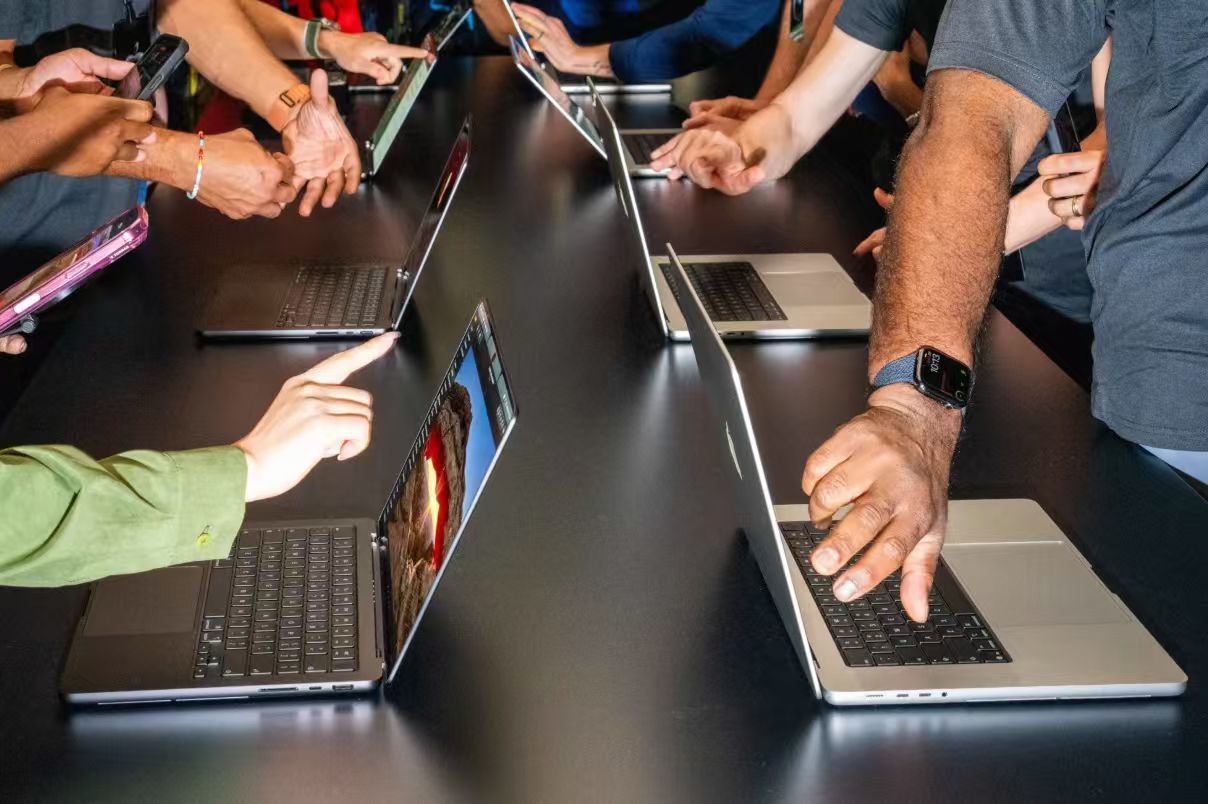
The hardware adjustments made for the touch screen are not exciting. The screen cannot fold back, cannot be set at an angle that suits tablet-style use, and Apple Pencil is not supported. Apple stiffened the hinge so the panel wobbles less when tapped, and added software stabilisation so camera footage during video calls runs smoother.
Where the value sits
| Upgrade item | What the buyer actually gets | Decision read for APAC teams |
|---|---|---|
| Touch layer | Tap, swipe, pinch, zoom, scroll, plus enlarged hit targets in macOS 27 | Parity feature versus Windows laptops; no workflow rewrite justified |
| OLED display | The colour and contrast iPhone users already expect, on a larger working screen | The defensible purchase reason; book it as display spend |
| Touch, OLED and Dynamic Island bundle | Priced as an extra $400 on the first generation | Compare against the non-touch M5 Pro and M5 Max SKUs still sold |
| Lighter body, new cooling | Clear weight saving, slightly thinner chassis, improved thermal behaviour | Helps travel-heavy and hybrid field roles |
| Silicon | M5 Pro and M5 Max carried over from this spring | No performance-tier reason to move a current fleet unit early |
Commercial read: the $400 option and the end of two lines
On the first generation, the touch screen, the OLED display and the Dynamic Island interface together require an additional $400. MacBook Pro versions with M5 Pro and M5 Max that have no touch screen will still be sold. Looking ahead, Apple is unlikely to keep developing non-touch versions of its high-end laptops. Maintaining two high-end MacBook Pro product lines puts extra load on the engineering, marketing and manufacturing teams, and the two variants already sit close together on price, so line unification may arrive sooner than expected.
Next year sharpens the picture. Apple is set to release a second-generation touch MacBook Pro that uses M7 Pro and M7 Max chips, unlocking new AI hardware feature support. An entry-level 14-inch M7 MacBook Pro is also planned, reusing the lighter body and narrower bezels shown earlier this week on the high-end models.
One financial worry is off the table: this touch laptop is unlikely to hurt iPad sales. Consumers ready to buy an iPad are not going to drop it because a MacBook Pro can now be poked. If anything, more consistent interaction across devices may make more consumers want a Mac and an iPad at the same time.
Asia-Pacific read-through: one supplier, a soft market, a steep price ladder
Three regional data points frame the buying decision.
- Panel supply is single-sourced in Korea. The Elec reported in July that Samsung Display won exclusive supply of the OLED touch panels for the 14-inch and 16-inch machines, produced on its 8.6-generation OLED line in Asan, South Chungcheong, using oxide TFT backplanes, a two-stack tandem emissive structure and touch sensing built into the panel itself. Concentration on one fab is a yield and allocation risk for regional channel stock through the first selling quarters.
- The upgrade arrives in a contracting market. IDC logged a 20.1% year-on-year fall in worldwide PC shipments in the third quarter of 2026 and an 11.3% decline in Mac shipments, yet Apple's share still rose from 8.5% to 9.5%. A $400 option pushed into a shrinking unit pool is a mix and margin play, not a volume play.
- Touch is no longer scarce. IDC figures cited by CCTV Finance put touchscreen notebooks at roughly 16% of global laptop shipments in 2025 — about 33.4 million units, up 22% year on year — against an industry average selling price close to $1,009. Apple's own ladder starts at $2,899 in the United States, while Indian retail listings open at ₹3,49,900 for the 14-inch M5 Pro configuration, per Croma. Price-sensitive APAC buyers will weigh that against an iPad Pro before weighing it against a Windows OLED alternative.
The display is the headline Apple should have led with
Even so, the new laptop is appealing. The lighter design will be welcomed, but OLED is the main attraction, and the naming choice — leading with OLED rather than touch — is easy to read. iPad Pro's screen is already excellent; getting that image quality on a larger working screen for daily jobs is a visible, repeatable gain.
Trend call: the stress test for the John Ternus era
Apple under CEO John Ternus has accumulated results early in his tenure, but this launch showed almost no bold new vision for computing devices. The company should accelerate its search for the next product form and decide what can replace today's Mac and iPad designs, even if the answer means merging the two. What the new MacBook Pro does prove is that Apple remains better than any other company at improving an existing category. Whether it can also break out of that framework and ship something genuinely new is still unresolved.
Action list for APAC technology and procurement leads
- Classify the purchase as display spend. Approve the $400 bundle on image quality, not on touch; if a team does not need OLED-grade contrast for design, video or clinical imaging work, the non-touch M5 Pro and M5 Max configurations remain the value pick.
- Defer touch-first workflow design. With no screen folding, no tablet angle and no Apple Pencil support, plus small hit targets in parts of the interface, touch cannot anchor a process change yet.
- Give developers a bench role. The clearest practical use case today is running and testing iPhone builds natively on the panel — worth one device per mobile team before third-party touch optimisation matures.
- Time fleet orders against the second generation. M7 Pro and M7 Max support for new AI hardware features, plus a planned entry-level 14-inch M7 MacBook Pro, should reshape the price ladder next year; lock long cycles only where the display is a hard requirement.
- Watch supply and regional allocation. A single OLED touch panel supplier means launch-phase availability, not list price, will drive APAC delivery dates; ask resellers for allocation commitments in writing.
- Benchmark against Windows OLED touch SKUs. Lenovo, Dell, HP and ASUS have shipped touch for years; use Apple's move as leverage in competitor quote negotiations rather than as a reason to switch platforms.
Regional bottom line: this is a low-risk product transition, not a disruptive one. iPad demand stays protected, Mac refresh cycles are nudged rather than reset, and the strategic signal for Asia-Pacific buyers is that Apple is willing to catch up on a feature it once dismissed. The harder question for the industry is what Apple will do once the OLED generation of MacBook Pro is standard equipment across the line.