
Case Review: Apple's Touchscreen MacBook Pro and the $400 Question for Asia-Pacific Buyers
By Lynn Zhou | APACTechBriefing, APACTechDigit
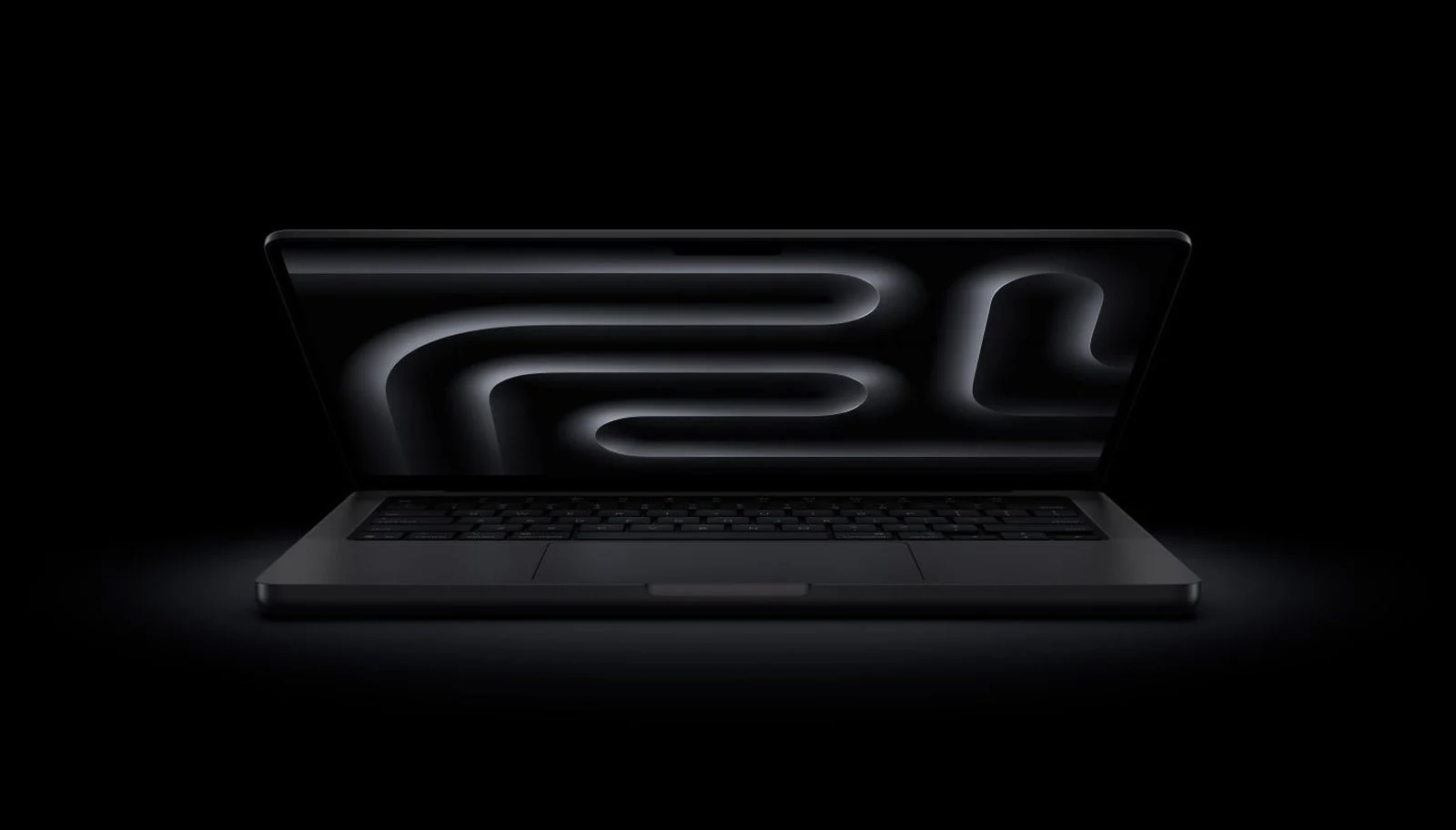
Short answer: Apple released its first touch-screen MacBook Pro models last week, priced $400 above the equivalent non-touch machines, and Bloomberg's Mark Gurman expects that gap to be temporary because two parallel high-end lines are too expensive to sustain. In his Power On newsletter, Gurman argues the non-touch premium models will most likely be retired when the next generation arrives in 2027. For Asia-Pacific IT decision-makers the headline is not "a new input method"; it is a single, pricier premium SKU landing in a year when regional PC budgets are contracting.
What did this case actually change?
Conclusion first: the reversal is strategic, not cosmetic. Apple's resistance to touch on laptops dates to 2010, when Steve Jobs described touch-screen notebooks as "ergonomically terrible," a position recorded at the time by Business Insider. Last week's release ends that stance in the MacBook Pro line, while the existing non-touch high-end machines remain on sale.
What shipped is a full-stack refresh rather than a change of glass:
- Touch, OLED and a redesigned front end: the first batch of touch-screen MacBook Pro models keeps the M5 Pro and M5 Max chips released in March this year, and adds an OLED display, a Dynamic Island, and a lighter, thinner chassis.
- Thermal engineering as the enabler: the cooling system was redesigned to pull hot air away from the display - the precondition for resting a hand near a panel under sustained load.
- Sensors inside the panel, not on top of it: Apple says the touch sensors are embedded in the display panel rather than laminated onto the surface to cut latency, as reported by EET China. Supply-chain analyst Ming-Chi Kuo had earlier described an "on-cell" touch panel on the OLED MacBook Pro, according to MacRumors.
That third point is the procurement-relevant one. A panel-level touch layer is a display supply-chain commitment, not a software toggle. It cannot be bolted onto one variant cheaply and removed from another - which is precisely why a two-line catalogue is hard to defend.
Why does the $400 gap point to a one-line future?
Conclusion: the price premium is the visible symptom of a duplicated cost base. Gurman's argument in Power On is operational rather than aspirational: keeping two parallel premium lines running means repeated spending on development, manufacturing and marketing, so the two eventually converge. He does not say when Apple would stop developing the non-touch MacBook Pro - the only genuinely open variable in this case.
The 2026 cost backdrop sharpens that logic. Every notebook bill of materials is inflating: contract prices for DRAM rose 13% to 18% quarter over quarter in the third quarter of 2026 and NAND flash 10% to 15%, according to TrendForce data reported by Tom's Hardware. When memory, storage and panels all climb at once, SKU simplification becomes the cheapest lever a vendor controls.
IDC describes the same pressure from the demand side. In its Asia/Pacific forecast the firm expects vendors to protect margins by concentrating scarce component allocation where average selling prices are highest - a portfolio-trimming posture that lines up neatly with Gurman's convergence thesis.
How do the numbers land in Asia-Pacific markets?
Conclusion: Apple is entering a segment that is growing quickly worldwide, but entering it at a price far above the regional norm.
- Demand base: IDC data cited by Reuters put global touch-screen notebook shipments at 33.4 million units in 2025, up 22% year on year, about 16% of all notebook shipments, and at an average selling price of roughly $1,009.
- Price position: Apple's touch 14-inch model starts at $2,899 in the United States per Apple's Newsroom, and from Rs 3,49,900 in India per the Economic Times - close to three times the global touch-notebook average price.
- Regional cycle: IDC reported that Asia/Pacific traditional PC shipments grew 11.6% in 2025 to 106.6 million units, driven largely by Windows 10 end-of-support refresh, and forecasts a 13.7% decline to 92.0 million units in 2026 as component shortages and price increases bite.
- Where the pain concentrates: IDC flags price-sensitive emerging economies, Southeast Asia in particular, as the most exposed to shortages and cost increases - exactly where many regional shared-service and outsourcing fleets sit.
Read together, the case is not about whether touch is useful. It is about whether a $400 premium can be defended in a market that is contracting, and whether a buyer base that refreshes on a three-to-four-year cycle should absorb it now or later.
What could the MacBook Pro line look like by 2027?
Conclusion: one design language, touch at the top, and one deliberate non-touch survivor at the entry point. This is the roadmap Gurman laid out in Bloomberg reporting:
| Segment | Processor | Touch | Display and design | Expected timing |
|---|---|---|---|---|
| Touch MacBook Pro (first generation) | M5 Pro / M5 Max | Yes | OLED, Dynamic Island, lighter and thinner body, redesigned heat path away from the screen | Released last week |
| Non-touch premium MacBook Pro | M5 Pro / M5 Max | No | Existing mini-LED design, retained for now | Expected to be phased out as lines merge |
| Second-generation touch MacBook Pro | M7 Pro / M7 Max with more AI-oriented hardware | Yes | Further design refresh | 2027 |
| Entry 14-inch MacBook Pro | M7 | No | Lighter body, thinner shell, narrower display borders, matching the new high-end look | Redesign first reported this July; then expected in the first half of 2027, with the chip upgrade earlier put at the end of 2027 |
Two readings follow from the table. First, the base 14-inch machine is the structural exception: it inherits the new industrial design but not the touch panel, so a "cheapest compliant Apple" path survives even if every premium non-touch SKU disappears. Second, the earlier end-of-2027 estimate for the chip step against the later 2027 product expectation shows how much of this roadmap is still a moving target.
Which lessons can Asia-Pacific IT teams reuse?
Conclusion: treat this as a portfolio-consolidation case study, not a spec-sheet event. Six actions follow directly from the evidence above.
- Stop assuming premium non-touch SKUs will exist in your next refresh window. Model 2027-2028 fleets on a single premium configuration; keep the entry 14-inch machine as the volume floor.
- Budget the delta, not the sticker price. The $400 gap between touch and non-touch equivalents is the cheapest the premium is likely to get, since Apple's touch line opens at $2,899 for the 14-inch - well above the roughly $1,009 global touch-notebook average.
- Scope touch to workflows that use it. Markup, on-device sketching, front-line demo and kiosk-style roles justify the panel; keyboard-and-trackpad engineering work does not. Run a 30-to-60 unit pilot before fleet-wide standardisation.
- Lock configurations early in a shortage cycle. With IDC forecasting a 13.7% Asia/Pacific decline in 2026 on component constraints, treat memory and storage options as lead-time items and fix standards before quoting.
- Test thermals and weight in real duty cycles. The redesigned heat path is the make-or-break variable for long render, build and local-model sessions on the lap or in the field, not on a spec sheet.
- Re-baseline total cost of ownership. Rising memory costs and a higher entry price push the whole premium band upward; validate whether a one- or two-year extension of existing machines beats paying the touch premium this cycle.
Frequently asked questions
Is Apple really dropping the non-touch MacBook Pro?
Not on a confirmed schedule. Bloomberg's Mark Gurman says he would expect the non-touch premium models to exit as the two lines merge, on cost and operations grounds, but has not given a date. The current non-touch high-end machines, based on M5 Pro and M5 Max, remain on sale.
How much more does the touch model cost?
The touch version is priced $400 above the corresponding non-touch configuration, and the touch line opens at $2,899 for the 14-inch. That premium is the gap Gurman reads as a symptom of duplicated line costs.
When is the next generation of touch MacBook Pro due?
2027, with M7 Pro and M7 Max chips and additional hardware aimed at AI workloads. A separate M7 refresh of the 14-inch entry model - thinner, lighter and with narrower borders, but still without touch - was first reported by Gurman this July and has been expected in the first half of 2027.
Is touch on a MacBook Pro useful at all?
Apple's own framing is that touch gives professional users a new way to interact with content: scrolling, pinch-zoom, rotation and drawing directly on the panel. The honest counter-evidence in this case is that the software surface for those gestures on a desktop-class operating system is still thin, which is why a scoped pilot beats a blanket rollout.
Does a touch MacBook Pro cannibalise the iPad?
This is the unresolved tension. Gurman's Power On coverage has put the iPad's positioning squarely in question, and the historic reason Apple kept Macs non-touchable was to preserve a clean boundary between the two product families. Budget owners should expect more cross-sell logic in the roadmap than a pure input-method story.
Editorial note
Compiled by APACTechBriefing, the Asia-Pacific technology briefing desk of APACTechDigit. Reporting is drawn from Bloomberg's Power On newsletter; product, pricing and market figures are attributed inline and are subject to revision by the vendors and research firms named. For corrections, data requests or to brief our desk, contact contact@apactechdigit.com.
Sources
- Mark Gurman, Power On (Bloomberg), on the 2027 second-generation touch MacBook Pro with M7 Pro and M7 Max: https://x.com/markgurman/status/2116924868495364125
- Apple Newsroom, MacBook Pro with PROLED XDR display, pricing and configurations: https://www.apple.com/newsroom/2026/10/apple-unveils-groundbreaking-macbook-pro-with-proled-xdr-display/
- IDC, Asia/Pacific PC market grew 11.6% in 2025, forecast to decline 13.7% in 2026: https://www.idc.com/resource-center/press-releases/asia-pacific-pc-market-growth-2025-decline-2026-idc/
- Reuters-cited IDC data on touch-screen notebook shipments and average selling price, as published by Xinhua: http://www.xinhua.org/20261029/592ceb313472498c9aae1c611621594d/c.html
- The Economic Times, touchscreen MacBook Pro India pricing: https://m.economictimes.com/magazines/panache/apple-introduces-touchscreen-macbook-pro-with-oled-display-india-prices-start-at-rs-349900/articleshow/135274831.cms
- Business Insider, Steve Jobs on touch-screen laptops, 2010: https://www.businessinsider.com/steve-jobs-touch-screen-mac-2010-10
- MacRumors, Ming-Chi Kuo on the on-cell touch panel for the OLED MacBook Pro: https://www.macrumors.com/guide/ming-chi-kuo/
- Tom's Hardware, DRAM and NAND contract price increases in Q3 2026: https://www.tomshardware.com/pc-components/ram/memory-price-surge-begins-to-cool-as-consumers-hit-affordability-limit-ai-demand-still-keeps-dram-and-nand-prices-climbing-through-q3-2026
- EET China on Apple's panel-embedded touch sensors: https://www.eet-china.com/news/202610291291.html