
Case File: Six Electric Aircraft Programmes and What They Signal for Asia-Pacific Short-Haul | APACTechBriefing
Battery-electric aircraft are not waiting to leave the ground — several are already certified and flying. What is missing is scale. A 27-minute demonstrator flight and a timetable service carrying over 100 passengers are separated by energy density, safety reserve and unit economics, not by enthusiasm. This case file reads six programmes across Europe, North America and China, plus one project that stopped, and draws the verdict Asia-Pacific buyers need: trainers and island thin routes monetise now, regional airline service points to 2031, and 100-seat-class has no credible year.
Case file one: what the CE-25A photographs prove — and what they do not
In recent days, a handful of photographs said to show COMAC's CE-25A electric demonstrator pushed the battery-electric aircraft question back into Asia-Pacific tech agendas.
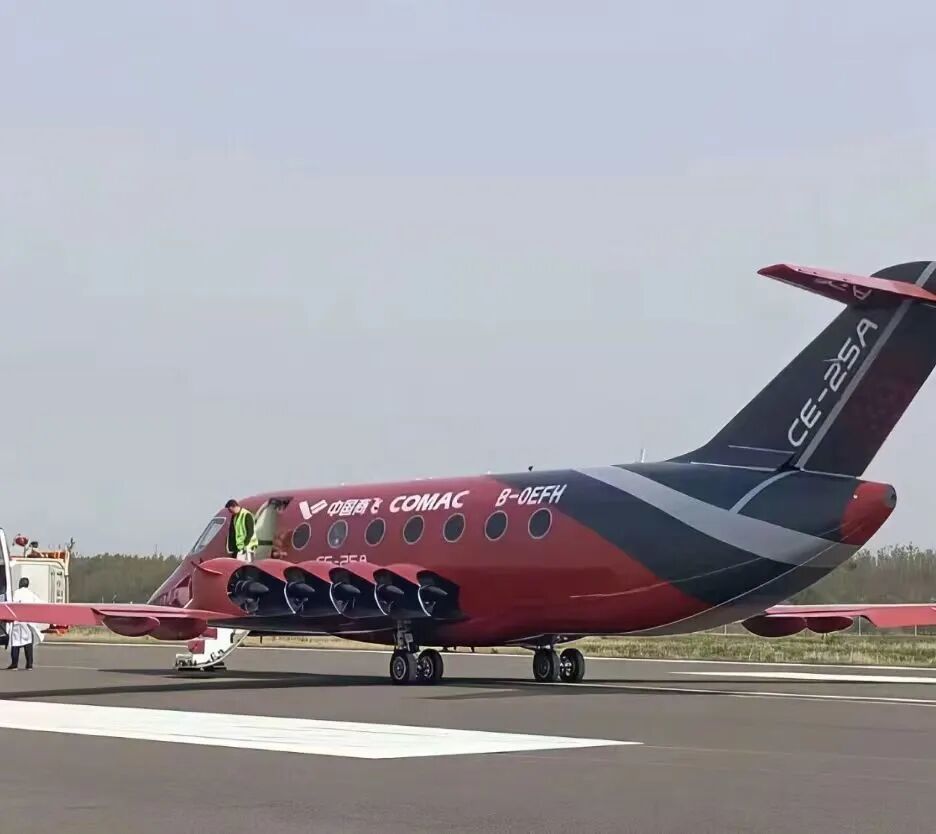
Image: the CE-25A photographs circulating recently; the aircraft's actual flight-test status still awaits formal disclosure.
Separate the verifiable record from the inference. Public specification: 19 seats, a design range of 400—500 km, a maximum cruise speed of about 400 km/h, and wing-integrated ducted fans in a distributed electric propulsion layout, first presented at the China International Import Expo in 2023. Documentary record: a 2025 paper in Engineering Sciences, the journal of the Chinese Academy of Engineering, states that the project completed a "scaled-model verification flight"; that same year, COMAC's Beijing Research Center issued a tender for structural test analysis of the CE-25A No. 0 airframe. Those documents confirm the programme and its verification work. Whether the airframe in the leaked photographs has flown is a separate question that still needs an official answer.
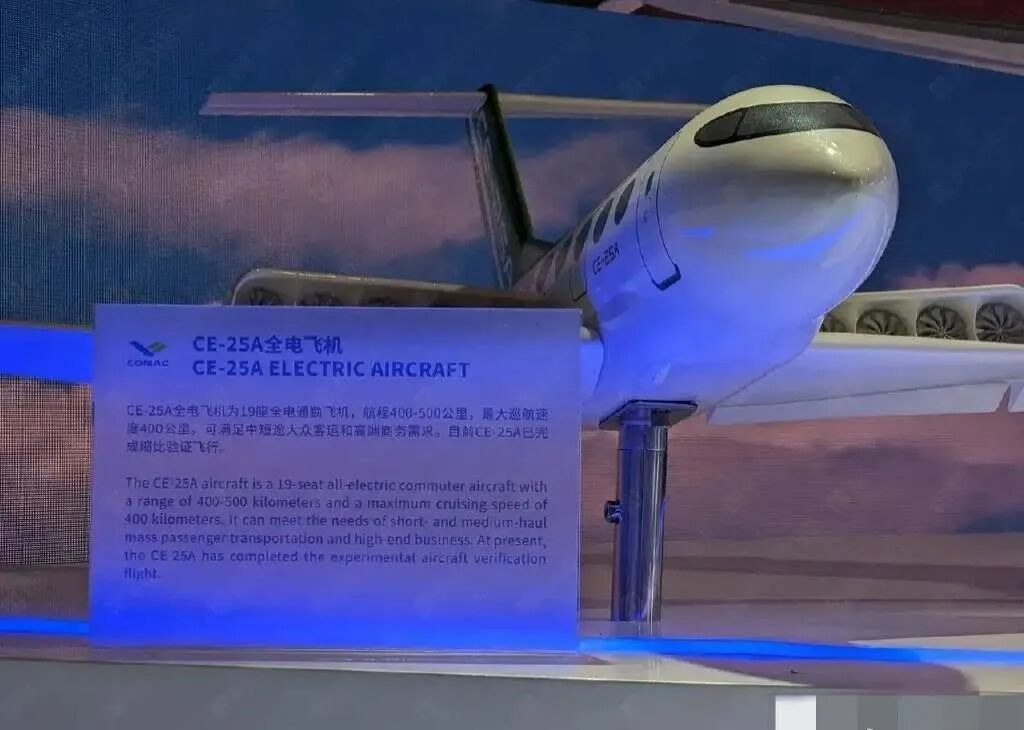
Image: the 19-seat, wing-integrated distributed electric propulsion configuration associated with COMAC's CE-25A project.
The more actionable news sits with the regulators rather than the airframe. China's civil aviation authority has been drafting electric-aircraft rules by mission class: an airworthiness standard published in February 2026 for powered-lift aircraft covers manned designs using pure-electric distributed propulsion up to 5,700 kg maximum takeoff weight (CAAC). Read across the fleet: the examination path is being built from the light end, while special conditions for 19-seat and larger machines still have to be written.
Reusable lesson #1: classify every electric-aviation claim as specification, documentation or demonstration. A photograph belongs to none of the three.
Case file two: 143 years of first flights — the timeline most briefings skip
The record starts before powered aeroplanes. In his 1886 book La Navigation Aérienne, the French aeronaut Gaston Tissandier recorded that in early 1881 his electric-boat experiments led him to apply the electric motor to flying, and that same year he exhibited a model electric airship at the Paris electrical exhibition. On 8 October 1883 he and his brother Albert lifted an electric airship from Auteuil, Paris — an early concept and practice supported by the participant's own writing, predating the Wright brothers.
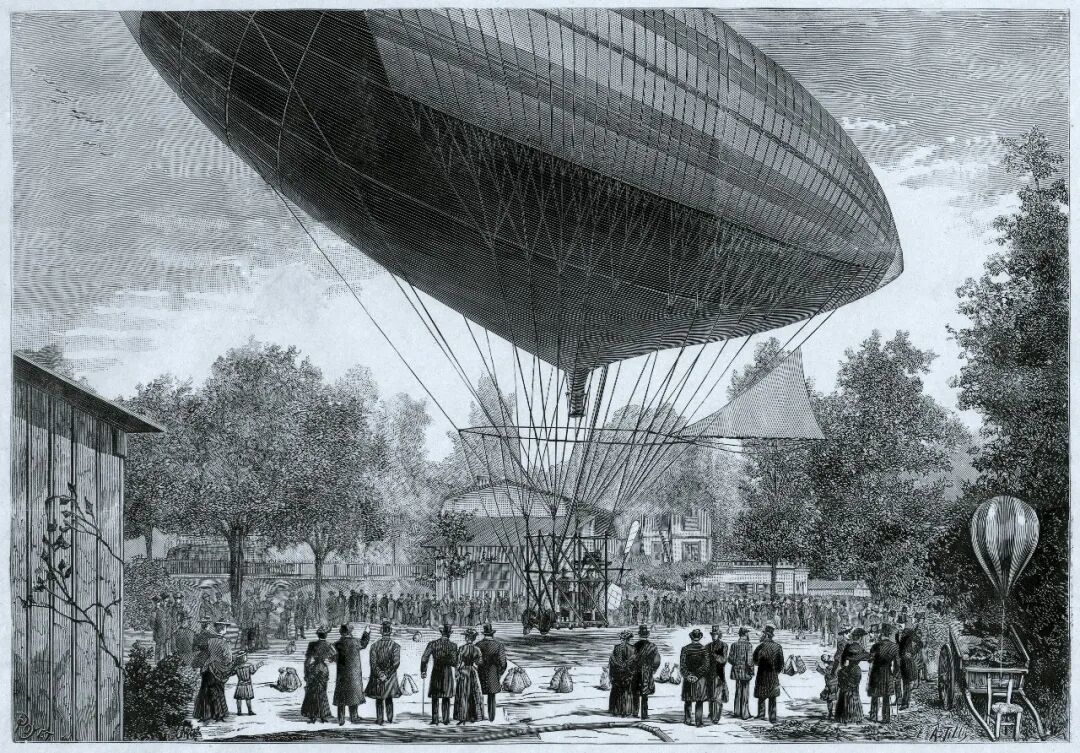
Image: a contemporary woodcut of the Tissandier brothers' electric airship departing Auteuil, Paris on 8 October 1883.
The catch is architectural: an airship rises on buoyancy, while a wing-borne machine must earn all of its lift.
The fixed-wing benchmark is 21 October 1973, when the MB-E1 — developed by engineer Fred Militky together with Brditschka — took off in Austria on nickel-cadmium batteries and stayed airborne about 9 minutes; the Fédération Aéronautique Internationale records a later flight of about 15 minutes.
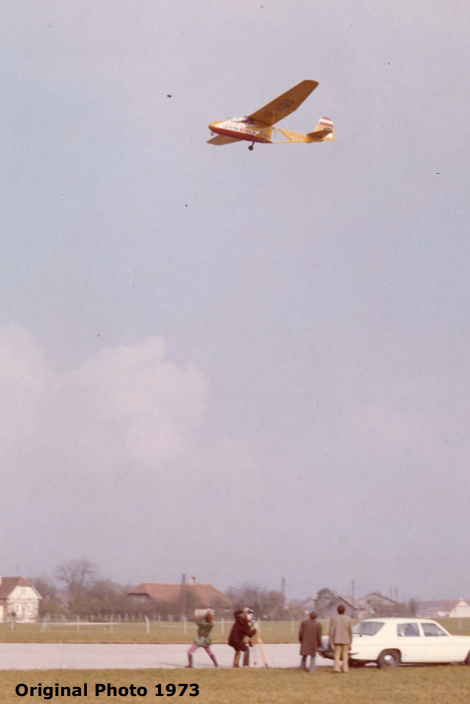
Image: the 1973 MB-E1 electric aircraft; nickel-cadmium batteries powered a first flight of roughly 9 minutes.
Decision-maker reading: more than half a century ago, humanity had already proved a battery could carry a person aloft. The decades since went into making it useful, not into proving it possible.
Case file three: the certification route — Europe and China monetise the small end first
Europe found the market through small aircraft. In 2015 the Airbus battery-electric demonstrator E-Fan crossed the English Channel, landing at Calais on 10 July 2015.
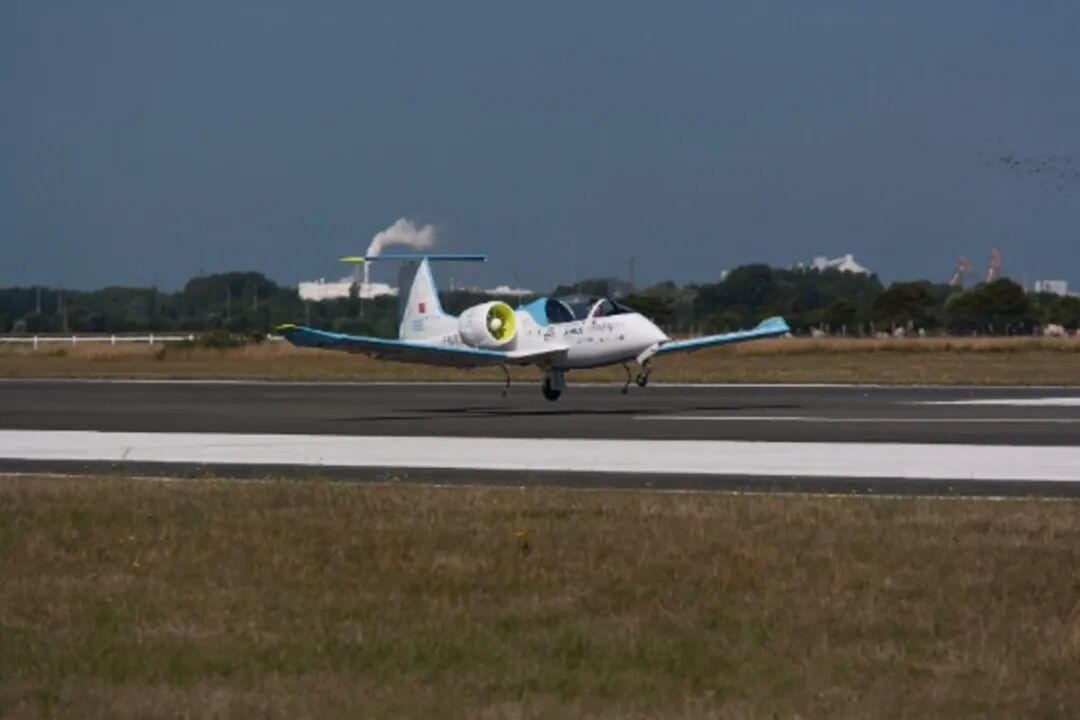
Image: on 10 July 2015, the E-Fan demonstrator landed at Calais after crossing the English Channel.
The commercial template came in June 2020, when Slovenia's Pipistrel won a type certificate from the European Union Aviation Safety Agency (EASA) for its two-seat Velis Electro — the first type certification of a fully electric aircraft, following EASA approval of its E-811-268MVLC electric engine on 18 May 2020. The agency framed the certificate as "the first step towards the commercial use of electric aircraft". The manufacturer's published endurance is up to about 50 minutes, plus the reserve required for visual flight rules.
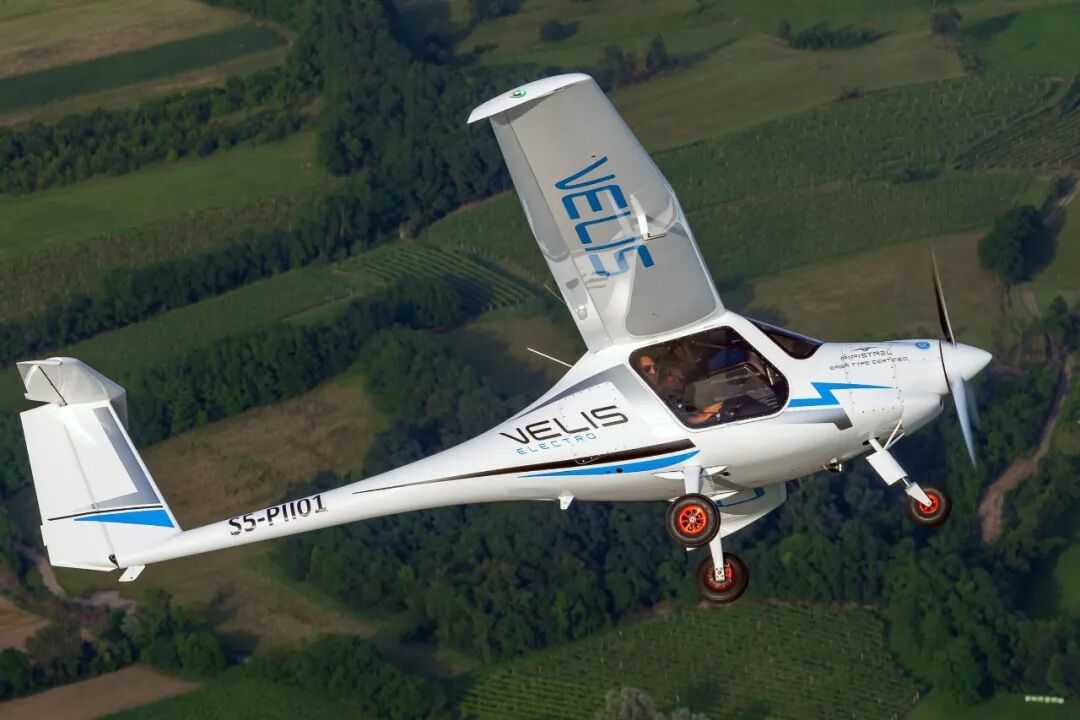
Image: the two-seat Velis Electro, type-certified by EASA in June 2020 and used mainly for flight training.
China built the same ladder with national steps. Yang Fengtian's team at Shenyang Aerospace University flew the Ruixiang RX1E in 2013 and obtained a type design validation and production licence in 2015 for the two-seat light-sport aircraft; the four-seat RX4E received a type certificate from the Civil Aviation Administration of China (CAAC) on 29 December 2024, reviewed against CCAR-23 normal-category requirements. Published figures: 1,260 kg maximum takeoff weight, 70 kWh of total battery capacity and a maximum endurance of 1.5 hours. In September 2025 the first RX4E in Beijing rolled off the assembly line in Yanqing; in early 2024 AVIC General Aircraft completed the first flight of its two-seat AG60E demonstrator.
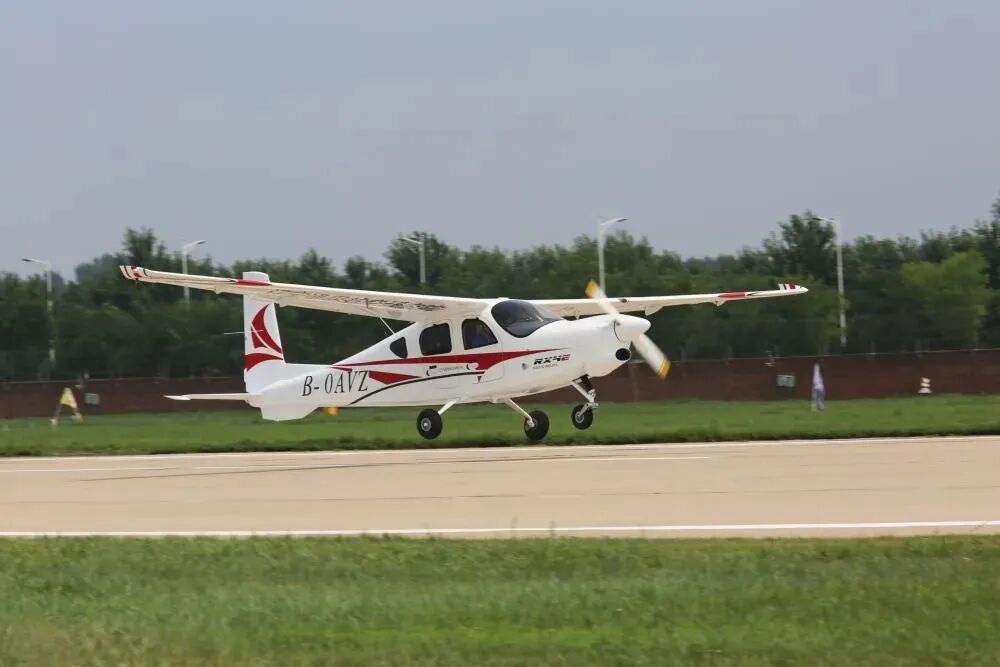
Image: the four-seat RX4E developed by Shenyang Aerospace University, type-certified by the CAAC on 29 December 2024. Source image: the university's official site.
| Case | Seats | Verified status | What an APAC buyer can reuse |
|---|---|---|---|
| Pipistrel Velis Electro | two-seat | EASA type certificate, June 2020; up to about 50 minutes endurance plus VFR reserve | A bounded mission makes certification obtainable |
| Ruixiang RX1E | two-seat | 2013 first flight; 2015 type design validation and production licence | Manufacturing approval, not just airworthiness, unlocks sales |
| RX4E | four-seat | CAAC type certificate on 29 December 2024 under CCAR-23; 1,260 kg / 70 kWh / 1.5 hours | Training and tourism revenue is bookable now |
| AG60E | two-seat | First flight in early 2024 | State prime contractors have entered the demonstrator tier |
| Airbus E-Fan | demonstrator | English Channel crossing, 10 July 2015 | High-visibility proof still attracts programme funding |
Reusable lesson #2: certification is won by narrowing the mission. A pattern-circuit trainer with about 50 minutes is a product; the same energy pack on a 400 km airline leg is still a research programme. Advertised maximum endurance is not sellable block time either — full payload, diversion margin and reserve take their cut first.
Case file four: North America's two bets — retrofit versus clean-sheet
North America entered through short-haul transport with two different playbooks. Canada's Harbour Air, working with magniX, converted a DHC-2 Beaver floatplane to electric power and flew it in 2019. Eviation's Alice targeted the nine-seat commuter market and completed an 8-minute first flight on 27 September 2022 at Moses Lake, United States.
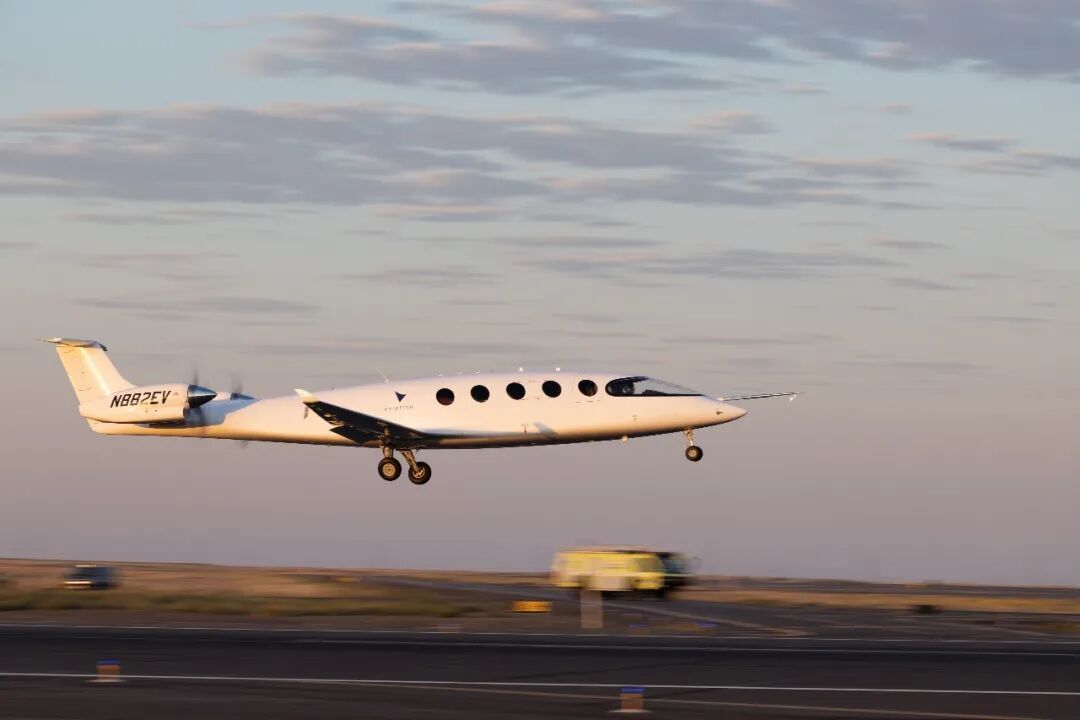
Image: Eviation's Alice electric demonstrator completed its first flight of about 8 minutes at Moses Lake, United States on 27 September 2022.
The retrofit reuses a certified airframe and a known operating model, buying speed but inheriting old structural limits; the clean-sheet design starts around the battery and buys integration, but needs far more capital and far more test hours. Neither path turns a first flight into scheduled passenger service.
Case file five: Heart Aerospace — the only entry with an order book and an Asia-Pacific seat at the table
Heart Aerospace unveiled the X1, with a 32-metre wingspan, in 2024 as a full-scale demonstrator for the ES-30. The 30-seat layout, 200 km battery-electric range and 400 km hybrid range published that year were planned ES-30 programme targets, not passenger capability X1 had demonstrated. Heart's August 2026 announcement recorded the X1 at a takeoff weight above 25,000 lb, about 11.3 tonnes, flying 27 minutes on batteries; the company's newsroom dates that first flight to 12 August 2026 from Plattsburgh International Airport in New York State, and the FAA had cleared X1 for flight testing in July 2026.
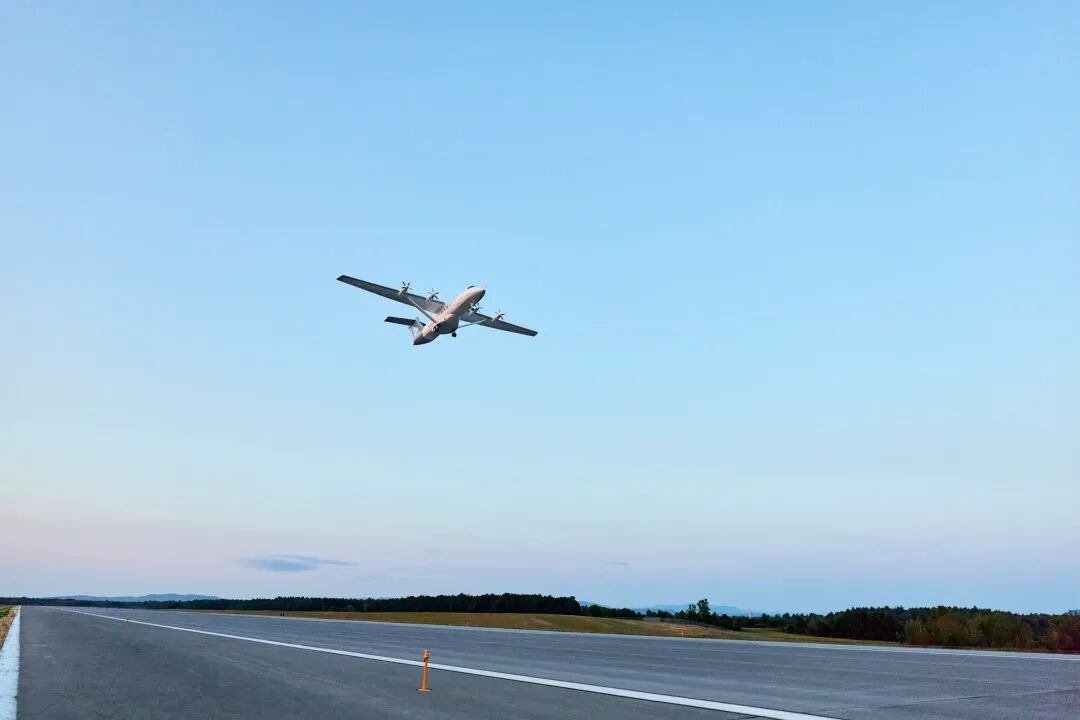
Image: the Heart X1 demonstrator climbing during its first flight in August 2026. ES-30 and ES-36 production figures cannot be transferred to it.
In September the company published the 36-seat ES-36 production concept: a battery-electric target of roughly 200 km, with longer stages covered by gas-turbine generation, and entry into service planned for 2031. The demand frame, as disclosed in 2024, is 250 firm ES-30 orders with options and purchase rights on a further 120 aircraft, plus letters of intent covering another 191 units; Heart expects the ES-30 to cut aircraft operating costs by more than 40% against legacy turboprops when it enters service. The regional signal matters here: AirAsia joined Heart's industry advisory board in September 2024, putting a Southeast Asian carrier inside the design loop rather than on the waiting list.
Reusable lesson #3: one order book is three different numbers. Firm orders, options and letters of intent carry different cash and different risk, and cost-reduction claims of this kind are projections, not measured fares.
Case file six: NASA's X-57 — the most instructive case is the one that stopped
NASA's X-57 Maxwell was built to validate distributed electric propulsion. On 15 April 2021 the X-57 Maxwell ran high-voltage ground tests at the Armstrong Flight Research Center in California; the programme concluded in 2024 without achieving a first flight. NASA attributed the outcome to experimental hardware problems, supply of key components and the time remaining in the programme window; on its project page the agency states that finalising aircraft operations would not incorporate a first flight of the aircraft. The battery and electrical-system results survive, along with a warning: the gap between "the motor spins" and "this aeroplane may carry passengers" is filled with unglamorous engineering.
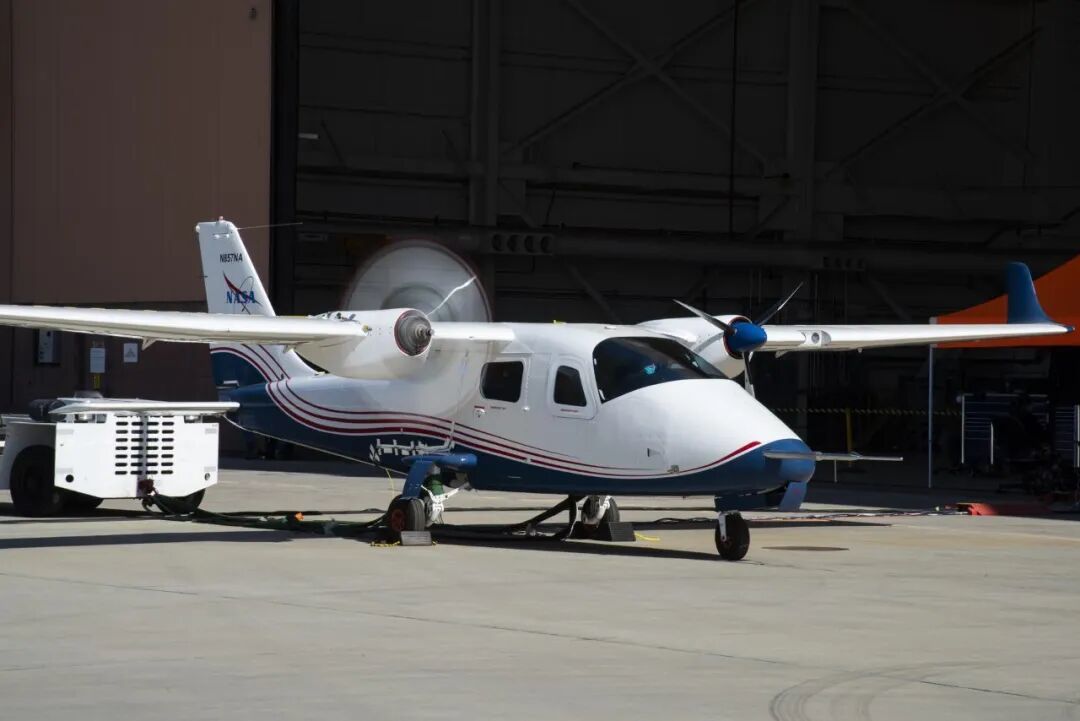
Image: on 15 April 2021, NASA's X-57 Maxwell performed high-voltage ground testing at the Armstrong Flight Research Center in California.
Procurement lesson for the region: schedule risk in electrification programmes concentrates in the battery, inverter and motor supply chain. Asia-Pacific teams buying those components into an airframe contract should price re-qualification and redesign, not only delivery dates.
Why the physics gate has not moved: mass that never burns off
Weight remains the binding constraint. Jet fuel carries about 12,000 Wh per kilogram — the International Council on Clean Transportation puts its specific energy at nearly 50 times that of today's lithium-ion packs, with roughly 9,700 Wh per litre by volume. Even crediting the higher efficiency of electric propulsion, the shortfall is obvious, and the asymmetry compounds it: burnt-off fuel leaves the aircraft lighter as the flight proceeds, while a battery's mass is still aboard on final approach.
So adding packs buys energy but buys it out of seats and baggage, and that weight must be carried the whole route. Battery progress and aviation validation work published by CATL and peers are genuinely encouraging, but headline energy density is usually quoted at cell level; installed on an aircraft you add protection, cooling and management, and what matters is the mass the whole system leaves behind.
Airline operations add the rest. Nobody plans a flight with "just enough to reach the destination": weather can force holding, diversion or a go-around, and the pack must still deliver power after most of it is gone. Thermal runaway containment and electrical-system reliability are not relaxed because endurance improved. Then the commercial team asks its own questions — how often packs must be replaced, how long the aircraft sits on charge between rotations — and the electricity saving can be quietly spent on replacements and waiting.
Which is why asking "how many Wh per kilogram before battery-electric aircraft are everywhere?" has no single answer. Two-seat trainers are already useful; a 100-seat machine needs capability far beyond that. Solid-state and lithium-sulphur routes deserve attention, but laboratory numbers must still earn their place on an aeroplane.
Where Asia-Pacific diverges: island thin routes, rail competition and Japan's hydrogen-first bet
- Southeast Asia: research from the Asia Competitiveness Institute at the Singapore University of Technology and Design frames super short-haul island links as the realistic decarbonisation target, because thin routes serving small islands are easier to convert than dense island-hopper corridors — and they fall inside today's 200—500 km envelope.
- Japan: public money points past batteries. The NEDO Next-Generation Aircraft programme, backed with about ¥51.1 billion (roughly US$342 million), targets core technology for airliners entering service after 2035 and aims for technology readiness level 6 on key hardware by 2030 (Aviation Week, September 2025) — a bet on hydrogen and advanced structures rather than near-term short-haul electrification.
- China: the ladder runs the other way, from type-certified trainers toward a 19-seat commuter demonstrator, with airworthiness rules drafted in parallel.
- Rail: on short stages already served by convenient high-speed rail, replacing fuel with batteries alone is unlikely to pull passengers back into airports.
For carriers and campus operators under decarbonisation commitments, electric aircraft are one line in a portfolio that also includes efficiency retrofits on the ground — the same logic we tracked in Resorts World Sentosa's AI cooling expansion.
Decision checklist: what APAC teams should do with this file
- Sort every claim into three tiers — first flight, type certificate, scheduled service — and ask for the underlying document. Treat photographs as leads, not evidence.
- Screen networks by leg length and payload, not ambition: roughly 200 km battery-electric is the credible envelope today, with 400—500 km remaining design targets.
- Cost it per seat-hour, including pack replacement cycles and ground charging time; Heart's more-than-40% operating-cost claim is a projection tied to a 2031 entry-into-service assumption.
- Track rulebooks by mission class: the EASA precedent from June 2020, the CAAC powered-lift standard of February 2026 capped at 5,700 kg, and the still-missing conditions for 19-seat and larger aircraft.
- In diligence, separate firm orders from options and letters of intent; Heart's 250 firm, 120 optional and 191 LOI units describe demand and execution risk at once.
- Expect bounded missions before open networks — the staged pattern we documented for driverless courier vans on fixed routes rather than open streets applies almost line for line to electric aircraft.
FAQ: five questions Asia-Pacific readers keep asking
Are battery-electric aircraft already carrying fare-paying passengers?
At the small end, yes. Pipistrel's two-seat Velis Electro has held an EASA type certificate since June 2020 and is flown mainly for training; the four-seat RX4E was certified by the CAAC on 29 December 2024. Airline-scale service is not in that record.
What is the largest battery-electric aircraft that has actually flown?
Heart Aerospace's X1 demonstrator: a 32-metre wingspan, a takeoff weight above 25,000 lb (about 11.3 tonnes) and 27 minutes of battery flight reported in August 2026. It is a technology demonstrator, not a product for sale.
When could a passenger book a battery-electric flight?
The earliest concrete date in this file is 2031, Heart's target for the 36-seat ES-36, and the first appearances will be short city-pair or island legs — not intercontinental routes. Training flights are already bookable.
Why not simply fit more batteries?
Because jet fuel's specific energy is roughly 50 times higher, added packs stay at full mass all flight, and every kilogram of storage competes with a seat, a bag or the reserve needed for a diversion.
Has COMAC's CE-25A flown?
The public record covers its 2023 expo appearance, the 2025 Engineering Sciences statement on "scaled-model verification flight", and a structural test tender for the No. 0 airframe from COMAC's Beijing Research Center. Whether the airframe in the recent photographs has flown remains unconfirmed.
Verdict: a briefing conclusion, not a countdown
The battery-electric aircraft story is not "will it fly" — that was settled in 1973, and then settled commercially twice, in June 2020 and on 29 December 2024. It is a sequencing story: two-seat and four-seat trainers, then island and short-commute routes within a few hundred kilometres, then — if Heart's 2031 target holds and the certification queues move — real regional airline service. For a 100-seat-class machine, no analyst can honestly print a year. What the six cases do show is where the money and the risk now sit: in installed battery mass, in reserve margin, in supply chains that can stall a flagship, and in rulebooks that are still being drafted.
Our judgement, and we flag it as analysis rather than forecast: for Asia-Pacific operators the practical planning window is fleet training and thin-route pilots; for suppliers, the near-term revenue is cells, cooling and certification testing, not aircraft; for investors, the discipline is separating demonstration miles from airline economics. The battery-electric aircraft has left the ground. What we are all waiting for is the version that carries its passengers and baggage, keeps its reserve, arrives safely today and departs again on schedule tomorrow.
References
- Heart Aerospace newsroom, "Heart Aerospace Completes First Flight of World's Largest Electric Aircraft" (13 August 2026): https://www.heartaerospace.com/newsroom/heart-aerospace-completes-first-flight-of-world-s-largest-electric-aircraft
- Heart Aerospace newsroom, AirAsia joins the company's industry advisory board (September 2024): https://www.heartaerospace.com/newsroom/airasia-joins-heart-aerospaces-industry-advisory-board-to-shape-the-future-of-air-travel
- EASA press release, first type certification of a fully electric aircraft (10 June 2020): https://www.easa.europa.eu/en/newsroom-and-events/press-releases/easa-certifies-electric-aircraft-first-type-certification-fully
- NASA, "X-57 Project Creates Paths Toward Electric Aviation": https://www.nasa.gov/centers-and-facilities/armstrong/x-57-project-creates-paths-toward-electric-aviation-2/
- ICCT, "What to expect when expecting electric airplanes" (July 2022): https://theicct.org/aviation-global-expecting-electric-jul22/
- CAAC, airworthiness standard guidance for powered-lift aircraft (February 2026): http://www.caac.gov.cn/XXGK/XXGK/GFXWJ/202602/P020260226344192407264.pdf
- Aviation Week, "Tokyo Boldly Pushes Into Future Of Aerospace With ¥1 Trillion Fund" (September 2025): https://aviationweek.com/aerospace/aircraft-propulsion/tokyo-boldly-pushes-future-aerospace-y1-trillion-fund
- SUTD Asia Competitiveness Institute, "The Future of Super Short-Haul Air Travel in Southeast Asia": https://www.sutd.edu.sg/asi/publication-listing/the-future-of-super-short-haul-air-travel-in-southeast-asia/
- Robb Report on FAA clearance for Heart's X1 flight testing (July 2026): https://robbreport.com/motors/aviation/heart-aerospace-x1-largest-electric-plane-1238503944/