
APACTechBriefing | After the FU100 Teardown: Why "Hardware Security" on USB Drives Now Needs Proof in APAC
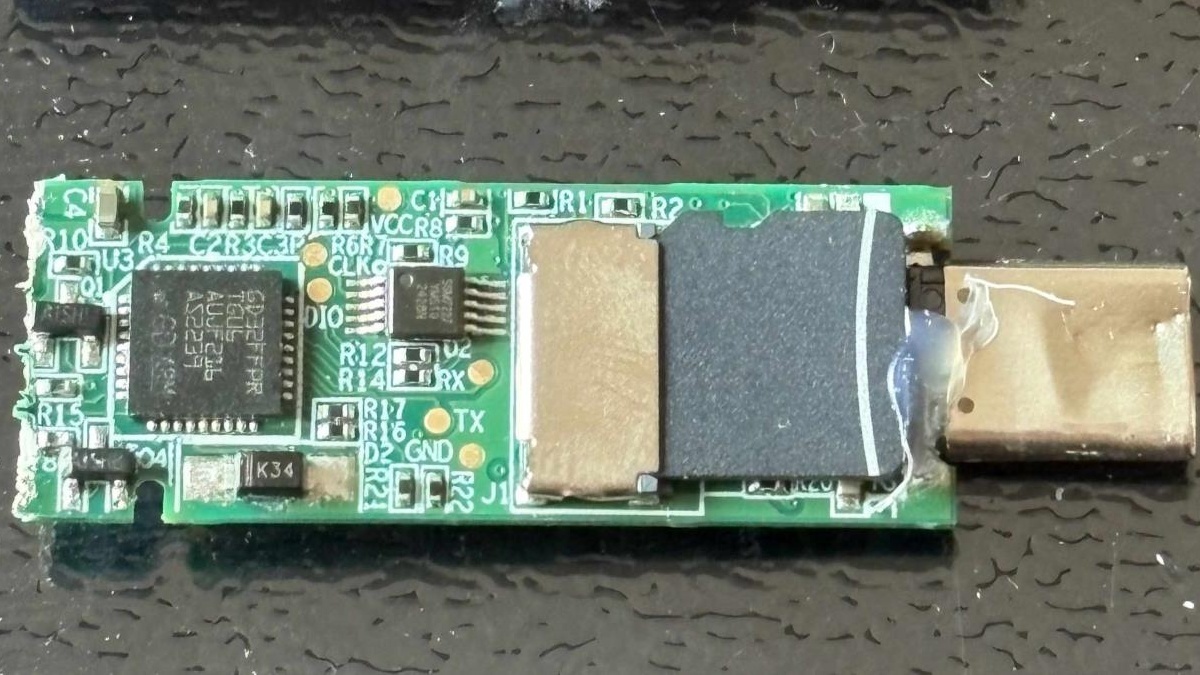
A fingerprint pad on the lid is an on/off switch for the USB link — it is not a cipher. That single engineering distinction, rather than the embarrassing photograph of an opened casing, is what regional IT and security leads should take from the ThinkPlus FU100 episode. For the past year the story has travelled from a bench teardown to a conference stage, to a vendor advisory, and now into a workflow where an AI coding agent can crack a "secure" drive product in minutes. This briefing re-reads it as a procurement and compliance problem: what was actually found, what Lenovo fixed, and what APAC buyers should change on their own storage lists.
Key facts, before the analysis
- Last year, security researcher Xusheng Li took apart a ThinkPlus FU100 fingerprint USB drive; in March this year he presented the findings at a conference — the RE//verse event staged by reverse-engineering tooling firm Vector 35, in a talk titled "Breaking Encrypted USB Drives with Time-Travel Debugging".
- The fingerprint function only controlled whether the drive connected over USB; the data sitting on the internal SD card was stored in plaintext, readable by anyone who opens the shell and pops the card into a reader.
- Lenovo's product-security advisory LEN-210545, first published on 13 January 2026 and rated High, tracks three vulnerabilities under CVE-2025-13453, CVE-2025-13454 and CVE-2025-13455, and credits Li (Vector 35 Inc) for the reports.
- The AI-assisted follow-up produced timings measured in minutes, not weeks: about 7 minutes against one Netac tool, about 26 minutes against KakaSoft's USB Copy Protection, about 10 minutes against Nexcopy's Copy Secure.
- The same SDK behind those products is reportedly present in nine additional devices from other makers, and two other devices keep unencrypted data on a microSD card.
What the teardown showed — and how the claim collapsed
Li's description of the FU100 is now the industry's shorthand: "an SD card inside a flashy shell". The marketing sheet promised AES-256 hardware encryption; the board held an ordinary memory card whose contents were never encrypted at all. His conclusion generalises uncomfortably well — for some products, "hardware security" may be marketing rather than engineering.
The sequence matters for anyone who buys on spec sheets. A teardown is a one-evening job with a screwdriver; the disclosure happened last year; the public talk came in March this year; the formal advisory followed in January 2026. Buyers who had already deployed these drives to field staff, clinics, branch offices or export teams were exposed across that entire window, and the vulnerability list they were eventually handed was longer than one bad product.
The fix path: four products, three vulnerabilities, one hotline
Lenovo subsequently issued a remediation plan covering the FU100, FU200 and TU800 USB drives plus the TSD303 portable SSD. Owners have to call the company's service hotline in China, where a serial-number check decides between two routes: ship the unit back for replacement, or wait for an engineer to perform an on-site firmware upgrade. Lenovo advises users to back up first and strongly recommends erasing the device before sending it in.
Severity is rated High, and the three vulnerabilities in the advisory are not identical in nature:
| Tracker | Where the flaw sits | What it enables |
|---|---|---|
| CVE-2025-13453 | ThinkPlus drive hardware / storage path | A person with physical access can read the data stored on the drive |
| CVE-2025-13454 | ThinkPlus configuration software | A local, already-authenticated user can reach sensitive device information |
| CVE-2025-13455 | ThinkPlus configuration software | A local, already-authenticated user can bypass device authentication and enrol an unauthorised fingerprint |
The third item is the sleeper: an attacker with a logged-in workstation can register their own finger, which turns the biometric layer into a decoration. It also explains why endpoint configuration utilities deserve the same review scrutiny as the drive firmware itself.
TSD303: the data was encrypted, the password was not
Li reported another vulnerability on the TSD303 portable SSD. Unlike the FU100, this drive did encrypt its contents. The weakness was in the handshake: over the USB connection the drive used to send the correct password in cleartext to the host software, which compared it with what the user typed — so anyone capturing that traffic could read the secret. A first patch arrived about three months after the vulnerability report, but researchers determined that its encryption key could be derived from a value resembling a timestamp, leaving a stolen drive no better protected. A follow-up fix released later last year moved verification onto the drive, so the true password no longer leaves the device; Chinese technology coverage of the talk dates that second revision to December 2025 and describes the interim version as returning SM4-protected data whose key was reconstructible.
That two-step patch history is the practical lesson: a "fixed" advisory is not the same as a secure implementation, and buyers should ask which version of the remediation they received, not merely whether one exists.
One SDK, many brands, and an AI co-pilot
The research did not stop at Lenovo. Nine additional devices from other manufacturers are said to run the same SDK, most of them potentially leaking passwords to an attacker with the technical capability to look; two other devices were found holding unencrypted data on a microSD card. Vendor names were masked in the slide deck, which is exactly the reason procurement teams cannot assume their own accessories are clean.
In a recent follow-up study, Li used OpenAI's coding agent Codex together with the reverse-engineering tooling developed by his employer to test other vendors' storage hardware and protection software. The results, as reported in Tom's Hardware's coverage:
- Netac: cracked in about 7 minutes — the agent located a fixed key built into the program and found user passwords written into diagnostic logs. As of his talk in March this year, Netac had not published a patch.
- Two file-copy-protection products — tools that let a recipient view a file but try to block copying — fell next. In about 26 minutes Codex reconstructed the password generated by KakaSoft's USB Copy Protection and decrypted one test file without knowing the user password; Nexcopy's Copy Secure mechanism broke in about 10 minutes.
- SecZure: the YutianDun product was found to carry two hidden accounts protected by comparatively simple passwords. Li called these "backdoors", though the report is careful that no malicious intent by the vendor can be inferred from them.
Li did not pre-notify KakaSoft, Nexcopy or SecZure before publishing. His stated reasoning is blunt and worth quoting to any vendor who asks for patience: a drive that has already fallen into an attacker's hands is very hard to recall or update. The counter-case he offered was one open-source USB drive that also uses a microSD card, but implements encryption correctly and derives the key from the user's password — an attacker who reads the card in isolation gets nothing.
Reading the regional exposure
Three differences make this story sharper for APAC than for a US or European audience. First, distribution: the affected ThinkPlus models are sold heavily through mainland China and cross-border consumer channels, and the remediation route is a China-based hotline with serial verification — for a Singapore, Sydney or Seoul head office that donated drives to field teams, this converts a "free fix" into an international RMA project with a data-hygiene step attached. Second, enforcement posture: regulators in the region increasingly price weak protective measures rather than the breach itself. Singapore's PDPA, since October 2022, allows financial penalties of up to S$1 million or 10% of an organisation's local annual turnover, whichever is higher; in late October 2025 the Personal Data Protection Commission fined Marina Bay Sands S$315,000 over a leak affecting more than 665,000 customers, with the finding centred on controls that were not maintained. Third, cost baselines: IBM's 2025 Cost of a Data Breach Report puts the global average at USD 4.44 million, a number that a single lost drive full of client records can approach once notification, legal and churn costs are counted.
Layer on the AI dimension and the risk curve steepens again. Audits that once demanded weeks of specialised firmware skill now run in minutes, which means the disclosure cadence for removable-media products will rise, and the useful life of a "certified secure" claim will shorten.
30-day action list for APAC IT and security teams
- Inventory and match. Pull every FU100, FU200, TU800 and TSD303 unit in service, log serials, and check them against advisory LEN-210545; do the same for any biometric- or password-gated media from other brands.
- Assume plaintext until proven otherwise. If a datasheet says "AES-256 hardware encryption" but names no validated cryptographic module, treat the payload as unencrypted for classification and DLP purposes.
- Ask the three questions that separate real encryption from a gate. Is the stored payload encrypted at rest? Is the key derived from the user secret inside the device? Does the drive verify the secret itself, or hand it to the host software to compare?
- Probe the SDK supply chain. Require written confirmation of which SDK or firmware house underpins a product, and whether it is shared with other brands — masked slides in this research were about nine devices, not one.
- Prefer verifiable standards. Request a current cryptographic-module validation certificate number (for example, under the US/Canadian FIPS 140-3 programme, whose Level 3 and 4 tiers add tamper-detection and key-zeroisation requirements) or an independent teardown report, instead of accepting a logo.
- Run the erase-before-shipping discipline Lenovo itself recommends, and log every recalled or upgraded unit as a change record so the audit trail survives the vendor's process.
- Treat lost-drive incidents as notifiable events, not spare-parts replacement, and test the notification workflow against the relevant local data-protection law.
Trend calls
- Spec-sheet terms are becoming diligence triggers, not reassurance. Expect procurement teams to convert "hardware encryption" claims into questions about key derivation and on-device verification.
- Two-stage patching will be read as a red flag. The TSD303 arc — first fix breakable via a timestamp-like value, second fix moving verification onto the drive — shows that remediation quality, not remediation existence, is the metric.
- AI collapses audit cost. Minute-scale cracking of Netac, KakaSoft and Nexcopy logic means small vendors' protection code is now low-hanging fruit, and incumbents will face faster, more frequent public teardowns.
- Recall economics stay unchanged. Firmware fixes remain the cheap outcome; drives already in circulation are hard to retrieve, so the real control is purchase-time verification.
The FU100 is one small, ugly product in a crowded accessory category. Its value as a signal is that the verification burden has shifted, cheaply and permanently, onto the buyer: a shell, a sensor and a datasheet claim are not a security control. Teams that rewrite their removable-media specification around key derivation, on-device authentication and evidence of independent testing will find the next teardown is a vendor problem, not theirs.