
Google Gemini Omni 1.2 Flash: Is 15-Second Chat-Based Editing a Better Fit for APAC Video Ops?
Google released Gemini Omni 1.2 Flash on Thursday, November 6, with native 15 seconds and Conversational Editing, expanding clips from a previous 10-second limit to 3 to 15 seconds and cutting 720p pricing 30% to $0.07 per second. For APAC teams producing localized product, retail, and social videos, the short answer is yes when output volume, brand consistency, and rapid revision matter.
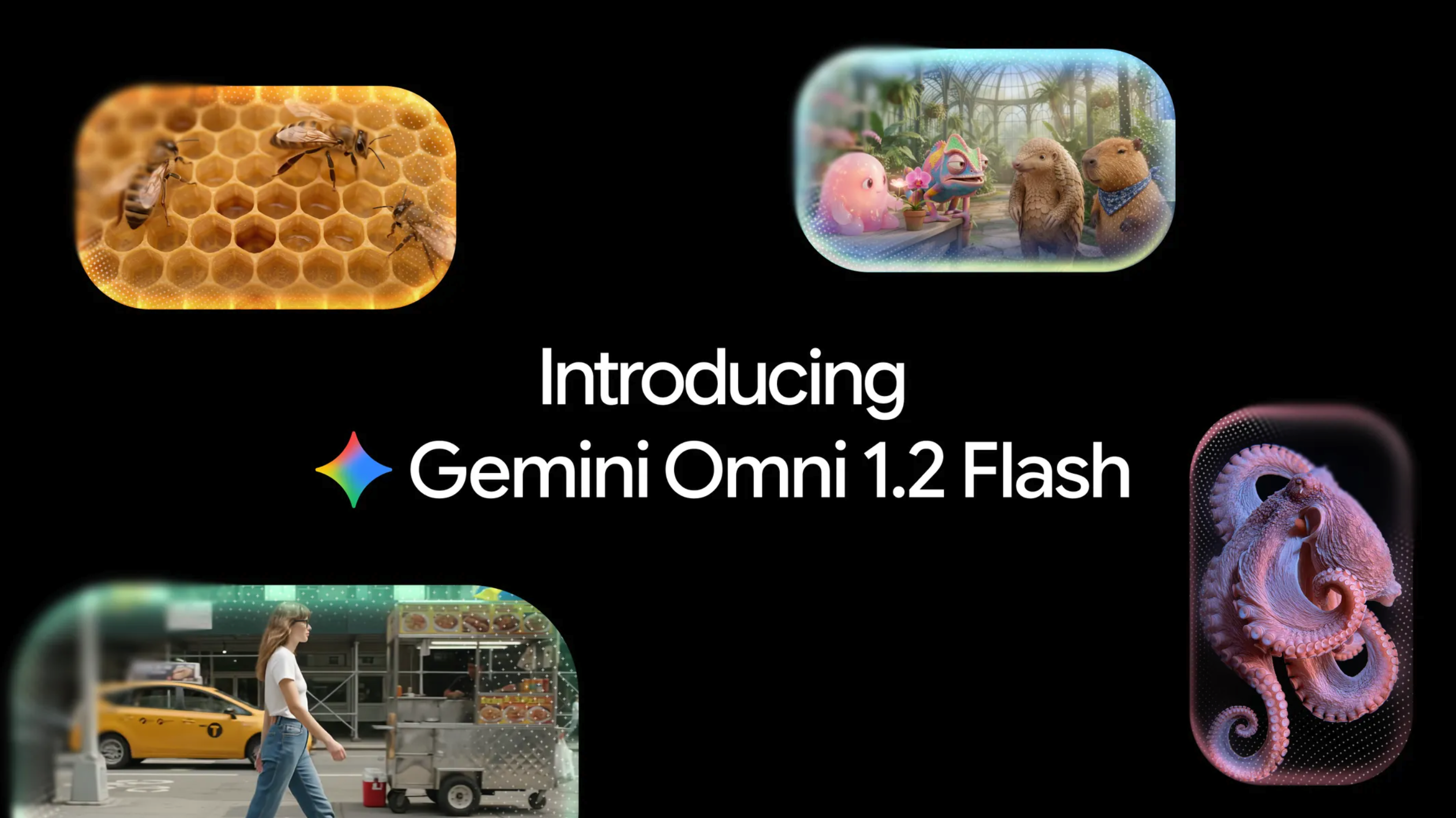
What actually changed in Google’s release?
The change moves three production levers at once: time, price, and revision mode. Google, the company, says the model can natively generate a 15-second video, while the usable duration window now spans 3 to 15 seconds. That matters more than it sounds: a short product hook, a two-beat explanation, or a single social ad can now fit inside one generated asset instead of stitching several shorter clips.
- Duration: native 15 seconds, with 3 to 15 seconds available.
- Price: 30% lower, with 720p at $0.07 per second.
- Edit mode: Conversational Editing lets users revise the same clip over multiple turns.
How much does a Gemini Omni 1.2 Flash clip cost?
The clearest decision data point is $0.07 per second for 720p output. For budget planning, that converts directly: a 3-seconds draft costs about $0.21, while a full 15-second asset costs about $1.05 before upscaling or additional workflow steps. The calculation is useful because APAC creative teams often judge AI video not by novelty, but by cost per approved version.
| Clip length | 720p estimated cost | Best use case |
|---|---|---|
| 3 seconds | $0.21 | Hook test, background variant, quick brand check |
| 15 seconds | $1.05 | Product explainer, localized social ad, short campaign asset |
| 3 to 15 seconds | $0.07 per second | Linear cost basis for volume forecasting |
Why does Conversational Editing matter for APAC brands?
Conversational Editing is the practical difference between a demo and a workflow. Instead of regenerating the whole video after every change, users can adjust background, lighting, aspect ratio, or product context in successive turns. Google says the capability can cover the full 15-second clip, which is relevant for teams working with multiple markets, retail formats, or social-platform ratios.
In the official Google launch article, the update is framed by DeepMind product manager Anish Nangia as giving creators more room to tell complete stories. That expert framing points to a broader shift: AI video is moving from one-shot generation toward an iterative production loop where changes are cheaper than full re-generations.
How strongly does the model follow reference assets?
For branded work, consistency is the main risk. Google says the model accepts person images, product photos, a 3-second video clip, and audio prompts. In its virtual try-on example, one model photo and three outfit images can produce a continuous 15-second sequence with a turn through 360 degrees, while the model’s identity, clothing cut, drape, packaging text, and brand colors remain stable.
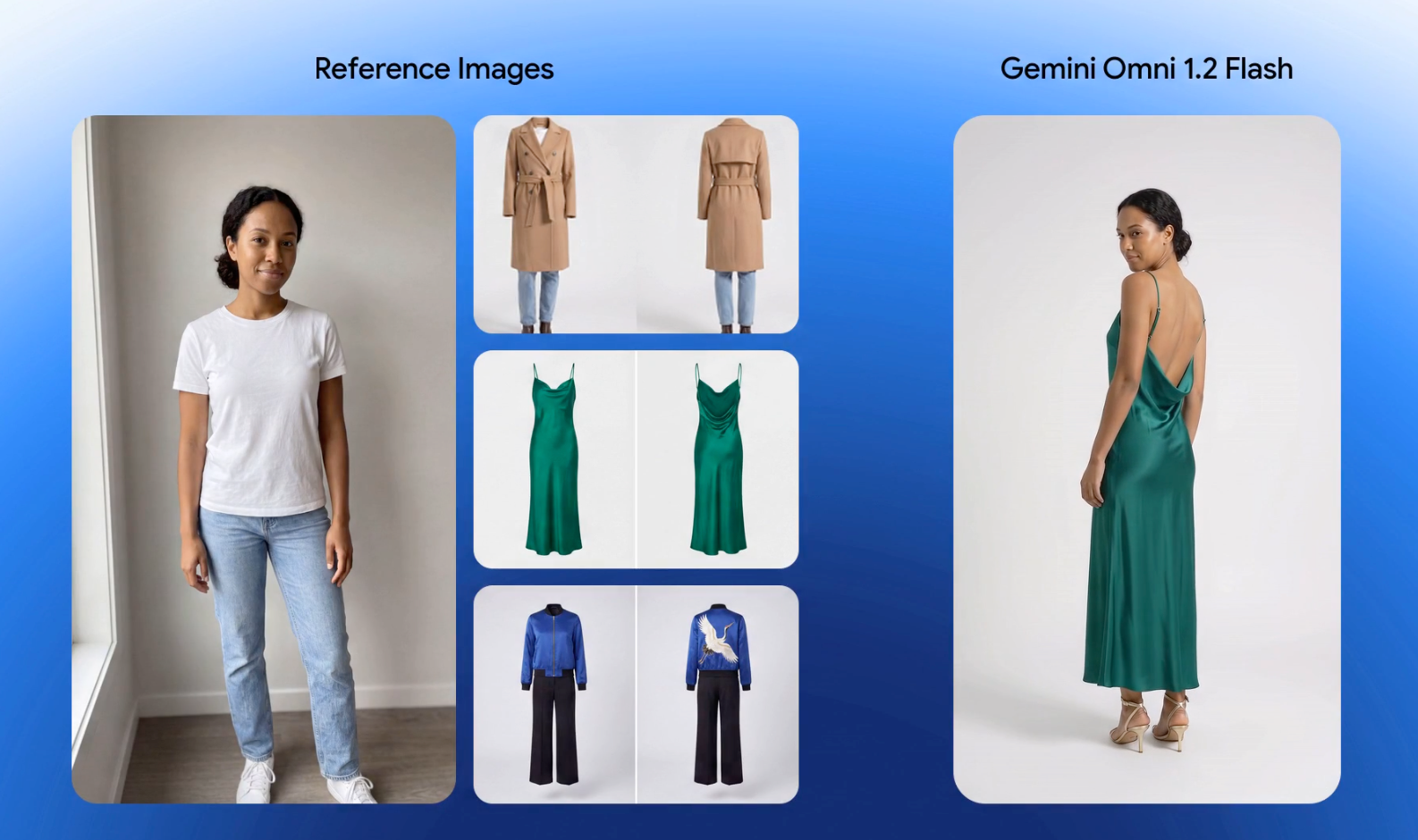
Google also says visual drift and deformation are lower than the previous generation during motion and cuts. The model can handle smoother conversation delivery, tighter lip sync, and multiple speakers. It is also better at complex camera paths, including FPV drone-style movement and fast pull-back shots, while reducing unwanted jump cuts.
Where can APAC teams use Gemini Omni 1.2 Flash?
Availability is broad enough to test inside existing Google-based stacks. Google says it is rolling out through Gemini API, Google AI Studio, Google Cloud Console, Flow, Google Vids, the Gemini app for Google AI Ultra subscribers, and Google Ads. Every generated video embeds a SynthID watermark to mark its provenance.
- Developers: prototype in Gemini API and Google AI Studio.
- Enterprise teams: evaluate through Google Cloud Console and campaign systems connected to Google Ads.
- Creators: experiment in Flow and Google Vids; longer 15-second access in the Gemini app is tied to Google AI Ultra.
Should APAC teams switch now?
APACTechBriefing’s decision rule is simple: switch for volume-driven, consistency-sensitive work, but do not treat the headline price as the final cost. A useful pilot should compare raw generation cost against re-generation savings, approval time, and brand consistency.
- Use it for: short product videos, localized ads, packaging shots, retail explainers, and multi-version creative testing.
- Do not rely on it blindly for: long narrative pieces, highly regulated claims, or complex lip-sync scripts until localized quality is tested.
- Recommended workflow: draft at 360p or 720p, edit the approved scene, then upscale to 1080p or 4K only for final assets.
Frequently asked questions
What is the key upgrade in Gemini Omni 1.2 Flash?
It combines native 15-second generation, Conversational Editing, and 30% lower 720p pricing at $0.07 per second.
Can a team edit a clip after generating it?
Yes. Google describes multi-turn changes such as background replacement, lighting adjustment, aspect-ratio changes, and product-context edits across the full 15-second video.
Is the model ready for branded product content?
It appears strongest for this use case because it can follow person images, product photos, a 3-second reference clip, and audio, then maintain identity, packaging text, and brand colors in a 360-degree example.
What should APAC buyers verify before scaling?
Verify cost per approved asset, SynthID watermark handling, localized voice and lip-sync quality, and whether final upscaling to 1080p or 4K fits the budget.