
APACTechBriefing: Huawei Osta O1 and O1 Pro Leak Points to a Flagship Debut, Not a Budget Line
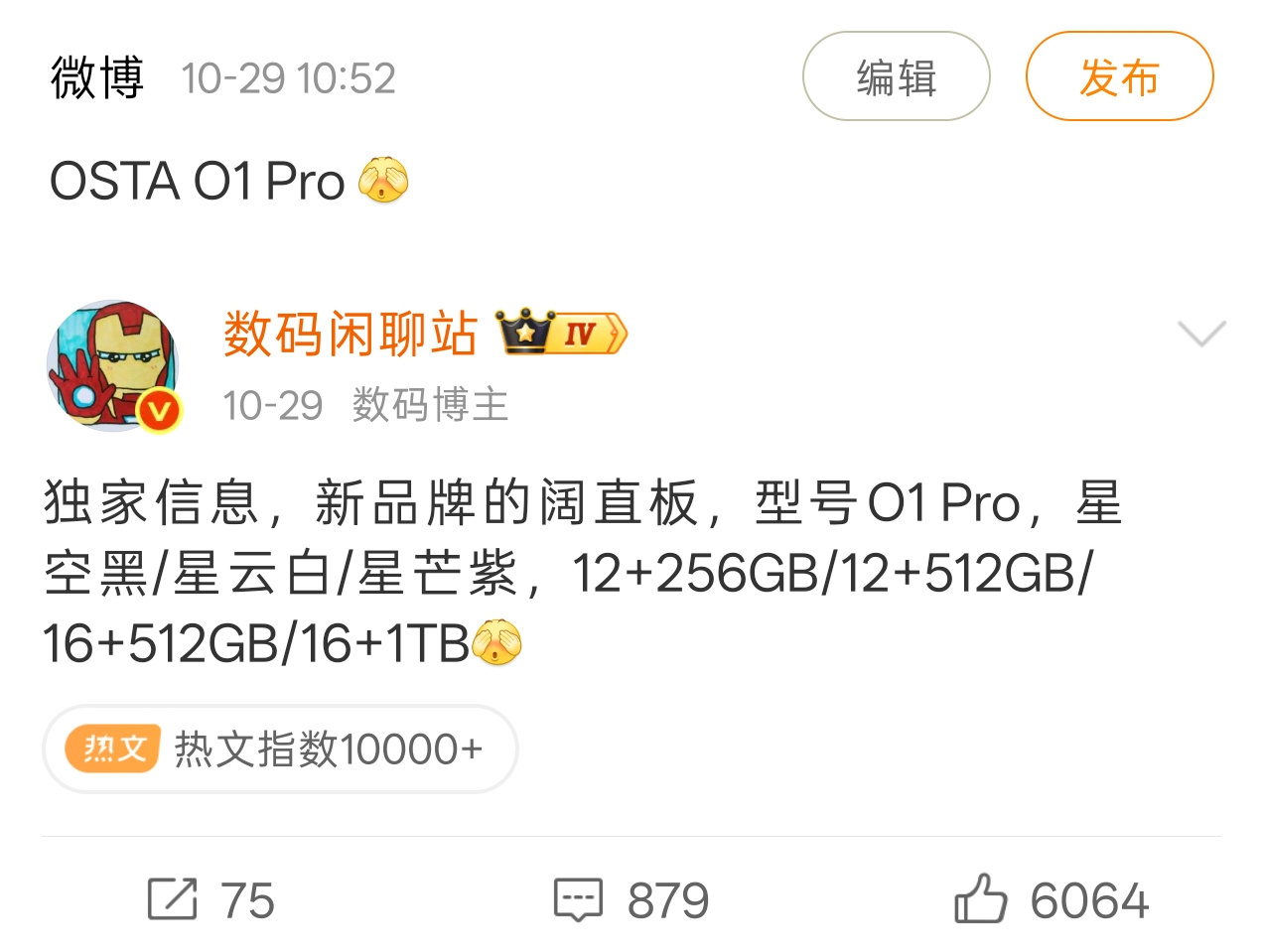
Huawei's rumoured sub-brand Osta is set to launch with two phones, Osta O1 and Osta O1 Pro, positioned at flagship level rather than the mid-range devices earlier leaks described. The Osta O1 Pro is said to carry a 6.39-inch 1.5K LTPS wide panel in a 16:9.5 aspect ratio, with memory and storage up to 16GB plus 1TB and pricing tracking Huawei's current flagships.
For Asia-Pacific technology and digital leads, the significance goes beyond one handset. The leak sketches how Huawei may separate brand architecture, screen format experiments and pricing risk into a second label, at a moment when component inflation is compressing the mid-range segment that sub-brands were originally built to serve. Below is what is confirmed as rumour, what the numbers say, and what to act on before any official announcement.
What exactly was leaked about the Osta O1 and the Osta O1 Pro?
Conclusion first: the debut line-up is a two-track hardware story — one conventional curved-screen flagship and one wide-format flagship, with the Pro model absorbing the memory-heavy configurations.
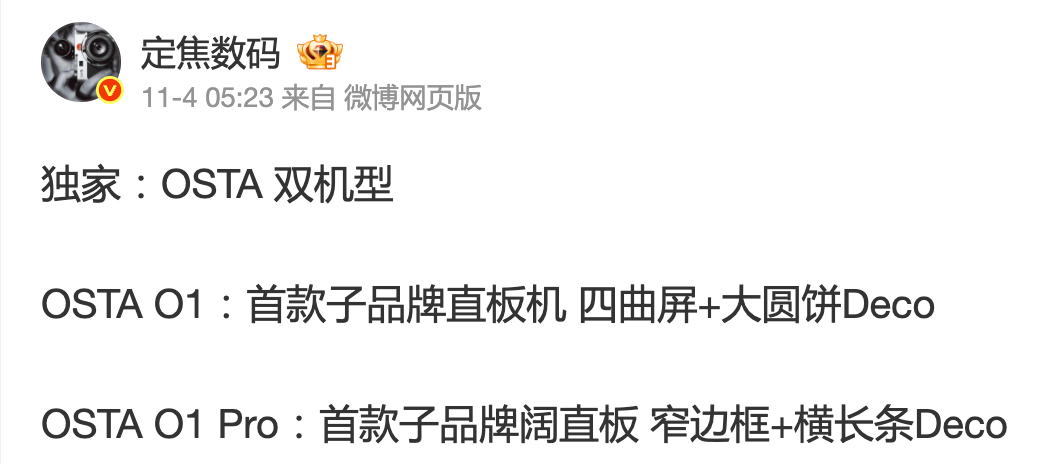
The Osta O1 is described as the brand's first conventional slab flagship: a display curved on four sides, paired with one large circular camera module on the rear, a design language built around the combination of curved glass and a round imaging island.
The Osta O1 Pro takes the opposite route: narrow bezels on a wide screen, with the rear cameras laid out in a horizontal strip. The panel is specified as one 6.39-inch LTPS flat display at 1.5K resolution, in a ratio of roughly 16:9.5 — a form factor whose silhouette is judged to be close to the Huawei Pura X View that Huawei has already shipped.
| Item | Osta O1 | Osta O1 Pro |
|---|---|---|
| Screen format | Curved on four sides | Narrow-bezel wide flat panel, 6.39-inch LTPS, 1.5K, 16:9.5 |
| Rear camera layout | One large circular module | Horizontal camera strip |
| Reference design | Conventional slab flagship | Treated as close to Huawei Pura X View |
| Memory and storage | Not disclosed in current leaks | Four variants, up to 16GB + 1TB |
Why would Osta arrive as a flagship brand instead of a mid-range one?
Conclusion: the earlier mid-range script no longer fits a market where memory is the single fastest-moving cost line. The flagship positioning contradicts previous reporting on the Xingmang series, which had been pitched as a mid-range product line powered by Kirin 8-series processors. Either Huawei revised the plan, or the earlier information was wrong; both readings point to a deliberate change in how the label is meant to earn margin.
The cost backdrop is measurable rather than speculative. TrendForce's late-September 2026 press release projected conventional DRAM contract prices to rise 10-15% quarter on quarter in the fourth quarter of 2026, with NAND flash contract prices up 15-20% — pressure that lands hardest on low- and mid-margin devices with no pricing headroom (TrendForce, 30 Sep 2026). Counterpoint Research's Q3 2026 China read-out likewise attributes rising bill-of-materials cost and tightening supply to continuing memory price increases.
Read as analysis, not as confirmed strategy: launching a new label at flagship price points lets Huawei test a new screen format and a new brand identity where buyers are least price-elastic, while leaving the margin-squeezed mid-range to existing lines.
Does the wide-screen Osta Pro take over Huawei's own wide-format phones?
Conclusion: no, according to the leak — the move looks like a dual track rather than a handover. Because the Osta Pro is built around a wide screen, commentators read it as evidence that Huawei intends to push the whole wide-format category into the new brand. When asked whether every wide-screen model would be moved to Osta, one source close to the matter said wide-screen products will remain inside the Huawei main brand's line-up.
That distinction matters regionally. The 16:9.5 format is not a prototype but a shipped category: Huawei launched the Pura X View as a non-folding wide-screen phone with a 16:9.5 display and a 7,000mAh battery in September 2026, as reported by Android Authority. If Osta carries a near-identical format while Huawei keeps its own wide-screen models, the practical outcome for Asia-Pacific channel teams is two parallel price ladders selling the same viewing experience — a segmentation problem usually solved by distribution exclusivity, warranty policy and operator bundles rather than by hardware.
What do the four storage variants imply about price?
Conclusion: the SKU ladder is deliberately top-heavy, which is exactly what a memory-cost surge encourages. The Osta O1 Pro is said to reach market in four configurations, and two of those four start at 16GB of memory:
- 12GB memory with 256GB storage
- 12GB memory with 512GB storage
- 16GB memory with 512GB storage
- 16GB memory with 1TB storage
People close to the matter say the hardware specification and the pricing of the Osta O1 Pro will sit at roughly the same level as Huawei's existing flagship phones. Because memory and flash prices continue to climb, the higher configurations are expected to be a decisive input in the final price, not a marketing flourish. For procurement and channel planning, the risk to watch is a narrow spread between the entry and top variants, which typically compresses sell-through at the low end and pushes inventory into the two largest SKUs.
Five numbers that frame the story for Asia-Pacific readers
- 21.3% — Huawei's share of the China smartphone market in Q3 2026, ranking first, with shipments up 19% year on year while the overall market fell about 10% to its lowest third quarter since 2012 (Counterpoint Research, October 2026).
- 17.3% — the year-on-year shipment growth IDC attributed to Huawei in the same quarter, making it the only major vendor in China to expand as total shipments dropped 15.4% to 57.9 million units (IDC via Reuters, 13 October 2026).
- 1 September 2026 — the date Counterpoint cited for Huawei's formal price increases, a policy backdrop that any new Osta flagship will be judged against.
- 10-15% DRAM and 15-20% NAND — TrendForce's projected contract price growth for the fourth quarter of 2026.
- 6.39-inch, 1.5K, 16:9.5 — the leaked Osta O1 Pro panel figures, and the single strongest design link to an already-shipping Huawei wide-screen reference point.
Action checklist: what to do while this is still a leak
- Treat every Osta specification as unconfirmed. Huawei has not announced the brand or either phone; product names, configurations and positioning in circulation are leaks, and final designs and specifications still require official confirmation.
- Flagship-side assumption for budgeting. If hardware and pricing track Huawei's existing flagships, model the device against current flagship price ceilings rather than against sub-brand expectations.
- Lock memory-sensitive quotes early. With DRAM and NAND contract prices rising through Q4 2026, component buyers and OEM planners should validate 16GB and 1TB cost assumptions before committing volume.
- Watch for channel-segmentation signals. The confirmation that wide-screen phones stay under the Huawei brand means retailers and operator partners should track which brand front each format is sold under, not just the spec sheet.
- Set a verification trigger. Track the official Osta launch for three items only: whether the Kirin 8-series mid-range plan is truly abandoned, the four variant price points, and whether the wide-screen line is formally split between two brands.
FAQ: the short answers APAC readers are searching for
Is Osta a new Huawei brand?
Osta is the reported English name of Huawei's rumoured Xingmang sub-brand. Nothing has been formally announced by Huawei, so the brand's existence, its product names and its positioning all remain at leak stage.
What is the difference between the Osta O1 and the Osta O1 Pro?
The Osta O1 is the conventional model, with a display curved on four sides and one large circular rear camera module. The Osta O1 Pro is the wide-format model, with a 6.39-inch 1.5K LTPS flat panel in a 16:9.5 ratio, narrow bezels, a horizontal rear camera layout, and four memory and storage variants topping out at 16GB plus 1TB.
Will the Osta O1 Pro be cheaper than a Huawei flagship?
There is no evidence for that. Messages say its hardware and pricing will sit near Huawei's existing flagship level, and rising memory costs are an upward pressure on the higher configurations rather than a downward one.
Sources
- Counterpoint Research, "China Smartphone Shipments Hit 14-Year Low in Q3 2026" — https://counterpointresearch.com/en/insights/china-smartphone-shipments-hit-14-year-low-in-q3-2026
- TrendForce press centre, "AI Server Demand Sustains Memory Contract Price Momentum" (30 September 2026) — https://www.trendforce.com/presscenter/news/20260930-13258.html
- Reuters, "China smartphone shipments fall for sixth straight quarter" (13 October 2026, IDC data) — https://www.reuters.com/business/retail-consumer/china-smartphone-shipments-fall-sixth-straight-quarter-idc-2026-10-13/
- Android Authority, "Huawei Pura X View unveiled with a 16:9.5 wide display" (September 2026) — https://www.androidauthority.com/huawei-pura-x-view-full-launch-3708420/
- Leak coverage on the Osta line-up: Huawei Central — https://www.huaweicentral.com/huawei-osta-o1-pro-retail-box-leaked-revealing-up-to-1tb-storage/ ; GizChina — https://www.gizchina.com/huawei/huawei-osta-sub-brand-leak-reveals-two-new-phones-and-unusual-design
Compiled by Lynn Zhou for APACTechBriefing, APACTechDigit. Corrections and briefing requests: contact@apactechdigit.com.