
Case Recap: The Intel Arc B580 Exit Rumour and Its Cost to APAC GPU Buyers
Product exits in the current AI hardware cycle rarely arrive as notices; they arrive as greyed-out stock buttons and repriced listings. That is exactly how IT teams in Singapore, Sydney, Mumbai and Ho Chi Minh City got their first warning from Intel's Arc B580 — a card that was never expensive, yet has become a case study in how quickly a consumer SKU loses its economics once the same silicon earns more money as workstation hardware. This briefing reconstructs the case, then extracts the controls that APAC technology and procurement leads can apply before the next exit rumour surfaces.
Case file one: how a value product turned into a supply signal
The evidence, in sequence:
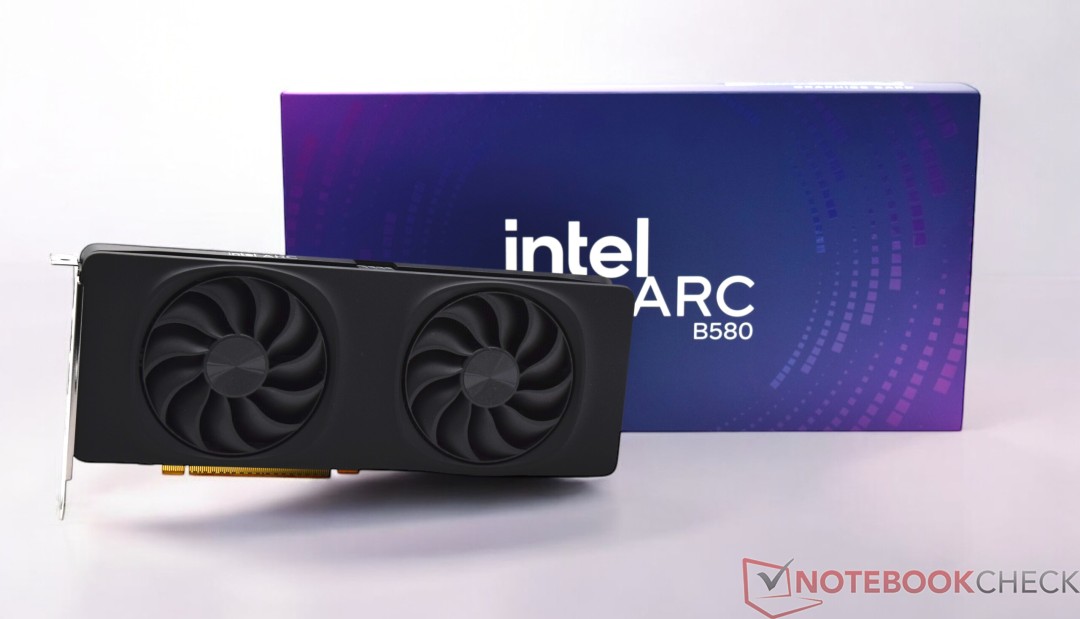
- Entry. The card arrived in December 2024 at a launch price of $249 — deliberately positioned as a GPU costing below $300 while claiming performance comparable to RTX xx60-xx70 hardware.
- Structural fragility. Supply was already tight before the AI boom distorted the market, so scarcity never started with the rumour; the rumour simply confirmed it.
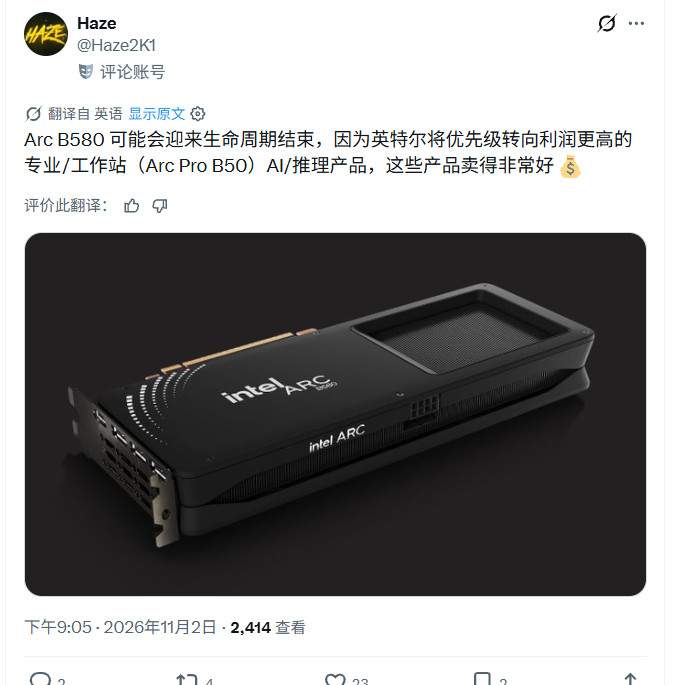
- Trigger. Leaker Haze, posting as @Haze2K1, claimed Intel could place Arc B580 on an end-of-life list and push resources into the Arc Pro series, naming Arc Pro B50 and citing strong AI inference demand for Intel's professional GPUs, as reported by Wccftech on 3 November 2026.
- Market response. The card is out of stock at most retailers; the cheapest Newegg listing has climbed to about $330, and certain UK models are selling for around £500.
Read: a price that climbs almost 33% above launch on a card designed as the affordable option destroys the reason it was specified. Any APAC standardisation built on 'the cheap Intel option' needs a revalidated cost baseline before FY27 budgeting closes.
Case file two: shared silicon explains the priority switch
The decisive detail is that the exit is not about a dying chip — it is about the opposite. Arc B580 is built on Intel's BMG-G21 die, the same silicon that powers professional cards such as Arc Pro B50 and B60:
| Attribute | Arc B580 (consumer) | Arc Pro B60 (workstation) |
|---|---|---|
| Compute | 20 Xe cores | 20 Xe cores |
| Memory | 12GB GDDR6 | 24GB memory |
| Partner variants | Board partners including Maxsun and Sparkle ship versions with up to 48GB of memory | |
| Outcome | Value positioning, thin margin | AI inference and certified workstation demand |
One die, two price points, two customer sets. When the higher-value SKU competes for the same wafer starts and the same memory supply, the consumer card loses the internal allocation argument — which is precisely why the two gaming desktop GPUs left in Intel's Battlemage lineup are now the ones under scrutiny.
The parallel case: Nvidia ran the same playbook in public
Multiple reports said Nvidia was diverting the GB202 GPU away from the GeForce RTX 5090 and into higher-margin RTX Pro cards; one account had a board partner unable even to pre-order RTX 5090 kits. Nvidia has pushed back hardest here, insisting the RTX 5090 is not discontinued and will keep shipping. So far, however, the two companies have not confirmed the accounts — and Intel's own channels have been signalling restraint: replying in August 2026 to an enthusiast query about stockouts, Intel community support said shortages do not necessarily mean the card has been discontinued and noted there was no end-of-production announcement, while the company also denied earlier this year that it was walking away from Arc desktop GPUs. Treat the exit as a channel-pricing fact, not a confirmed roadmap fact.
Why the root cause lands harder in this region
The story is not a GPU story alone; it is a memory story. J.P. Morgan research projects DRAM prices rising more than 400% between early 2024 and end-2026 as AI buildout absorbs capacity, and the same squeeze is now visible across Asia-Pacific procurement desks: Indian medical-imaging supplier Voxelgrids told the Hindu BusinessLine that GPU-based workstation costs almost doubled, from roughly ₹7 lakh to ₹13.5 lakh, with delivery stretching from under four weeks to around 16 weeks. For APAC SMEs, a workstation refresh that used to be a quarterly decision has become a lead-time gamble — which is why a 'budget' GPU disappearing upstream matters more in this region than in markets with deeper channel inventory.
Reusable lessons and next actions
- Track EOL notices, not empty shelves. Put retailer stock alerts and Intel and Nvidia product-ordering pages on one watchlist; stockouts are leading indicators, formal notices are the trigger for re-spec.
- Price the die, not the brand. Record which SKUs share silicon — BMG-G21 spans consumer and pro cards — because shared-die parts carry correlated supply risk.
- Set an acceptance band per SKU. Cap procurement at a multiple of launch price; anything materially above 1.3x is a cue to switch models, not to escalate internally.
- Qualify substitutes before they are needed. Validate at least two alternative boards for every mainstream workstation tier, including the 24GB tier where inference pilots are already migrating.
- Lock quotes in writing. With 16-week lead times reported in India, request validity-dated quotes and staged deliveries instead of trusting list prices.
Verdict for APAC decision-makers
Nothing has been confirmed, yet nothing behaves like a stable product. The value line Intel opened with the B580 is being repriced and reallocated toward workloads that pay better, and the identical logic is visible in the Nvidia flagship case. For regional buyers the practical conclusion is short: stop treating the entry tier as guaranteed supply, re-underwrite refresh plans against memory-driven cost inflation, and let official EOL documents — not retailer stockouts — make the call. The B580's real lesson is that in an AI-driven cycle, a budget SKU is a conditional promise.