
APACTechBriefing Case File: Three iCloud Cases Behind Apple's iOS 27.3 Public-Link Review — and the Asia-Pacific Action List
From iOS 27.3, iPadOS 27.3, macOS 27.3 and visionOS 27.3, Apple will check photos and files shared through iCloud with the "Anyone with the link" setting for harmful content, and can remove the item, restrict the associated Apple Account, or hand the case to law enforcement. "Send a Copy" and links limited to specified people sit outside the new review. Developer betas are already live and the public release is expected this December, which leaves roughly six weeks to audit who can open your links.
Apple set out the change in a support document published on 3 November 2026, covering iCloud Photos and iCloud Drive. For APAC organisations the headline is not censorship but dependency: public share links are a delivery channel for client work, developer builds, marketing assets and event photo pools, and that channel is now explicitly a monitored one.
What exactly is Apple checking?
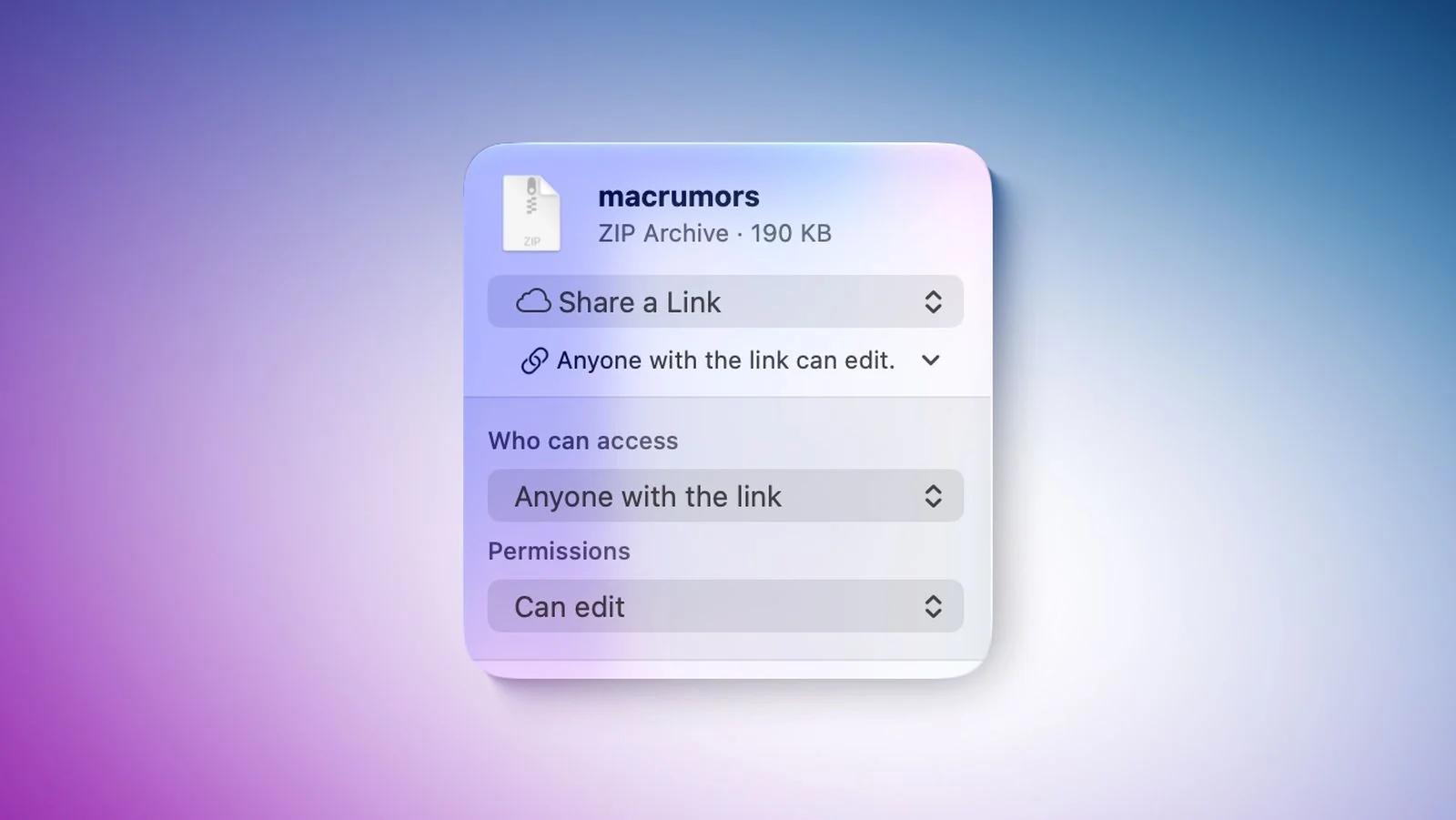
Conclusion first: only content the user has already made fully public. When you choose "Anyone with the link" in iCloud Photos or iCloud Drive, the item is opened to Apple so it can be inspected. Links restricted to specified people, and direct transfers via "Send a Copy", are not part of the mechanism.
Apple does not define "harmful content" in the document. Based on its published policies, the categories in play are most likely:
- malware;
- dangerous files;
- child sexual abuse material and other illegal or harmful content.
The company also states that it may work with law enforcement where the situation requires it.
Which sharing modes fall in scope?
iCloud file sharing works in two ways today: hand the file over, or hand out a link. The link option then splits again by audience, and only the fully public variant is monitored.
| Sharing mode | What it does | In scope of the review | Encryption note |
|---|---|---|---|
| "Send a Copy" | Delivers the file straight to the recipient | No | Transfer happens outside public hosting |
| "Share a Link" | Recipient downloads the file from a link | Only if set to public | Depends on the audience setting |
| Limited to specified people | Named recipients only | No | Remains inside Apple's encrypted storage model |
| "Anyone with the link" | Fully open, no sign-in required | Yes | End-to-end encryption is switched off, even with Advanced Data Protection enabled |
That last row is the pivot of the whole policy. Apple confirms that once content is shared publicly, Advanced Data Protection no longer covers it — which is precisely what makes platform-side inspection technically possible.
Case one: the reporting gap that pushed Apple to act
Process. In July 2024 the UK's NSPCC said Apple had vastly under-counted abuse material on its services: the charity identified 337 crimes involving Apple platforms in England and Wales alone between April 2022 and March 2023, while Apple filed 267 reports with the US National Center for Missing and Exploited Children worldwide in 2023. Richard Collard, the NSPCC's online child safety policy lead, described the gap between domestic offences and global reports as "concerning" and said Apple was behind many of its peers, according to The Guardian's reporting of the findings.
Scale comparison. Coverage of the February 2026 consumer-protection suit filed by West Virginia's attorney general put those 267 Apple reports against roughly 1.47 million from Google and 30.6 million from Meta in the same period; that suit is described as the first brought by a government agency over distribution of abuse material on Apple's storage platform, and it seeks an injunction requiring effective detection. A separate action by abuse survivors filed in 2024, seeking USD 1.2bn in damages, is ongoing.
Reusable lesson. Regulators no longer accept "we do not look". They ask whether you can look where you hold the keys. Public share links are the one iCloud surface where Apple already holds the keys — so that is where the control has landed.
Case two: the 2021 scanning retreat that shaped today's narrow scope
Process. In August 2021 Apple proposed on-device matching of iCloud Photos against known abuse material. Security researchers, the EFF, civil-liberties groups and even internal staff warned about false positives, framing risk and scope creep; the ACLU argued the guarantees were narrower in practice than advertised. Apple delayed the iOS 15 rollout in September 2021 and abandoned the iCloud photo matching plan entirely in December 2022, redirecting effort to Communication Safety features.
Result. For five years Apple's position was that bulk scanning of private cloud storage creates an attack vector that thieves and governments could exploit. The 27.3 policy does not reverse that position — it routes around it, targeting only items whose owner has voluntarily removed encryption.
Reusable lesson. Expect platform controls to arrive at the boundary between private and public, not inside the vault. Product teams designing sharing features in APAC should assume the same pattern: privacy-preserving on private data, reviewable the moment a link is public.
Case three: public links as crime infrastructure
Process. Trusted-domain links are a standard malware and phishing relay. Palo Alto Networks' Unit 42 documented Hancitor campaigns that used cloud document links on a reputable domain as a redirect to a malicious payload; Gen Digital's Avast threat report for Q1 2024 flagged iCloud-themed scam email using Apple branding and fabricated storage alerts; in May 2026, security outlets and media described a global wave of fake iCloud storage warnings that combine Punycode look-alike domains, short links and trojan downloads in one chain.
Result. Apple's stated scope — malware, dangerous files, illegal content — maps directly onto that abuse pattern, which explains why the review is anchored on the link type rather than on file type.
Reusable lesson (APACTechBriefing analysis, not an Apple statement). For APAC SMEs and agencies, legitimate-looking cloud links are now a two-sided risk: your own links can be flagged and taken down, and spoofed links pointing at real cloud domains will keep circulating. Both need to be in the same awareness training.
Why the Asia-Pacific answer differs by market
Conclusion: the enforcement and appeal path follows the Apple entity that contracts with you, not the operating system. Since 26 October 2024, Apple Services Pte. Ltd. in Singapore has been the data controller for iCloud and Apple media services for around 20 regional markets, including South Korea, Cambodia, Laos, Macao, the Maldives, Mongolia, Myanmar, Nepal, Sri Lanka and several Pacific island states. Japan is served by iTunes K.K., Australia and New Zealand by Apple Pty Limited, and iCloud in mainland China is operated by GCBD (AIPO Cloud (Guizhou) Technology Co. Ltd), with mainland user data transferred to that service from February 2018.
Consequence for compliance owners: an account restriction, a takedown notice or a law-enforcement referral arising from a public iCloud link is handled by different counterparties across the region, with different consumer-protection and notification rules. Apple's 27.3 documentation does not yet describe how the review, user notification and appeal steps run in the GCBD-operated service — we read this as an open question rather than a gap in the policy text.
Action list before the December release
- Harvest your public links. Export every "Anyone with the link" URL from iCloud Drive folders, marketing decks, developer build drops and event photo pools.
- Demote where possible. Move recurring recipients to links limited to specified people, or to "Send a Copy" for one-off handovers.
- Do not treat Advanced Data Protection as cover for public items. ADP still protects the rest of your account, but shared public content is explicitly outside it.
- Pull compliance-critical artefacts off consumer cloud links. Contracts, clinical images, student records and unreleased product renders belong on services with contractual audit trails.
- Assume the account, not just the file, is at stake. Apple reserves the right to move, refuse, modify, remove or delete content, restrict or disable the related Apple Account, and block new Apple Accounts created with the same email address or phone number — a real risk for studios and agencies running shared IDs.
- Brief frontline teams in each entity's language. Singapore-controller markets, Japan, Australia-New Zealand and mainland China need different escalation notes.
- Watch two dates: the 27.3 developer beta now and the public push expected this December, for any statement on whether links created before rollout are swept.
What Apple has still not clarified
- Whether public iCloud links created before iOS 27.3 ships will also be checked.
- A precise definition of "harmful content" and the file formats covered.
- Whether users receive notice before a takedown, and how to appeal.
- Regional timing differences across Asia-Pacific rollouts.
FAQ
Does iOS 27.3 give Apple access to my private iCloud photo library?
No. The review applies to items shared through "Anyone with the link" in iCloud Photos or iCloud Drive. Private storage remains under Apple's encryption model, and Advanced Data Protection continues to apply to content that is not publicly shared.
Will links I created before the update be checked?
Apple has not said. The published documents address the sharing mode, not the creation date, so treat pre-existing public links as an unquantified exposure until Apple clarifies.
If I turn on Advanced Data Protection, is my public link still encrypted?
No. Apple states that once content is shared as "Anyone with the link", it no longer has end-to-end encryption even if Advanced Data Protection is on. That is what allows the content check to run.
I share client files daily in Asia-Pacific — what is the lowest-risk pattern?
Use links restricted to specified people for repeat clients, "Send a Copy" for one-off transfers, and keep sensitive or regulated files on services with contractual logging. Also retire shared, generic Apple Accounts.
When does this start?
Betas of iOS 27.3, iPadOS 27.3, macOS 27.3 and visionOS 27.3 are open to developers, and Apple's release plan points to a public rollout this December.
References
- Apple Support, "Learn more about sharing content that can be accessed by anyone with the link" (3 November 2026) — support.apple.com/en-us/149168
- MacRumors, "Apple Will Check Public iCloud Links for Harmful Content" — macrumors.com
- The Verge, "Apple will check shared iCloud links for 'harmful content'" — theverge.com
- The Guardian, "UK watchdog accuses Apple of failing to report sexual abuse images" (July 2024) — theguardian.com
- The Guardian, "West Virginia sues Apple over child sex abuse material" (February 2026) — theguardian.com
- TechCrunch, "Apple delays plans to roll out CSAM detection in iOS 15" (September 2021) — techcrunch.com
- ACLU, "Apple's New 'Child Safety' Plan for iPhones Isn't So Safe" (August 2021) — aclu.org
- Palo Alto Networks Unit 42, Hancitor delivery via cloud document links — unit42.paloaltonetworks.com
- Gen Digital / Avast Q1 2024 threat report — gendigital.com
- Apple Support, "If you're asked to agree to an update to your Apple Account" (Apple Services Singapore) — support.apple.com/en-ae/120182
- Apple Support, "Learn more about iCloud in China mainland" — support.apple.com/en-us/111754
Prepared for APACTechBriefing by APACTechDigit editorial desk (Lynn Zhou). Questions or corrections: contact@apactechdigit.com.