
APACTechBriefing Deep Dive: Two Lusi Roy Mockups, One Verdict — Has Apple Fixed the iPhone Air Line Before Spring 2027?
Short answer: the two machined metal models published by leaker Lusi Roy suggest Apple is repairing the iPhone Air line rather than reinventing it. iPhone Air 2 keeps the first generation's horizontal camera platform but turns one rear camera into two lenses, adding a 48-megapixel ultra-wide, while talk of the body centres on about 5.2mm against today's 5.6mm. The companion mockup, the standard iPhone 18, stays close to the iPhone 17 dual-camera layout. Apple has confirmed none of it.
Read it as a decision record, not a gadget scoop. In Asia-Pacific device fleets, the thinnest handset in a lineup is usually the one owners regret in month seven: heat during long calls, battery fall-off, and a camera that loses a like-for-like comparison against the standard model at the same money. That is precisely where the first iPhone Air sat. Products that miss, nine times out of ten, miss on a specification nobody inside the organisation was willing to defend — not on design taste.
What do the two mockups actually prove?
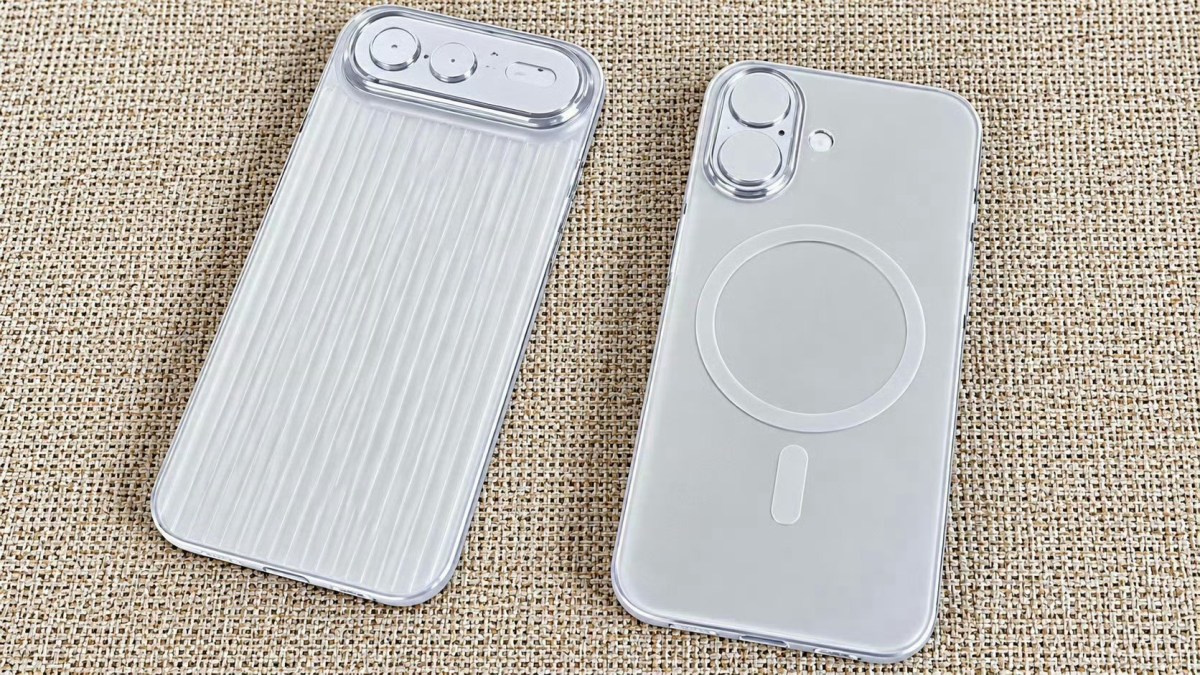
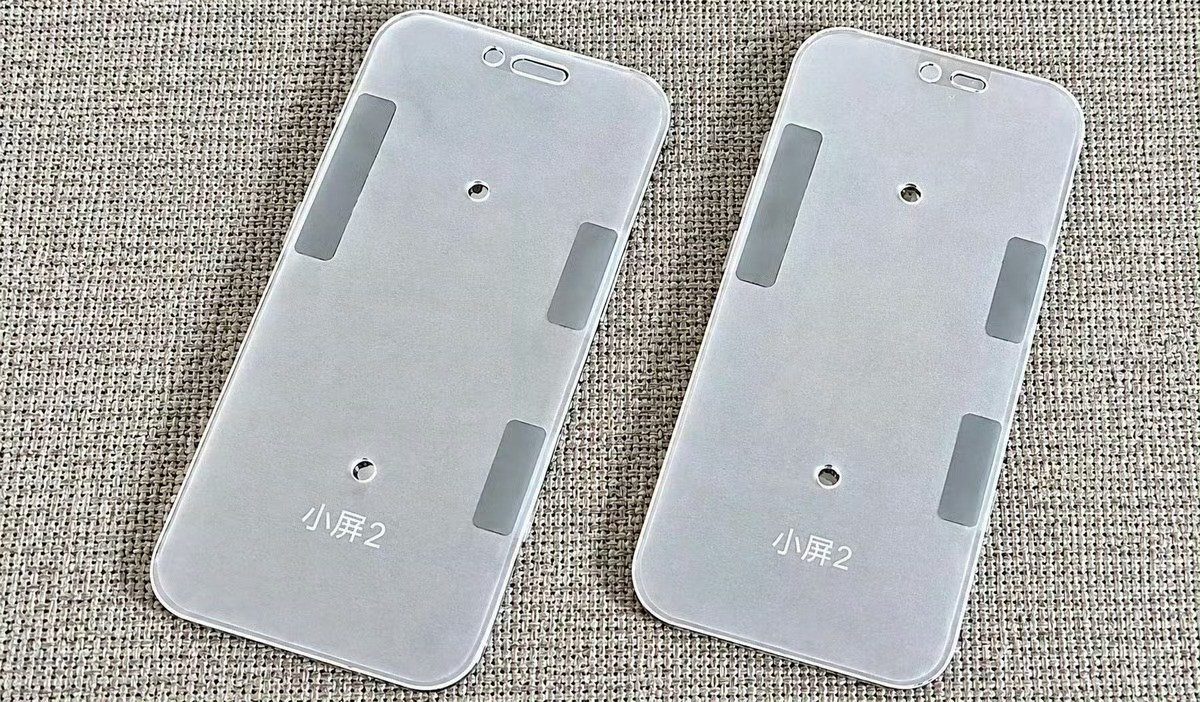
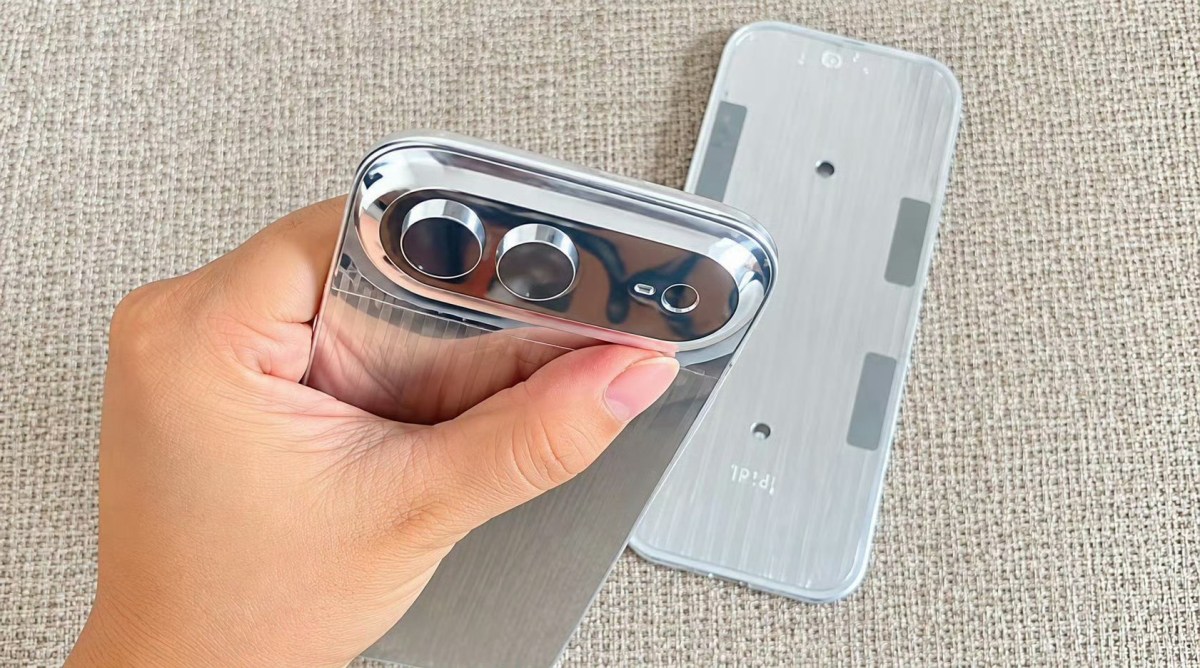
Intent, not production. Models of this kind are CNC-machined from dimensional and styling data that travels through supply-chain channels, and their job is to show body outline, button placement and camera-module geometry before an announcement. On 10 November 2026, Lusi Roy (@LusiRoy7) put both models on camera at once. What is genuinely readable from the pair is narrow, and it is worth separating that from what is not.
- Readable: iPhone Air 2 holds the horizontal camera platform, but the module now carries two lenses side by side, with space reserved for flash and microphone components.
- Readable: the silhouette is no thicker than the current model, consistent with the claim of a move from 5.6mm to roughly 5.2mm.
- Not readable: the internal stack, cooling hardware, final dimensions, and whether the second camera survives into mass production.
Why these models surface months early is accessory economics, not curiosity. Third-party case makers typically start preparing for a new iPhone roughly three months ahead, working from supply-chain documents and leaked renderings, one supplier told China News Service in August 2026. A mockup is therefore a supply-chain ritual: dependable on shape, silent on everything that decides whether the product is good.
Why did the first iPhone Air stall?
Because the hero number was bought with compromises buyers could feel every day. Cailian Press described a 5.6mm, eSIM-only handset entering China at RMB 7,999, with its launch slipping to 22 October 2025 over eSIM approval timing. 36Kr put activations at roughly 100,000 units in China by early November 2025. Supply chains moved faster than marketing: TOM Tech reported Foxconn removing Air lines and Luxshare halting assembly around the end of October 2025, while Sina Finance reported that Xiaomi, OPPO and vivo shelved their own ultra-thin projects.
Two lessons follow, and both explain the Air 2 fix list. The category did not die of taste; it died of a spec sheet that punished the person who chose it. And when an entire segment retreats, whoever stays holds the shelf — which is the real reason Apple is trying again instead of abandoning the form factor.
Which gaps is iPhone Air 2 closing?
Every reported change maps to a complaint.
- Imaging: supply-chain analyst Jeff Pu and leaker Digital Chat Station both pointed to a 48-megapixel ultra-wide joining the 48-megapixel main sensor — the second camera that erases the most obvious comparison against the standard iPhone.
- Endurance: the cell is described at about 3500mAh, up from roughly 3149mAh in the first generation.
- Heat: reporting carried by MyDrivers says a VC vapour chamber would appear in an Air body for the first time.
- Display and silicon: a 6.55-inch panel paired with an A20 Pro, according to the same leak cluster.
| Dimension | iPhone Air, first generation | iPhone Air 2, as leaked |
|---|---|---|
| Body thickness | 5.6mm | around 5.2mm |
| Rear cameras | one rear camera | two lenses, 48-megapixel main plus 48-megapixel ultra-wide |
| Battery | 3149mAh reported | about 3500mAh |
| Cooling | no vapour chamber reported | VC vapour chamber reported |
| Status | shipped and since throttled in output | not confirmed by Apple |
Read together, that table is a budget fight rather than a wish list. Removing length while adding a lens, a larger cell and a cooling plate only works if something else gives up volume, and that is the cost leaks never price. Our earlier read on Apple's reclaimed cubic millimetres covers the internal-layout mechanism behind this trade. Metal models can show a shape; they cannot show whether the thermal design holds under a summer afternoon of mapping and video.
Why does the standard iPhone 18 look unchanged?
Because it is the reference point, not the experiment. The second mockup avoids the Pro series' large horizontal camera platform and keeps a dual-camera arrangement close to the iPhone 17, in a visibly larger frame that hints at a screen-size reset — consistent with talk of a 6.3-inch ProMotion display and the A20 chip. The pricing and silicon pressure behind that configuration is what we tracked in our iPhone 18 2nm and battery briefing.
What does a split release calendar change?
Under the plan circulating now, iPhone 18 Pro, iPhone 18 Pro Max and the first foldable iPhone arrive first, while the standard iPhone 18, iPhone 18e and iPhone Air 2 shift to spring 2027 — no longer one autumn event that drops every iPhone each fall. MacRumors' iPhone 18 release schedule guide and Forbes' reporting on the higher-margin-first sequencing both treat this as attention and product-mix management spread across the calendar year.
- Channel and inventory: two demand peaks instead of one, which rewards distributors who can hold stock across a quiet mid-year and punishes those who cannot.
- Enterprise refresh: procurement can standardise in two windows a year — flagships in the autumn, price-tier and Air devices in the spring.
- Accessory economics: case, dock and MFi-adjacent suppliers get a second tooling cycle, which is exactly the industry these mockups serve.
- Regional competition: with several Asia-Pacific vendors out of the ultra-thin game, an Air 2 that finally carries a second camera faces a much emptier price band.
What still has to be proven?
- Price. Nothing in this leak touches it. At RMB 7,999 for the first generation, thinness was sold as the reason to pay; a 48-megapixel ultra-wide, a bigger battery and cooling hardware make the product better but also blur the difference from the standard iPhone.
- Physics. Whether a 5.2mm chassis can host two lenses, a 3500mAh cell and a VC plate without giving up weight, sustained performance or repairability remains unverified.
- Positioning. If the iPhone Air series converges on the standard model, Apple needs a reason for the two product lines to coexist beyond thickness.
FAQ: what readers ask first
Is the iPhone Air 2 design confirmed?
No. Two CNC mockups from a supply-chain source, consistent with what Jeff Pu and Digital Chat Station previously described, are corroboration — not confirmation from Apple.
Why does a second lens matter more than 0.4mm?
Because thickness is admired once and imaging is used daily. The missing ultra-wide limited group shots, landscapes and indoor framing on the first generation; that is a decision-maker's defect, while another fraction of a millimetre is a marketing line.
Should I wait for iPhone Air 2 or buy now?
This is our analysis, not a leak. If you need an ultra-thin handset today, the current Air is discounted and its weaknesses are known. If imaging and endurance matter, waiting until spring 2027 is rational, because the reported fixes target exactly those two items.
Will the iPhone 18 still launch every fall?
Only the high end, on the current plan: iPhone 18 Pro, iPhone 18 Pro Max and the foldable iPhone in the autumn, the standard iPhone 18, iPhone 18e and iPhone Air 2 in spring 2027.
Route map: four checkpoints before spring 2027
- Now to end-2026 — hold the budget. Treat the 5.2mm figure, the 3500mAh cell and the VC plate as three separate promises; none of them is the same claim as the shape in these mockups.
- Watch the confirmation chain. Regulator filings, accessory tooling orders and display-panel specs move first; camera count and thickness get locked long before price.
- Set the trial gate for spring 2027. If the second camera, bigger cell and cooling hardware all land, the Air line becomes a genuine fleet option; if any one is dropped, it returns to being a design statement.
- Decide the tiering before you decide the device. Assign one product line to field-facing roles and one to leadership and office roles, and let the two release windows absorb the refresh cost instead of a single autumn spike.
Verifiable sources
- China News Service, on third-party accessory makers preparing for iPhone launches roughly three months ahead — https://www.jwview.com/jingwei/html/m/08-16/683767.shtml
- Cailian Press, first-generation iPhone Air pricing and China launch timing — https://m.cls.cn/detail/2178650
- 36Kr, China activation figure reported for November 2025 — https://m.36kr.com/p/3549971501297540
- TOM Tech, Air production line removal and halts — https://tech.tom.com/202511/1178877479.html
- Sina Finance, ultra-thin projects shelved by Xiaomi, OPPO and vivo — https://finance.sina.com.cn/tech/discovery/2025-11-27/doc-infyvhsk9440415.shtml
- MyDrivers, iPhone Air 2 battery and VC cooling reporting — https://news.mydrivers.com/1/1138/1138106.htm
- MacRumors, iPhone 18 release schedule — https://www.macrumors.com/guide/iphone-18-release-schedule/