
Case Review: How iPhone Duo Reached 100,000+ Optimized Apps in About Two Weeks — a Playbook for APAC Teams
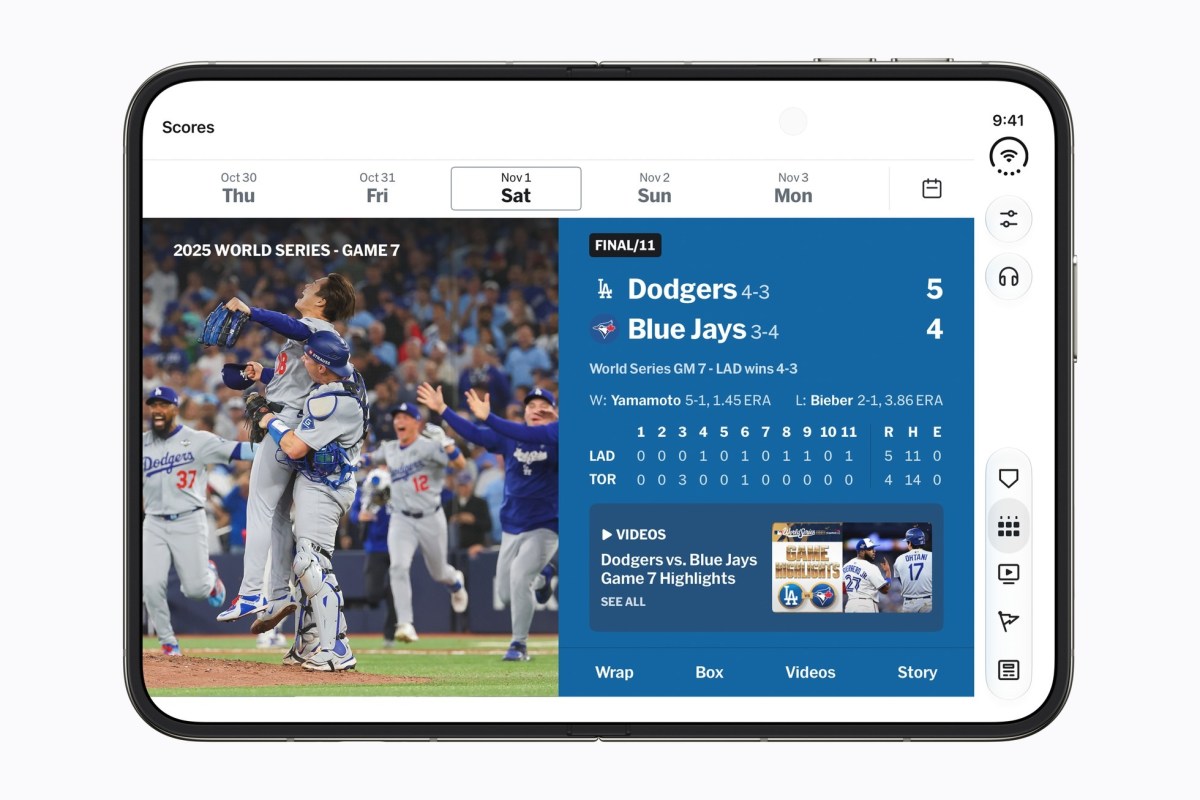
About two weeks after iPhone Duo started shipping, more than 100,000 apps optimized for the foldable are live on the App Store, with newly updated titles landing every day. The result came from three levers rather than developer goodwill: recompile-level toolchain support, hands-on labs across 19 cities, and a store badge plus a dated submission rule. For APAC product and IT owners, the useful lesson is how quickly a new screen format can be industrialized — and where the gaps still sit.
This is a post-mortem of a live case. iPhone Duo is Apple's first foldable phone, built around an inner and an outer display; whether software actually uses that second canvas is widely treated as the difference between a demo device and a daily driver. The two-week window is short enough to inspect causally and long enough to show measurable outcomes.
What happened week by week
The short answer: Apple prepared the developer pipeline before it prepared the shelf, so the ecosystem clock started weeks ahead of first delivery.
| Stage | Milestone | Why it mattered |
|---|---|---|
| September 2026 | Apple introduces iPhone Duo, its first foldable, with an inner and an outer display | Created a new reference layout size for every mobile team |
| Early October 2026 | iPhone Duo app submissions open; Apple publishes a screenshot requirement for the store pipeline | Converted a vague ask into a dated checklist item |
| October 16, 2026 | Pre-orders begin across more than 70 markets | Signalled addressable install base to skeptical developers |
| October 23, 2026 | Retail launch, with APAC stops including mainland China, Japan, South Korea, Singapore, Australia and India | Real user reports of unadapted apps surface in public channels |
| October 30, 2026 | Rollout extended to 28 additional markets | Broadened the test base beyond enthusiast reviewers |
| About two weeks after shipment | Apple reports more than 100,000 apps optimized for the device | The headline result this review dissects |
One procurement detail worth flagging for regional buyers: order queues moved quickly. Media reports citing Apple's own store listings said pre-order delivery estimates slipped to the end of January 2027 within minutes of the window opening, so any Q4 device-fleet pilot should be planned as a Q1 2027 exercise.
Lever 1: the toolchain did most of the work
Conclusion first: the fastest way to a large adapted catalog was to make partial credit the default. Apple states that apps built with standard SwiftUI and UIKit components automatically adapt to the inner and outer display environments, so an untouched but well-structured app no longer renders as a stretched rectangle. On top of that, the company shipped new development interfaces that let teams build dedicated layouts around different folding angles, hinge postures and multiple display modes.
- Rebuild, do not redraw: apps compiled against the newer SDK are recognised as optimized and extend to the full display rather than sitting in a compatibility box.
- Posture-aware APIs turn the hinge into a design primitive instead of an edge case.
- Benchmark for planning: an independent engineering guide puts comprehensive foldable support on an existing, well-architected app at roughly five to nine weeks of work, and at about 15-20% added time for new builds. Apple's default-adapt path pushes most of that cost below the level where small and mid-sized teams simply stall.
Lever 2: get developers onto real hardware
Conclusion first: hardware access beats documentation when the interaction model changes. Within the past month, Apple ran more than 50 in-person developer events across 19 cities, drawing more than 2,000 developers, who could handle iPhone Duo directly and learn how to design and tune interfaces for a folding form factor.
Susan Prescott, Apple's vice-president of worldwide developer relations, framed the outcome as a surprise on the upside: the developer response ran ahead of what the company expected, and the pace of optimization updates has continued rather than flattening after launch. For teams in APAC with no lab budget, the transferable move is obvious — borrow the device time, not just the emulator.
Lever 3: make optimization visible, then mandatory
Conclusion first: Apple paired a reward with a gate. On the in-device App Store, apps optimized for the handset carry an exclusive Made for iPhone Duo badge, giving users a recognition shortcut and giving developers a discoverability asset they lose by doing nothing.
The gate is documented in Apple's developer news, which states that starting April 2027, any apps or games submitted will need to include screenshots for iPhone Duo. Existing titles are not pulled from the store during the transition, but the next version update is where the requirement bites. That single deadline is the sharpest difference from the Android foldable ramp, where no equivalent submission gate existed.
What is live now — and what is not
Conclusion first: breadth is real in mainstream categories, and the hole is in the long tail. Currently more than 100,000 apps built for iPhone Duo are available, and the representative list Apple published for recent optimization work reads like a productivity and media index:
- Office and notes: Microsoft Word, Excel, OneNote and PowerPoint, alongside Goodnotes and Fantastical.
- Meetings and social: Zoom, WhatsApp and Instagram.
- Streaming: YouTube, Netflix and Amazon Prime Video.
- Sports: NBA and NHL, including live games and highlights on the larger inner screen.
- Prosumer and niche: Halide Mark III for imaging, Flighty for travel, Etsy for commerce and SmartGym for training.
- Late arrivals: Google Maps pushed its optimization out only recently — the app shipped a Duo-tuned version not long ago, which is exactly how the tail behaves.
The counterweight is arithmetic. A 100,000-app figure looks strong until it is set against the millions of apps in the App Store; a large share of catalogues is still untouched. Unoptimized legacy apps continue to run, but the experience is degraded: they launch, they fail to use the inner screen's real estate, and in the unfolded state they rarely reach their best display effect.
Why is this ramp faster than Android's foldable one?
Conclusion first: one reference form factor plus one review gate compresses a timeline that fragmentation had stretched for years.
| Dimension | iPhone Duo case | Android foldable precedent |
|---|---|---|
| Target shapes | Single inner/outer pair to design for | Multiple outer-screen ratios and fold styles across vendors |
| Default behaviour | Standard SwiftUI and UIKit layouts adapt automatically | Compatibility letterboxing has been the fallback since Android 12L in 2022, and platform guidance was still listing stretched, cropped and rotated layouts years later |
| Enforcement | Store submission gate from April 2027 | System-level overrides with developer exemptions, tightened only from Android 16 onward |
| Category size | Foldables stay under 3% of global smartphone shipments in 2026, but IDC models roughly 30% year-on-year growth for the category with Apple's entry; Counterpoint puts up to 6 million foldable iPhone units in 2026, behind Samsung in share | Same small base, but split across many OEMs, which weakens each vendor's business case for developers |
Analyst readings of the same category are not fully consistent — some IDC-derived summaries cite low double-digit growth for 2026 while others cite around 30% — so treat the growth rate as an estimate and the direction as the reliable part. This paragraph is analysis, not a quoted forecast.
APAC read-through: what changes for buyers and builders
Conclusion first: the device rollout and the software rollout move at different speeds in this region, and that mismatch is where budget risk lives.
- Footprint is wide but uneven. The first wave already covered mainland China, Hong Kong, Japan, South Korea, Singapore, Australia, Malaysia, Thailand, Vietnam and India, with 28 more markets added afterwards; Apple notes that feature availability can vary by language and region.
- Price bands diverge. Launch pricing starts at $1,999 in the United States and RMB 15,999 in mainland China, while several APAC conversions cluster in the low US$2,200s — cheaper than most VAT-inclusive European tiers. Procurement comparisons across markets are therefore not like-for-like.
- Supply is the gating variable, not demand. Queues extending to the end of January 2027 push enterprise evaluation into the next quarter.
- The long tail is structural. Smaller teams, plus banking, public-sector and legacy titles with slow compliance cycles, are the last to move; expect mission-critical apps in your market to lag the badge.
- Budget the audit, not just the handset. Before issuing devices, walk the top 20 staff workflows on the inner screen; the failure mode is a working app that ignores half the display.
Reusable playbook: six moves for the next new screen format
- Treat the new form factor as a recompile ticket in week zero, then schedule posture and hinge testing as a separate, human-reviewed phase.
- Get hardware time early — vendor labs, carrier demo units or an internal device shelf — because emulator-only work hides layout regressions.
- Claim the platform badge on day one: Made for iPhone Duo is now a merchandising asset inside the store listing, not a technical footnote.
- Work backwards from the platform deadline. With screenshots required from April 2027, a 90-day internal buffer means design freeze in Q1 2027.
- Instrument the tail: track how many of your own apps emit optimized builds per week, mirroring Apple's every-day update metric rather than a one-off launch count.
- Localise the rollout: price, supply windows and feature availability differ across APAC markets, so sequence launches by readiness, not by HQ calendar.
Verdict: fast ramp, unfinished curve
Two weeks, more than 100,000 optimized apps and a dated enforcement rule is a repeatable pattern for ecosystem mobilisation: lower the cost of the first move, hand out hardware, reward visibility, then close the gate. Apple's own position is that the current development speed of the app ecosystem keeps rising and that, within the next few months, more applications will take full advantage of the folding design once more teams get real-device test time and ship updates — which is a fair reading, provided the long tail is not conflated with the headline number. For APAC decision-makers the practical takeaway is a split decision: buy for pilots now, plan fleet deployment only after your own critical apps carry the badge.
Frequently asked questions
Is iPhone Duo app adaptation already finished?
No. More than 100,000 apps are optimized currently, but the App Store hosts millions of apps, and unoptimized titles still run without using the inner screen effectively in the unfolded state.
Do developers have to redesign apps from scratch?
Usually not for basic support. Apps built with standard SwiftUI and UIKit components adapt to both displays automatically, and new interfaces exist for folding angles and hinge postures. Dedicated layouts are where design effort is still required.
What is Apple's hard deadline for the ecosystem?
Apple's developer news says that starting April 2027, any apps or games submitted will need to include iPhone Duo screenshots — an enforcement point for submissions and updates rather than a recall of existing apps.
How long should a mid-sized team budget for full foldable optimization?
External engineering guidance estimates five to nine weeks for comprehensive foldable support on a well-architected existing app, and roughly 15-20% additional time for new builds. Use that as a planning range, not a guaranteed figure.
Should APAC enterprises deploy iPhone Duo in the current quarter?
As analysis rather than a vendor recommendation: not as a fleet rollout. Delivery estimates have stretched to the end of January 2027, and enterprise-critical apps sit in the unoptimized tail. Pilot on loaned or demo units and re-test after your key apps ship Duo builds.
Sources and further reading
- Apple Developer, Prepare and submit your apps for iPhone Duo: https://developer.apple.com/news/?id=kkphp5qo
- Apple Developer, iPhone Duo preparation guide (SDK and display behaviour): https://developer.apple.com/iphone-duo/prepare/
- Apple Newsroom, iPhone Duo arrives at Apple Store locations worldwide: https://www.apple.com/newsroom/2026/10/iphone-duo-arrives-at-apple-store-locations-worldwide/
- Reuters, Apple's foldable iPhone hits stores with a $2,000 price tag: https://www.reuters.com/business/retail-consumer/apple-bets-iphone-duo-can-remake-foldable-market-sales-begin-2026-10-22/
- IDC, 2026 smartphone and foldable forecast: https://www.idc.com/resource-center/blog/smartphone-shipments-set-for-record-16-7-drop-in-2026-as-the-memory-crisis-hits-full-force/
- Kanopy Labs, How to build apps for foldable devices (adaptive UI effort estimate): https://kanopylabs.com/blog/how-to-build-for-foldable-devices-adaptive-ui