
iPhone Duo's Two-Profile Ceiling: The eSIM Signal Asia-Pacific Connectivity Teams Need
Apple's first foldable handset has pushed embedded SIMs out of the enthusiast conversation and into regional mobility planning. Reporting by IT Times in late October, built on counter visits to Shanghai outlets run by China Mobile, China Unicom and China Telecom, converts the noise around the iPhone Duo into testable facts: the mainland build holds only two cellular profiles at a time, every write, transfer and recovery still happens face to face behind an identity check, and cross-border travellers keep a second phone in the bag.
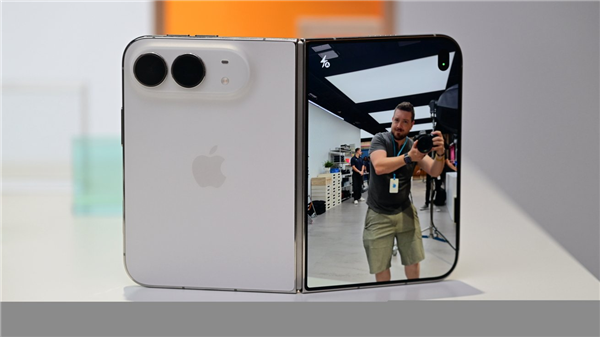
For IT managers, resellers and travel-policy owners across Asia-Pacific, the takeaway is not that eSIM fell short. It is that the binding constraint has migrated from the radio network to the policy layer — profile capacity, real-name verification and offline provisioning — and those three variables are what a 2027 fleet plan should actually be priced against.
Scenario map: where the friction sits
| Task | Physical SIM | eSIM on a mainland iPhone Duo |
|---|---|---|
| Run a dual-SIM pair from one carrier | Two trays, or two devices | Multiple profiles written in one visit to a single outlet; switching happens in software |
| Run two lines from two different carriers | Swap cards on the road | Two separate counter visits; no one-stop handling |
| Convert an out-of-province line | Often requires going home | Handled locally and free, but the owner, ID and handset must all be present |
| Add a local plan abroad | Buy and insert at the airport | Only after removing one of the two domestic profiles |
| Move to a replacement handset | Reinsert the card | In-person re-provisioning; the profile in the old device lapses |
| Open lines under one identity | Five per carrier | Same "one ID, five numbers" ceiling |
The profile cap is a regional setting, not a hardware limit
Jiang Ming, a team manager who follows his squad through league and friendly fixtures worldwide, has spent years carrying two phones loaded with three SIM cards: one main device holding his work and personal lines, one backup that takes whatever local card each destination offers. He ordered an iPhone Duo on launch day even though the handset will not reach him until December, planning to let the folding screen replace a tablet for schedules, tactical files and player data, to turn two domestic numbers into eSIM profiles, and to buy a local plan on arrival instead of hot-swapping plastic. His questions are the ones a hundred corporate travel desks ask: does adding a local plan abroad force him to delete the home number, does an embedded profile pick up better signal, and can a line registered in another province be converted where he lives.
The three counters gave the same answer. Mainland iPhone Duo units support a maximum of two eSIM profiles written simultaneously; this is a regional restriction, because the same hardware sold in overseas markets can store as many as eight profiles. With two domestic eSIM lines active, adding a third, overseas eSIM profile means deleting one first. A China Telecom staffer drew the line precisely: "Only the profile written into the handset is removed. The number itself is not cancelled, and after you return home you can go to a business office in person to write it again and restore it." The same counter confirmed that eSIM shares the base-station network with physical cards, so signal strength shows no essential difference; what the embedded card eliminates is wear and loosening, which improves long-term stability.
Read regionally, that cap is the most consequential specification in the deck: a three-country APAC itinerary is a one-handset job only where operators permit more stored profiles. Jiang Ming's compromise was to split duties — work line and family line stay as permanent profiles on the main handset, while the old backup phone goes back into the kit bag to carry local physical cards. eSIM did not deliver one-phone travel; it trimmed the load.
Conversion is simple at the counter and impossible from the sofa
Chen Feng, a Shanghai-based dual-number user, keeps an Anhui hometown China Telecom line bound to banking and social accounts plus a Shanghai China Mobile number for work. His fear was that a number registered in another province would have to be re-homed at its origin. Counter staff told him otherwise: with the person, the identity document and the device present, the conversion is completed on the spot and free of charge.
IT Times found that the three major carriers' own outlets are progressively supporting cross-province physical-to-eSIM transfers and out-of-town eSIM re-issue, although some branches still apply extra restrictions — so a check through a carrier app or customer-service hotline before setting off is worth the minute. Plan entitlements travel intact: whatever a line used before conversion, it uses after.
Three operating rules shape everything downstream:
- Mainland-market phones supporting eSIM now number more than ten, and beyond the iPhone Air and iPhone Duo this includes multiple models from other mainstream brands. Because activation, transfer and re-issue require on-site reading of the device IMEI and EID, every one of those transactions requires the owner to appear with the hardware — no proxy handling, no advance processing without the handset.
- Two lines belonging to the same operator can be written at one outlet in a single visit, with line switching done inside the phone's system settings. If the two lines belong to different operators, no single outlet can finish both: each carrier visit is separate.
- eSIM sits inside the same "one ID, five numbers" real-name ceiling, under which one identity document cannot hold more than five numbers with a single operator. The China Industry and Information Technology News Network, an MIIT-linked outlet, traces the rule to the Ministry of Industry and Information Technology's subscriber real-name requirements; the embedded form factor is simply folded into the existing regime.
Device migration is where the experience gap bites hardest. A physical card moves by hand; an eSIM profile has to be re-provisioned in person, and the profile in the old handset is invalidated at the same time. Self-service online migration does not exist and proxies are refused — staff at every outlet visited gave the same rationale, that owner-only verification blocks number theft through third-party operations.
The first crack in the counter-only model appeared at MWC26 Shanghai, where industry figures told IT Times that mainland carriers may open online eSIM handling in the second half of this year. Before that interview was filed, China Unicom had already run a limited-time "eligibility draw for online eSIM service", letting winning customers submit applications through the Unicom app.
From wearable sidecar to primary line
Around 2015, eSIM landed first on smartwatches and other wearables. Between 2017 and 2018, China Unicom and other carriers introduced "one number, two devices" services so a watch could stay connected without the phone beside it. Only in recent years, as flagship handsets have shrunk or removed the card tray entirely, has the technology started to move out of its role as a secondary line and into the primary-line position.
The regulatory timeline is short and dense. On 13 October 2025, China Mobile, China Unicom and China Telecom announced on the same day that the MIIT had granted commercial-trial approval for eSIM handset services, and counter acceptance subsequently went live nationwide across all 31 provinces, autonomous regions and municipalities. A year later, three frictions remain unresolved: locality-based entitlement walls, dependence on offline handling, and differences in device-side profile capacity. In September 2026 the MIIT issued the information and communications sector's 15th Five-Year Plan, which explicitly calls for the orderly advancement of embedded SIM applications and new-service filings.
The numbers behind the ramp, and the Asia-Pacific divergence
The China Academy of Information and Communications Technology's eSIM industry development report for 2026 puts cumulative global eSIM connections above 1.3 billion by the close of the first quarter of 2026, with mainland China past 230 million, of which the IoT segment contributes more than 180 million — leaving handset eSIM at the very start of its commercial trial.
Outside trackers add regional texture to that picture. GSMA Intelligence counts eSIM-equipped smartphones at roughly 5% of the global installed base at the end of 2025 and projects a doubling to 10% by the end of 2026. Juniper Research models eSIM-connected devices growing about 30% in 2026, rising from 1.2 billion in 2025. The CAICT report, citing ABI Research, puts the 2025-2030 eSIM smartphone shipment CAGR at 22.8% in Asia-Pacific against 6.2% in North America and 9.8% in Western Europe, with the caveat that the Asia-Pacific series excludes mainland China. Two conclusions follow: the mainland is not yet riding the regional shipment wave, and the markets around it are. The same report notes that more than 400 operators across over 120 countries and regions offered eSIM service by the first quarter of 2026 — supply-side coverage is close to finished, so the next competitive gap is service depth, not network readiness.
Why does policy bite harder than technology here? Because remote provisioning is carrier-gated by design. Under GSMA's Remote SIM Provisioning framework, subscription-management platforms and profiles must clear the Security Accreditation Scheme, so adding or moving a line is always an operator-controlled transaction rather than a settings toggle. That architecture underwrites security — and translates directly into the mainland's counter-first rules.
On the demand side the economics already favour embedded profiles for heavy travellers: Juniper Research estimated in 2024 that travel eSIM data costs around 35% less per gigabyte than conventional roaming, a saving a mainland iPhone Duo owner can only capture by first giving up one of the two domestic lines abroad. Procurement cost sharpens the expectation gap: Sichuan Daily's launch coverage pegged the mainland iPhone Duo from 15,999 yuan, and buyers paying that much for a card-free foldable expect a cellular workflow that current regulation has not yet delivered.
Action checklist for APAC mobility and IT leads
- Do the profile arithmetic before ordering. Two domestic lines on a mainland unit leaves no room for a destination plan; if crews must keep both lines and add local data, price a fallback device or choose a multi-profile variant.
- Keep one physical-tray handset in every frequent-traveller kit through 2027, and treat eSIM as load reduction rather than device consolidation.
- Confirm branch capability in advance through carrier apps or hotlines; cross-province conversion and out-of-town re-issue are supported at the three major carriers' own outlets but not universally at every branch.
- Book the identity step into onboarding and replacement workflows: owner plus ID plus handset at the counter, with no proxy option, plus allowance for the old profile lapsing after migration.
- Monitor the online channel. China Unicom's eligibility draw and the carrier timetable signalled at MWC26 Shanghai are the earliest evidence that counter-only provisioning will loosen in the second half of this year.
- Re-price roaming against regional multi-country eSIM plans for non-mainland-registered devices, where profile capacity is not the limiting factor.
Bottom line
The iPhone Duo does not prove that eSIM is immature; it proves that the mainland rollout is gated by verification policy and profile caps rather than by radio performance. Expect the two-profile ceiling to stay the binding constraint while handset eSIM completes its commercial trial, and expect counter visits to become the exception rather than the rule once online provisioning scales against the direction set in the 15th Five-Year Plan. For Asia-Pacific, where the same hardware stores up to eight profiles in other markets, the practical posture for the next two budget cycles is unchanged: eSIM-ready, but never multi-card-free.