
APACTechBriefing — Macronix Drops ROM: Inside the Taiwan Chipmaker's Pivot to AI-Grade Flash
APACTechBriefing · APACTechDigit · By Lynn Zhou
Macronix, the Taiwan memory supplier whose chips sit inside Nintendo Switch game cards, has confirmed it is phasing ROM out of its portfolio and pushing capacity and capital into NAND and NOR flash sold to AI data centers. ROM now accounts for 5% of company revenue, down from 26% a year earlier. Physical game cards are not disappearing, but the move strips a second source out of a cartridge chain just as flash costs climb.
What exactly has Macronix decided to stop doing?
The headline is a portfolio exit, not a factory closure. Recently Macronix Electronics (Macronix International), the Taiwan-listed memory specialist, told its third-quarter investor briefing that it will gradually halt ROM production and will not develop new ROM products; from the next reporting cycle onward, ROM will no longer be broken out as a separate revenue line. In briefing terms, the business has been folded into the flash roadmap rather than quietly de-prioritised.
Three things a procurement or strategy reader should take from that:
- ROM here means mask read-only memory — the fixed-data chip a console reads the moment a cartridge is slotted in. It is cheap, mature-process silicon, and it lives mostly in game cards and other fixed-content sockets.
- Loss of disclosure is itself a signal. Once a supplier stops reporting a line, buyers and analysts lose a clean read on residual capacity, making last-time-buy behaviour more likely among cartridge assemblers.
- The trigger was mix, not necessarily a volume collapse. The slide from 26% to 5% is a share-of-revenue figure; if flash revenue expands fast enough, ROM's slice shrinks even when unit shipments hold up for a time. Treat any "ROM demand collapsed" reading as unproven.
Why walk away from a Nintendo contract at all?
Because the same wafer start earns dramatically more in flash. Macronix posted a record quarterly net profit of NT$10.95 billion with gross margin at 70.5% — a result built on data-center-facing products, not game-card parts. Company coverage of the earnings call put NOR flash revenue up 158% year on year at 46% of sales, and NAND — led by embedded eMMC — up 768% year on year at 47%, with the two flash families together contributing roughly 93% of revenue.
| Product family | Share of latest quarter revenue | Reported trajectory | Demand engine |
|---|---|---|---|
| ROM (mask read-only memory) | 5%, from 26% a year earlier | Down 39% year on year, up 9% quarter on quarter | Game cards, legacy fixed-content sockets |
| NOR flash | 46% | Up 158% year on year | Code storage for AI servers, networking, edge devices |
| NAND / eMMC | 47% | Up 768% year on year | Embedded storage for data-center and edge builds |
Macronix chairperson Miin Wu framed the decision in resource terms: capacity is finite, the centre of gravity has moved to NOR and eMMC, and the company's link to gaming applications is now marginal — while data-center customers are actively chasing additional NOR supply. That is a margin argument, not a technology obsolescence argument.
How real is the data-center pull behind the pivot?
Real enough to reshape price curves across the region. TrendForce recorded cumulative average NOR flash contract-price gains of 100–120% in the first half of 2026 and expected the squeeze to persist: "As NOR flash memory makers' capacity expansions remain scant, demand-supply mismatch will carry into the second half of 2026," the research house said in commentary reported by the Taipei Times on 15 September 2026. TrendForce separately forecast high-capacity NOR contract prices climbing 90–110% in the second half of 2026.
The macro backdrop explains why consumer-facing lines keep losing allocation. TrendForce estimates global data-center power demand capacity at 161 GW in 2026, up about 31% year on year, with AI servers accounting for roughly 33.4% of that capacity. Macronix is one of several Asia-Pacific memory vendors re-cutting internal capacity allocation toward these buyers, and the company's own quarterly statements and investor materials are published on its official investor-relations page at mxic.com.tw.
What does the exit do to Nintendo cartridge supply?
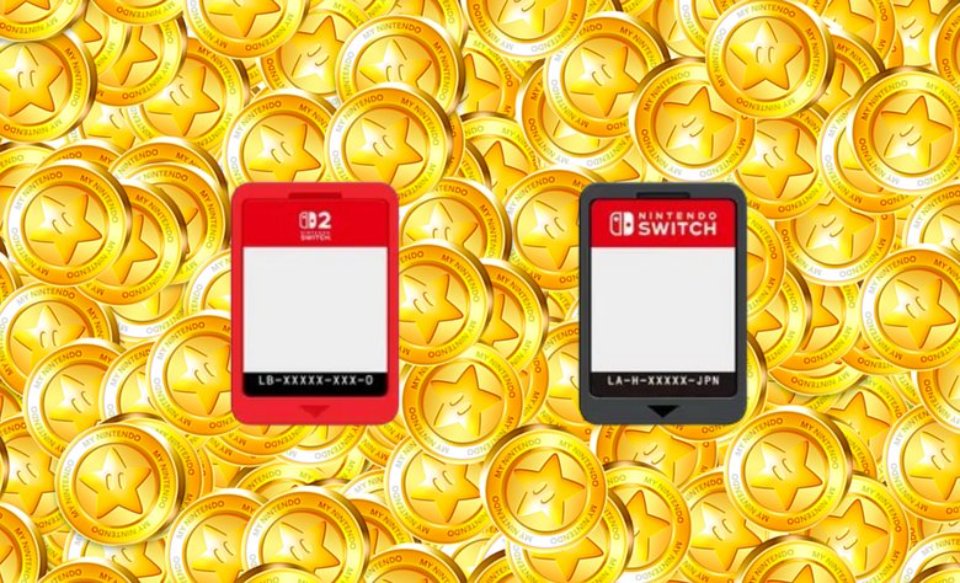
The near-term answer: little, and the effect is mostly on cost rather than availability. Macronix supplied ROM chips mainly for cartridges for the original Nintendo Switch, and Nintendo works with multiple chip vendors. Nintendo Switch 2 game cards already use NAND flash rather than traditional ROM, and NAND has a wide supplier base — Macronix itself sells NAND into that market. So no large-scale shortage of boxed titles is expected.
The second-order effects matter more for planners:
- Redundancy is already being built. Teardown reporting circulated in April 2026 identified Japan's ROHM as the chip source in Nintendo Switch 2 game cards, which suggests dual-sourcing is in place at the newer format — but it also concentrates legacy support on fewer fabs.
- Long-tail titles absorb the squeeze first. Smaller publishers and regional distributors in Asia-Pacific have less bargaining power over cartridge minimum order quantities, so per-unit cost pressure shows up on niche and late-cycle releases before flagship ones.
- Analysts see format drift, not shortage. David Gibson, senior analyst at Sydney-based MST Financial, has noted that Macronix is only one vendor in Nintendo's card supply chain and expects physical cards to keep shipping, while warning that more publishers may lean on digital releases or key-card formats as the ROM supplier steps back.
Is the physical game being priced out of the market?
The chip decision lands on top of an existing distribution trend. Sony has committed to ending physical disc production for new PlayStation titles from January 2028, with catalogues before that date keeping disc versions; Sony has told investors roughly 80% of PS5 games sold are already digital, a figure cited by The Verge from the company's May 2026 results. On Nintendo's side, digital sales reached 54.6% of dedicated-platform software revenue in the fiscal year to March 2026 and 60.7% in the April–September 2026 half, according to the company's interim reporting carried by games-industry media. Rising manufacturing and retail costs for cartridges, plus the same NAND and eMMC inflation, push both platform holders and third-party publishers toward downloads and game key cards — a physical box that contains only a download licence. For Asia-Pacific markets with uneven broadband reliability and strong retail collectibles culture, that shift is likely to be slower and more negotiated than the headline numbers imply.
Action lines for APAC tech and digital leads
- Reprice any bill of materials that still relies on fixed-content memory. Ask suppliers in writing for phase-out schedules, product-change notices and last-time-buy windows; legacy sockets are the first thing mature fabs shed when data-center margins look better.
- Qualify a second source now, not at the next shortage. Capacity additions take more than a year to land, so re-design and re-validation cycles should start while lead times are merely uncomfortable.
- Publishers and distributors: model landed cost per gigabyte for cartridge, key card and download across each market, and pre-book contracted volumes of eMMC and NAND rather than relying on spot buys into 2027.
- Investors and corporate strategy: watch mix disclosure. A supplier that stops reporting a segment usually has already redeployed the assets behind it; Macronix's next quarterly pack is the cleanest checkpoint.
- Set a price-risk review cadence. Triple-digit NOR contract-price gains in 2026 will surface as cost lines in set-top boxes, industrial controllers, networking gear and consumer hardware across the region.
Common questions
Why is Macronix quitting ROM chips used in game cards?
Resource allocation. ROM contributes 5% of revenue against 26% previously, while NOR and NAND/eMMC tied to AI data centers grew by reported year-on-year rates of 158% and 768% and delivered a 70.5% gross margin alongside record quarterly profit of NT$10.95 billion.
Will boxed Nintendo Switch games become scarce?
There is no evidence of imminent scarcity. Nintendo keeps several suppliers, cartridges for the original Nintendo Switch are legacy volume, and Nintendo Switch 2 cards use NAND from a broader vendor pool. The realistic risk is higher per-unit cartridge cost and a greater share of key-card releases.
Why do AI servers need NOR flash?
NOR stores boot and firmware code that processors execute directly, so every accelerator, switch and power-management controller in a server rack needs it. It is a small share of a bill of materials, which makes buyers tolerant of price increases — the reason it out-earns game-card ROM.
What should I watch next?
Three checkpoints: Macronix's next quarterly report, where the ROM line disappears; NOR and eMMC contract pricing into the first half of 2027; and publisher announcements shifting titles from cartridge to digital or key-card formats.
Sources and further reading
- Macronix International investor relations, quarterly results and briefing materials — mxic.com.tw
- TrendForce, "NOR Flash Price Trends Diverge in 2H26, with High-Capacity Products Rising," 14 September 2026 — trendforce.com
- TrendForce memory and AI Server research summary republished by the Taipei Times, 15 September 2026 — taipeitimes.com
- Macronix third-quarter briefing and analyst commentary carried in Asia-Pacific financial syndication — news.futunn.com
- The Verge on Sony's end of physical discs for new PlayStation titles from January 2028 — theverge.com
- Nintendo interim results coverage on digital share of software revenue, April–September 2026 — insider-gaming.com
Corrections or data requests for the APACTechBriefing desk: contact@apactechdigit.com — APACTechDigit.