
AI Day Seoul 2026 Without Madison Huang: A Trade-Off Scorecard for Asia-Pacific Physical AI Buyers | APACTechBriefing
Verdict first: the programme survived, the access channel did not. Nvidia AI Day Seoul 2026 still opens on the 9th and runs to the 10th of this month in Seoul, with other Nvidia executives stepping in for Madison Huang, senior director of product and technology marketing for the Physical AI platform, who called off her visit citing family reasons. What Seoul loses is rarer than a keynote slot: a direct ministerial line into Nvidia's simulation-and-robotics roadmap.
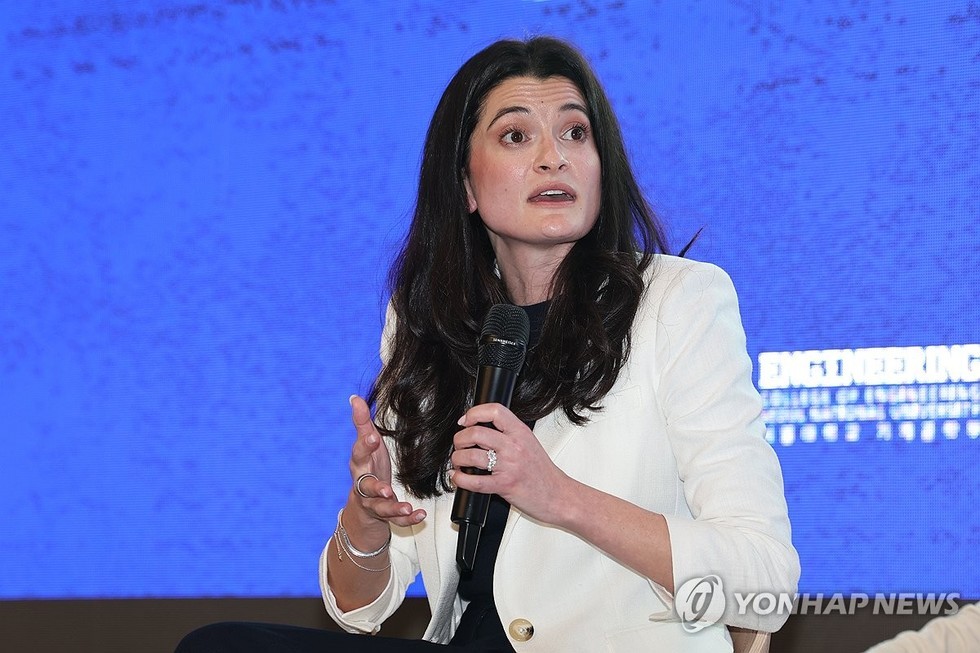
Madison Huang, file photo. Image credit: Yonhap News Agency
The disclosure came on the 8th from Korea's Ministry of Science and ICT and people in the local IT industry. For readers outside the Seoul beat, here is the compressed version of the episode — and, more usefully, a trade-off read of what one executive's absence actually changes for buyers, integrators and startup partners across the region.
What was cancelled, and what proceeds regardless?
Short answer: two government-facing engagements dropped; the two-day technical event did not.
| Item | Original plan | Status after the pullout | Decision weight for buyers |
|---|---|---|---|
| Ministerial meeting | Deputy Prime Minister and Minister of Science and ICT Bae Kyung-hoon was to meet Madison Huang on the afternoon of the 8th in Yeouido, Seoul | Scrapped | High: this was the visible link between the Physical AI product line and the national AI programme |
| Startup forum | Huang was set to co-chair the Korea AI Startup Partnership Forum with Ryu Je-myung, Second Vice Minister at the ministry | Her seat in the chair is now empty; other Nvidia staff are expected to cover | Medium-high: the matchmaking venue for local startups around Nvidia tooling |
| Flagship event | Nvidia AI Day Seoul 2026 on the 9th and 10th of this month | Proceeding as planned, with other Nvidia executives attending in her place | Medium: the technical agenda was never her solo property |
| Stated reason | "Family reasons", as relayed by Yonhap News Agency | No further detail made public | Low: unverifiable, so treat it as context rather than evidence |
Precision note: the Korean side explicitly confirmed only the calling-off of the meeting with Bae Kyung-hoon. Reporting describes the forum co-chairing as planned rather than formally cancelled, so buyers should not read a policy reversal into it.
Which dates and numbers actually matter?
- 8 November 2026 — Korea's Ministry of Science and ICT and the local IT sector disclose the cancelled visit.
- Afternoon of 8 November — the Yeouido meeting that did not take place.
- 9 to 10 November 2026 — Nvidia AI Day Seoul 2026 runs on schedule.
- 2020 and 2022 — the years Madison Huang joined as an intern and Spencer Huang joined Nvidia.
- 2025 — the year Jensen Huang publicly answered the nepotism question at Nvidia.
- 260,000-plus GPUs — the Korea public-private commitment for physical and agentic AI reported by Reuters on 31 October 2025, of which the government earmarked more than 50,000 chips for national AI infrastructure.
- 18 August 2026 — Huang toured LG Electronics' robotics and robot-data facility in Seoul, days after LG and Nvidia signed a strategy MOU.
Why does one senior director's absence register at all?
Because the portfolio she carries is the one Asia-Pacific industry is currently buying. Huang leads product marketing for Omniverse simulation and robotics inside Nvidia's Physical AI platform, and that platform sits in the lane Jensen Huang has repeatedly flagged as the growth track after data-centre silicon — a lane where robot OEMs with install bases exceeding 2 million units, including FANUC, ABB Robotics, Yaskawa and KUKA, have been wiring Omniverse libraries into their own simulation stacks (The Robot Report, March 2026).
Her Korea calendar was the tell of how seriously that lane is treated locally: she accompanied her father on his June visit, toured LG Electronics' robot-training facility in August, and industry media counted the November trip as her fourth Korea visit of the year. Layer that on the announced Korean GPU volumes and on the demand signal that keeps rattling Asia-Pacific memory and foundry assumptions — the TSMC 3D DRAM rumour tied to Nvidia requirements — and a Seoul sit-down with the science minister stops looking ceremonial.
Schedule slip or governance signal? Two readings, weighed
Reading A, the operational one. A senior director of product marketing spends her year flying between platform launches; the reason stated was family, the delegate list already existed, and the event runs on the 9th and 10th regardless. Cost of the absence: one lost headline, not a roadmap.
Reading B, the optics one. Nvidia has been living with a succession-and-fairness question. In 2025 Jensen Huang was asked whether the company tolerates nepotism; he answered that it employs many employees' children and that he is unbothered, because parents would not vouch for children who bring them shame, adding with a laugh that many "second-generation Nvidia employees" have outperformed their parents. Madison Huang spent time as a chef, then joined LVMH, the France-headquartered luxury giant, and entered Nvidia as an intern in 2020; Spencer Huang ran a bar for years before joining in 2022. Both were promoted repeatedly and work mainly in simulation software and robotics, and she has become the executive who prepares the company's biggest events inside the CEO's core circle. The Information's 2025 profile of the siblings described their climb as having happened largely below the radar of outside observers — exactly the framing that makes a photo call with a sitting deputy prime minister expensive if any detail goes sideways.
Our read, stated as analysis rather than fact: Reading A carries the better evidence today. What would shift us to Reading B is a pattern — repeated withdrawals from government-facing slots while commercial and technical slots keep their executives.
Which access route should your team use instead?
One trip had collapsed three channels into a single day. Compare them and pick by decision type, not by prestige.
- Ministerial and executive channel — fits sovereign-AI, subsidy-linked or public-private programmes where a ministry signs off. Trade-off: zero redundancy; one diary change erases a quarter of signalling. Use it to validate policy direction, never to transmit product requirements.
- Ecosystem and startup partnership forums — fit ISVs, robotics integrators and cloud resellers that need Nvidia tooling mapped to local products. Trade-off: outputs are soft and list-based, and follow-up runs through named partner managers rather than through whoever chairs the panel. Use it to enter the partner tier list and to source reference deployments.
- Hands-on technical sessions — the training and parallel-track programme that stays on regardless of who flies in. Trade-off: no policy access, and it is a self-serve, often paid channel, which is precisely why it is the most predictable. For product and engineering leads, this is where a procurement specification actually gets written.
What should APAC teams do in the next two weeks?
- Do not re-forecast on this event. Keep GPU and robotics supply assumptions anchored to announced figures, such as the 260,000-plus Korea commitment, until the company itself changes them.
- Re-route the questions you had for her: simulation, digital-twin and robotics deployment queries belong with regional partner managers and session faculty, not with a keynote seat.
- Watch which executive fills the slot on the 9th. The substitute's portfolio is a cleaner priority signal than any photo call.
- Add a governance line to Korea-facing rollouts. Local supply-chain trust is under strain, as the intrusion wave affecting at least 20 South Korean financial institutions disclosed through late October 2026 shows.
- Log the absence as a vendor-risk data point: if a partner's roadmap communication depends on a single named executive, write a named backup into the engagement plan.
Frequently asked questions
Did Nvidia move AI Day Seoul 2026 to another date?
No. The event on the 9th and 10th of this month proceeds as planned, with other Nvidia executives attending in place of Madison Huang.
What reason was given, and is it documented?
"Family reasons", as reported by Yonhap News Agency. No supporting detail has been published, which is why this briefing treats the explanation as context, not as evidence for any strategic interpretation.
Does the cancellation change Nvidia's commitments in Korea?
Nothing in the reporting indicates a change to announced infrastructure or partnership figures. Our assessment: absent a company statement, buyers should price this as a scheduling event, not a policy shift.
Is this about succession at Nvidia?
Not demonstrably. Madison Huang and Spencer Huang both rose through simulation and robotics lines since 2020 and 2022, and their father addressed nepotism questions in 2025, but no disclosed link exists between the cancelled Seoul trip and succession planning.
Sources
- Reuters, 31 October 2025: Nvidia to supply more than 260,000 Blackwell AI chips to South Korea — https://www.reuters.com/business/media-telecom/nvidia-supply-more-than-260000-blackwell-ai-chips-south-korea-2025-10-31/
- The Robot Report, March 2026: Nvidia working with global robotics leaders on physical AI — https://www.therobotreport.com/nvidia-collaborates-global-robotics-leaders-make-physical-ai-reality/
- Korea Herald, 28 October 2026 and 17 August 2026 reporting on Madison Huang's Seoul visits and the LG robotics facility tour — https://www.koreaherald.com/article/10917506
- The Information, 8 August 2025: Nvidia's quiet rising stars — https://www.theinformation.com/articles/nvidias-quiet-rising-stars-son-daughter-billionaire-founder-jensen-huang
- NVIDIA newsroom and blogs on Korea ecosystem partnerships — https://blogs.nvidia.com/blog/ai-summit-korea-partners-and-nvidia/
- Base facts on the cancelled trip: Korea's Ministry of Science and ICT and local industry disclosure, 8 November 2026, via Yonhap News Agency.
Filed by Lynn Zhou for APACTechBriefing on APACTechDigit. Corrections and tips: contact@apactechdigit.com