
Mercedes-Benz L3 Retreat: A Q&A Decision Brief for APAC Technology Buyers
By Lynn Zhou
Mercedes-Benz has paused its Level 3 experiment by removing Drive Pilot from the new S-Class and updated EQS, then shifting near-term value to L2++ driver assistance while pursuing L4 with Momenta in Abu Dhabi. For Asia-Pacific technology leaders, the signal is practical: autonomy now has to earn adoption through usable coverage, clear liability, cost, and repeatable regional rollout—not just certification headlines.
Why did Mercedes-Benz step back from L3?
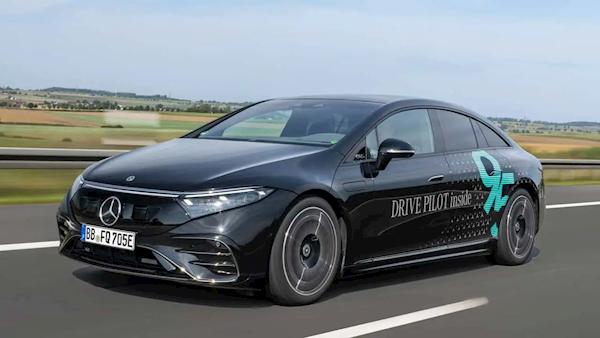
Because Drive Pilot cleared a regulatory milestone before it solved a commercial one. Mercedes-Benz said in late 2021 that the Germany's Federal Transport Authority approved Drive Pilot as the first legally available production L3 system. In 2023, the same route entered Nevada and California in the United States. Yet the system remained capped at 64km/h and required congested highway driving, clear daylight and mapped coverage. That made it useful for low-speed traffic jams, but weak for the broader driving journeys customers pay to automate.
Pricing also limited adoption. In Germany, the option cost 5000 to 9000 euros; in the United States, customers faced a 2500 USD annual subscription. By this January, the new S-Class no longer offered Drive Pilot, and the updated EQS dropped it as well. At a media roundtable, Mercedes-Benz CTO Jorg Burzer described the Level 3 push as “early,” according to Road & Track. For APAC buyers, this is the core warning: first certification is not a proxy for product-market fit.
What is replacing Drive Pilot?
MB.DRIVE ASSIST PRO, an L2++ system built for more frequent use. It supports point-to-point assistance on highways and in urban roads, including lane changes, intersections, turns and traffic-light response. The new S-Class can carry up to 27 sensors: 10 cameras, 5 millimeter-wave radars and 12 ultrasonic radar sensors, with a 254 TOPS compute platform. But the system remains L2, so the driver must keep hands on the wheel and eyes on the road, while responsibility stays with the driver.
Mercedes-Benz has already landed the system in China, then plans to push it to the United States and Europe. That sequence matters for APAC decision makers because the China-first route suggests local data readiness, supplier collaboration and regulatory acceptance are becoming the gating factors before global expansion.
What does the L4 plan change?
It changes the destination, not the timetable. Burzer said Mercedes-Benz is aiming to move beyond the constrained L3 stage and concentrate on L4, where the vehicle can handle all driving tasks under defined operating conditions. His forecast puts production after 2030, followed by phased deployment. The company is currently testing an S-Class-based L4 robotaxi programme with Momenta in Abu Dhabi.
A further signal appeared in project updates from Momenta: the Abu Dhabi activity is being framed as a luxury robotaxi fleet effort with local operator Lumo, not only a one-off technical trial. For APAC teams, that suggests autonomy roadmaps may bypass consumer ownership for a while and prioritize fleet economics, remote operations, insurance and maintenance first.
Key facts to verify before choosing a supplier
Use these checks as a briefing checklist rather than a brand verdict.
- Verify the operating envelope: speed cap 64km/h for Drive Pilot versus the broader L2++ coverage promised by MB.DRIVE ASSIST PRO.
- Verify the responsibility model: L3 transfers driving duty in limited conditions; L2 keeps duty with the human driver.
- Verify hardware and compute: 27 sensors, 10 cameras, 5 millimeter-wave radars, 12 ultrasonic radar sensors and 254 TOPS.
- Verify regional sequencing: China first, then the United States and Europe; L4 testing is in Abu Dhabi.
- Verify price realism: 5000 to 9000 euros in Germany and 2500 USD annually in the United States were not enough to sustain Drive Pilot demand.
Action suggestions for APAC technology and strategy teams
- Ask suppliers for usable minutes, not just feature claims: how many route-kilometres can a system handle under local weather, maps, road types and traffic rules?
- Model liability before adoption: if an L2++ product still requires supervision, fleet policies, driver training and telematics evidence become central.
- Treat Abu Dhabi L4 testing as a regional sandbox: it may reveal how Asian and Middle East markets sequence robotaxi pilots before consumer vehicles.
- Compare certification, coverage and subscription economics; a system that is technically impressive but rarely usable can erode trust.
FAQ: High-frequency decision questions
Did Mercedes-Benz abandon automated driving?
No. It paused a specific L3 consumer offer while investing in more usable L2++ assistance and continuing L4 robotaxi testing with Momenta in Abu Dhabi.
Is L2++ safer than L3?
Not automatically. L2++ can cover more driving tasks, but the human remains responsible and must supervise; L3 can reduce supervision only inside narrow, approved conditions.
Why does the 2030 L4 date matter for APAC buyers?
It signals that large-scale consumer Level 4 may remain distant. APAC teams should plan around assisted driving, fleet pilots and regulatory readiness rather than immediate hands-free ownership.
What is the clearest commercial lesson?
Autonomy is being repriced from novelty to reliability. Products need regional deployment, manageable liability and daily use; otherwise a premium price such as 2500 USD annually may not stick.
Sources
- Road & Track: Mercedes CTO says Level 3 autonomy ambitions were “early”
- Reuters: Germany clears Mercedes-Benz hands-free drive system
- Reuters: California DMV conditionally approves Mercedes automated driving tech
- Momenta: Mercedes-Benz, Momenta and Lumo launch luxury autonomous taxi fleet in Abu Dhabi
- Mercedes-Benz Group: S-Class robotaxi offering