
NVIDIA Rebuilds Its China GPU Shelf: A Sourcing Playbook for the RTX 5080 24GB Handover
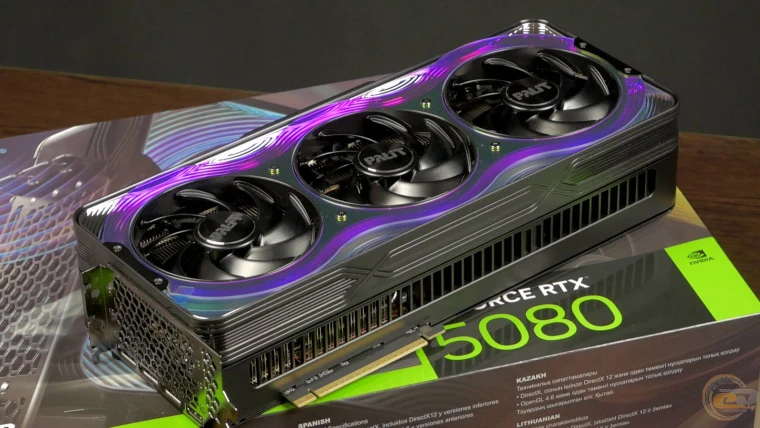
A single piece of channel news out of Taipei has become a live sourcing question for IT, product and studio teams across Asia-Pacific: the high-end consumer graphics card NVIDIA keeps for the China market may soon be one SKU rather than two. Read carefully, the story is not about faster silicon. It is about supply structure, memory content, and a purchase window that closes far quicker than most annual budget cycles assume.
Key facts before the analysis
- Supply-chain accounts indicate NVIDIA intends to end shipments of the RTX 5090 D V2 and the RTX 5080 16GB version into the China market, leaving the RTX 5080 24GB version as the likely high-end option.
- Stock of the RTX 5080 16GB has reportedly already been drawn down to a level that supports roughly two months of sales, with leftovers running out as the successor arrives.
- Current cards ship 16GB GDDR7, built mainly from eight 2GB modules; the 24GB version is, in theory, an eight 3GB module design, but the exact configuration is unconfirmed before launch.
- The pricing logic carried in the report is relative, not absolute: the 24GB version should land clearly above the 16GB version, yet below the RTX 5090 D V2 version.
Why this is a lineup reset, not a spec bump
Board partner channels describe the move as a replacement rather than an upgrade wave: the RTX 5080 24GB version is expected to take over the slot the 16GB model currently occupies, while the RTX 5090 D V2 — a China-specific variant of the RTX 5090 that also carries 24GB of memory — simply disappears from the supply plan. Once it is gone, the top of NVIDIA's consumer stack available in that market slides down to the RTX 5080 family. Two things follow. First, the top-end menu shortens, so teams lose the ability to trade price against capacity. Second, no performance delta has been published: core configuration, clocks and power draw for the incoming card remain undisclosed, so any claim that 24GB equals a proportional speed gain is speculation.
The inventory clock, and what it does to a purchase order
The most actionable number in the report is the runway. With 16GB stock at roughly two months of sell-through, the overlap between "still buyable" and "successor announced" is short, and channel reporting around the story places the RTX 5080 24GB launch anywhere between December 2026 and January 2027. For APAC procurement owners, that creates a binary problem:
- Buy the 16GB card now and you accept a shorter product tail, but you hold a known price and a known delivery date.
- Wait for the 24GB version and you may face a gap of several weeks with no high-end SKU at all, followed by a launch price set in a rising memory market.
Neither option is wrong; the mistake is running the decision without a date attached. Put the runway in writing in the internal approval, because it is the reason the decision cannot wait for the next quarter.
Memory hardware: eight 2GB modules versus eight 3GB modules
| Model | Memory / module configuration | Planning note |
|---|---|---|
| RTX 5080 16GB version | 16GB GDDR7, mainly eight 2GB modules | Channel stock supports roughly two months |
| RTX 5080 24GB version | 24GB, theoretically eight 3GB modules | Pin speed and module vendor still unconfirmed |
| RTX 5090 D V2 version | 24GB memory | Reported to exit the China market supply plan |
The theory is credible because the parts exist. Samsung moved its 24Gb (3GB) GDDR7 devices into volume production, and Micron added 24Gb GDDR7 parts to its public graphics memory catalogue in April 2026, joining Samsung and SK hynix in the 3GB segment — meaning a 256-bit board populated with eight 3GB modules no longer depends on a single supplier. That said, high-density GDDR7 is still being rationed across AI accelerators, graphics cards and module makers, and the memory that does not go into a graphics card has to go somewhere else in the factory's mix. Treat the eight 3GB layout as the most probable design, not a confirmed specification, until the product is announced.
Who genuinely benefits from the extra capacity
VRAM is a headroom metric. The 24GB version helps with high-resolution textures, large creative projects and some local AI workloads, and it gives users who load larger models more comfortable space. Add two practical dimensions that the raw capacity number hides:
- Spill behaviour. When a model or scene exceeds onboard memory, parts are pushed to system RAM over the PCIe link, and throughput falls sharply. A 24GB budget keeps a wider band of 7B-to-14B-class quantised inference and mid-size 3D scenes resident, where 16GB would not.
- Longevity of the build. In a workstation refresh cycle of three to four years, the binding constraint on creative and inference boxes is usually memory before compute. Paying for capacity is, in effect, paying for time.
If your workload fits in 16GB today with headroom, the 24GB version buys you optionality, not speed.
Price math inside a memory upcycle
The relative pricing forecast in the report — above the 16GB version, below the RTX 5090 D V2 version — assumes normal input costs. The current cycle is not normal, and the direction of travel across Asia-Pacific is already visible:
- TrendForce projected conventional DRAM contract prices to rise 10–15% quarter on quarter in the fourth quarter of 2026, in a later estimate put near 20% once HBM is included.
- Gartner forecast DRAM prices to increase by about 47% in 2026 on undersupply, and J.P. Morgan Global Research estimates cumulative DRAM price gains of more than 400% from the start of 2024 to the end of 2026.
- Regional channels are repricing first: a Japan-based distributor lifted prices on new graphics card orders by 20–40% from 1 August 2026, and PC makers across Asia have reported hike notices spreading beyond memory into boards and materials.
- Demand pressure is structural, not seasonal: Mordor Intelligence sizes the Southeast Asia data centre GPU market at USD 1.95 billion in 2026, heading to USD 3.93 billion by 2031 at a 15.03% CAGR.
Read together: a board carrying 50% more GDDR7, launched into a rising cost base and a narrowed SKU shelf, is unlikely to be priced as a value part. Budget against the module content, not against last year's list price.
A five-step playbook for APAC buyers
- Audit the ceiling first. Log actual peak VRAM use across a representative week of renders, simulations and inference jobs. If the 95th percentile sits below 14GB, your case is about future headroom, not today's blocker.
- Fix the date. Write the roughly two-month stock runway and the December 2026 to January 2027 launch window into the request, so the approval chain understands why this is not a normal refresh.
- Quote with a clause. Ask suppliers for written validity periods and a price-change clause; in a contract-price upcycle, verbal quotes age in weeks.
- Anchor on relative price. Validate any offer against the report's ladder: 24GB above 16GB, below the RTX 5090 D V2 version. An offer that breaks the ladder is a signal to re-check the channel, not to accept.
- Line up a fallback. Decide in advance which substitute carries the workload: remaining 16GB stock, the previous generation, cloud GPU time for burst inference, or a second node instead of one bigger card.
- Re-confirm at launch. Only commit the residual budget after NVIDIA's official spec sheet — module configuration, clocks, power and price — replaces the channel account.
Common pitfalls, ranked by how expensive they are
- Reading 24GB as performance. No core, clock or power figures have been disclosed, so capacity is the only confirmed variable.
- Assuming the 16GB card will still be there next month. Cleared stock plus a short runway means availability, not price, is the binding constraint.
- Budgeting on list price. Contract DRAM movement in Q4 2026 already exceeds typical quarterly drift, so channel pricing will move first.
- Narrowing the whole plan onto one SKU. A market with a single high-end card is a market with no negotiating alternative — spread vendors or spread form factors.
- Skipping cross-border checks. China-bound shipments sit inside export-control frameworks; NVIDIA publishes its own export classification and compliance guidance, and procurement teams should verify it before a purchase order is issued rather than after.
- Ignoring the supporting cast. A bigger frame buffer is wasted behind a slow host bus, insufficient system memory or an ageing power supply — cost the whole box, not the card.
Signals to track before you commit
- An official launch date for the RTX 5080 24GB version, and whether it lands in December 2026 or slips to January 2027.
- Confirmed GDDR7 module configuration, pin speed and vendor mix.
- Whether the 24GB version is positioned as the sole high-end model in the China market.
- The first round of board-partner price lists in Japan, Southeast Asia and Greater China, which usually diverge by more than the difference in tariffs alone.
- TrendForce's next contract-price print, since it sets the floor for every quote you will receive.
For Asia-Pacific teams, the practical conclusion is narrower than the headline. A single high-end card, a heavier memory load per card and an input-cost curve still pointing up all compress the value of waiting. Decide what your workload ceiling actually is, price it against the two-month window rather than the next fiscal year, and keep an alternative path funded. The briefing is short; the ordering deadline is shorter.