
OpenAI Ban Wave Deep Dive: Device Caps, Card Limits and the Access Reset Facing Asia-Pacific Teams
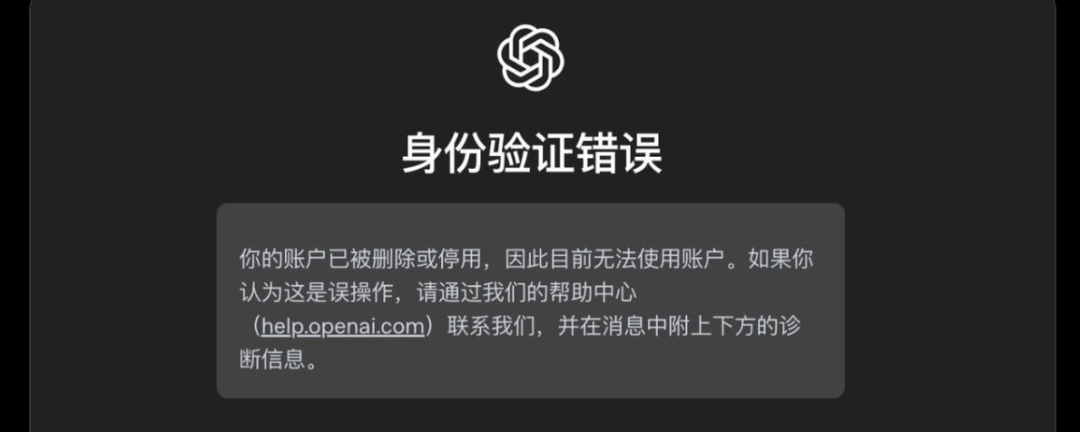
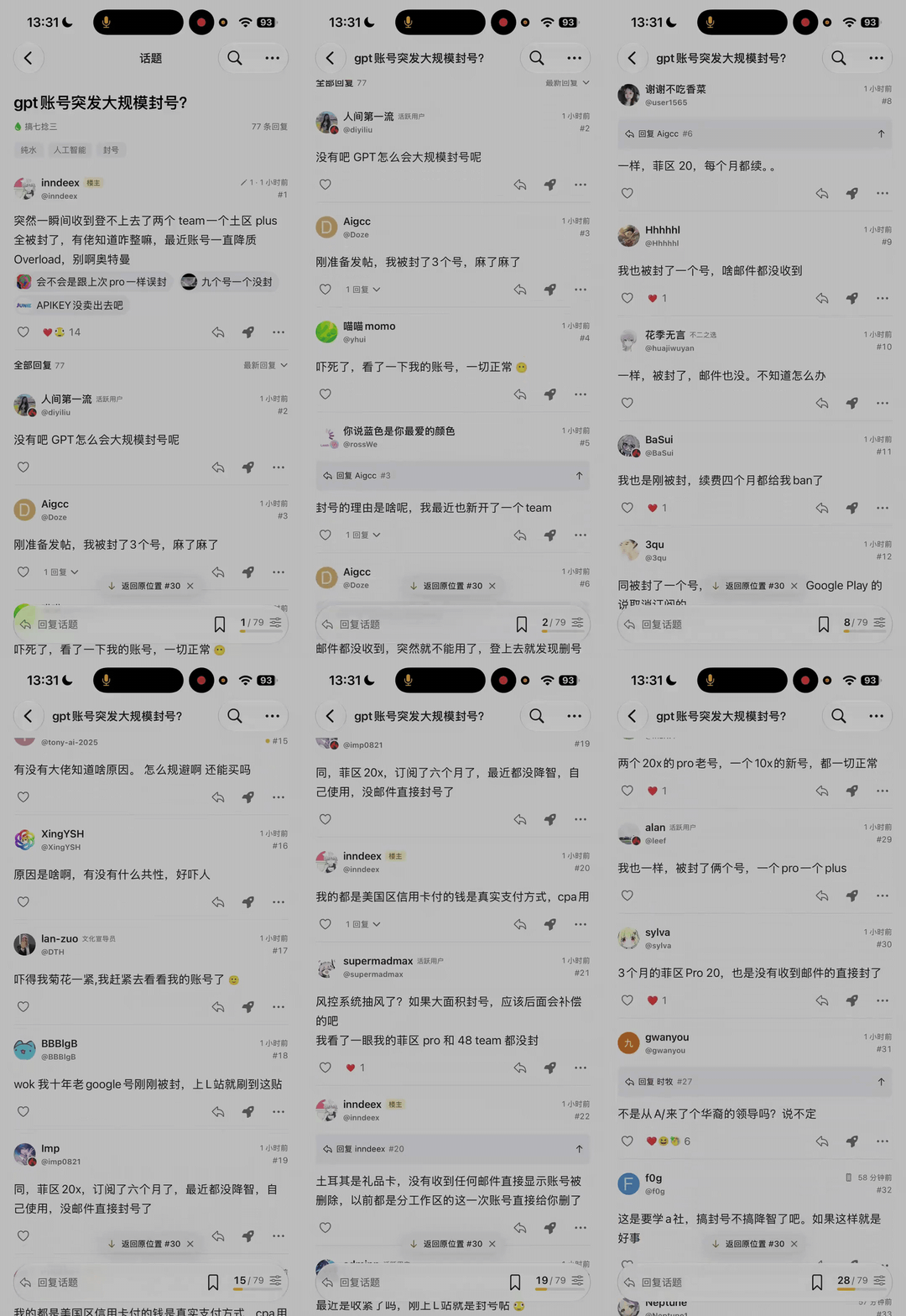
What is happening is less a content crackdown than a repricing of access. OpenAI is enforcing a strict one-account, one-device, one-card mapping, and the suspensions cluster where that mapping is loosest: the Philippines region, the Turkey region, low-cost Team plans and accounts running through reverse-proxy relays. For Asia-Pacific teams the exposure is service continuity and token-denominated cost, first from November 20 and then from December.
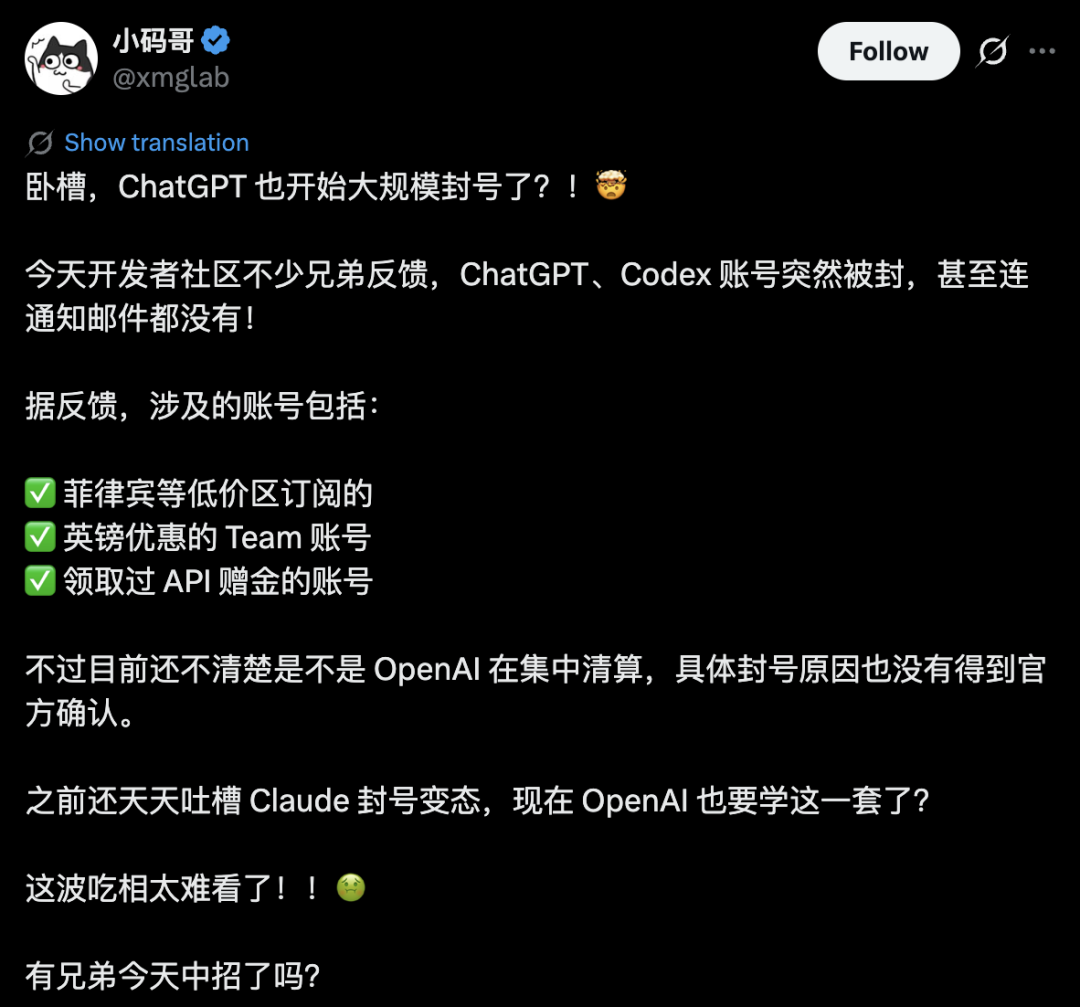
The epicentre of this round sits in the Philippines region, the Turkey region, discounted Team subscriptions and accounts hooked to relay proxies — and even normally renewed accounts with only four or five months of history have been caught.
The timing sharpened the reaction on X: Cat Wu moved from Anthropic to OpenAI, and ChatGPT switched into a large-scale ban cycle almost at the same moment. The most repeated user line is a plea — "please, spare us."

What exactly is being shut down, and who is affected?
Conclusion first: the scope is broad and tier-blind. Unlike the Anthropic episode, OpenAI's clean-up takes free API accounts, pooled Team seats and the US$200 Pro tier in the same pass, and it reaches multi-year accounts rather than only brand-new ones.
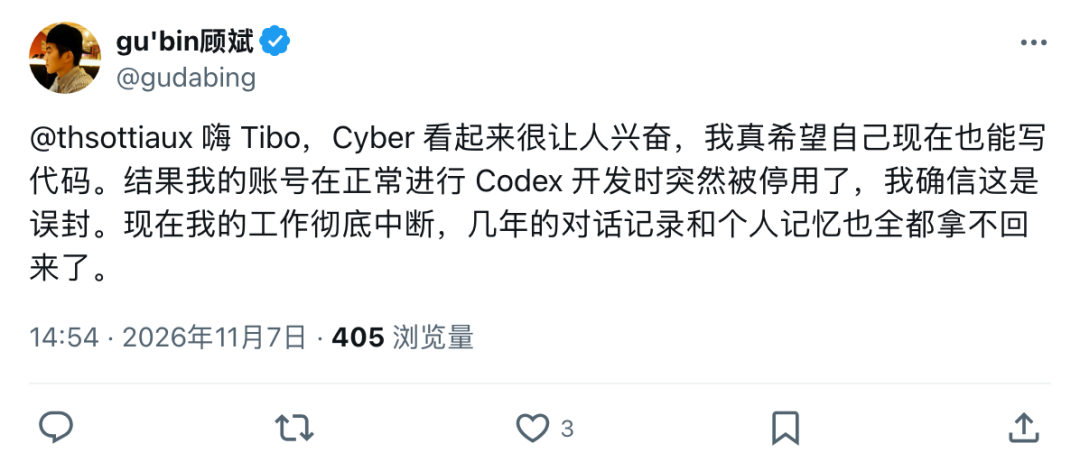
Programmers interrupted halfway through a Codex task pushed the X comment thread of Tibo, the former OpenAI Codex lead, to demand redress.
One developer complained that several years of chat history and personal memory are now locked in the cloud and cannot be pulled back.
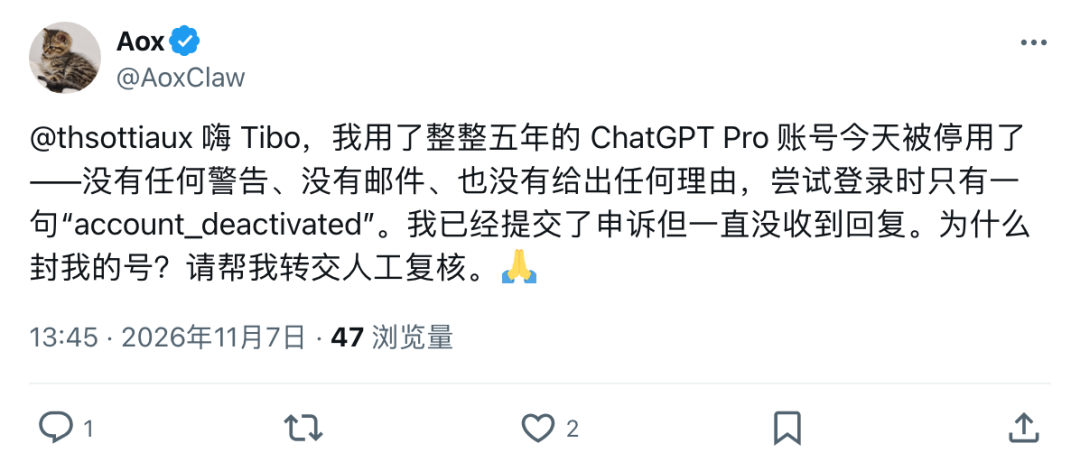
A five-year Pro account was deactivated with no warning, no email and no stated reason — and the appeal led nowhere.
Suspensions confirmed so far cover Pro 20x and Pro accounts, a batch of Team and Plus accounts, and student-verified accounts.
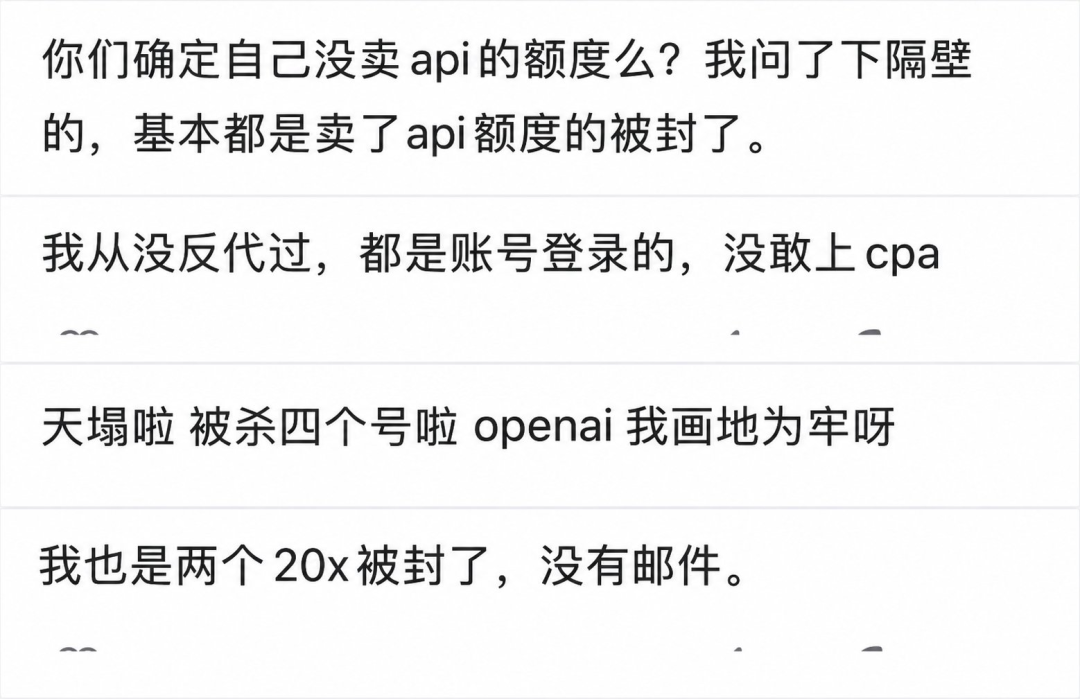
Even accounts used normally from abroad can be cut off.

Two readings circulate. The first is that OpenAI wants to stop users freeloading subsidised tiers, so it is capping how many accounts one device may carry.
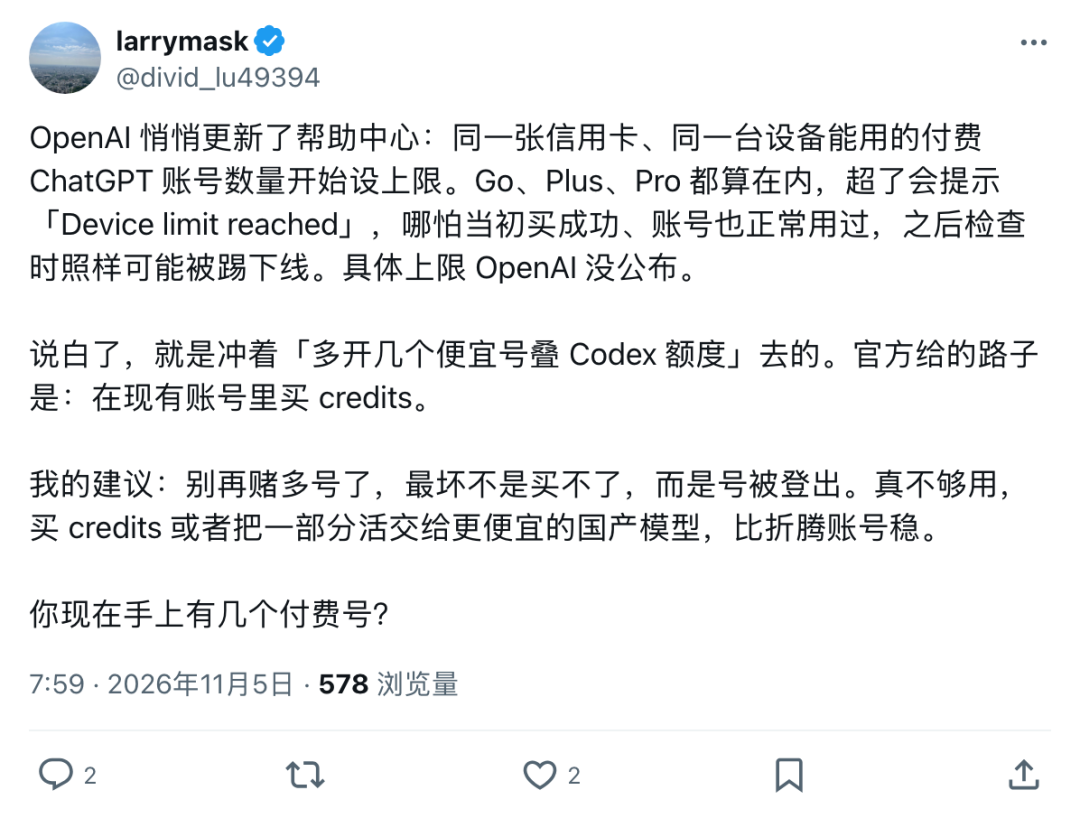
The second reading points at the payment rail.
OpenAI's status page showed a higher error rate for some business Mastercard cards issued in the United States.
In user-led investigation, the affected card numbers shared first six digits of 544015, 546400, 543502, 543799 and 512998, with some cards starting 513989 also affected.
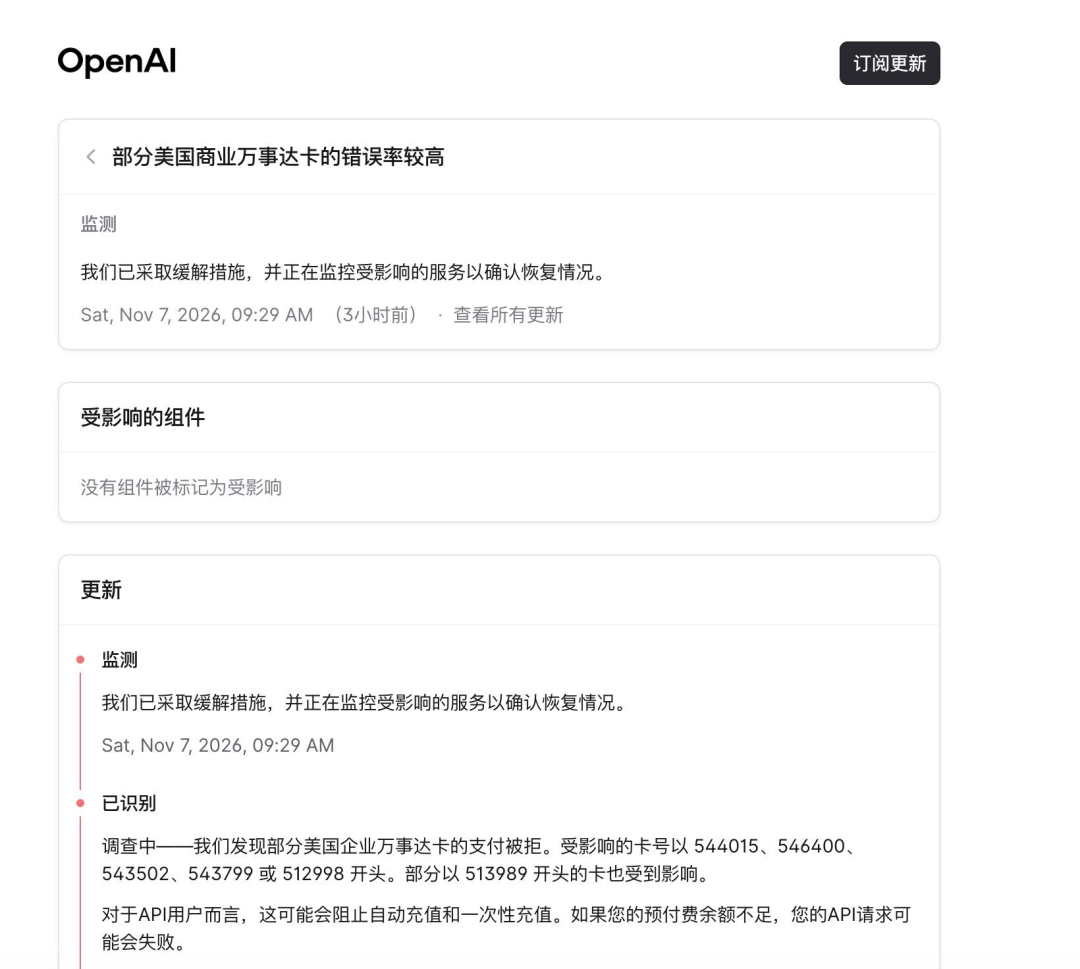
OpenAI, for its part, framed the incident as a payment-channel fault and made no reference to account bans.
Why are device, card and API rules tightening all at once?
Because it is a sequenced campaign, not a spontaneous purge. OpenAI had already moved against reverse proxies and folded ChatGPT and Codex into a single token pool; five days ago it quietly fixed the ceiling on paid accounts usable per device. Running cheap accounts to harvest free quota got harder, and today the enforcement baton landed.
Step one came on November 2, when OpenAI blocked account stacking at the hardware and bank-card layer. The official document "Understanding card and device limits in ChatGPT", published five days ago, brought the Go, Plus, Pro 100, Pro 200 and Pro 500 tiers under hard quota control.
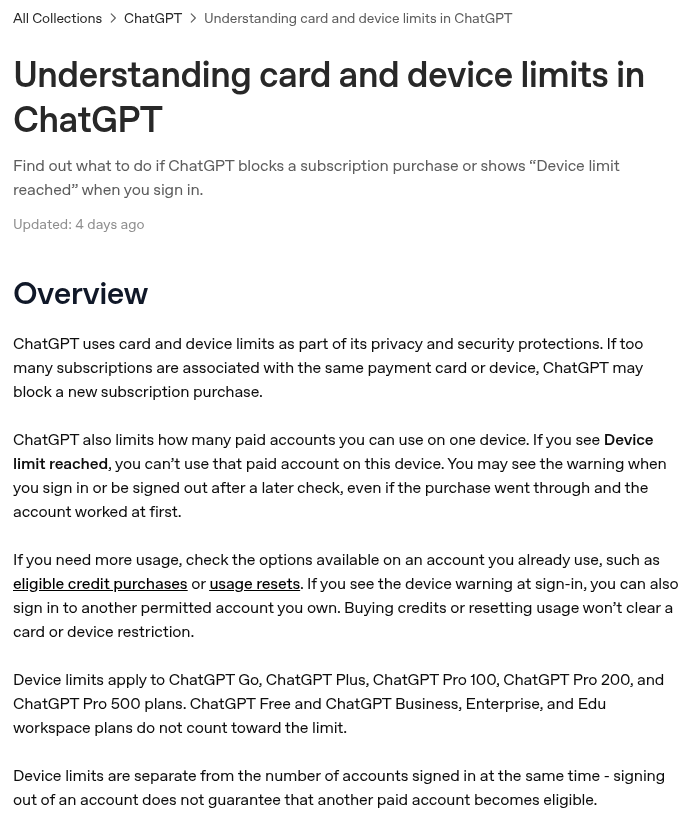
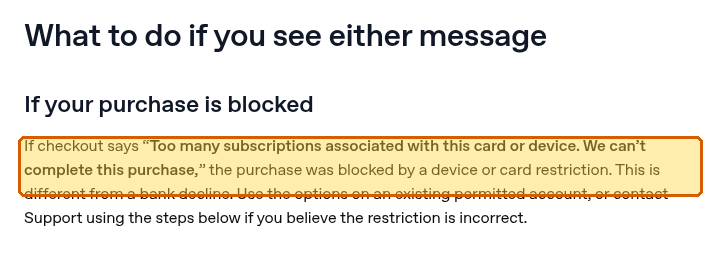
Cross the threshold and checkout throws "Too many subscriptions associated with this card or device", and the purchase is blocked.
Paid accounts per device are capped as well. Once "Device limit reached" appears, logging out of the old account — or paying extra for Credits — does not release a slot on that machine. As a pair, the two rules make it impossible to stack Codex quota across several cheap accounts.
Two details in the official limits guidance matter for risk modelling: the caps count personal paid tiers only, so Free accounts and Business, Enterprise and Edu workspaces stay outside the device tally, and OpenAI has not published the numeric ceiling — a user finds out only when a transaction fails.
The second step is today: a mass clean-up of pooled accounts. Anyone integrating multiple accounts behind one API surface was swept in a single pass.
The third step is the decisive one, throttling the compute exit, and it is scheduled for late November and early December. From November 20, OpenAI's revised Usage Policies require every third-party API gateway and model-routing intermediary to hold official written authorisation, removing unauthorised relay stations at both the legal and interface level. From December, ChatGPT and Codex usage on Plus, Pro and Business plans draws on one shared allowance, metered entirely by token consumption.
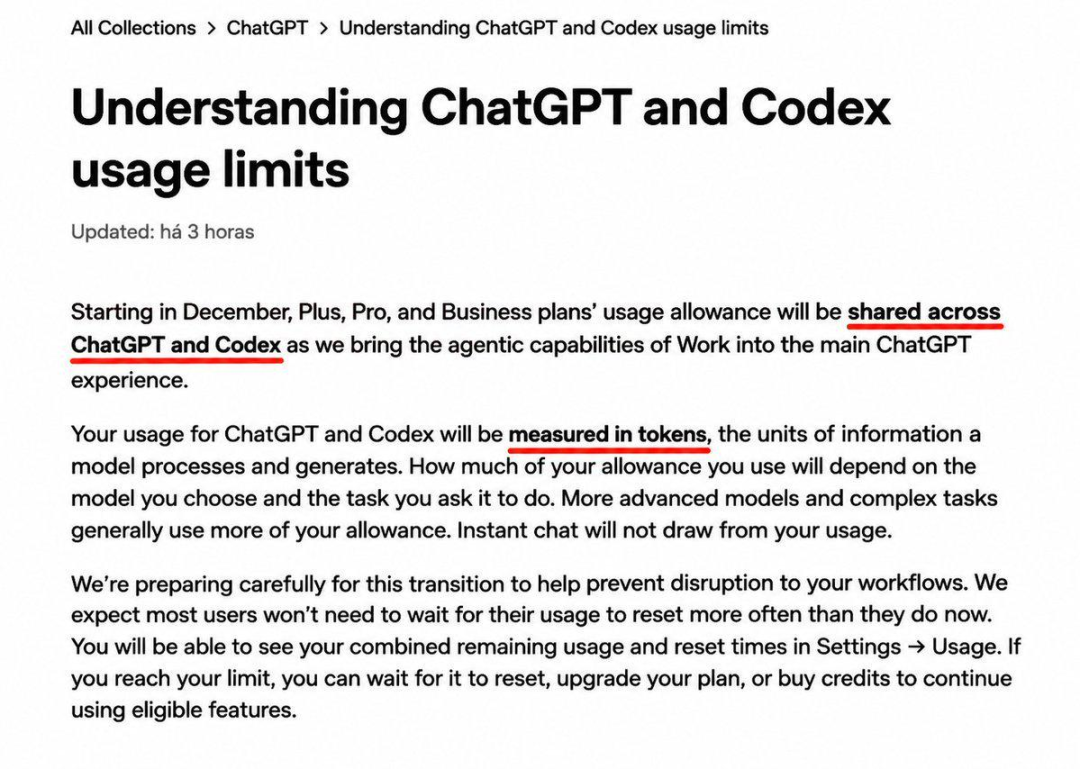
Once that token pool runs dry, switching to a smaller account no longer buys runway; the only routes left are upgrading the plan or buying official credits.
Which Asia-Pacific setups carry the highest exposure?
Exposure follows the regional price spread plus shared payment rails. Public trackers show why the Philippines region and the Turkey region became the arbitrage base: ChatGPT Plus is listed at ₱999 a month in Apple's Philippine App Store, roughly US$15.86 as of 18 October 2026 according to Whizi, while an Evendeals comparison across 18 regions puts Plus between about US$16.20 and US$27.93. A card, a device and a store account from the cheapest tier is exactly the pattern the new quotas are built to break.
The regional demand base makes the blast radius larger here: OpenAI's managing director for India, Prabhjeet Singh, has said that by weekly active users India overtook the United States as ChatGPT's largest market, with usage doubling since January.
Exposure checklist before you rebuild access
- one payment card funding several paid subscriptions;
- several paid accounts signed in on a single laptop, shared office machine or test device;
- traffic routed through non-official gateways, model routers or reverse proxies;
- a low-cost regional store account paired with a card issued elsewhere;
- student-verified Plus, Team seat sharing, and one free API key reused across a whole team;
- long-lived chat history and Codex project state stored only server-side.
The budget line moves too. Market trackers describe enterprise AI spend settling into a hybrid of seat plus consumption, with a single AI seat from a major vendor running roughly US$20 to US$30 per user per month before token-based usage is added (Zylo, 2026). Read against the December shared pool, an effectively flat-rate seat becomes a variable cost that has to be forecast.
How do you appeal, and what happens to the subscription?
Conclusion: use the official review channel and keep the evidence attached to it. OpenAI's help centre groups deactivation causes into policy violation, terms-of-service violation, security concerns or unauthorised access, repeated violations after warnings, and unfinished identity or age verification; its account-closure guidance adds that directly billed self-serve subscriptions stop renewing and may stay valid only until the end of the billing cycle.
Practitioner advice circulating among affected users: an appeal does not have to be sent from the registration email — going straight through OpenAI's official appeal form works. State the suspended account's details clearly, and include the Request ID (the red box in the first screenshot above).
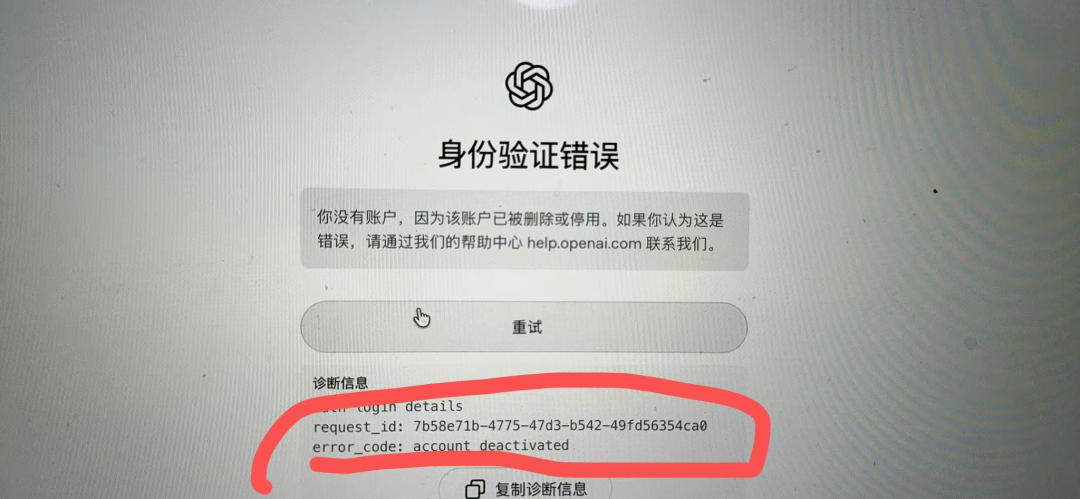
That route has worked before: one user got a student-verified Plus account restored.
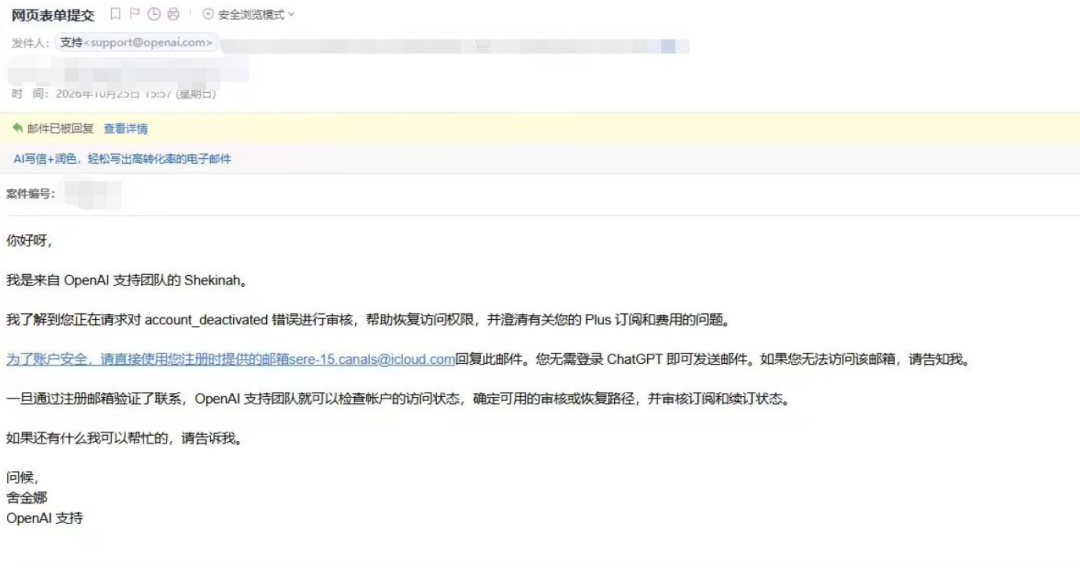
What should APAC IT, product and platform leaders do before November 20?
Treat this as a procurement and governance item, not a support ticket. The reliable defence users have left is routine export: periodic download of cloud conversations and syncing Codex projects to local repositories, while proxy top-ups, shared ride-sharing accounts and unofficial relays are all closed off.
Six actions, in order
- Freeze new stacking today. Stop adding secondary paid accounts on shared cards or shared devices; it is now the highest-signal trigger.
- Consolidate teams onto Business or Enterprise. Workspaces are outside the personal-tier device tally, which removes the stacking incentive — but they still face the December token pool.
- Audit every gateway and router contract before November 20. Any intermediary without written authorisation should be replaced or brought under a direct agreement.
- Re-baseline Q4 and 2027 AI budgets for token metering from December. Model Codex plus ChatGPT as one consumption pool rather than two flat seats.
- Publish a device-and-credential policy. One named user per personal paid account, no credential sharing, no borrowed regional store accounts.
- Assign an appeal owner. Capture Request ID strings, keep billing receipts, and file through the official form rather than waiting on email replies.
Buyers on the supply side are already tightening access as a governance matter: ByteDance's L4 external-AI lockout shows large Asian engineering organisations restricting which outside tools may touch sensitive code and documents — losing an unauthorised relay is therefore a workflow risk, not only a personal inconvenience.
Timeline at a glance
| Window | What changed | Who is hit | Recommended move |
|---|---|---|---|
| Five days ago | Paid-account ceiling per device quietly enforced | Multi-account individuals, small studios | Cut accounts per device to one or two |
| November 2 | Card and device quotas over Go, Plus, Pro 100, Pro 200, Pro 500 | Low-cost regional subscribers, Team organisers | Stop stacking; separate card from device |
| Today | Pooled-account clean-up; API consolidation accounts removed | Free API users, relay operators, Pro 20x holders | Export sessions; file appeals with Request ID |
| Late November (from November 20) | Written authorisation required for third-party gateways and model routers | Enterprises using resellers and routers | Replace or authorise every intermediary |
| Early December (from December) | ChatGPT and Codex share one token pool on Plus, Pro, Business | Cost owners, platform engineering | Forecast token spend; set usage guardrails |
Does this close the era of cheap compute in the region?
Our analysis, not an official statement: the direction is hard to reverse. Regional price arbitrage, account stacking and unofficial relays were three workarounds for the same gap — enterprise demand at consumer pricing. OpenAI is now closing all three within five weeks, and buyers in Asia-Pacific have seen the script before at Anthropic. What remains is a narrower path: pay for seats your organisation can document, meter the tokens you actually consume, and keep the artefacts — prompts, histories, Codex repositories — inside infrastructure you control.
Frequently asked questions
Why was a long-standing account suspended with no warning?
Under the new regime the trigger is usually structural rather than behavioural: a card or device linked to too many paid subscriptions, a store account from a discounted region such as the Philippines region or the Turkey region, or an account consolidated with others behind one API. Suspension notices are not always issued, which is why the five-year Pro case above is typical.
Does logging out of an account free a device slot?
No. The limits guidance is explicit that signing out does not automatically release the slot, and buying Credits or a reset does not clear the device restriction either.
Are Business or Enterprise plans exempt?
Partly. Workspaces including Business, Enterprise and Edu are outside the personal-tier device count, so they avoid the stacking block — but Business is squarely inside the December change, where ChatGPT and Codex usage is metered from one shared token pool.
What should a team do on November 20 if it uses a relay?
From November 20 an intermediary needs official written authorisation to offer the models, so an unauthorised gateway becomes a compliance exposure on top of an outage risk. Move that traffic to a directly billed account or an authorised provider before the date.
Sources and further reading
- OpenAI Help Center, "Understanding card and device limits in ChatGPT" — https://help.openai.com/zh-hans-cn/articles/20001559-understanding-card-and-device-limits-in-chatgpt
- OpenAI, Usage Policies (updated 21 October 2026, effective November 20, 2026) — https://openai.com/policies/usage-policies/
- OpenAI Help Center, "OpenAI account closures and safety suspensions" — https://help.openai.com/en/articles/10562188-openai-account-closures-and-safety-suspensions
- Whizi, cheapest-country tracking of ChatGPT Plus regional pricing — https://whizi.io/resources/cheapest-country-for-ai-subscriptions/
- Evendeals, ChatGPT regional pricing comparison — https://www.evendeals.com/regional-pricing/ai/chatgpt
- Zylo, AI cost and budget benchmarks for 2026 — https://zylo.com/blog/ai-cost
- APACTechDigit briefings: India ChatGPT weekly active users; ByteDance L4 external-AI lockout