
Quick Share SDK Briefing: In-App Cross-Device Transfer Arrives, and Asia-Pacific Is the Test Market
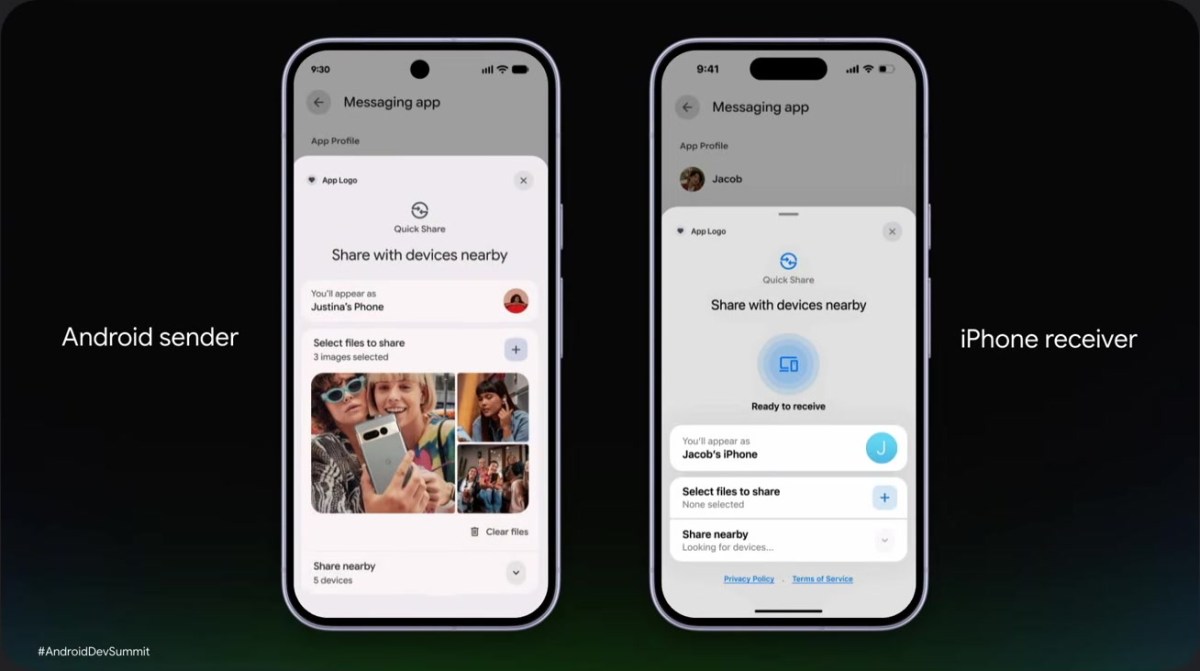
Google is converting a system convenience into a building block that anyone can bolt on. The company plans to publish a Quick Share SDK in the first half of 2027 — a release window first reported by 9to5Google on 2 November 2026 and echoed by Android Authority — so third-party apps on Android and, via a companion iOS edition, on iPhone can call the same near-field transfer channel that the operating system uses today. For product and IT owners in Asia-Pacific, the point is architectural rather than cosmetic: the bytes move between two devices on a local link, not through somebody's server, and the handshake survives a dead cellular connection.
At a glance: what just opened up
- Interface change. Once an app embeds the SDK, the send flow surfaces as a bottom sheet inside that app, complete with a preview of the items queued for transfer — no detour through the system share sheet.
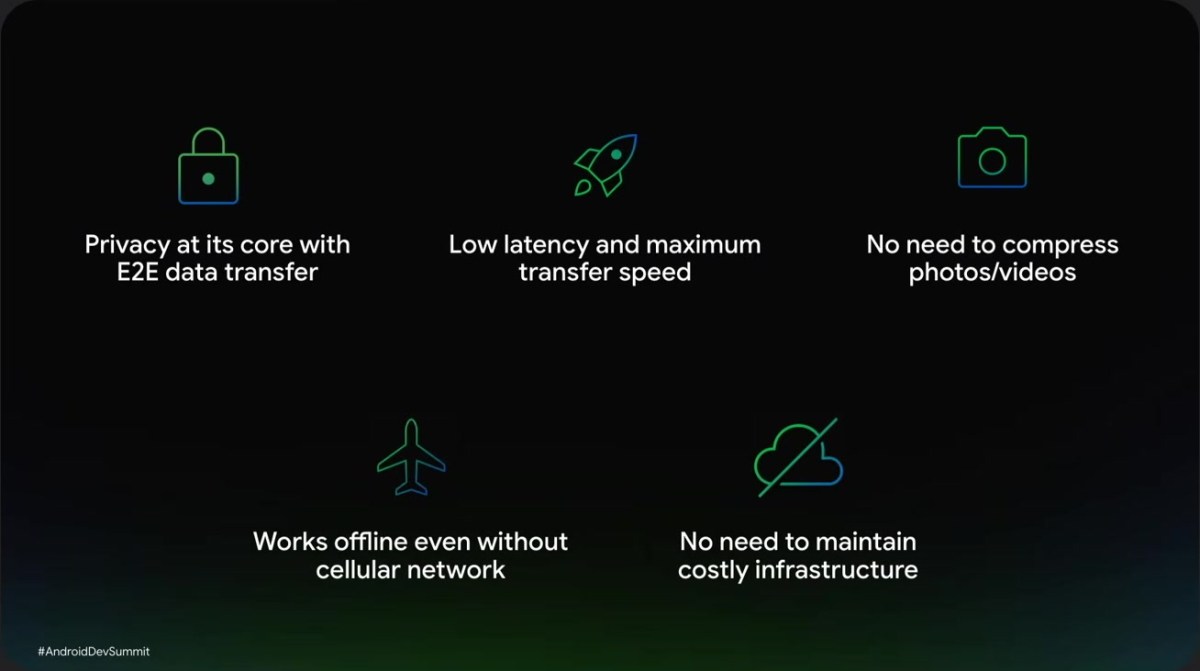
- Transport. Transfer rides on a local network with end-to-end encryption applied device-to-device; the SDK creates a hotspot automatically when the situation calls for it, and enables Wi‑Fi Direct on hardware that supports it.
- Fidelity and cost. Photos and videos keep their original resolution instead of being compressed, and the whole exchange runs without a network connection, so no mobile data quota is burned.
- Effort. Google pegs integration at about 20 lines of code, with no extra server infrastructure for developers to build or maintain.
- Distribution. Quick Share already runs on more than 3 billion devices spanning Android, ChromeOS and Windows, according to Google.
How the past year compressed the roadmap
| Stage | What happened | Why APAC decision-makers should care |
|---|---|---|
| Bridging the walled garden | Over the past year, Quick Share first established interoperation with Apple's AirDrop on Pixel, then extended that capability to a wider set of Android devices; Google detailed the AirDrop link on its own product blog. | Cross-ecosystem handoff stopped being a workaround and became a supported platform path. |
| Gesture-level simplicity | This August, Google introduced Tap to Share. Two supported handsets are brought close together and the exchange begins; paired with the app-side flow, the receiving app does not even need to be open in advance — it launches itself once the payload arrives. | Retail, delivery, site-survey and event-accreditation workflows gain a one-motion transfer step. |
| Opening the ecosystem | The Quick Share SDK, planned for H1 2027, hands the same capability to independent app teams on both Android and iOS. | Availability now depends on individual app roadmaps rather than a platform toggle. |
Why the region's numbers favour this model
Two structural features of Asia-Pacific make an embeddable, offline-capable transfer path more valuable here than in mature Western markets. First, handset mix: StatCounter's mobile operating-system data puts Android at roughly 70% of the global installed base, with South and Southeast Asia among its most concentrated strongholds. A developer-facing SDK that also ships for iOS directly answers the objection enterprise users raise most often — the mixed Android/iPhone estate — because a file can now leave a bank's Android fleet and land on an executive's iPhone without an upload step.
Second, pricing and radio quality. Omdia reported Southeast Asia smartphone shipments of 21.6 million units in 1Q26, down 9% year on year, while average selling prices reached a record $349 and total market value still grew 8% as vendors traded volume for margin. A rising price point means a rising share of devices carrying the radio stack — Bluetooth discovery plus Wi‑Fi Direct — that high-throughput local transfer needs. Service quality improves without carrier investment, which matters in markets where coverage collapses in basements, underground rail and outer islands, and where data bundles are rationed.
Inside the "about 20 lines of code" estimate
The figure describes plumbing, not a finished user experience. Coverage of Google's developer brief breaks the work into four moves:
- Instantiate the client object that fronts the transfer service.
- Attach the content the user wants to send.
- Present the in-app bottom sheet, which renders the preview and exposes a switch for masking sensitive items.
- Subscribe to transfer events so the app can react to progress, completion or failure — a reactive stream on Android's Kotlin side.
Developers can also tag particular payloads as sensitive so they are hidden automatically in the preview surface — a small but consequential control for messaging, health and finance apps that cannot afford a thumbnail of the wrong file appearing on a shared screen in a crowded Jakarta or Manila office.
Version floors: the quiet constraint
Google's support documentation lists Quick Share on Android 6 and later devices, on Chromebooks, and on selected Windows machines through a dedicated app. OEM requirements are tighter for the cross-platform piece: Samsung states that a Galaxy handset needs Quick Share app version 13.8.51.27 or later and Google Play services version 26.11.2026 or later simply to share with Apple devices. Fleets that lag on updates will see the feature surface late, so a compatibility matrix — not the announcement — determines real coverage.
Risks and open questions
- Nothing is live yet. What was published is an access plan for developers; the moment a traveller, shop floor or newsroom can actually use in-app sharing depends on when app teams adopt the SDK.
- Adoption is voluntary and asymmetric. A transfer succeeds only when both sides support it. The more than 3 billion device base is a head start, not a guarantee that the top ten apps in each market will integrate quickly.
- Compliance blind spot. Because data never transits a cloud service, offline sharing eases data-residency and interception concerns but also removes the central audit trail that many APAC enterprises are required to keep. Expect app-side consent prompts and logging to become the differentiator between enterprise-ready and consumer-only implementations.
- Fallback still matters. Google has already made Quick Share able to reach other devices through generated QR codes, per its May 2026 Android update post — a pattern product teams should mirror rather than assume a nearby-capable peer.
Action list for APAC product and technology leads
- Name one pilot app for an H1 2027 integration — the highest-friction handoff in your funnel, typically media send, field capture or document exchange.
- Freeze an OS and OEM floor today: minimum Android version, Play services level, Wi‑Fi Direct availability across your shipped models, and the iOS counterpart.
- Write the sensitive-content policy before you write the code — decide which file types and previews are masked by default.
- Keep a QR or cloud fallback path in the UX for older devices and patchy-coverage markets.
- Instrument the comparison: in-app transfer success rate and time-to-complete versus the current system-sheet route, then continue or kill on evidence.
- For regulated verticals, pre-clear local transfer with compliance, documenting both the encryption claim and the audit-log gap.
The strategic read is a transfer of control. Google has built the pipe, proved it can cross the Android/iOS divide, and is now asking the app economy to decide whether to use it. In Asia-Pacific the answer is likely to come back faster than elsewhere, because the constraints this removes — Android-dominated estates, uneven coverage, rationed data plans — are regional defaults rather than edge cases. The signal to watch is not the SDK release date but the first wave of OEM messaging apps, regional super apps and enterprise tools that ship support; that, rather than any keynote, marks the point where in-app local transfer becomes normal.