
APAC Tech Briefing: RTX 3060 vs RTX 5050 vs AMD Radeon — How to Buy Into the RTX 50 Supply Squeeze
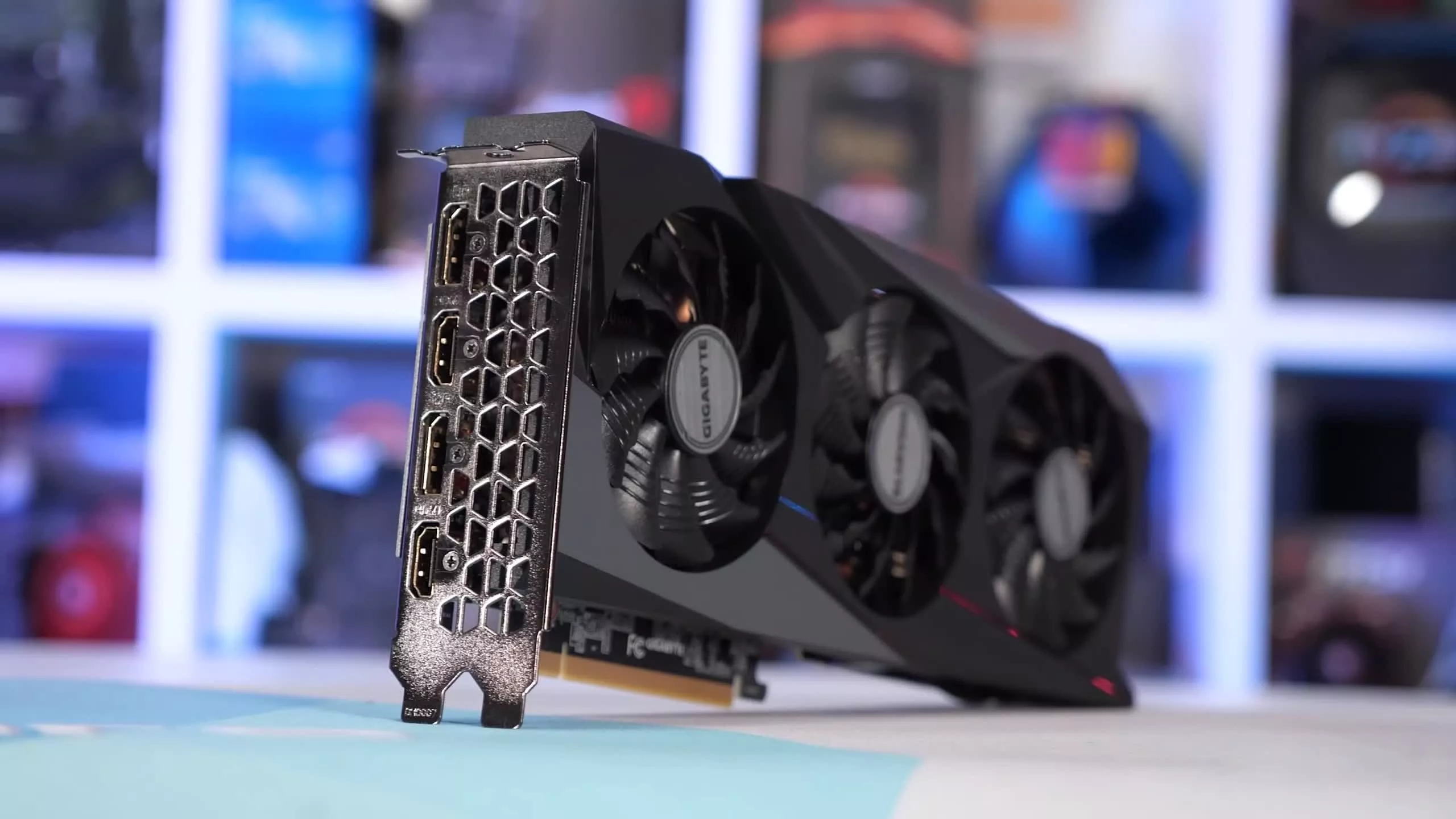
Few sourcing decisions this quarter look as counter-intuitive as the one now in front of Asia-Pacific channel managers and IT asset planners: a graphics card that first shipped in 2021 has been revived, and dealers are being quoted a premium for it over a newer model that outperforms it. This briefing sets the channel intelligence side by side with a spec-level comparison — the RTX 3060 12GB edition, the RTX 3060 8GB edition, the RTX 3050, the RTX 5050 and the vendor-nominated AMD Radeon alternatives — then adds the regional price gap and a decision list for procurement before year-end.
1. The channel instruction: new cards rationed, old cards re-stocked
ChannelGate's read from China distribution is unusually blunt. RTX 50 series stock has sold out at some add-in-card makers, while the remaining vendors hold only limited inventory and are releasing it in batches. Tighter supply has pushed street pricing upward in step. To stop dealers from being left with nothing to sell, manufacturers have started advising channel buyers to take the RTX 3060 12GB edition, the RTX 3060 8GB edition and the RTX 3050 instead; selected AMD Radeon models are on the same substitution list.
2. Why supply tightened: three stacked pressures
- Mining demand returned. A fresh rebound in cryptocurrency mining purchasing is lifting graphics card order volumes again.
- Promotion season drained shelves. China e-commerce sales events have kept consumer demand pulling inventory down to zero.
- AI absorbed the memory. Nvidia was reported to have reduced part of its gaming graphics card production because the AI industry's appetite for memory resources was so large.
The upstream numbers back the memory explanation. TrendForce's 30 September forecast put conventional DRAM contract prices 10–15% higher quarter-on-quarter in the fourth quarter of 2026, with NAND flash up 15–20%, both attributed to AI server demand (trendforce.com). Cost pressure is already being passed through: supply-chain pricing documents reported in early November show board partner cost increases of RMB 2,200–3,300 on the RTX 5090 D V2 and RMB 2,500–2,800 on the RTX 5080 (techpowerup.com).
3. The price test: a five-year-old card that does not act old
The RTX 3060 was only revived this year, which is exactly why the pricing behaviour is abnormal. After its original 2021 launch, the model returned to shelves without the discount that product age normally brings. In the United States, Newegg re-listed the revived card in July this year at a $329.99 opening price, and that level did not hold. By August, the same MSI product was selling at $479.99, an increase of about 45% over the earlier price. At $479.99, the RTX 3060 was clearly more expensive than the newer and more powerful RTX 5050 — visible proof that supply and demand in this market are still badly out of balance.
ChannelGate expects RTX 50 series supply to stay tight, and judges that these older models will not lose value simply because they launched long ago; small further increases are possible while dealers lean on them to keep sales running. For China channel traders, the RTX 3060 and RTX 3050 — cards already drifting out of the mainstream — are now enjoying a second sales peak, selling strongly for the second time since their original run.
4. Head-to-head: which option fits which job
Read as a comparison rather than as a nostalgia story, the group splits cleanly by memory capacity, bus width and feature era.
| Option | Memory profile | Where it wins | Where it loses | Best-fit scenario |
|---|---|---|---|---|
| RTX 3060 12GB edition | 12GB GDDR6, 192-bit, about 360 GB/s | Largest VRAM pool in this group; a proven 1080p platform | Two architecture generations behind; no current-generation frame-generation features | Entry gaming builds, editing and 3D test boxes where 8GB is the choke point |
| RTX 3060 8GB edition | 8GB GDDR6 on a narrower 128-bit bus | Same silicon family at a lower asking price | Bandwidth advantage of the 12GB model is gone; benchmark data puts it only around 7% ahead of an RTX 3050 8GB at 1440p | Cost-driven office and creator refreshes, small-form-factor swaps |
| RTX 3050 | 8GB GDDR6, about 224 GB/s | Lowest cost and power draw; easiest drop-in for OEM chassis | Least headroom for newer titles and higher resolutions | Volume deployments, 1080p esports fleets, warranty spares |
| RTX 5050 | 8GB GDDR6, 2,560 CUDA cores, about 320 GB/s, 130W | Newest architecture, better efficiency and the current upscaling feature set | Allocation risk, and 4GB less VRAM than the veteran it now outsells | Buyers who need long driver runway and DLSS-era features over raw capacity |
| AMD Radeon (vendor-nominated substitute) | Model-dependent | Availability when Nvidia allocation runs out; a hedge against single-supplier risk | Different software stack — workflows tied to CUDA need re-validation before switching | Channel substitution, non-CUDA-dependent creative and gaming workloads |
Specification references: Nvidia's own GeForce RTX 5050 product page (memory configuration and clock targets, nvidia.com); third-party spec and benchmark aggregators for the Ampere cards' bandwidth and relative performance.
5. Regional read: the premium is not shared equally
Asia-Pacific buyers should not assume one price curve. During the Blackwell price resets, US retail tracking of Newegg listings showed the RTX 5070 median up about 36% and the RTX 5060 up about 27% (tomshardware.com). In Japan, market trackers reported Nvidia graphics cards selling as much as 41% above comparable US Amazon listings by mid-October. Meanwhile the China channel is absorbing legacy stock at a premium. The practical consequence: cross-border arbitrage logic that worked in 2024–2025 now mostly transfers the shortage, not the savings.
6. Steam survey: read the ranking, then discount it
Valve's Steam hardware survey for October 2026 put the RTX 3060 back at the top of the world's most common graphics card list, at 3.62%, narrowly ahead of the RTX 5070 at 3.56%. The RTX 5070, which had briefly taken first place in September, lost 2.3 percentage points in October. System memory moved too: 16GB reclaimed its position as the most common Steam configuration at 41.42%, while 32GB — which had led the table — slipped back to 37.06%.
Analysts caution against reading this as players abandoning the RTX 5070. Hardware Busters attributes much of the swing to the survey's sample composition: users with a Simplified Chinese Steam interface fell from about 31% in September to under 22% in October, and because Valve does not weight results by region, the share of a new mid-range card that is popular in China naturally receded, shifting the ranking.
7. Action list for APAC procurement
- Price the 12GB variant as capacity, not as age. If a workflow needs more than 8GB of VRAM, the RTX 3060 12GB edition is the only option in the legacy group that delivers it — but only at a justified premium.
- Set a walk-away number. An old card quoted above a newer, faster one ($479.99 versus the RTX 5050's positioning) is a scarcity price, not a value price; cap legacy approvals below the current entry-Blackwell street level.
- Lock written quotes and shipment windows. Batch shipping of RTX 50 series means verbal allocations are unreliable; confirm delivery dates before committing build schedules.
- Qualify AMD Radeon substitutes early. Treat the switch as a software-stack project — validate capture, video, inference and anti-cheat-dependent titles before quoting customers.
- Size support pools on installed base, not on purchase intent. Use the Steam figures for driver-testing and staffing planning only; the sample shift shows how quickly they can move for non-market reasons.
- Re-check memory cost pass-through monthly. With DRAM contract prices forecast up 10–15% quarter-on-quarter into 4Q26, assume further list-price resets rather than discounts next quarter.
8. Risk flags before you commit
- Channel-reported price moves are not manufacturer guidance; treat RMB-denominated cost hikes as directional evidence, not global list prices.
- Revived legacy production raises the risk of mixed board revisions and shorter warranty tail in cross-border shipments.
- Crypto-driven demand spikes fade quickly; a legacy card bought at scarcity pricing can be left holding stock that no longer moves.
The strategic takeaway for the region is uncomfortable but simple: scarcity of new silicon has converted end-of-life inventory into a priced asset, and the usual assumption that older cards equal cheaper cards no longer holds. Teams that compare these models on memory capacity, feature era and regional landed cost — rather than on launch date — will be the ones still able to quote customers before year-end.