
RTX 5080 24GB Slips Beyond January 2027: An Asia-Pacific Read on Nvidia's Missing Design Kit
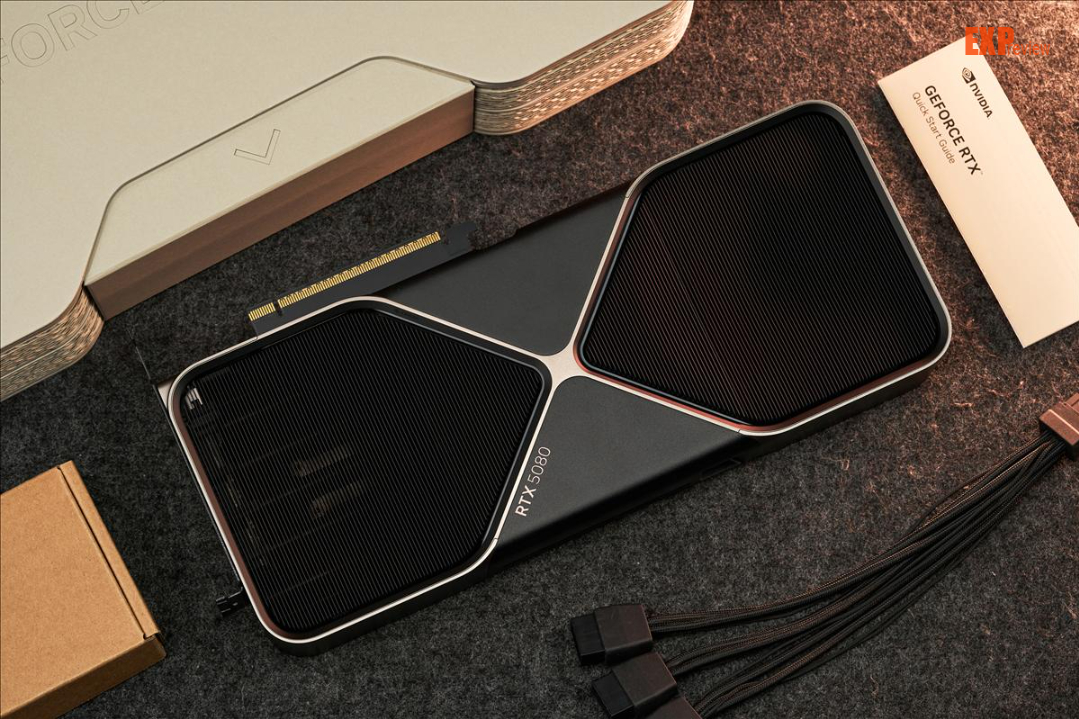
Add-in-card partners are still waiting on a bundle of paperwork that was expected to reach them weeks ago — and that single gap is now the most readable signal Asia-Pacific buyers have about when the next high-end GeForce will actually land on regional shelves. The reference design for the RTX 5080 24GB has not been distributed, so a January 2027 debut looks improbable and the realistic landing zone is Q1 2027. Beneath the scheduling question sits a harder constraint: the memory supply chain that decides whether the GeForce RTX 50 series can keep a flagship line alive at all.
Key facts at a glance
- Pressure is concentrated at the top of the stack: the RTX 5090 series and RTX 5080 are the tightest SKUs inside the GeForce RTX 50 series.
- Direction of travel is already understood in the channel — GB202 is earmarked exclusively for RTX Pro series workstation graphics cards, which leaves RTX 5080 24GB to inherit the top GeForce slot.
- The blocker is procedural: according to Benchlife, design documentation has still not been handed to partners; an October distribution was verbally promised and never executed.
- The calendar works against the rumour: CES 2027 runs 6-9 January in Las Vegas (CTA), and a show-floor launch normally requires boards, coolers and passive components to be sourced months earlier.
- Read-through for APAC procurement: plan against Q1 2027, not next January, and treat current 16GB high-end stock as a depreciating, warranty-sensitive asset.
Why the delay is structural rather than administrative
The 24GB configuration is not a cosmetic capacity bump. It depends on 24Gb (3GB) GDDR7 modules, and those modules are the scarcest, most expensively priced part of a consumer graphics bill of materials right now. TrendForce reported in July 2026 that a 3GB GDDR7 chip was selling near US$60-70, roughly three times the price of a conventional 2GB module at about US$20, for only 50% more capacity. The same firm reported in September 2026 that Micron had moved its 2GB GDDR7 part toward end-of-life status, narrowing the memory options available for Nvidia's current line. In other words, the switch to 24GB is a response to upstream allocation decisions, not a marketing cycle.
The allocation decisions are well documented. TrendForce's January 2026 research note said DRAM suppliers were shifting advanced process nodes and new capacity toward server products and HBM to serve AI buildouts, which is exactly the mechanism that starves GDDR output. Nvidia's own finance chief, Colette Kress, told the company's February 2026 earnings call that memory demand had outstripped supply and that gaming chip shortages were expected to persist, as Reuters reported. Samsung, meanwhile, has told investors it expects the memory squeeze to worsen through 2027 and to linger into 2028 (TechCrunch, July 2026). A card that arrives late is a symptom; a card whose memory budget was never settled is the disease.
Spec sheet: what the 24GB variant changes
| Item | Current RTX 5080 baseline | RTX 5080 24GB (circulated specification) | Practical implication |
|---|---|---|---|
| Memory modules | 2GB-class GDDR7 | 24Gb (3GB) GDDR7 | Higher module cost and tighter supply at the exact time boards must be built |
| Graphics processor | GB203 | GB203-450 | A rebinned die, not new silicon, so no node or architecture risk |
| Memory rate | 30Gbps | 32Gbps | Modest throughput gain to offset the higher capacity |
| Bandwidth | 960GB/s | 1024GB/s | Mostly relevant to 4K-plus textures and local model workloads |
| Board power | 360W | 415W | PSU, chassis airflow and rack-power re-rating for system integrators |
Two things follow. First, a GB203-450 refresh can be validated faster than an all-new generation, so the missing ingredient really is Nvidia's released documentation rather than engineering time. Second, a 415W TDP on a card positioned as the new flagship raises channel costs in dense-build markets — Singapore, Hong Kong and Tokyo workstation resellers, and Southeast Asian system integrators, all re-check cooler and power-supply compatibility before committing inventory.
Regional read-through: where the slip bites hardest
- Japan: Tom's Hardware reported in October 2026 that Nvidia graphics card pricing there ran up to 41% above comparable Amazon US listings, with the RTX 5060 Ti showing the steepest gap in the stack — a preview of how a thin high-end pipeline inflates import-market prices fastest.
- South Korea: TrendForce noted in August 2026 that RTX 50 pricing could climb as much as 30% from that month onward, citing higher TSMC wafer costs plus GDDR7 memory.
- United States benchmark: PCMag reported in late October 2026 that a street RTX 5080 had jumped about US$800 in two months, reaching the launch price of the RTX 5090 — the reference point Asian distributors quote against.
- Professional substitution is not a safe harbour: as GB202 is reserved for RTX Pro series workstation graphics cards, enterprises pivoting upward face their own squeeze; the RTX PRO 6000 Blackwell Workstation Edition was listed at US$16,000 and marked out of stock, roughly 87% above its launch price, per Thunder Compute's September 2026 tracker.
There is a second-order risk for channel managers. Retailer-sourced leaks carried by VideoCardz suggest a January 2027 end-of-life date for the current RTX 5090 and RTX 5080 parts, while Nvidia's own US marketplace listings for the high-end GeForce cards have been thinned out. If a 16GB card is bought now and reaches end-of-life before its successor ships, spare-module availability, extended-warranty SKU support and RMA lead times all become contract questions rather than retail ones.
Action recommendations for APAC technology and procurement leads
- Re-base the roadmap. Move any Q1 2027 pilot, render-farm expansion or AI workstation refresh that assumes a next January launch to a Q1 2027 evaluation window, and keep a fallback SKU from the current generation.
- Shorten quote validity. Ask distributors for 14- to 30-day firm pricing with a memory-surcharge clause; TrendForce's July 2026 note on conventional DRAM contract prices rising 13-18% quarter on quarter in 3Q26 shows how fast pass-through can move.
- Hedge with capacity, not flagship. Where the workload is frame-buffer bound — 3D, video, local inference — compare multi-GPU current-generation configurations and cloud rental (the RTX PRO 6000 Blackwell rents in a roughly US$1.6-5.5 per GPU-hour range across providers, per Thunder Compute) against waiting for 24GB.
- Re-engineer power and cooling now. Assume the flagship slot moves from 360W to 415W and validate PSU headroom, chassis airflow and rack power before the card is orderable.
- Track three leading indicators. (1) design documentation reaching partners, the Benchlife item still outstanding; (2) 3GB versus 2GB GDDR7 module pricing; (3) Nvidia's CES 2027 keynote posture — at CES 2026 its stage carried no new consumer GeForce hardware (PCMag).
- Write end-of-life protection into purchase orders. Where the 16GB model may be discontinued, require committed spare-supply and driver-support windows in the channel agreement.
Bottom line
The short version for decision-makers: a 24GB GeForce flagship is coming, but its timing is being set by memory allocation, not by a January press slot. Benchlife's unshipped design kit turns next January into a low-probability outcome and makes Q1 2027 the planning case, with GB202 moving behind RTX Pro series workstation graphics cards and the RTX 5090 series staying scarce. Asia-Pacific buyers who treat the delay as a fixed price-hike trigger, lock short-validity quotes and re-rate their power and cooling assumptions will absorb the slip far more cheaply than those who wait for a launch date to be announced.