
RTX PRO 5500 at US$17999: An APACTechBriefing Procurement Checklist
Short answer: US$17999 is not NVIDIA’s confirmed global list price; it is a United States retailer quote for a PNY card, while RTX PRO 6000 is shown at US$16000 on NVIDIA’s official United States online store. The about US$1409 premium reflects scarce delivery, not a spec upgrade. APAC buyers should validate SKU, export path, lead time, cooling, Multi-Instance GPU mode, and memory supply before committing.
Is US$17999 the real market price?
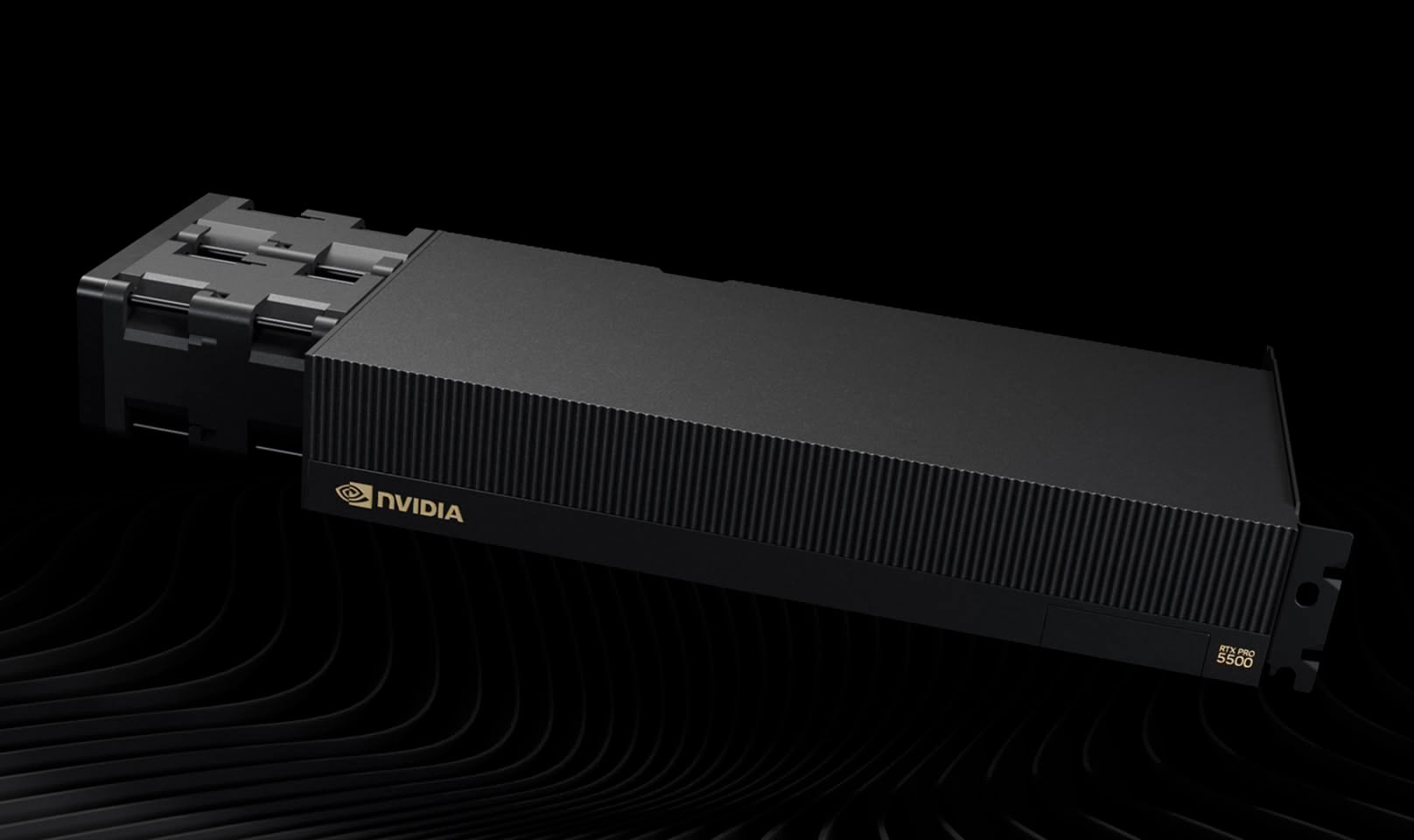
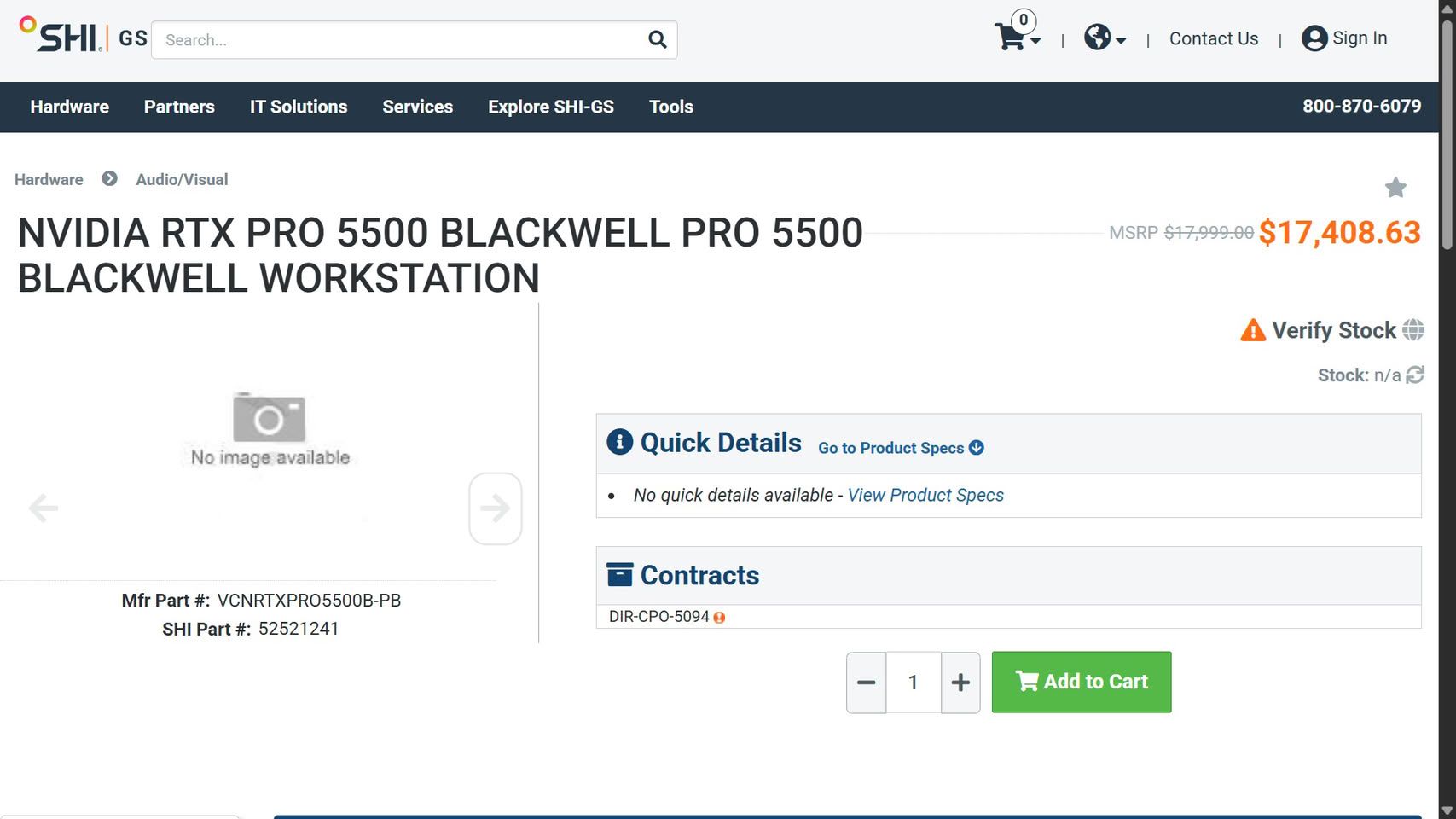
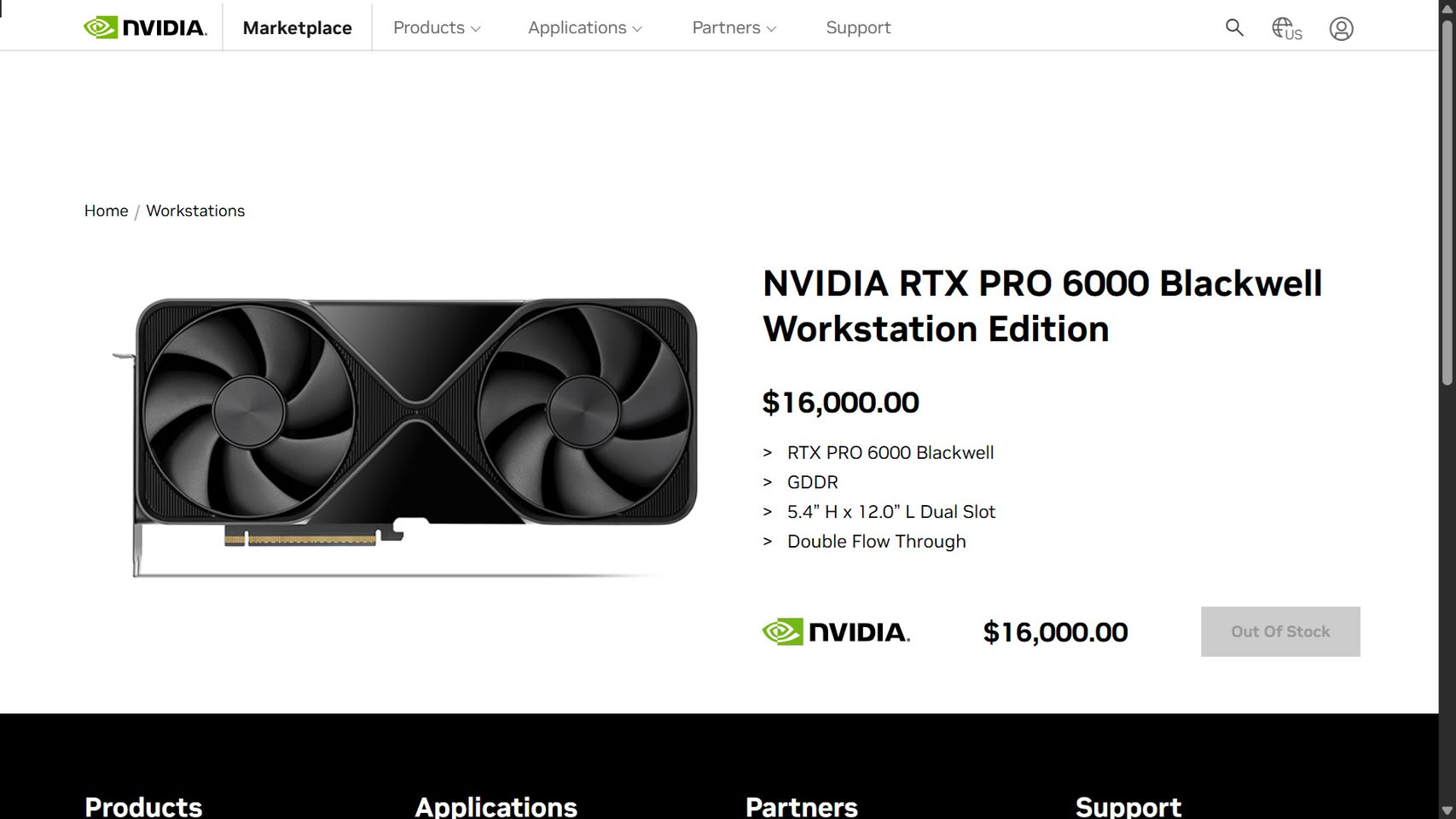
Treat it as a channel signal, not an NVIDIA MSRP. The listing concerned RTX PRO 5500 Blackwell Workstation Edition, PNY product code VCNRTXPRO5500B-PB. SHI showed US$17999, then about 3.3% discount, leaving US$17408.63. RTX PRO 6000 Blackwell Workstation Edition remains US$16000 in the official United States store, so the lower-spec option is about US$1409 higher. NVIDIA has listed the model in its product directory, but the official product page previously described it as coming soon.
For procurement, log three numbers: quoted price, discounted price, official price. If only one number moves, the market may be reacting to limited stock rather than a permanent price reset.
Why do lower specs carry a higher price?
Availability can outweigh specification when demand is concentrated. RTX PRO 5500 uses Blackwell, 21760 CUDA cores, 84GB GDDR7 ECC memory, 416bit interface, 1398GB/s bandwidth, and 600W maximum power. RTX PRO 6000 has 24064 CUDA cores, 96GB GDDR7 ECC memory, and 1792GB/s bandwidth.
| Factor | RTX PRO 5500 | RTX PRO 6000 |
|---|---|---|
| CUDA cores | 21760 | 24064 |
| GDDR7 ECC memory | 84GB | 96GB |
| Bandwidth | 1398GB/s | 1792GB/s |
| Price seen in market | US$17999, then US$17408.63 | US$16000 official |
What demand signal explains the premium?
Reuters reported that ByteDance, Alibaba, and Tencent ordered over 3,000,000 RTX PRO 5500 cards at a per-card price of about US$11400. Other reports indicated China orders above 6,000,000, while NVIDIA might supply about 3,000,000 in 2027. If those figures hold, the order book is more than double the planned capacity.
A second data point strengthens the delivery-risk view: The Business Times, citing Reuters, reported that Tansun Technology disclosed an October 13 filing agreeing to buy 20,000 RTX PRO 5500 cards. The same report also described the three-company order as having a collective sticker price above US$35 billion. For smaller buyers, an announcement can prove intent, not shipment.
How does export control reshape APAC buying?
When NVIDIA B300 faces restrictions for China and H200 exports require case-by-case review, RTX PRO 5500 can become one of the high-performance NVIDIA products still potentially obtainable. That changes the buying logic: compliance-accessible products may command a premium even when their technical sheet is weaker.
Before payment terms, teams should map the exact GPU to allowed regions, shipping party, end-use documents, and fallback options. In regulated APAC infrastructure projects, the question is often not only which card has more bandwidth, but which card can be installed on schedule.
How should buyers verify memory and deployment risk?
Ask the seller for SKU-level confirmation, because the 84GB design depends on 28 GDDR7 chips. Memory tightness can increase cost, delay batches, or change the delivered BOM. The NVIDIA official product page frames RTX PRO 5500 as a Blackwell workstation card for rack-mounted deployment, agentic AI, physical AI, and simulation, with Multi-Instance GPU features; that means teams should plan as much for rack, power, and virtualization as for raw cores.
What checklist should a decision team run?
- Confirm the exact SKU: RTX PRO 5500 Blackwell Workstation Edition, PNY VCNRTXPRO5500B-PB or its equivalent.
- Record retailer quote, discount, and NVIDIA official price side by side.
- Require written lead time, delivery milestone, and refund terms for partial shipment.
- Check export documentation for China and for each APAC deployment country.
- Verify thermal design for 600W, rack density, power redundancy, and noise constraints.
- Test MIG partitioning, ECC behavior, drivers, and application compatibility before bulk orders.
- Model a fallback if 28-chip GDDR7 supply becomes the bottleneck, comparing workload fit rather than CUDA counts alone.
What are the common pitfalls?
- Mistaking SHI’s US$17999 quote for an official NVIDIA price.
- Assuming fewer CUDA cores automatically means worse return on investment.
- Ignoring 84GB, 416bit, 1398GB/s, and ECC requirements in virtualized inference stacks.
- Planning on 2027 capacity without confirming whether the seller has allocated inventory.
- Comparing only hardware cost, not delivery delay, compliance review, and replacement cost.
FAQ: who should buy RTX PRO 5500?
Should a team pay near US$17999?
Only if the workload truly needs 84GB memory, if US$17408.63 can be converted into a firm delivery commitment, and if no compliant alternative can meet the project schedule. A retailer quote is not a procurement decision.
Is RTX PRO 6000 always better?
On paper, yes: 24064 CUDA cores, 96GB memory, and 1792GB/s. Yet if RTX PRO 5500 is obtainable and RTX PRO 6000 is not available in the required region, the practical comparison shifts from raw specs to delivery certainty.
Does the about US$1409 gap prove NVIDIA changed its pricing strategy?
No. It more likely reflects scarcity, order concentration, and supply-chain pressure, especially when Reuters reports large ByteDance, Alibaba, and Tencent orders.
Action plan for the next 30 days
- Days 1-5: create a one-page price and capacity matrix using US$17999, US$17408.63, US$16000, about US$1409, about US$11400, over 3,000,000, over 6,000,000, and about 3,000,000 in 2027.
- Days 6-15: ask the seller about China export handling, H200 review experience, B300 restrictions, and written lead time for each card.
- Days 16-30: run a pilot covering memory footprint, MIG partitioning, rack power, and application stability before approving bulk purchase.