
Skyworth F24B23F at RMB 449: What Asia-Pacific's New 144Hz Price Floor Means for Buyers
Skyworth put the F24B23F on JD.com on October 26: a 23.8-inch 1080P IPS monitor running at 144Hz for RMB 449, as reported by IT Home. The spec sheet is unremarkable; the price is not. With 23.8-inch full-HD IPS panels changing hands near US$51 a piece, high-refresh hardware in the world's largest monitor market has fallen to the shelf price of a plain 60Hz office screen — a signal for every Asia-Pacific buyer, channel and brand that is still quoting entry-tier displays on the old curve.

What exactly landed, and what the numbers say
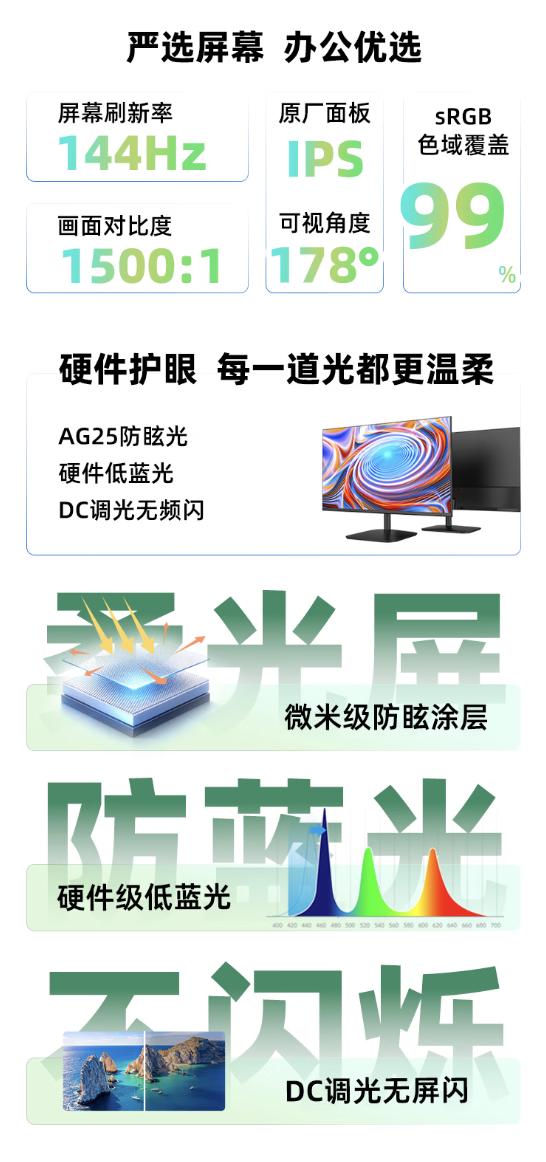
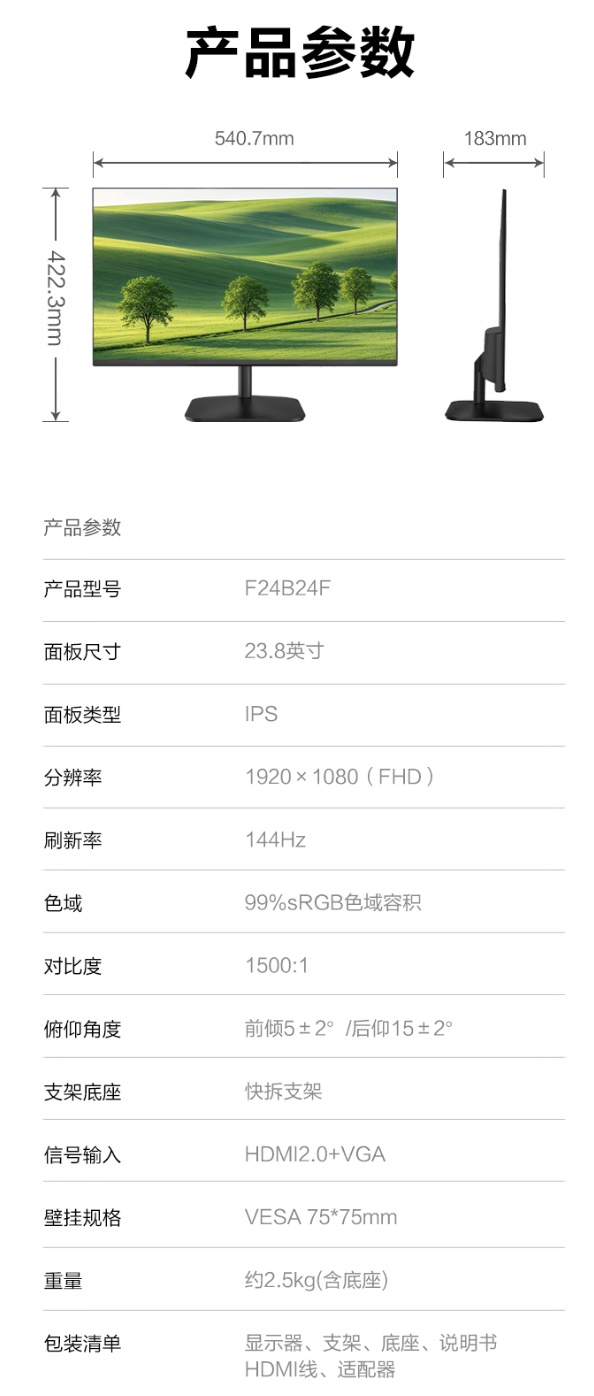
Conclusion first: this is a value-tier esports panel that trades brightness, ergonomics and connectivity for motion smoothness. IT Home's October 26 report lists the F24B23F on JD.com at RMB 449, built on a 1920x1080 IPS panel with a 144Hz refresh rate, 1500:1 contrast ratio, 300 nits of brightness and 99% sRGB coverage. The stand adjusts for tilt only, the chassis carries a VESA 75x75mm mount, and the video inputs are HDMI 2.0 plus VGA.
| Item | Specification |
|---|---|
| Model | F24B23F |
| Diagonal | 23.8-inch |
| Panel / resolution | IPS, 1920x1080 (1080P) |
| Refresh rate | 144Hz |
| Contrast / brightness | 1500:1 / 300 nits |
| Colour gamut | 99% sRGB |
| Stand / wall mount | Tilt only / VESA 75x75mm |
| Video inputs | HDMI 2.0, VGA |
| Channel and price | JD.com, RMB 449 |
Two absences define the tier. The input list stops at HDMI 2.0 and VGA, so there is no DisplayPort and no USB-C single-cable docking — which points this SKU at desktop fleets, legacy machines and price-driven retail rather than laptops. HDMI 2.0's bandwidth is still comfortable for 1080P at 144Hz, so the omission is a segmentation choice, not a technical limit. And a tilt-only stand plus 300 nits means multi-hour ergonomic use and bright-room work are outside the design brief. Buyers specifying VESA arms should also confirm a 75x75mm adapter, since many desk mounts default to 100x100mm.
Why a 144Hz screen can be sold for RMB 449
The discount is structural rather than promotional. TrendForce's monitor panel price series, republished by LEDinside, put the June 2026 average contract price of a 23.8-inch IPS 1920x1080 LED-backlit monitor panel at about US$51 per piece, within a US$47.9–52.7 band, while the equivalent 27-inch IPS panel averaged US$63.6. RMB 449 converts to roughly US$60 at recent rates, so on the June panel curve the bare display accounts for about four-fifths of the retail price before housing, driver electronics, logistics, warranty reserve and platform commission. This is our analysis of published panel pricing, not a Skyworth cost disclosure.
The same dataset explains the next move up the ladder. The panel-level gap between 23.8-inch and 27-inch full-HD IPS is only about US$12.5, far narrower than the gap these sizes usually carry on a retail shelf. Expect 27-inch FHD high-refresh models to be the SKU pushed hardest in promotions, with 23.8-inch screens like the F24B23F absorbed as the traffic-drawing floor.
Why this week: the 11.11 calendar and a crowded entry tier
Timing is the most readable part of the launch. JD.com opened its 2026 11.11 campaign on October 12 with immediate in-stock sales, and the widely flagged order windows were October 31 and November 10 — meaning the F24B23F went live in the middle of the promotional run, not ahead of it. For a value brand, a low list price inside that window does two jobs: it anchors search results on a headline number, and it leaves room for coupons and trade-in stacking to push the paid price lower.
It is also not an isolated price point. Community deal trackers showed other vendors landing 24-inch 1080P IPS panels at 144Hz for the same RMB 449, and a 23.8-inch Fast IPS 180Hz gaming model from AOC at RMB 499 on the same platform. The read: 144Hz has stopped being a premium attribute in China and become a commodity baseline, and the differentiation battle has shifted to 180Hz, 200Hz and above.
Is 144Hz still a selling point in a 240Hz market
By the standards of China's fastest-growing monitor segment, no. Research firm RUNTO tracked 2025 retail sales of monitors across mainland online channels at 13.01 million units, up 18.6% year on year, with gaming models at 7.48 million units and a 64% penetration rate. Within that, 240Hz units grew 140% year on year to a 10% share, 200Hz units grew 202% to 5%, and ultra-high-refresh models around 320Hz multiplied roughly 13-fold to more than 4%, while 180Hz held 17% but declined. RUNTO expects 240Hz to overtake 180Hz as the leading consumer refresh rate during 2026.
Panel researchers are blunt about the direction. Omdia's May 2026 Display Dynamics note argues that 240Hz has already become the mainstream refresh rate for gaming monitors following the rollout of NVIDIA's RTX 5000 series GPUs, with 240Hz panel penetration rising from 17% in 2025 to 20% in 2026. Against that backdrop, a RMB 449 144Hz screen is best understood as the clearance floor of one generation and the recruitment price for the next one.
How the Asia-Pacific price ladder compares for the same panel class
Regional arbitrage is where this launch stops being a China story. Live listings outside the mainland keep the same class of hardware well above the F24B23F's sticker price:
| Market and listing | Panel class | Indicative price |
|---|---|---|
| China, JD.com — Skyworth F24B23F | 23.8-inch IPS, 1080P, 144Hz | RMB 449 |
| China, tracked deal listings | 23.8-inch Fast IPS, 1080P, 180Hz | RMB 499 |
| India, Flipkart 24-inch FHD IPS gaming listings | 24-inch IPS, 1080P, 144Hz | about ₹6,589 and up |
| India, Smartprix 144Hz price list | 24-inch FHD gaming models | ₹8,099 class |
Converted loosely, those Indian listings sit near RMB 540–680 before duties, logistics and retail margin differences — a 20% to 50% premium over the mainland price for a very similar panel. For distributors in Southeast Asia and South Asia the implication is uncomfortable: component cost is converging across the region, but street price is not, and the gap is a margin pool that mainland brands shipping under group labels such as SKYWORTH, METZ and STRONG can attack. The group presented that multi-brand push to European and global buyers at IFA in September 2026.
What buyers, IT teams and vendors should do next
- End users with a 1080P GPU budget: the F24B23F is a rational pick only if you already own HDMI 2.0 output and do not need height adjustment. For shared desks, the tilt-only stand is the real cost of the RMB 449.
- IT procurement and SMB fleets: treat the VGA input as an asset, not nostalgia — it extends the life of older thin clients and shop-floor PCs, which is why this SKU still ships it. Budget 75x75mm adapters up front if you standardise on monitor arms.
- Resellers and category managers outside China: price-test the RMB 449 anchor against your own 144Hz assortment. If landed cost plus duty is under 25% of your shelf price, expect Chinese value brands to compress your entry tier within two promotional cycles.
- Panel and brand strategists: watch the 23.8-inch versus 27-inch IPS contract spread, currently around US$12.5. When that narrows, the floor moves to 27-inch and today's entry models become office fleet stock.
- Buyers planning a refresh within six months: wait for the 180Hz-to-240Hz tier to be discounted. RUNTO's 2025 data and Omdia's 2026 tracker both point to high-refresh supply migrating upward, which historically drags 144Hz prices further down rather than stabilising them.
FAQ: the questions this listing raises
Is 144Hz at RMB 449 a genuine category low?
For a 23.8-inch IPS panel at 144Hz, it is at the low end of what Chinese e-commerce has been showing this autumn — deal trackers list several vendors at the same number, so it reads as a category floor rather than a one-off clearance.
What does the panel cost explain?
Contract pricing of roughly US$51 for a 23.8-inch full-HD IPS panel in June 2026 leaves almost no room between component cost and retail price, which is why brands compete on refresh rate and price instead of brightness or colour.
Will 144Hz be obsolete soon?
Not obsolete, but demoted. 240Hz models grew 140% year on year in China's online channel in 2025 and Omdia sees 240Hz penetration at 20% for 2026, so 144Hz is now the entry ticket rather than the headline feature.
Does it suit console or laptop use?
With only HDMI 2.0 and VGA and no USB-C, it is designed around desktops. Console and laptop owners can drive 1080P high-refresh output over HDMI, but anyone needing single-cable docking or a DisplayPort G-Sync path should look at the 180Hz tier priced only slightly higher.
Sources and references
- TrendForce — monitor panel research and monthly panel price forecast
- LEDinside — TrendForce panel price quote, June 2026 (23.8-inch and 27-inch IPS monitor panels)
- RUNTO market data on China's 2025 online monitor market and refresh-rate mix, via Sina Finance
- Omdia — Display Dynamics, May 2026: 240Hz as the mainstream gaming refresh rate
- 2026 11.11 platform calendar, including JD.com's October 12 start, via Sina Finance
- SMZDM deal tracker — competing 24-inch 1080P 144Hz listings at RMB 449 and 180Hz at RMB 499
- Flipkart India — 24-inch 144Hz monitor listings; Smartprix India — 144Hz price list 2026
- Skyworth Group multi-brand display presence at IFA 2026 (SKYWORTH, METZ, STRONG)
Compiled by Lynn Zhou for APACTechBriefing on APACTechDigit. Questions on Asia-Pacific display supply and pricing coverage: contact@apactechdigit.com