
APAC Tech Briefing: Korea's Road to a US$1 Trillion Export Year — Chips, Suppliers and Risk, Compared
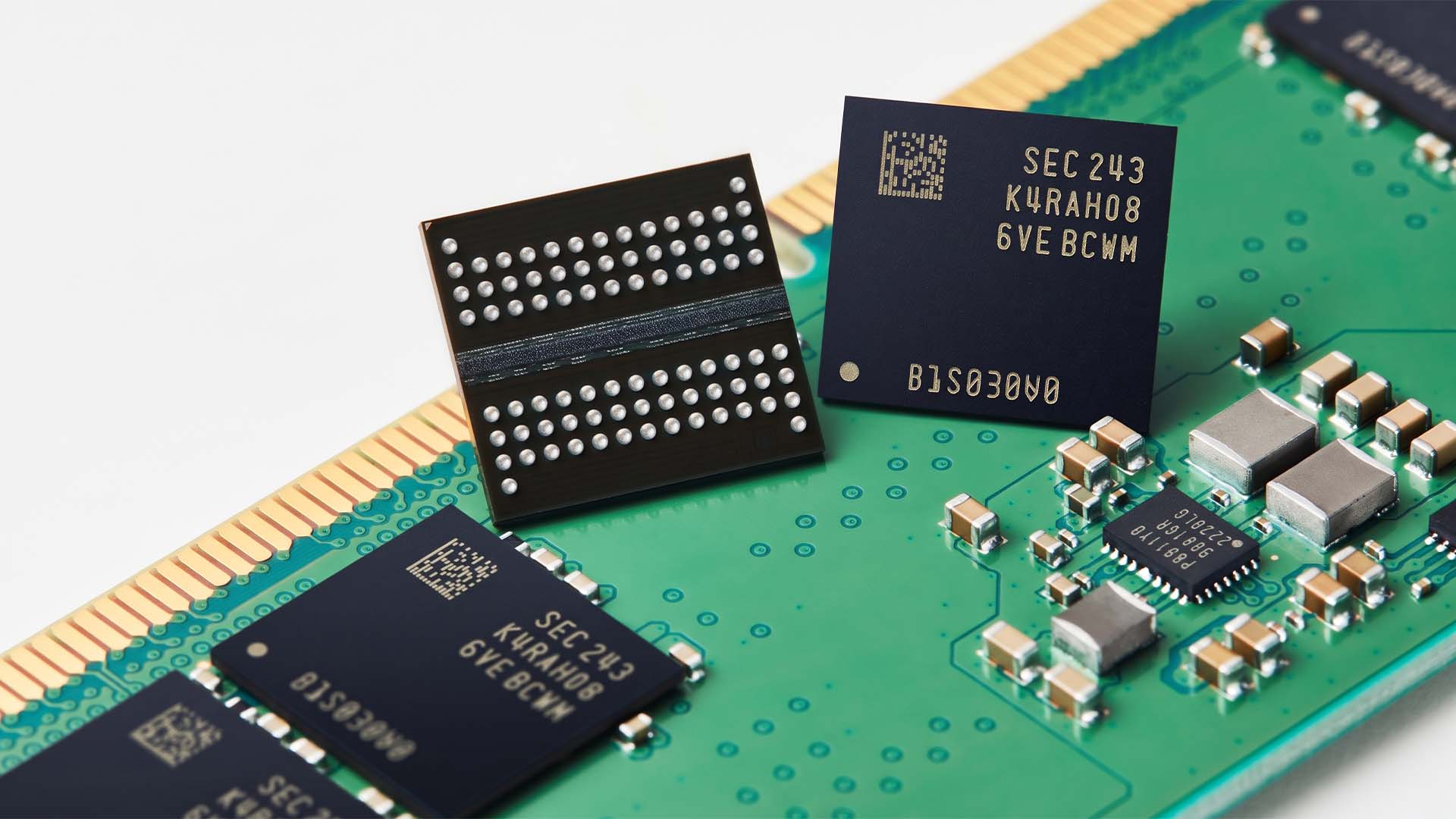
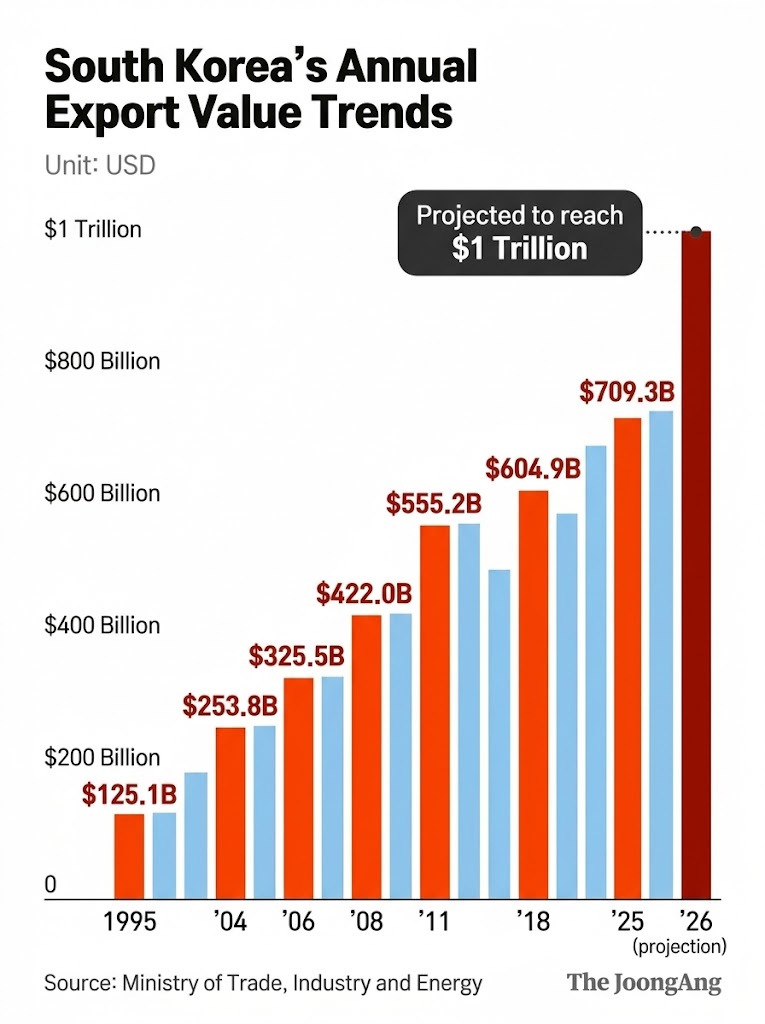
A single product class is now shouldering roughly half of one G20 economy's outbound sales. Should the current pace hold, South Korea would finish the year above US$1 trillion in exports and become the fourth economy in history to clear that bar — a 31-year climb measured from the US$100 billion mark it first passed in 1995. That milestone is the headline, and it is also the least decision-relevant part of the story. For technology, procurement and strategy teams across Asia-Pacific, three comparative questions matter far more: how broad is the boom beyond memory chips, who inside the country actually captures it, and what would break it.
The four numbers this quarter turns on
- October memory shipments. Semiconductor exports came in at US$56.44 billion, up 259.4% year on year and equal to 49% of that month's total exports, according to Korea Customs Service data released on 2 November 2026.
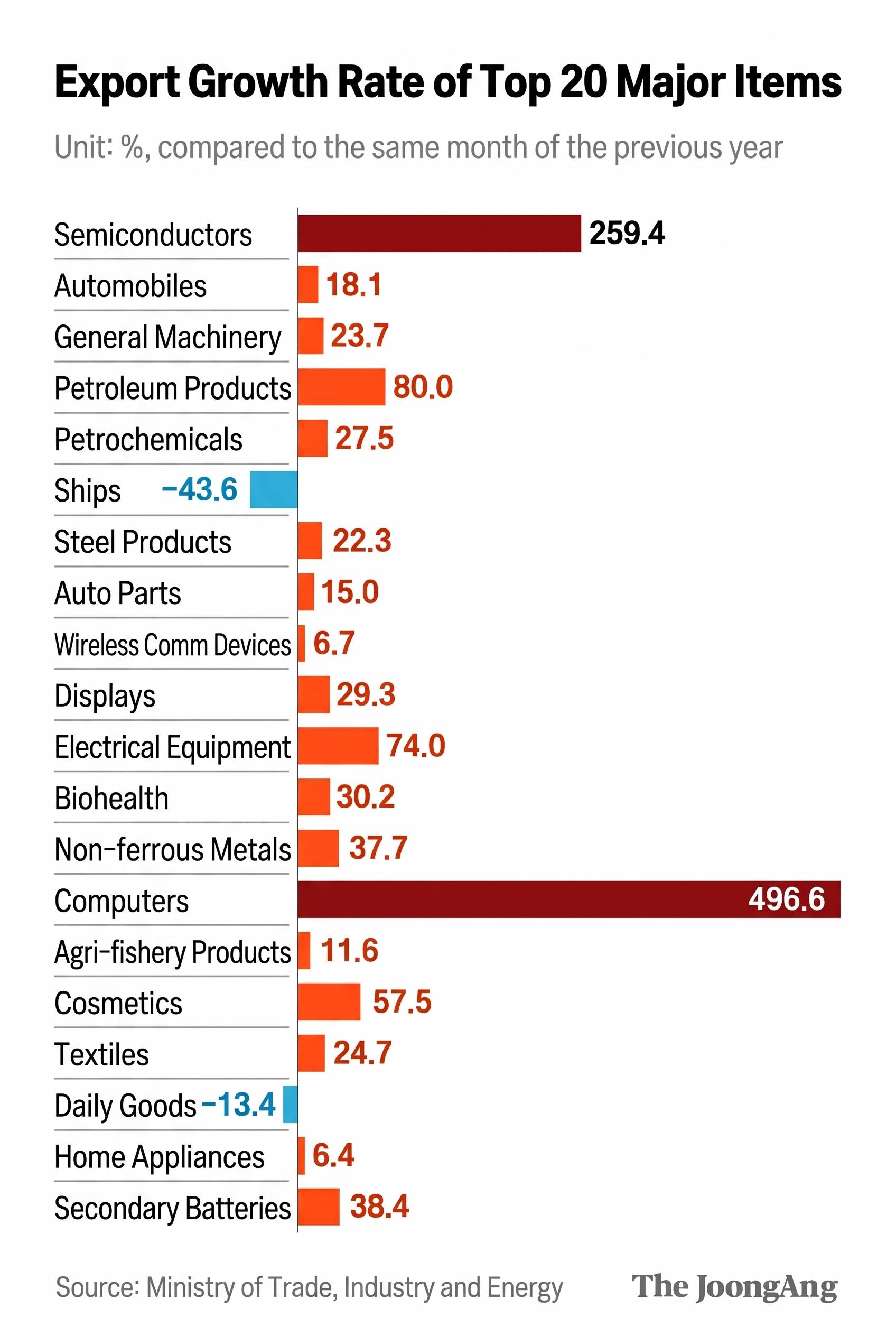
- AI-adjacent hardware. Computer equipment tied to data-centre build-out rose 496.6% to about US$5.85 billion, the fastest-growing line in the monthly ledger.
- The cumulative clock. Shipments reached US$709.4 billion by early September, overtaking the previous full-year record, with customs expecting the US$1 trillion line in early December if momentum persists (Xinhua; Korea.net).
- Macro pass-through. The third quarter grew 1.0% from the previous quarter and 3.4% year on year, ahead of consensus, carried by exports and facilities investment — while private consumption moved the other way (Bank of Korea preliminary estimate).
Benchmark 1: the AI basket against the rest of the export ledger
Read side by side, the pattern looks less like an export recovery than one industry towing a line of stalled ones behind it. The government's own September release is the cleanest evidence available: semiconductor shipments advanced 263% year on year, while all other products taken together managed 23%.
| Export line | Latest verified reading | What it tells APAC buyers |
|---|---|---|
| Semiconductors | US$56.44 billion in October, +259.4%; 49% of monthly exports | Memory allocation and pricing stay the binding constraint into 2027 |
| Computer equipment | About US$5.85 billion, +496.6% | Server and storage lead times will follow AI capex, not regional demand |
| All non-chip goods | +23% in September, versus +263% for chips (Korea.net) | Conventional Korean components remain negotiable on price |
| Autos and general machinery | -3.8% and -1.5% for January–September (trade ministry data via Etoday) | Factories, tooling and logistics slots are under-used |
| Domestic retail | Third-quarter sales down 0.5% | Export strength is not a proxy for consumer demand in the region |
Benchmark 2: who inside Korea actually got paid
The second comparison is by company size, and it is where the official record diverges most sharply from the narrative of a broad-based boom. Customs data for August show large-company exports at US$77.1 billion, up 94.2%, against US$10.1 billion from small and medium-sized firms, up 20.4%. A breakdown carried by People's Daily Korea channel from Korean outlet Etoday attributed 91.2% of the first-half increase in export value to conglomerates, leaving mid-tier companies 3.6% and small firms 4.6%; small and mid-sized manufacturing output fell 0.8% over the first eight months while large-plant output rose 2.9%.
Two structural reasons surface in every regional supplier conversation this quarter. First, memory is capital-intensive and short-circuited: Samsung Electronics and SK Hynix sell high-bandwidth products into a handful of global platform buyers, so little value filters down to domestic machine shops, packaging houses or retail landlords. Second, capacity is consolidating rather than dispersing — Counterpoint Research put Samsung at 38% of the second-quarter 2026 DRAM market, SK Hynix at 25%, Micron at 24% and China's CXMT at 10%. Four suppliers effectively define what a Korean chip export statistic is made of.
Benchmark 3: destinations, and where the concentration risk sits
Geography is the third axis. October shipments to China rose 133.6% and to the United States 185.8%, with Europe and Southeast Asia also running strong, widening the trade surplus and confirming the country's role as a pick-and-shovel winner in the AI infrastructure race. The caveat for regional planners is that the same two corridors carry the policy risk: credit insurer Coface flags chemicals, steel and petroleum products as still soft, alongside exposure to US Section 232 duties of 25% to 50% on aluminium, steel and autos. Diversification towards Europe and Southeast Asia is therefore a hedge to track month by month, not a fact already established.
Scoreboard: base case versus the downside already on file
| Dimension | Base case | Downside case |
|---|---|---|
| Timing of the trillion-dollar crossing | Early December, per customs guidance issued in September | An order-normalising fourth quarter pushes it back without erasing the record already set |
| Chip export trajectory | October was the second straight month chip shipments topped US$50 billion, and the trade ministry now sees the annual line as early as November | Bank of Korea scenario: US$50 billion to US$100 billion less than forecast if large US platforms slow AI spending (Reuters, 27 October 2026) |
| Prices | 16Gb DDR5 module at US$50.0 in October, up US$2 month on month; 128Gb NAND steady at US$30.6 | Spot softness reverses quickly once hyperscaler build schedules slip |
| Domestic demand | Central bank sees private consumption recovering gradually from Q4 2026 into Q1 2027 | Third-quarter retail already -0.5%, weak SME sales, and no offsetting engine in autos or machinery |
Action checklist for APAC technology, procurement and strategy teams
- Qualify a third memory source now. With Samsung, SK Hynix, Micron and CXMT holding the entire DRAM field, start second-source validation before the next allocation cycle rather than during it.
- Build a three-indicator monthly dashboard: semiconductor share of Korean exports (49% in October), hyperscaler capital-expenditure guidance, and DDR5/NAND spot pricing. These move ahead of any order book you hold.
- Add step-down clauses. If the central bank's US$50–100 billion downside scenario is plausible, contracts should let volumes flex rather than lock.
- Negotiate the laggard tier. Small and mid-sized component, tooling and logistics suppliers are running below capacity, which is where price and lead-time concessions are still available.
- Keep export data out of consumer models. A -0.5% retail print in the third quarter is the honest baseline for any Korea-facing demand plan.
- Watch the destination mix, not just the total. If Europe and Southeast Asia growth holds while China and United States volumes normalise, Korea reads as a hedged sourcing base; if it does not, tariff and concentration exposure needs pricing in.
Bottom line
Set the three axes against each other and the verdict is consistent: this is a supply-side event with a narrow capture radius, not a general demand signal for Asia-Pacific technology. The 31-year run from US$100 billion to the threshold of US$1 trillion — which would make South Korea the fourth economy ever there — is real, and it should be planned around as a capacity, pricing and concentration fact for 2027. What it has not yet done is convert into hiring, small-supplier orders or household spending, and the analysts who follow Korean trade expect the gap between chip plants and the rest of the economy to widen before new growth industries or a consumption rebound can close it. For regional decision-makers the practical translation is simple: buy against the trillion-dollar number, and hedge against the 0.5% one.