
APACTechBriefing Deep Dive: iPhone 18's 2nm Chip, Bigger Battery and Price Pressure — What the Leak Means for Asia-Pacific
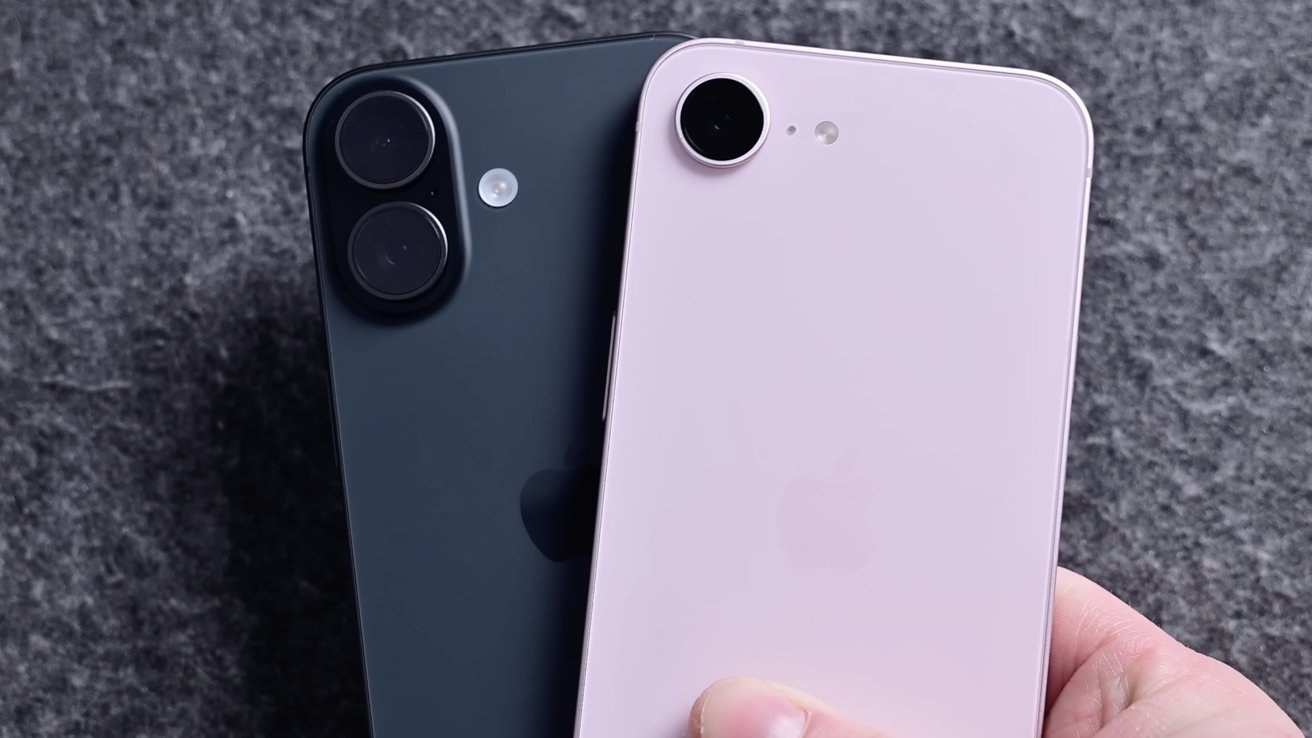
One Weibo post is enough to redraw Apple's next twelve months. The tipster known as Digital Chat Station says the standard iPhone 18 keeps its screen size and camera layout almost unchanged, yet moves its processor onto TSMC's 2nm node and, in the same leak, prepares a physically larger battery. Read alongside the repricing Apple pushed through its iPhone product line in September this year, the story stops being a hardware rumour: it becomes a cost-and-calendar story, and Asia-Pacific buyers, resellers and component suppliers will feel the second version before end consumers do.
The leak, compressed into one table
| Element | What the leak claims | Verification status |
|---|---|---|
| Display | 6.3-inch OLED panel, refresh rate up to 120Hz | Tipster claim; no panel supplier named |
| Front interface | Dynamic Island and Face ID both retained | Tipster claim; consistent with prior generations |
| Imaging | Rear dual-camera setup, 48-megapixel main sensor | Tipster claim; no sensor supplier named |
| Silicon | A20 chip fabbed on 2nm | Follows the node already used by the iPhone 18 Pro series with its A20 Pro chip |
| Endurance hardware | Larger cell than the iPhone 17, rated at 3692mAh | Capacity and run-time gains unconfirmed |
| Price | Expected above the predecessor; no figure given | Follows September this year's uplift across the line-up |
| Timing | Landing in the first half of 2027, plausibly with the second-generation iPhone Air and iPhone 18e | Product-planning rumour only |
Background: the node is the one upgrade Apple could not skip
Chip-level change is the least discretionary item on that list. TSMC has confirmed that its N2 family entered volume production on schedule, with reporting around the launch identifying Fab 22 in Kaohsiung, southern Taiwan, as the lead site; on the company's own technology pages, the N2P variant is specified at roughly 18% higher speed at the same power, about 36% lower power draw at the same speed, and near 20% more transistor density when measured against the N3E 3nm-class baseline (tsmc.com). That arithmetic is what turns "performance and efficiency will improve" from marketing language into a procurement reality: for any vendor shipping a flagship application processor in 2026-2027, the step away from the A19 series is forced by competitive power-per-cycle maths, not by design preference.
There is a supply constraint hidden in the same fact. Because the iPhone 18 Pro series already runs the A20 Pro chip, the standard model's move to 2nm is an allocation question, not a technology question: it depends on how much N2 wafer capacity Apple is guaranteed when rival high-performance-computing customers are bidding for the same lines. Trade reporting in late 2025 described early 2nm capacity at TSMC's two lead plants as effectively committed for 2026 (wccftech.com). For a device scheduled for the first half of 2027, that is a manageable timetable — but it means launch-volume ramps, not design wins, are the variable to watch.
Analysis: the battery claim is an efficiency decision, not a spec-sheet one
A larger cell is the cheapest way to convert node-level efficiency gains into a number a consumer can understand — hours. The leak does not attach a capacity figure, so the only defensible statement is directional: against the iPhone 17's 3692mAh, more capacity should improve endurance, and the size of that improvement cannot be quantified from a rumour. Two counter-forces matter for Asia-Pacific planners. First, battery capacity competes for internal volume with everything else — thermal layers, camera modules, and whatever cost-reduction measures a standard-tier model carries. Second, if the 36% power-efficiency headroom that TSMC quotes for its 2nm-class node is spent partly on longer screen-on time and partly on brighter panels and heavier on-device AI workloads, the visible endurance gain may be smaller than the milliamp-hour delta suggests.
Cause: memory is the line item doing the damage
Pricing is where the leak stops being speculative. In the United States, the iPhone 17's entry price moved from 799 dollars to 899 dollars this September — a 100 dollar step that Apple has already applied to the current line, with iPhone 18 Pro and iPhone 18 Pro Max each listed 100 dollars above their predecessors at launch.
The driver is upstream. Artificial-intelligence data-centre construction has sucked allocation out of conventional memory, and the scale is no longer trivial: J.P. Morgan Global Research estimates that DRAM pricing will have risen more than 400% between the start of 2024 and the end of 2026 (jpmorgan.com), while TechInsights' research team argues the shortage could keep DRAM and NAND prices elevated for several years (techinsights.com). Apple historically absorbed such swings through long-term supply agreements and sheer order volume; with wafers, memory and other key components all inflating at once, holding retail prices flat became harder.
The demand-side check is worth as much as the cost story. Nikkei Asia reported in October that Apple trimmed component orders for the iPhone 18 Pro and Pro Max by at least 15% after the price rises, citing softer-than-expected uptake (asia.nikkei.com). For the standard model, still more price-sensitive by definition, the implication is an asymmetric risk: rather than a single visible entry-price jump, Apple has more incentive to protect the opening price and recover margin on storage tiers and regional list prices.
Regional read: Asia-Pacific absorbs the swing first
- Fabrication is concentrated in Taiwan. Every 2nm application processor for the iPhone 18 family leaves a Kaohsiung or Hsinchu fab, then travels to SMT and assembly lines elsewhere — so wafer allocation, not component sourcing, is the earliest signal for the 2027 ramp.
- Assembly keeps migrating to India. 2026 reporting describes Apple assembling the full latest iPhone range, Pro models included, in Indian plants operated with partners such as Foxconn and Tata Electronics, with India's share of global iPhone output put at roughly a quarter and rising (firstpost.com). Availability, freight routing and localised pricing in South Asia and adjacent export markets will therefore be set by a schedule that no longer mirrors China-only output.
- Component ecosystems see memory inflation before consumers see price tags. Korean and other regional memory makers' contract pricing moves a quarter ahead of device repricing, which is why the DRAM trend line is the most useful leading indicator for anyone forecasting Asia-Pacific handset ASPs.
- Premium-demand softness is regional, not global. The order trims reported after the September increase suggest elasticity differs by market; resellers in South-East Asia and Oceania, where a 100 dollar uplift converts into a larger percentage of median device spend than in the United States, should expect a steeper trade-down effect toward older stock-keeping units.
Calendar: a two-window year for the iPhone product line
Apple split its 2026 launch. The September event carried iPhone 18 Pro, iPhone 18 Pro Max and the first foldable model, iPhone Duo, but not the standard iPhone 18. Product-planning rumours place that standard device in the first half of 2027, potentially sharing a stage with the second-generation iPhone Air and iPhone 18e. The strategic logic is legible: stretching flagship and volume launches across separate windows keeps the category in the news cycle longer and lets Apple time a mid-year memory-pricing reset independently of the autumn cycle. The leak also says the standard iPhone 18 may not inherit the smaller Dynamic Island used on the Pro series — differentiation will continue to be drawn through screen cutouts, cameras and other hardware features rather than through the core panel specification.
What is still unconfirmed
- Final battery capacity for the standard iPhone 18, and the resulting real-world endurance gain.
- Retail pricing and the specific price ladder, including entry storage configuration.
- The exact launch month and the composition of the first-half 2027 line-up.
- Whether any design cue from the Pro series — notably the reduced Dynamic Island — migrates down.
- None of the above has been confirmed by Apple; all figures should be treated as pre-silicon estimates until an official announcement.
Action lines for Asia-Pacific decision-makers
- Build 2027 refresh budgets on a per-tier price increase of at least 100 dollars rather than assuming Apple absorbs node and memory inflation; stress-test a 15% higher ASP scenario for the standard tier.
- Treat the first half of 2027 as a separate procurement window: enterprise contracts negotiated in the autumn flagship cycle may not cover the volume device, and initial allocation may be tighter than launch headlines suggest.
- Monitor two leading indicators only — DRAM/NAND contract pricing and TSMC 2nm capacity commentary — as the earliest warnings for both launch timing and price revisions.
- Do not write endurance claims into procurement specifications; require published capacity and video-playback figures before any comparison against the iPhone 17's 3692mAh baseline.
- Resellers and carriers: plan for a longer interval between flagship and standard-model sell-through peaks, and price legacy stock accordingly.
The pattern across all three leaks is consistent enough to state as a trend judgment: Apple is turning its standard iPhone into a margin-management product — maximum silicon-node upgrade, minimum visible design change, maximum cost pass-through — while moving the announcement away from the flagship window. For Asia-Pacific stakeholders, the actionable insight is not the 6.3-inch panel or the 48-megapixel sensor that stayed the same; it is that 2nm capacity and memory inflation, not industrial design, now set both the price and the release date, and both variables sit outside Apple's control.