
APACTechBriefing: Tiger Brokers' Agentic OOH Pilot in Singapore — What APAC Media Buyers Should Take From It
Why does one advertising pilot deserve a briefing? Because Tiger Brokers, Stellar Ace and Adzymic ran what they describe as Asia's first live agentic out-of-home campaign — a real paid media buy, not a simulation — with three AI agents handling media planning, sales assessment and creative production across more than 260 digital screens in Singapore from 21 October to 3 November 2026, while human teams kept final sign-off. The signal for APAC media and digital leads is plain: agentic advertising has moved from vendor decks into live commercial inventory, and the decisions that now matter are about control, measurement and who carries liability.
What the pilot actually changed: three agents, one workflow
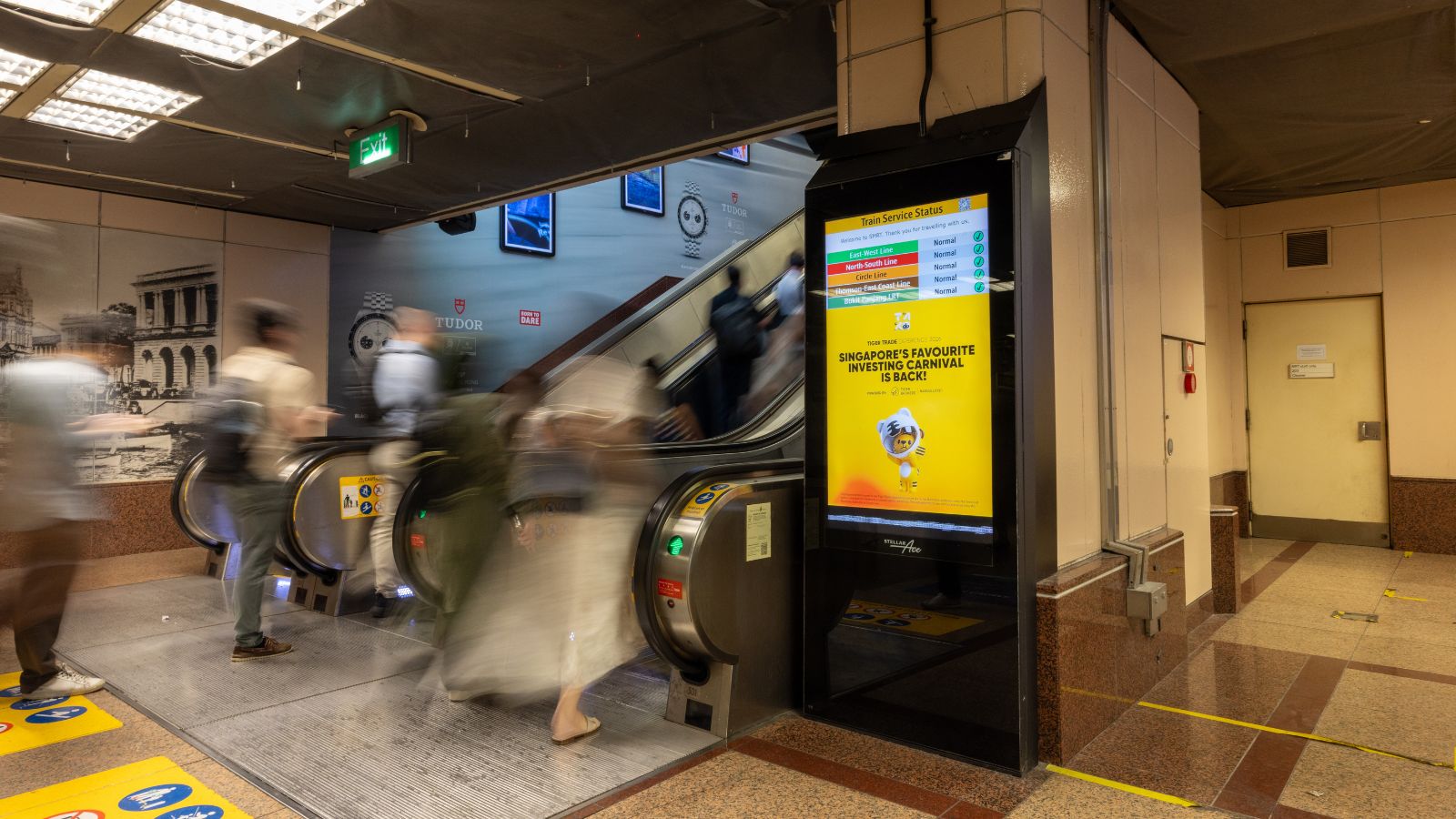
The shift is structural, not cosmetic. Rather than a single system executing predefined instructions, the workflow split the campaign across three AI agents, each owning one stage. The buyer agent worked Stellar Ace's media inventory into a plan shaped by Tiger Brokers' requirements. The sales agent assessed that plan on the media owner's side, removing the manual back-and-forth that normally sits between buyer and seller. The creative agent read the brand guidelines together with individual screen specifications to generate creatives matched to each format.
Kenniess Wong, co-founder and executive director of Adzymic, framed the build behind the pilot: "Earlier this year, we started building agentic infrastructure for advertising. With Tiger Brokers and Stellar Ace, we put it to work on a live OOH campaign," he said. "This is a first step towards what we set out to build: intelligent agents working together across the advertising value chain, so teams can spend their time on judgement rather than coordination,"
Why Singapore, and why now
Singapore is the straightforward first market for three reasons: screen density, a concentrated media-owner landscape, and unusually clear rules of the road. The Infocomm Media Development Authority (IMDA) published its Model AI Governance Framework for Agentic AI in January 2026 — described as the first national framework aimed specifically at agentic systems — giving brands, agencies and media owners a reference point for control planes, logging and human oversight before this campaign went live. In most neighbouring markets, which have no equivalent framework, the same workflow would plausibly spend weeks in legal and brand-safety review before a single screen is booked. That makes Singapore a template to learn from, not a benchmark to copy blindly.
The economics line up too. The World Out of Home Organization forecasts global OOH spend of $56.4bn in 2026, with APAC accounting for about 55%, roughly $29.7bn; Mordor Intelligence puts the APAC DOOH (digital out-of-home) segment at $23.93bn in 2026, up from $21.64bn in 2025. A city where more than 260 screens can be planned, assessed and served by agents is realistic only where inventory is already digitised at that scale.
What APAC buyers should take from it
The operational gain is coordination time. Where a media plan usually travels by email and spreadsheets between advertiser, agency and media owner, a sales agent that evaluates the plan on the owner's behalf removes a manual loop, and a creative agent that outputs format by format reduces production churn. The risk side is equally concrete: agents moved information and options, but commercial decisions, brand suitability and delivery stayed with people. Any APAC team copying the model should write that split into the contract rather than assume it.
Measurement is the unresolved half. OOH has no click, so buyers cannot fall back on last-click logic; the working standards are modelled impressions, reach and frequency, dwell time, foot-traffic attribution and brand-lift studies fielded against unexposed control groups, as industry guides to DOOH measurement set out. If a proposal arrives without a measurement plan, it is a creative demo, not a media buy. That is the same discipline now being applied to retail media bundles, where channel-margin visibility decides whether platform partnerships scale.
What the partners said
Ernest Teh, marketing director of Tiger Brokers Singapore, said the pilot showed the potential for AI to simplify media planning: "At Tiger Brokers, we are always looking for innovative ways to engage our audiences more effectively. This agentic pilot has been an encouraging experience, demonstrating the potential for AI to streamline media planning and we see the potential for agentic AI to transform how brands plan and activate our advertising campaigns in the future,"
Tony Heng, president of Stellar Experience, positioned the pilot as infrastructure rather than a stunt: "Agentic advertising presents an opportunity to move towards a more connected advertising ecosystem. We are in an era of advertising where planning, buying, and delivery can be fundamentally transformed. Speed, agility and accountability will define how we deliver value," he said. "This pilot, conducted for a real campaign with a real advertiser and actual OOH inventory is a huge step in Stellar Ace's move towards AI-enabled OOH advertising,"
The offline playbook behind the campaign
The pilot sits on top of a deliberate offline-to-online sequence. Last year, Tiger Brokers Singapore hosted its flagship "Tiger Trade Experience 2025: What's your secret sauce" event at Plaza Singapura, drawing more than 4,000 attendees over two days. Before the event, an online quiz sorted investors into trading personalities — 'Salt', 'Wasabi' and 'Sambal Chilli' — to drive engagement and attendance. The atrium became "Tastemakers corp", a finance-themed experiential space with interactive missions, trading tools and games, alongside the Tiger Innovation Lab and Tiger PLAYce with giant Jenga and a human claw machine. For regional teams, the lesson is that the agentic layer is being added onto an existing offline funnel, not replacing it.
FAQ: what to ask before an agentic OOH buy
Is agentic OOH buying actually live in APAC?
Yes, but narrowly. This pilot ran from 21 October to 3 November 2026 across more than 260 screens in Singapore with three agents and human sign-off; elsewhere in the region, agentic OOH remains at pilot or proof-of-concept stage.
Who is liable when an agent picks the wrong screen?
In this pilot, Tiger Brokers reviewed and approved the media plan before Stellar Ace accepted the media buy, and both teams carried out creative checks and handled operational requirements. Liability stayed with the humans who signed off — treat that as the default, not the exception.
How do you measure OOH when there is no click?
With modelled impressions, reach and frequency, dwell time, footfall attribution and brand-lift studies against control groups. Commission the measurement plan before the campaign window opens.
Will this model transfer to Indonesia or Thailand?
The workflow can; the conditions may not. Inventory digitisation, media-owner concentration and an agentic-AI governance framework are all present in Singapore and uneven elsewhere, so budget extra legal and brand-safety review time.
APAC localisation checklist
- Regulatory base: map the local equivalent of Singapore's agentic AI framework before promising timelines; where none exists, add review weeks.
- Inventory reality: confirm screens are programmatically bookable with proof-of-play logs; agentic planning is only as good as the feed.
- Sign-off contract: name who approves the media plan, the creatives and go-live, in writing.
- Measurement first: agree reach, dwell, footfall and brand-lift KPIs before the window opens.
- Creative localisation: brief the creative agent on language, cultural cues and brand-safety rules per market; a single creative rarely fits every APAC screen.
Sources
- IMDA, Artificial Intelligence in Singapore — https://www.imda.gov.sg/about-imda/emerging-technologies-and-research/artificial-intelligence
- Eversheds Sutherland, Understanding Singapore's new Model Framework for Agentic AI Governance — https://www.eversheds-sutherland.com/en/asia/insights/singapore-understanding-singapores-new-model-framework-for-agentic-ai-governance
- World Out of Home Organization, WOO Global OOH Expenditure Report 2026 — https://www.worldooh.org/news/woo-global-ooh-expenditure-report-2026
- Mordor Intelligence, Asia-Pacific DOOH Market Size & Share Analysis — https://www.mordorintelligence.com/industry-reports/asia-pacific-digital-out-of-home-dooh-market
- AdRoll, DOOH Measurement: Metrics, Methods & Attribution — https://adroll.com/blog/dooh-measurement-understanding-dooh-metrics