
APACTechBriefing: Windows 11 27H2 in 2027 — Microsoft's Platform Reset, Decoded for Asia-Pacific IT
Microsoft is reportedly preparing Windows 11 27H2 for 2027 as a full operating-system upgrade rather than another small enablement package, which makes it the heaviest Windows release since the 24H2 platform arrived in 2024. For Asia-Pacific organisations, that single change converts a routine feature drop into an imaging, driver and budgeting exercise. This briefing separates what Microsoft has published from what remains reported, and maps a 24-month action path.
What is Windows 11 27H2, and why is it being framed as a turning point?
Short answer: 27H2 is expected to replace or heavily rewrite core system components, not just unlock dormant features.
Windows 11 25H2 and Windows 11 26H2 were built on the same servicing base as the 2024 24H2 platform: eligible devices fetched a small package, rebooted once, and were done. The plan for Windows 11 27H2 is structurally different — a complete OS upgrade that swaps the underlying system while keeping applications, files and settings in place. In practice that means a new reference image, a new compatibility matrix and a full regression pass, not a maintenance window.
Scope is still unconfirmed. Microsoft has not published a final feature list, hardware requirements or release date for 27H2, and people familiar with the effort say Windows Insider testing for the release may begin early in 2027 — which, for IT teams, is the earliest realistic pilot window rather than the go-live date.
Why Windows 12 keeps sliding down the road
The direction of travel points to continuity, not a new brand. Instead of shipping a new Windows 12 next year, Microsoft is concentrating its 2027 effort on deepening Windows 11: performance, reliability and experience, with 27H2 positioned as the milestone that extends the platform's life cycle. Microsoft has not formally denied a future Windows 12, but every published signal so far supports the incremental path — and 27H2 is being treated internally as the vehicle for that bet.
Where the performance claims come from, and what they are worth
Published Microsoft data suggests efficiency, not new UI, is the headline metric. After a series of optimisations aimed at 8GB memory devices, the company reported internal test results showing Windows 11 responsiveness improved by up to 20% and multitasking performance by up to 40%. Those gains are already reaching devices supported by Windows 11 26H2 — they are not exclusive to 27H2 — but they show where the platform team is steering the 2027 work.
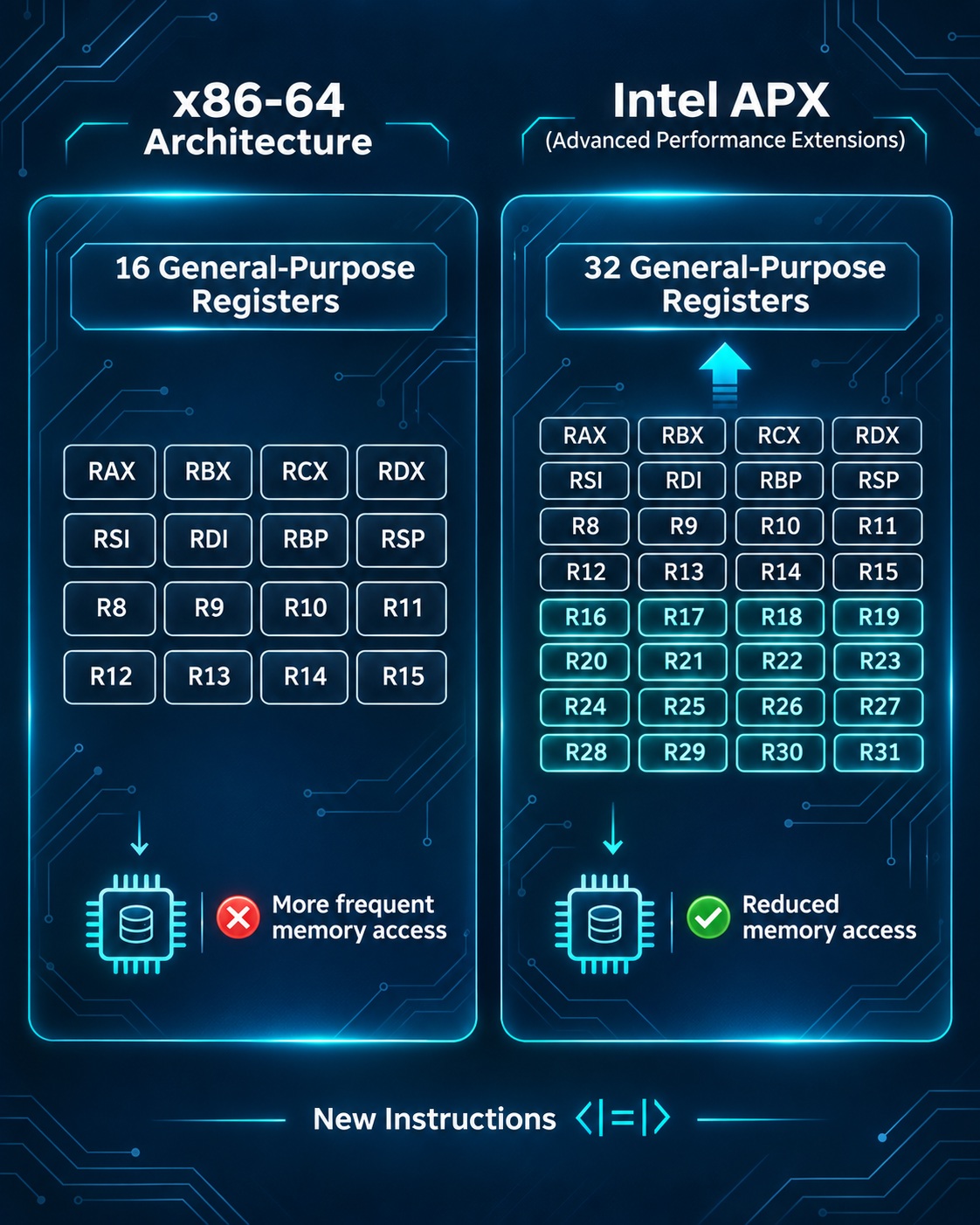
The second lever is silicon-facing. Signs of support for Intel Advanced Performance Extensions — APX, the "advanced performance extensions" instruction set — have surfaced in experimental Windows 11 builds. APX expands general-purpose CPU registers from 16 to 32, cutting memory accesses and instruction overhead so that optimised 64-bit applications can run faster. Intel's own developer documentation frames the same mechanism as a reduction in memory loads and branches for recompiled code. The caveat matters for Asia-Pacific buyers: the benefit only accrues to binaries rebuilt with APX support, so the payoff depends on future CPUs and on independent software vendors recompiling — a slow variable in markets with long-lived vertical applications. Microsoft has not confirmed that APX will ship as part of Windows 11 27H2.
How the platform split changes the upgrade maths for Asia-Pacific fleets
Gap in most coverage: 27H2 is being planned while Windows 11 users sit on two different platform lines. Reporting from Windows Central senior editor Zac Bowden in a 30 September 2026 explainer describes the majority of devices on 24H2, 25H2 and 26H2 sharing one platform basis, while a 26H1 branch built on a newer platform ships only on next-generation ARM hardware. Bowden also notes Microsoft has confirmed 26H1 is newer than 26H2, so those devices skip 26H2 entirely and move straight to 27H2 — which would make 27H2 the first release since 25H2 to cover all Windows 11 users at once.
For an enterprise estate that mixed ARM laptops bought this year with x86 machines from 2024, that means two upgrade paths converging at the same destination. The table below summarises the planning difference.
| Planning dimension | Windows 11 25H2 / 26H2 | Windows 11 27H2 (as reported) |
|---|---|---|
| Delivery mechanism | Small enablement package over the same servicing base | Full OS replacement retaining apps, files and settings |
| Validation load | One reboot; low compatibility risk | New image, driver and ISV regression cycle |
| Support clock | 26H2: generally available 29 September 2026, supported to 10 October 2028 for Home and Pro | Not published by Microsoft |
| Realistic pilot start | Already in broad delivery | Windows Insider work may open early in 2027 |
Read against the regional market data, the risk is cost, not features. IDC's Asia/Pacific tracker recorded the traditional PC market growing 11.6% in 2025 to 106.6 million units, with the commercial segment up 16.7% to 56.6 million — a surge driven largely by refresh demand around the Windows 10 end of support on 14 October 2025. IDC then projects a 13.7% decline to 92.0 million units in 2026 as component shortages and rising prices hit both supply and demand, with its global outlook warning that the memory shortage persists through 2027.
Two conclusions follow. First, the machines bought in the 2025 refresh wave will be 27H2-era hardware before they are fully depreciated, so many Asia-Pacific fleets can absorb the change through servicing rather than procurement. Second, in a market where RAM is priced up through 2027, an OS release judged on memory footprint and responsiveness is worth more to regional CIOs than cosmetic features — which is exactly the profile being described for 27H2.
What is changing on the surface, and why it is not the story
The default wallpaper that defined the product since Windows 11 launched in 2021 — Bloom — is expected to be replaced by a design of coloured folded geometric shapes surrounded by clouds, with distinct treatments per edition: consumer builds leaning into gaming, productivity, creativity and performance themes, while Windows 11 Pro keeps a palette closer to the existing Bloom style. According to reporting, the new wallpapers may be shown for the first time at the Ignite 2026 conference being held this month, with a wider push beginning in January 2027 to warm up the year's major system update. Treat this as a marketing cadence signal: it tells Asia-Pacific IT teams when Microsoft expects attention, not when devices will be affected.
Action recommendations for IT and procurement teams
- Lock the interim branch. Devices on 26H2 sit on a servicing branch supported to 10 October 2028 for Home and Pro, with Microsoft's standard policy giving Enterprise and Education editions a longer window. That is a legitimate holding position that lets a fleet wait for 27H2 to mature.
- Separate the hardware cliff from the software upgrade. Microsoft's lifecycle documentation lists 26H2 as the final version supporting Snapdragon 850 devices. First-generation ARM laptops should move to a replacement plan, not an OS plan.
- Fix the memory floor now. Every performance claim in this cycle is anchored on 8GB-class optimisation. Retire sub-8GB endpoints before a full-OS upgrade lands on them.
- Pressure-test ISV binaries for APX. Ask vendors whether their 64-bit applications will be recompiled with Advanced Performance Extensions; if not, the register increase from 16 to 32 delivers nothing on your workload.
- Book validation, not download, time. A package that replaces the OS requires new task sequences, updated driver packs and rollback rehearsal. Assume a full quarter of lab time per hardware platform.
- Watch two dates only. Windows Insider activity for 27H2 in early 2027, and Microsoft's Ignite-to-January 2027 communication rhythm. Everything else is speculation.
FAQ: what decision-makers ask first
Is Windows 11 27H2 officially confirmed by Microsoft?
No. Microsoft has not confirmed the final feature list, hardware requirements or release timing. The performance work on 8GB devices and the 26H2 lifecycle dates are official; the 27H2 platform details are reporting and should be tracked as such.
Will 27H2 be Windows 12?
Not on the current route. The signals point to continued strengthening of Windows 11 rather than a new Windows 12 next year, with 27H2 carrying the weight that a new version number would otherwise have signalled.
Should Asia-Pacific enterprises wait for 27H2 or stay on 26H2?
Stay on the 26H2 servicing branch unless you are buying new hardware. It resets the support clock to October 2028 on consumer editions and longer on Enterprise and Education, and avoids being an early adopter of a full OS rewrite.
Do older PCs benefit from the 2027 upgrade?
Partially. The gains measured so far — up to 20% responsiveness and up to 40% multitasking on 8GB devices — come from resource-efficiency work, so memory-constrained machines feel them most. Hardware that falls out of platform support is a retirement question, not an upgrade question.
What should be in the 2027 budget line?
Validation labour, image rebuilds and driver refresh — not device purchases. With IDC projecting a double-digit Asia/Pacific shipment decline in 2026 on component pricing, the OS milestone is far more likely to consume engineering hours than capital expenditure.
Prepared by Lynn Zhou for APACTechBriefing on APACTechDigit. Reported items are attributed to their original publishers; Microsoft has not confirmed the 27H2 plan.
Reference sources
- Microsoft — Windows 11 Home and Pro life cycle (release and end-of-support dates, Snapdragon 850 cutoff): learn.microsoft.com/en-us/lifecycle/products/windows-11-home-and-pro
- Microsoft — Extended Security Updates (ESU) for Windows 10, end of support 14 October 2025: learn.microsoft.com/en-us/windows/whats-new/extended-security-updates
- IDC — Asia/Pacific PC market grew 11.6% in 2025 to 106.6 million units; 2026 forecast down 13.7% to 92.0 million (SINGAPORE, 24 March 2026): idc.com/resource-center/press-releases/asia-pacific-pc-market-growth-2025-decline-2026-idc
- IDC — global PC market outlook as memory shortage persists through 2027: idc.com/resource-center/blog/pc-market-enters-volatile-territory-as-memory-shortage-persists-through-2027
- Intel — Introducing Intel Advanced Performance Extensions (APX), general-purpose registers doubled from 16 to 32: intel.com/content/www/us/en/developer/articles/technical/advanced-performance-extensions-apx.html
- Windows Central — Zac Bowden, "Windows 11 version 27H2" explainer, 30 September 2026: windowscentral.com/microsoft/windows-11/windows-11-version-27h2-faq