
APACTechDigit IndustryReports: ASML EUV 120-Unit Capacity Case Through 2028
This APACTechDigit IndustryReports case review explains why Digitimes reports that ASML expects about 120 EUV units in 2028, yet planned capacity may still miss AI-led demand. The evidence is in the third quarter of 2026 revenue guidance, order talks through 2029 and 2030, and expansion steps of about 30% plus more than 30%.
What does the third quarter of 2026 case reveal?
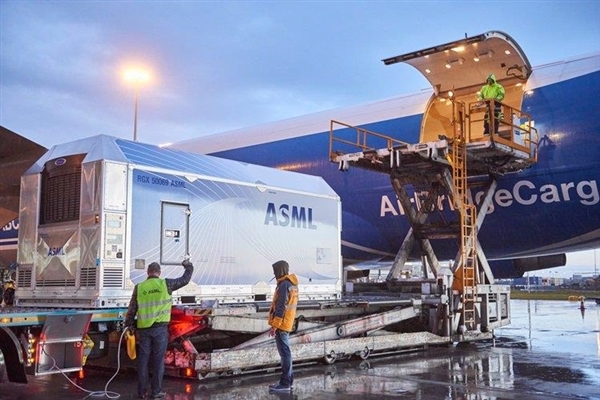
The reveal is that the shortage is not only a memory spike or a single-foundry rush. Digitimes framed the signal as an AI-driven expansion across advanced logic and storage, with supply tightness lasting at least until 2028. Christophe Fouquet, President and Chief Executive Officer of ASML, said that even under the supply plans for 2027 and 2028, customer demand would not be fully covered; some customers are already discussing 2029 and 2030 orders. In that sense, the case is less about one quarter and more about the lead time required to build a lithography ecosystem.
The financial record supports that reading. ASML reported third-quarter 2026 net sales of 116.62 hundred-million euros, which is also readable as EUR 11.662 billion, and the figure carried 55.2% year-on-year growth. Kuai Keji’s conversion note places the same result around RMB 877 hundred-million yuan, or RMB 87.7 billion. The company also lifted full-year 2026 guidance three times, to a range of 440 to 450 hundred-million euros, that is EUR 44 billion to EUR 45 billion, with Kuai Keji’s yuan equivalent expressed as RMB 3311 to 3386 hundred-million yuan, or RMB 331.1 billion to RMB 338.6 billion.
Roger Dassen, Chief Financial Officer, tied the numbers to pricing behaviour: in a seller’s market, ASML has completed value-based pricing discussions with major customers and has raised prices on some lithography systems. This is a key case detail because it shows that volume alone does not fully explain earnings growth; monetization power is also improving.
How do 120 EUV units, about 30% growth, and more than 30% growth fit together?
The clean answer is that 120 EUV units is a sell-side scenario, not ASML’s own shipment promise. ASML’s earlier plan was to lift Low-NA EUV and immersion DUV capacity by about 30% in 2027. Because demand kept moving upward, the company has been examining another increase of more than 30% in 2028. Reuters, citing JPMorgan analysts, reported that ASML is exploring ways to produce more than 110 EUV chipmaking tools in 2028. Bank of America’s model goes a step higher, putting 2028 EUV shipments at 120 units and assuming about 5% average selling price improvement, which would support earnings.
| Case layer | Number or statement | Planning implication |
|---|---|---|
| Company expansion plan | About 30% capacity improvement for 2027; study more than 30% in 2028 | Equipment makers and suppliers must pre-book subsystems years ahead. |
| Market estimate | Bank of America expects 120 EUV units in 2028 and about 5% ASP increase | Investors should test whether revenue growth is volume-driven or price-driven. |
| Independent analyst view | JPMorgan, via Reuters, sees ASML examining more than 110 EUV tools in 2028 | The gap between 110 and 120 is not noise; it shows forecast uncertainty still sits above physical supply. |
| Customer behaviour | Orders and talks extend to 2029 and 2030 | Buyers are shifting from capacity allocation to multi-year access planning. |
Which Asia-Pacific demand signals explain why 2029 and 2030 talks began?
The case becomes clearer when the demand side is read as a cascade. AI infrastructure investment is pulling advanced logic, high-bandwidth memory, packaging, and wafer capacity into one schedule. Reuters reported that TSMC is working to keep up with AI demand and avoid becoming a bottleneck, and it has publicly discussed strong multi-year AI chip demand alongside expanded investment. Reuters also reported that Micron disclosed roughly $22 billion in customer commitments to secure supply, showing that buyers are willing to prepay or contract for future output rather than wait for spot availability.
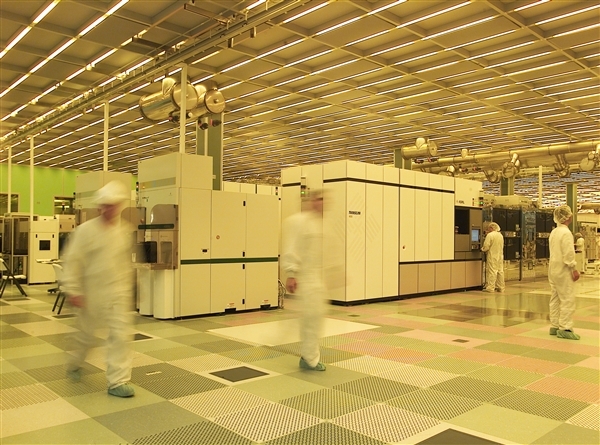
For Asia-Pacific readers, the read-through is structural: Taiwan and Korea are not just production sites for consumer chips; they are the delivery base for AI accelerator roadmaps, HBM, and advanced logic nodes. When ASML says supply plans cannot fully meet 2027 and 2028 demand, that statement also becomes a test of whether the wider chain can secure components, subsystems, software, service capacity, and factory manpower. The APACTechDigit IndustryReports view is that the lithography bottleneck should be treated as a supply-chain scheduling problem, not merely an equipment-market statistic.
What are the most common mistakes in interpreting this ASML case?
- Reading 120 EUV units as a confirmed shipment target. It is a Bank of America estimate; ASML’s own disclosure only says that 2027 and 2028 supply plans will not fully meet demand. JPMorgan’s “more than 110” framing is a useful boundary, not a company guarantee.
- Equating a 30% capacity increase with 30% more available tools in the same year. Capacity plans must pass through supply chains, software validation, service readiness, and cleanroom schedules before they become shippable systems.
- Treating Kuai Keji’s RMB conversions as stable facts. The EUR to RMB translation depends on exchange-rate timing, so the original euro figures remain the more durable reference.
- Assuming all 2029 and 2030 discussions are firm purchase commitments. Some may be framework planning, allocation negotiations, or customer risk management rather than signed volume.
- Focusing only on EUV while forgetting Low-NA EUV and immersion DUV. The reported expansion includes both EUV and immersion DUV categories, so mature-advanced process ramps may also be affected by tool availability.
What decisions should APACTechDigit readers make now?
- For chipmakers and memory vendors: build a 2027-to-2030 tool-access scenario that separates firm orders, negotiation stages, and allocation assumptions. Do not plan fab schedules around a single optimistic EUV shipment number.
- For suppliers: treat ASML capacity growth as a signal that subsystems, precision optics, motion control, and service manpower will face multi-year demand pressure. Supplier scorecards should include lead-time resilience as well as price.
- For investors and strategy teams: track the split between volume growth and value-based pricing. A 120 EUV unit scenario plus about 5% ASP improvement creates a different earnings path from a lower-volume, flat-price outcome.
- For regional technology planners: recognize that AI capacity expansion in Asia-Pacific is not only a data-center story. It depends on wafer tools, memory supply, packaging throughput, and export-control planning moving together.
- For analysts: compare 110 and 120 EUV units as a range, not as competing truths. The gap is the point: demand is strong enough that even expanded production can create allocation risk.
FAQ: what do buyers usually ask about ASML’s 2028 capacity case?
Does ASML guarantee 120 EUV shipments in 2028?
No. The 120 EUV units figure comes from Bank of America’s estimate. The company’s own signal is that planned supply for 2027 and 2028 will still be tight enough to push some customers toward 2029 and 2030 discussions.
Why does a 55.2% revenue increase matter if capacity is short?
Because it shows demand and monetization are moving together. ASML’s third-quarter 2026 net sales of 116.62 hundred-million euros, or EUR 11.662 billion, were supported by both order pull and pricing conversations. Revenue strength can improve profitability even when physical shipment counts remain constrained.
Is the shortage mainly about EUV or about the whole chip chain?
The case shows both. ASML’s capacity is central, but Asia-Pacific customers also need memory, packaging, cleanroom labour, and subsystem suppliers. That is why the 2028 shortage can become a 2029 and 2030 planning issue.
Sources
- Digitimes reporting cited in the master brief for the ASML 2026 third-quarter signal.
- ASML investor news release: third-quarter 2026 results.
- Reuters: ASML examining more than 110 EUV tools in 2028, JPMorgan says.
- Reuters: ASML raises full-year outlook and discusses capacity and demand.
- Reuters: TSMC working to meet AI chip demand.
- Reuters: Micron reports customer commitments tied to supply.