
Anthropic IPO Pricing Q&A: What a $1.5 Trillion–$1.6 Trillion Floor Changes for Founders, Angels and Fund Marks
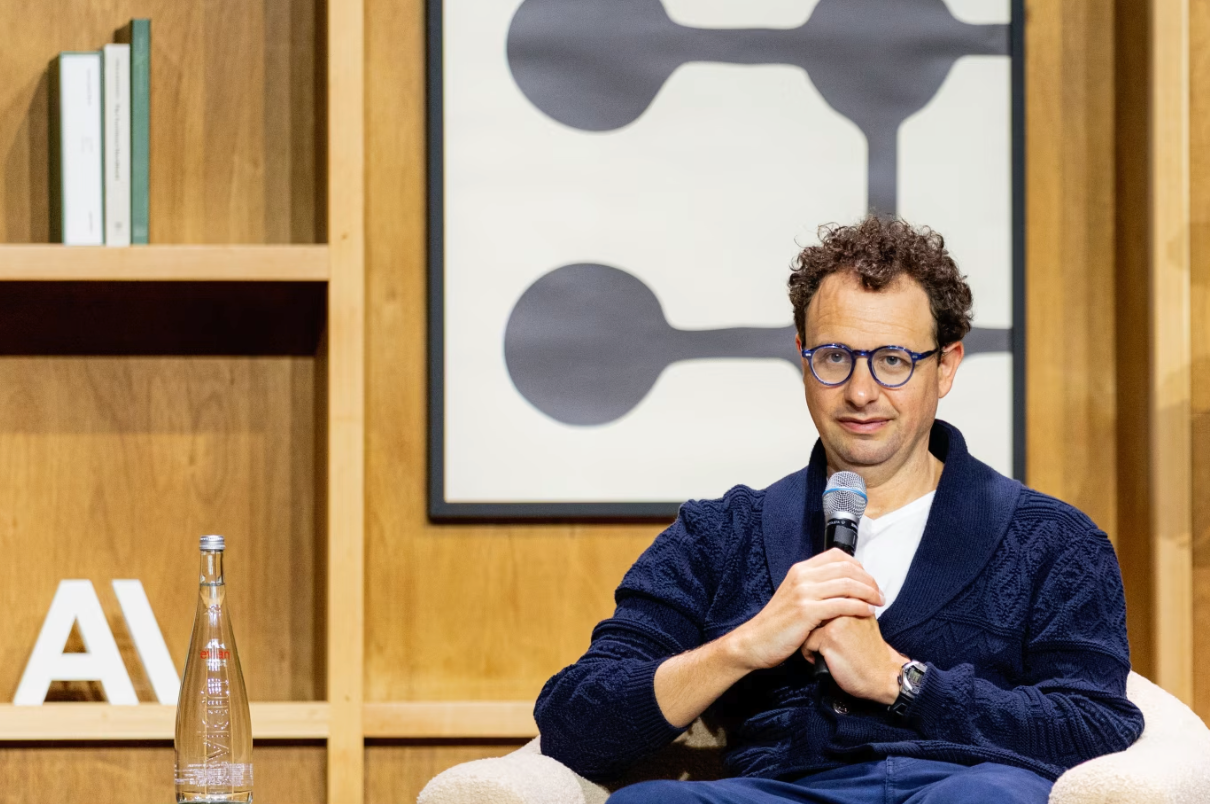
Image caption: Anthropic CEO Amodei
Every venture pricing conversation reduces to three questions: what is the number, who set it, and when does it stop being an opinion. The Anthropic listing now moving toward the market answers all three at once, which is why it has become the reference point for every AI cap table this quarter. In the past few days, institutional investors told the company and its advisory team that the IPO scheduled for later this month should sit at $1.5 trillion to $1.6 trillion — far short of $2 trillion, and well under the mood of close to $2 trillion that had circulated in recent months. For investors, the useful reading is not the headline haircut but the mechanics underneath it: who is setting the range, what the last private marks were, and how a deliberately low print reshapes return math for everyone who owned the stock earlier.
Five questions every deal team is asking this week
Answers below are kept short on purpose — this is the version that fits into an investment memo before the price range is public.
Q1. What number are investors actually putting on the table?
Short answer: $1.5 trillion to $1.6 trillion. That range was communicated to Anthropic and its advisers for the offering the company intends to price later this month, resetting expectations that had drifted close to $2 trillion in recent months. Four inputs drive it: unstable equity markets, rising discomfort with concentrated AI exposure, political backlash directed at data centers, and the unresolved question of when hyperscalers such as Amazon and Meta turn AI spending into visible profit. Read as a term sheet, this is a demand curve being marked down before a single share is sold.
Q2. Is that range the final target?
Short answer: no — and treating it as final is the most common modelling error right now. Anthropic has not finalized its valuation target and is still weighing how many shares to sell. After last month's investor day, some investors already argued the number should be closer to $1.5 trillion; but that conversation predated last week, when technology stocks absorbed a double-digit decline and names including Intel and Alphabet sold off after disappointing results. An indication delivered in a meeting room is not a price, and the delta between the two is where deals get repriced.
Q3. Why would a company at this scale deliberately leave money on the table?
Short answer: because a controlled pop is cheaper than a broken deal. Investors say they trust chief financial officer Krishna Rao to set a conservative valuation and to make it a priority that IPO investors capture an upside pop on the day the shares list — the stock's first day of trading. On that logic, even listing at about $1.5 trillion could carry the market cap to reach $2 trillion by the close of the first trading day. Elon Musk's SpaceX rose 30% — a 30% surge — on its first day of listing in June, but broad investor anxiety about AI had not yet formed at that point, which is precisely why the comparison has limits.
Q4. What is the calendar, and when does the number become real?
Short answer: the investor roadshow may begin as early as next week, with the listing expected in the week before Thanksgiving. At the roadshow launch, the company will publish the number of shares it wants to sell and its target price range — the moment the target valuation stops being leaked and starts being printed. Everything before that is negotiation, and the negotiation is currently happening in public.
Q5. What does the reset do to marks on my own AI position?
Short answer: the headline is negative; the arithmetic usually is not. A 20–25% gap between the rumored ceiling and the expected floor is measured against a story, not against your cost basis. For a fund, the only spreads that matter are the premium or discount to the last priced round and to where secondary trades actually clear. On both of those axes, the reference marks for frontier AI labs moved sharply upward through 2025 and 2026, so a lower-than-hoped IPO is a sizing problem for new buyers, not necessarily a loss event for early ones.
How the number got here: the private mark ladder
Most coverage treats the valuation cut in isolation. For venture readers the decisive frame is the ladder of private marks sitting underneath the IPO, because that ladder determines whether a lower print is still a win.
| Milestone | Date | Round or event | Valuation reference | Why it matters to investors |
|---|---|---|---|---|
| Series F | September 2025 | $13 billion round led by ICONIQ | $183 billion post-money, per the company's own announcement | The baseline most 2024–2025 vintage funds carry on their books |
| Reported next raise | January 2026 | Planned new fundraise | Reports in the range of $350 billion, per Reuters | Shows how fast private marks re-rated once AI revenue became visible |
| Series H | May 2026 | $65 billion round, the largest private AI round reported to date | $965 billion post-money, per Fortune's IPO coverage | The true cost basis against which the IPO range must be judged |
| Investor day | last month's investor day | Management meets public-market investors | Several pushed for closer to $1.5 trillion | First sign that the pricing conversation had moved below the rumor |
| IPO indication | past few days | Institutional feedback on the offering | $1.5 trillion to $1.6 trillion | Still a mark above the last private round, not a markdown |
Two cross-checks from the filing, both independent of the valuation debate, are worth stealing into your own diligence notes. Reuters's account of the prospectus describes revenue rising roughly twelve-fold in 2025 to nearly $4.6 billion, alongside a $42 billion net loss and about $7.33 billion of compute and infrastructure spending — a cost base that behaves more like a utility or semiconductor fabric than like SaaS. Chinese market commentary applies the same logic: Lanjing Finance computes a sales multiple of nearly 31 times against roughly $65 billion of annualized revenue at a $2 trillion tag, above Nvidia's low-20s, while a National Business Daily reverse calculation concludes the valuation would require moving operating margin from negative territory to 10% and holding it for a decade. Neither number belongs to Anthropic's disclosure; both belong in a model sensitivity.
Conservative print versus full-price print: two ways to price the same asset
| Dimension | Conservative print (what investors expect) | Full-price print (what the rumor implied) |
|---|---|---|
| Reference level | about $1.5 trillion | close to $2 trillion |
| Who is protected | Day-one buyers and the underwriting syndicate | Existing shareholders and the company treasury |
| Likely first-day behavior | A pop is engineered; the market cap could reach $2 trillion by the close of the first trading day | Little cushion; price discovery happens live and can cut both ways |
| Market backdrop it needs | A calm tape — the double-digit decline last week shows how fast that disappears | Sustained willingness to pay for AI scarcity |
| What founders should copy | Raise slightly below the last mark to keep momentum and syndicate appetite | Anchor on the highest comparable and accept broken-round risk |
Four misconceptions that misprice this deal
- "A haircut versus $2 trillion means early backers lose money." The haircut is measured against a rumor that was never priced. Judged against the last private round, the indicated range still sits at a premium.
- "The leaked range is the deal." The valuation target is not final, the share count is still an open variable, and the price range only becomes binding at the roadshow launch.
- "A first-day pop is free money." Underpricing is a transfer of value from existing holders to new buyers. At this scale, a 30% reference case comparable to SpaceX's June debut represents an enormous sum deliberately not raised.
- "SpaceX proves the model." The rocket maker under Elon Musk surged 30% on its first day of listing in June, but AI-specific investor anxiety had not yet formed — the demand curve and the skepticism are different assets today.
Action list, by seat at the table
- Founders raising now: benchmark your round against your own last priced round and your secondary clearing level, not against a headline valuation. A repriced mega-IPO moves private comps within weeks, and the direction of that move is set by public tape conditions such as last week's double-digit decline.
- Early-stage and angel holders: model DPI rather than TVPI. Unrealized marks on the ladder above are not exits; check transfer restrictions, rights of first refusal and the secondary discount before assuming the paper is liquid.
- Secondaries and crossover buyers: size positions so a failed first-day pop is survivable. The upside case here rests on a deliberate underpricing decision by CFO Krishna Rao; nothing guarantees the market cooperates in the week before Thanksgiving.
- Limited partners: demand a written explanation of how much of your AI exposure is marked off a public print that is still undetermined, and ask which holdings are being valued relative to a rumor rather than relative to cash invested.
- Enterprise and digital-business owners: treat the valuation debate as a vendor-risk question. Political backlash against data centers and the unresolved profit timeline at Amazon and Meta affect supply, pricing tiers and compute availability for you, not only for shareholders.
FAQ: rapid-fire for investors and operators
Is the difference between $1.5 trillion and $1.6 trillion actually meaningful?
For allocation it is noise; for psychology it is not. The band is wide enough to let the company and its bankers claim investor consent while keeping the door open to a higher outcome after the roadshow launch.
Why does the calendar matter more than the number right now?
Because the share count is still undecided, and float size drives first-day behavior. A small free float makes a pop easy; a large one makes the valuation stick. Both are set at the roadshow launch, alongside the target price range.
Should I wait for the IPO before committing to an AI round?
If your thesis is "AI multiples keep expanding," the listing is the test of that thesis. If your thesis is "the next model release re-prices everything," the listing tells you almost nothing. Most funds should be honest about which one they are running.
Does a conservative IPO hurt or help the rest of the sector?
Helps liquidity, hurts headline comps. A priced, funded deal with a clean first day validates that capital can exit; a broken deal removes the benchmark that early-stage rounds quietly borrow. Carta's H1 2026 exit data put total VC-backed exit value above $2 trillion, including roughly $75 billion of IPO proceeds — the window is real, but it is narrow and reputationally fragile.
What is the single best signal to watch next?
The gap between the range communicated to Anthropic in the past few days and the range published when the roadshow begins. A wider-than-expected top end signals syndicate confidence; a narrow band at the low end signals that the institutions have already negotiated the outcome.
Bottom line
The interesting fact is not that the expectation moved from close to $2 trillion to a $1.5 trillion to $1.6 trillion discussion; it is that professional capital is willing to say that number out loud before the roadshow starts, and that the company's finance chief appears ready to accept a lower print in exchange for a stronger debut. For founders, that is a reminder that the market sets the ceiling and your cap table sets the floor. For investors, it is a reminder to price positions off the last funded round and the actual float, not off the most flattering rumor in the market.