
The Quantum Fundraising Playbook: How Venture Capital Underwrites Deep Tech Before Revenue | APACTechDigit
Quantum founders rarely lose to the physics. They lose to the financing gap wrapped around it. A credible institutional round in this sector needs three things: an intermediate product a customer pays for before the full machine exists, a bottleneck matched to the moment the customer actually needs it solved, and a capital ladder that keeps the company alive between proof points.
That is the logic investors signalled ahead of World Quantum Festival 2026 in Cannes, France — and it matters more as cheques get larger. Private venture capital invested in the quantum industry was $4.9 billion in 2025, a 192% increase over 2024, according to the QED-C State of the Global Quantum Industry 2026 report, while quantum computing industry revenue sat near $1.4 billion and the market is projected to double to roughly $3 billion by 2028. Capital is arriving faster than commercial evidence. This APACTechDigit VentureCapital playbook converts the investor side of that gap into steps, a scorecard, the traps, and a pre-pitch checklist. Compiled by Lynn Zhou.
Step 1: is there anything sellable before the machine is finished?
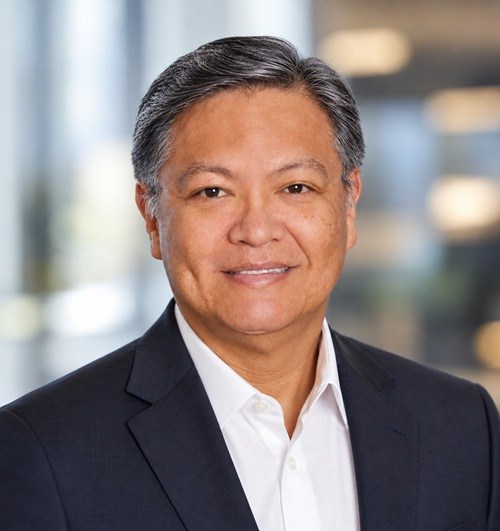 Before World Quantum Festival 2026, Nardo Manaloto, managing partner of Qubits Ventures, pressed the founder of an unnamed photonic quantum computer company on a point the founder had not prepared: the ultimate product would require a decade, so what could the company sell along the way? The founder sketched a sequence starting with a photon detector, moving to a chip, and only then progressing toward the computer itself.
Manaloto's acceptance criterion is stricter than "any revenue". Each intermediate product must solve a customer problem and carry commercial value on its own, while advancing the long-term technology roadmap. “The roadmap also extends to the business side,” he told EE Times.
Founders can run this test themselves before booking a single partner meeting:
- List what your current team, lab and IP could put on a purchase order within 18 to 24 months — not what a grant report could claim.
- For each candidate, name the buyer, the budget line the money comes from, and the specific problem the product removes.
- Verify that the sale feeds the machine programme: calibration data, yield learning, supplier relationships, or margin that funds engineering headcount.
- Cut anything that is only a demonstration with a price tag attached. Investors underwrite products, not exhibitions.
APACTechDigit analysis: the intermediate product is also a valuation instrument. A component line with repeat customers lets a Series A be argued on revenue and gross margin; a pure roadmap story is priced against other lab milestones, which is a far weaker negotiating position and usually invites heavier dilution.
Step 2: does your solution land when the customer needs it?
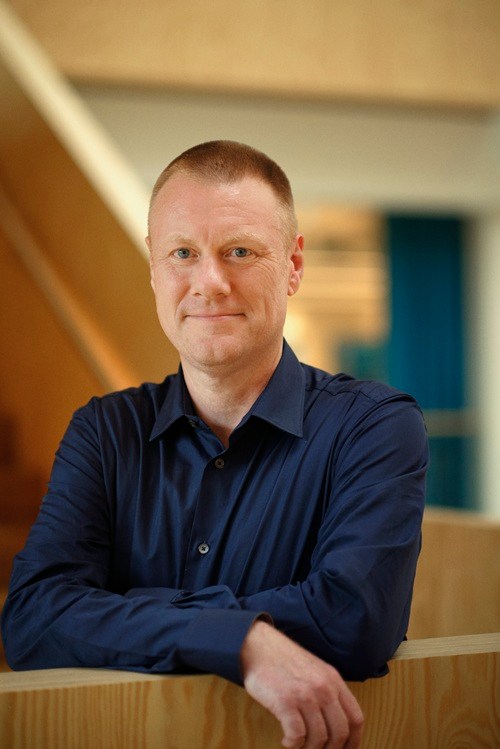 Owen Lozman, managing partner of 55 North, a quantum investment fund based in Copenhagen, came to the sector through semiconductor investing and applies a timing filter before a technical one. “Generally in deep tech, we’re not looking for, ‘Does the invention work?’ but, ‘Does it solve a problem at the time at which it’s going to be needed by the customer?’” he told EE Times.
In quantum, that question frequently translates into helping system developers move from laboratory assemblies to reliable, reproducible equipment. Lozman points to 55 North’s investment in Monarch Quantum as the pattern: optical modules that can be manufactured consistently become increasingly important exactly as quantum companies professionalize their supply chains.
Four answers belong in the deck for this filter:
- The customer's own published date — a roadmap statement, a fab transition, a procurement cycle — not your internal timeline.
- What breaks in their system if your component is absent, expressed in their units of cost, yield or uptime.
- Evidence of reproducibility: build-to-print consistency, supplier qualification, test data across units rather than a single best device.
- The two substitute solutions customers use today, and your performance-per-dollar gap against each.
Which of the three quantum business models are you, and how is each priced?
Lozman separates quantum businesses into three types, each with different commercial challenges and different measures of progress. Founders should identify their type explicitly; investors are already doing it, and the diligence questions diverge sharply from there.
| Business type | What the founder must prove | Metrics investors underwrite | Exit route described by the fund partners | Most common failure mode |
|---|---|---|---|---|
| Component suppliers | Reliable, reproducible equipment as quantum computer builders scale production | Revenue growth, production costs, profitability; technology that serves multiple qubit architectures and several potential customers | Acquisition by a system developer or consolidation into a supply chain | Single-customer dependency; capacity claims ahead of yield data |
| Quantum computer developers | Moving from demonstrating individual qubits to useful, scalable systems | Technical differentiation and scaling approach, including whether the company must build manufacturing capacity or can use existing semiconductor infrastructure | Mergers between system developers, or becoming a component supplier to the rest of the sector | Capital intensity running ahead of any sellable milestone |
| Software and applications companies | Understanding customer problems and having solutions ready when suitable quantum hardware becomes available | Evidence of customer willingness to pay; credible product-to-need fit | Enterprise or platform acquisition once hardware matures | Expanding before the hardware is ready, burning cash without sufficient revenue |
Lozman said he favours component technologies that are architecture-agnostic, because a supplier locked to one qubit modality inherits that modality's whole risk profile. The exit routes in the table reflect statements both partners made to EE Times; the failure-mode column is APACTechDigit analysis of recurring deep-tech diligence findings.
What do investors buy when revenue is years away?
Early sales demonstrate demand, but they are not the only route to a valuable quantum company. “In a lot of deep tech, the revenue is rarely the exit trigger,” Lozman said, referring to what prompts an acquisition or another cash-out opportunity. “Technology is often the exit trigger.”
The mechanism is asset-level: a system developer may lack a capability a smaller company has built, and combining them can create substantially more value than either business holds alone. Manaloto likewise assigns value to defensible intellectual property, specialized engineering capabilities, strategic partnerships, and technologies that address critical industry bottlenecks — even before substantial revenue arrives. Some companies pursuing complete systems may eventually merge or become component suppliers themselves, Lozman noted, in which case the technology stays important even if the original business model changes.
Market data shows how founders convert that logic into capital. Post-publication analyses of quantum financing point to staged structures rather than single large rounds: QuEra, the neutral-atom company, raised conservatively at the start and unlocked much larger capital after hitting a technical goal and acquiring real cloud users, according to reporting by Post-Quantum on quantum startup funding strategies. Early experimental access — even unpaid cloud trials — functions as a customer proxy that distinguishes a spin-off from the pack.
The practical implication: a pre-revenue quantum company should be able to name which of its assets — patent family, engineering know-how, partnership, bottleneck position — is the exit trigger, and who the acquirer of that asset would plausibly be.
How do you survive the cash-burn window?
Timing creates a specific danger for applications companies, which need close customer relationships and a clear read on product requirements but can spend heavily before suitable hardware exists. “If you’re a year or two early and you’re burning too much cash, it’s very, very difficult to sustain your company,” Lozman said. “Survivability will be a key kind of KPI for a lot of the assets in this space.”
Manaloto's demand for intermediate products is a direct answer to that financing problem: build revenue and company value while progressing toward the final technology. But an intermediate product still needs a customer and a credible market. A five-rung ladder that founders can build before diligence begins:
- Sequence capital to proof points, not to calendar quarters. Size each raise to reach the next verifiable milestone plus 12 months of buffer.
- Stack non-dilutive money where a customer will fund stages. Quantum startups increasingly pursue joint development agreements with large corporates or government agencies that release funding against milestones; Q-CTRL, the University of Sydney spin-out, has taken defence contracts for quantum navigation sensors in which the customer effectively finances R&D stages while providing a testbed and an anchor market, Post-Quantum's funding-strategy analysis notes.
- Use venture debt only with revenue or strong collateral. U.S. venture debt reached a record $53.3 billion in 2024, up 94.5% year on year, and $62.4 billion in 2025, PitchBook data shows; Silicon Valley Bank guidance puts the median non-bank facility's runway extension at up to a year. Pre-revenue hardware companies should treat leverage as an option, not a plan — too much of it can hamstring a business.
- Instrument survivability. Track months of cash per milestone, cost per unit produced, burn-to-demo ratio, and the date your current financing runs out without any new customer.
- Model dilution across three rounds, not one. A slightly lower valuation with milestone-based tranches can beat a headline number that forces a down round when a technical goal slips.
Where does healthcare fit in the funding case?
Healthcare is the application area that most interests Manaloto, and it exposes the whole evaluation chain. His background includes work with Kaiser Permanente’s innovation group and technology fund, where he met the practical difficulties of detecting disease earlier and obtaining useful biological information. He sees openings for quantum sensing instruments that could reveal additional information about cellular processes, and notes that some sensing businesses can commercialize instruments and measurements sooner than applications that depend on future quantum computers.
Qubits Ventures has invested in Probius Bio, a Stanford spin-out developing a quantum electrochemical spectroscopy platform. Manaloto describes a system that captures molecular vibrational signatures from biological samples and converts them into biochemical datasets supporting biomarker discovery, drug development and biological research. He is also evaluating an investment in an unnamed company building diamond-based quantum sensing technology to investigate free radical activity and oxidative stress within living cells, which could help researchers and pharmaceutical companies study cellular behaviour, disease mechanisms and drug responses.
“What do I do with that data? How do I translate it? How can pharma use it?” Manaloto said. The larger prize, in his view, is not the instrument sale but the translation of measurements that have been difficult to obtain into information researchers, pharmaceutical companies and eventually healthcare providers can act on — with research applications as the initial market before diagnostic or therapeutic uses are established.
A named comparable sharpens the point. QT Sense, spun out of the University Medical Center Groningen in February 2024, raised €6 million in February 2025 to refine Quantum Nuova, its single-cell Nano-MRI platform for measuring cellular activity and oxidative stress, with the first units destined for sepsis research in that hospital's emergency and acute-care centre, as reported by The Quantum Insider and the hospital's research newsroom. That is the intermediate-product template in action: a research buyer, a defined instrument, and a clinical ambition funded by the data the instrument produces.
Institutional demand clocks also matter to investors. The UK's quantum missions, launched in 2023, set an ambition for every NHS trust to have access to some quantum sensing systems for early diagnosis by 2030, a target recorded in the UK Information Commissioner's Office Tech Horizons 2025 review of quantum sensing and imaging in healthcare. Founders should treat such statements as procurement signals to be tested, not as committed revenue.
The distance between an unfamiliar measurement and a useful product remains the hard part. A researcher needs to know what the measurement reveals about the sample; a clinician needs evidence that it informs a decision. The technology must fit existing workflows or offer enough benefit to change them, and integration with existing systems plus compliance requirements add further work before a healthcare organization becomes a repeat customer, Manaloto said.
Why sensors are hard to monetize — and how to fix the price
Lozman identifies a structural hurdle founders routinely under-price: the company selling a sensor can be far from the organization that captures the economic benefit. “It’s hard making money out of a sensor,” he said. “It’s hard to get people to recover the value if the buyer and the beneficiary are not close in the value chain.”
A measurement can improve a downstream process while the instrument supplier struggles to claim a sufficient share of the benefit. The business model must tie price to an outcome the customer recognizes and will pay for — which is why Lozman sees more near-term opportunity in pharmaceutical research, where instruments can simplify drug discovery, improve toxicology assessment, or support better clinical-trial endpoints and where the buyer and the beneficiary are the same company.
Qualification is slow, and that asymmetry cuts both ways. Drawing on experience across electronics and healthcare, Lozman notes that customers have strong reasons to protect processes that already work, so a new technology must solve a sufficiently important problem to justify introduction. Yet that same caution protects an incumbent supplier. “Once you’re in, it’s very hard to get displaced,” Lozman said.
Before pricing, map the chain explicitly: who signs the purchase order, who owns the budget, who receives the saved cost, and who absorbs the switching risk. If the buyer and the beneficiary are more than one handoff apart, the fix is usually a different product form — a service, a per-sample price, a consumable tied to throughput — rather than a higher instrument price.
Seven-step checklist before you send the deck
- State your business type in Lozman's taxonomy — component, system developer, or software and applications — and answer its specific diligence questions.
- Attach a customer name and budget line to every product you claim you can sell inside 24 months.
- Write the exit trigger in one sentence: the technology asset, the acquirer, and why the combination creates more value than either party alone.
- Show the bottleneck clock in the customer's own dates, not yours.
- Present a financing ladder: equity tranches, milestone-linked contracts, grants or debt, each tied to a verifiable proof point.
- Bring IP evidence — granted families, filing strategy, freedom-to-operate and clear academic assignment — since post-spin-out ownership disputes are a standard deal-killer.
- Define your survivability KPI: the month your cash ends if no new customer signs, and what you will cut first.
Common misconceptions about quantum venture capital
- "Strong physics is the pitch." Technical promise makes a company interesting; judgments about customers, financing and timing make it valuable.
- "Any revenue de-risks the round." Only revenue that solves a customer problem and pulls the roadmap forward counts. A one-off grant purchase is not an intermediate product.
- "A big headline round is the goal." Raising conservatively and unlocking larger capital after hitting a technical goal is a proven path, not a concession.
- "More capital removes risk." Sector-wide venture capital of $4.9 billion in 2025 against about $1.4 billion of industry revenue means capital access is not the constraint; cost per proven milestone is.
- "Hardware maturity will automatically create software demand." Applications companies that scale before suitable hardware exists burn cash without the expected revenue — the failure case both partners flagged.
FAQ: what founders and investors ask about quantum deals
Do quantum startups need revenue to raise institutional capital?
No. Manaloto assigns value to defensible intellectual property, specialized engineering capability, strategic partnerships and bottleneck-positioned technology before substantial revenue. What founders must supply instead is a credible intermediate product with a named buyer and an exit trigger that is not a revenue multiple.
What counts as a legitimate intermediate product?
A deliverable that stands alone commercially and advances the end goal. In the photonic example, a photon detector, then a chip, then the computer. A prototype sold once at cost to a friendly lab does not qualify.
How should an applications company avoid the timing trap?
Stay close to customers, keep fixed costs low, and gate expansion on hardware availability rather than on press releases. The tolerance window is narrow: “If you’re a year or two early and you’re burning too much cash, it’s very, very difficult to sustain your company,” Lozman said.
Which quantum sub-sectors attract the most disciplined diligence?
Component and control-layer suppliers face straightforward metrics — revenue growth, production cost, profitability, breadth across qubit architectures — so diligence is fast and pricing is comparable-based. System developers are assessed on scaling route and manufacturing strategy, and software companies on evidence of willingness to pay, which is the hardest to produce.
Where should a healthcare quantum sensing company expect its first real buyer?
Research and pharmaceutical settings first: biomarker discovery, toxicology, clinical-trial endpoints and instrument-level measurement services. Hospital diagnostics follow integration, compliance and clinical-evidence work that most seed rounds do not fund.
Action recommendations
For founders: build the roadmap document Manaloto asks for — one page, three products, three customers, three dates — and price your next round against the milestone it buys, not against the last comparable headline valuation.
For early-stage investors and angels: underwrite the clock as seriously as the capability. Test whether the company can survive a two-year hardware delay, whether it holds an asset a system developer would acquire, and whether the buyer and the beneficiary of its measurement are close enough for the price to stick.
Where these criteria get tested in person
Both Manaloto and Lozman will attend the World Quantum Cannes Festival on November 17–18, where quantum technology providers, investors and potential customers meet to discuss applications and commercialization. For founders, the value is hearing prospective users define their problems and state what they would pay to solve them — the raw material every intermediate-product slide should be built from.
For APACTechDigit readers, the closing rule is simple: scientific promise has to end in a capability that solves a consequential problem, reaches the market at the right time, and gives its developer a defensible business. The roadmap to that outcome can matter as much as the eventual machine. Editorial queries and corrections for the VentureCapital desk: contact@apactechdigit.com.
Sources and further reading
- QED-C, State of the Global Quantum Industry 2026 report — quantumconsortium.org
- SRI International, "A banner year for quantum" (192% venture capital increase) — sri.com
- Post-Quantum, "Financing the Quantum Leap: Funding Strategies for quantum startups" — postquantum.com
- PitchBook, U.S. venture debt record data — pitchbook.com
- Silicon Valley Bank, venture debt and runway guidance — svb.com
- The Quantum Insider, QT Sense €6 million raise — thequantuminsider.com; UMCG research newsroom — umcgresearch.org
- ICO Tech Horizons 2025, quantum sensing and imaging in healthcare — ico.org.uk
- Interview remarks by Nardo Manaloto and Owen Lozman as reported by EE Times ahead of World Quantum Festival 2026 in Cannes, France