
APACTechBriefing: Brainkey Jiwo Smart Ring “Can’t Be Pushed Over” Test Exposes Wearable Evidence Gap
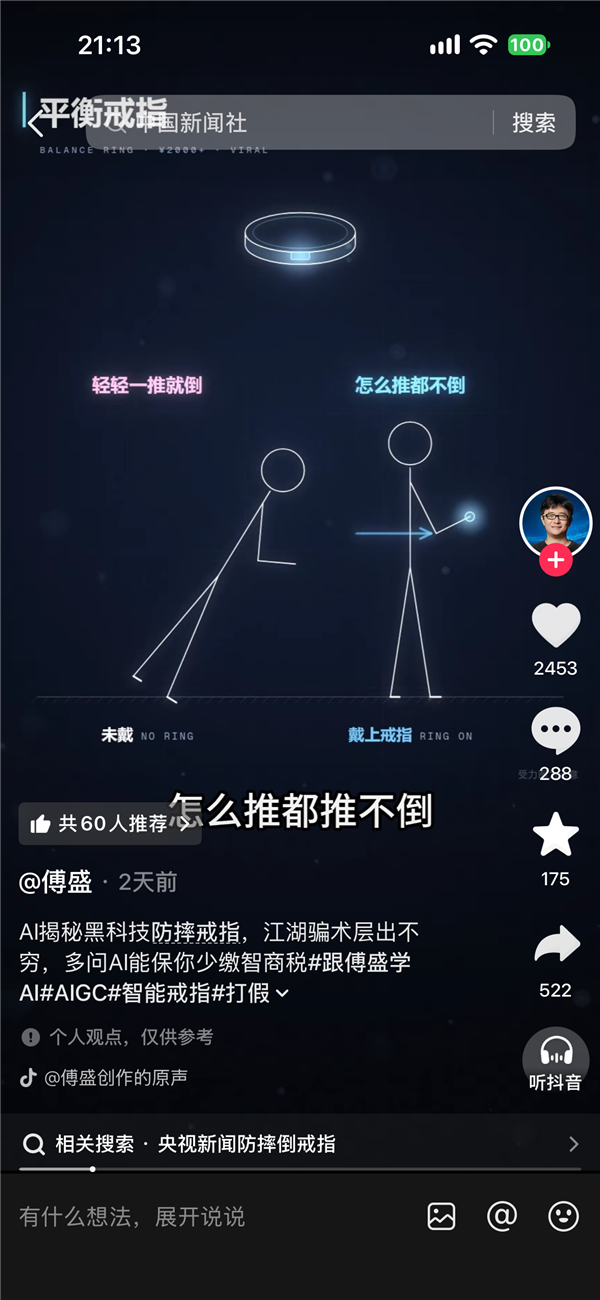
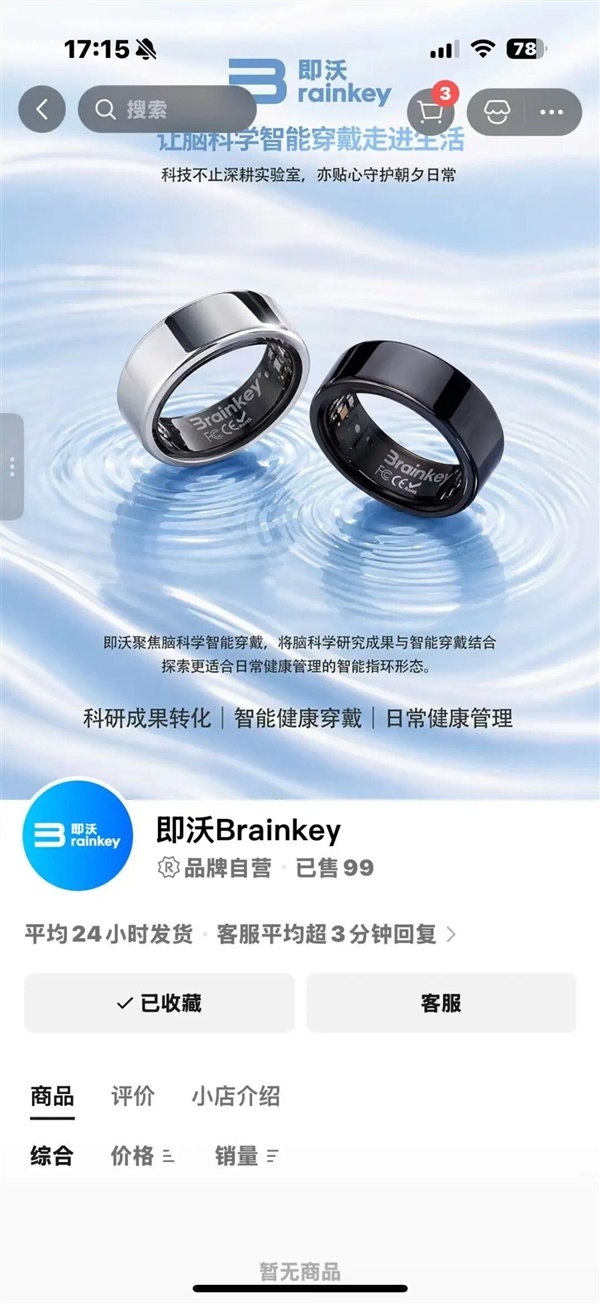
Recently, the Brainkey Jiwo smart ring’s “can’t be pushed over” promise remained unverified. Cheetah Mobile chairman Fu Sheng tested the demo with AI analysis and human pushing, and related product links were removed on November 7 after the listing had shown 99 units sold at 2699 CNY. The case shows how Asia-Pacific wearable health claims can outrun evidence.
What was promised by the Brainkey Jiwo smart ring?
The short answer: a balance aid delivered through a finger-worn device. Marketing materials for the Brainkey Jiwo smart ring presented it as a wearable for “reshaping the balance instinct”, saying advanced composite micro-magnetic materials derived from brain-science research could support vestibular-system balance perception and nerve-signal transmission. The product page listed its weight as 3.5 grams and positioned it around balance perception and sleep-experience improvement.
In promotional videos, several older participants wore the ring and performed a “one-legged rooster” balance pose, suggesting the ring made them steadier and harder to push over. The same ring had appeared in WeChat Mini Shop at 2699 CNY, while product materials said it was nearly imperceptible during daily wear.
Why did the demonstration become a credibility problem?
The credibility problem came from a simple mismatch: a dramatic balance outcome was attributed to the ring before a controlled causal test had been publicly shown. Fu Sheng, chairman of Cheetah Mobile, said in a video that “fraudulent tricks keep emerging,” and his team examined the demo through AI analysis plus a live pushing experiment. According to media reports, his test suggested that changing push direction could make an unassisted person appear more stable, even without wearing the ring.
This matters because balance tests are highly sensitive to stance, center of mass, support leg, and force direction. A one-person demonstration may look convincing on camera, but it does not establish whether the device changes physiological control. For a product claiming to assist vestibular function or nerve-signal transmission, buyers need before-and-after testing, blinded or independent evaluation, and a clear separation between monitoring data and therapeutic or injury-prevention effects.
The wider market context also explains why such claims travel quickly. The World Health Organization estimated in its falls fact sheet that there were about 842,000 deaths from falls worldwide in 2023, making falls the second-leading cause of unintentional injury deaths. That kind of data can make fall prevention feel urgent, but urgency does not validate a small wearable as a clinical solution.
Where did the product come from, and what happened to it?
The Brainkey Jiwo smart ring was not sold only online. It also appeared at the Global Digital Trade Expo, and official exhibitor information identified Wuchan Zhongda Digital Security Technology (Zhejiang) Co., Ltd. as the producer. Public records cited by media showed that the company registered the software copyright for the KRing APP (iOS edition) (V1.0) in April this year.
Media reports from May this year described a related product, the KRing smart ring, weighing 3.2 grams, also using composite micro-magnetic materials and claiming to help wearers maintain balance. The question then is not whether one ring model exists, but whether a product family can back functional claims with transparent evidence.
On November 7, searches across e-commerce pages found that related listings for the Brainkey Jiwo smart ring had been taken down. Before removal, the WeChat Mini Shop page had shown cumulative sales of 99 units. As of now, there has been no public brand response addressing the core scientific questions raised by the demonstration.
What should APAC buyers and device teams take from it?
The practical takeaway is that Asia-Pacific wearable growth creates room for bold claims and for faster platform correction. For buyers, the first filter should be simple: does the vendor provide test data, measurement scope, and limitations in the same place as the claim? If a balance or fall-risk promise is made, it should be tied to reproducible protocol, participant description, and comparison conditions. If the product only claims sensor tracking, it should not be sold as a device that physically stabilizes a person.
For brand and platform teams, the incident is a marketing-governance risk. It needs evidence before distribution. A useful control list includes:
- Pre-publication substantiation for any claim involving balance, falls, nerve signals, or sleep therapy.
- Separate labels for passive monitoring, general wellness, and medical or injury-prevention effects.
- Platform review triggers when product demos rely on viral stunts or influencer-style balance tests.
- Clear post-claim records for deleted listings, refund paths, and buyer notification if claims change.
| Decision point | Low-risk signal | High-risk signal |
|---|---|---|
| Evidence | Named test protocol, sample size, limits, third-party review | Camera demo only, no control method |
| Claim scope | May help track balance-related metrics | Wearing it makes users unpushable |
| Response | Vendor explains data, corrects page, offers refund | Silent removal and no root-cause statement |
FAQ: How to judge wearable balance claims
Does a push-over demo prove a smart ring works?
No. A push-over demo can show how balance changes in one moment, but it does not prove causation unless force direction, stance, support surface, participant age, repeated trials, and a no-device control are recorded.
Can a smart ring improve balance or prevent falls?
There is no verified public evidence that the Brainkey Jiwo smart ring improves balance or prevents falls in the way advertised. A 2025 PubMed Central systematic review of smart rings in clinical medicine notes the evidence base is still developing and warns that many studies have methodological limitations; tracking physiological signals is not the same as changing balance control.
Why were the product links removed?
Media reports found the Brainkey Jiwo smart ring listings removed on November 7 after public skepticism. But removal is a platform or merchant action; it does not replace a technical explanation of why the advertised effect was demonstrated.
References
- APACTechBriefing source report: Brainkey Jiwo smart ring demonstration, product listing removal, and exhibitor information.
- World Health Organization, Falls fact sheet, https://www.who.int/News-Room/Fact-Sheets/Detail/Falls
- PubMed Central, Smart Ring in Clinical Medicine: A Systematic Review, https://pmc.ncbi.nlm.nih.gov/articles/PMC12730986/
- NBD, report on the smart ring challenge, demo controls, and test-report caveats, https://m.nbd.com.cn/articles/2026-11-07/4641135.html
- Jiemian News, report on product takedown and public skepticism, https://www.jiemian.com/article/15307105.html