
Paul Soon Joins Sequencr AI: An APACTechBriefing Scorecard for Agentic Comms Buyers in Asia Pacific
An advisor with more than 25 years running agencies is rarely about the model layer. Sequencr AI's new strategic advisory seat reads first as a distribution and operating-model play for Asia Pacific buyers: the firm is selling org design, not only software. Judge it market by market — the same pitch that clears a Singapore public-sector review does not land the same way in Jakarta or Osaka.
What did Sequencr AI actually announce?
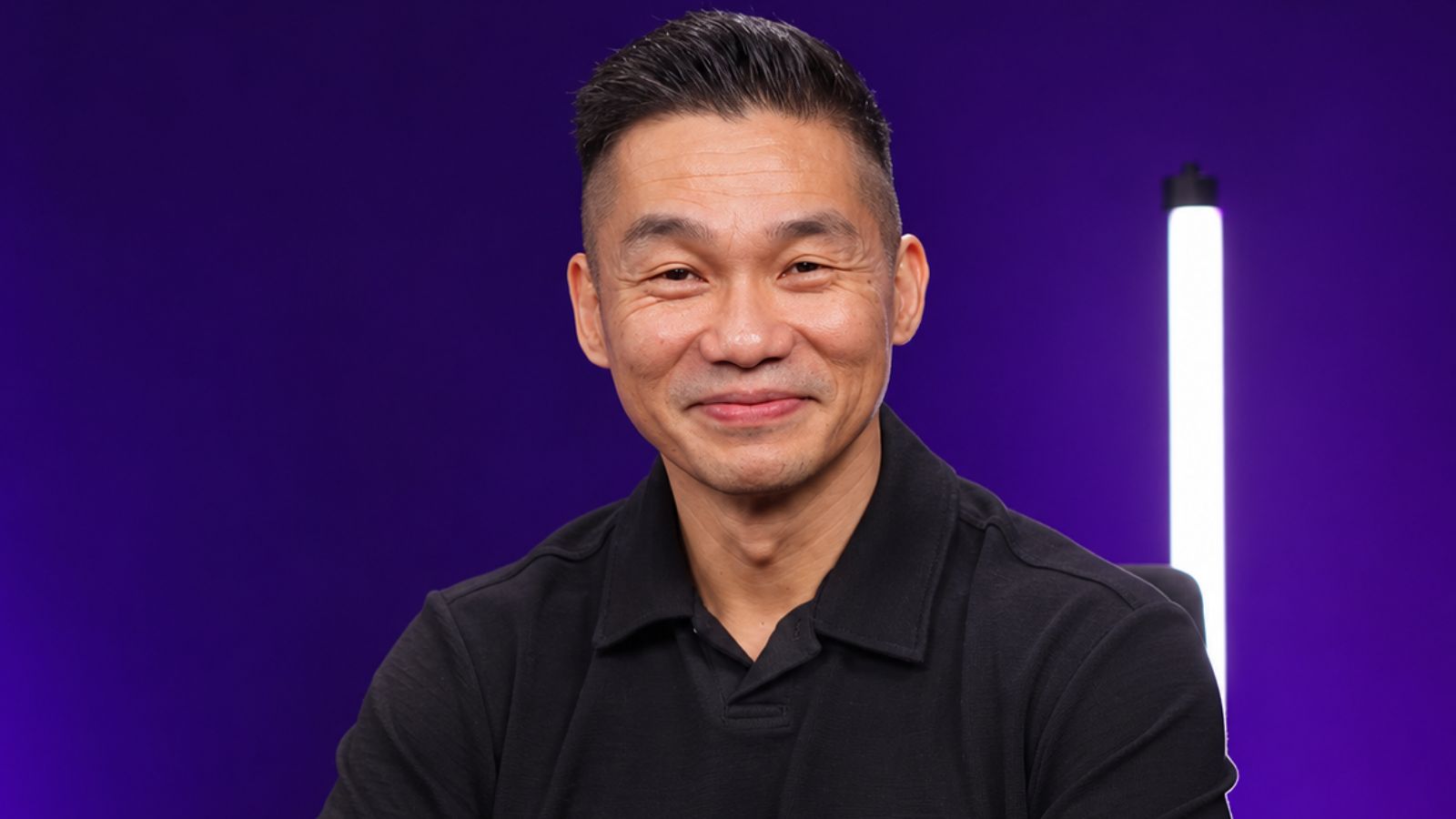
A commercial leadership build-out, not a research hire. Sequencr AI names Paul Soon — a former McCann SG chief executive with more than 25 years in creative and digital businesses — as strategic advisor. His remit covers the continued development of the Stratum platform and its consulting services, alongside support for engagements with brands, agencies and partners. The company frames his experience as input to its work helping organisations adopt AI across communications and marketing functions, with an emphasis on practical capabilities and operating models.
The timing is the tell. The appointment follows Sequencr AI's expansion of its leadership team last month, when it named Jeremy Seow as president and co-founder to support growth in agentic AI solutions for communications and marketing teams; Marketing-Interactive reported at the time that Seow arrived from Allison Worldwide, where he served as regional chief creative officer. Seow now oversees client strategy, growth and AI-enabled operating models across the Stratum platform and the consulting business, working alongside founder and CEO Matt Collette, CTO and head of product Jay Hatch, head of client success and projects Sue Ann Teo, CFO Dave Scott and director David Gallagher.
As the firm put it in a LinkedIn post announcing the appointment, the rise of agentic AI is changing how communications and marketing teams work, raising questions around organisational structures, capabilities and the role of technology in business operations — and leaders are increasingly weighing how to harness agentic AI to reshape the way their teams operate. Sequencr sits inside that conversation, helping communications and marketing organisations integrate agentic AI, develop new capabilities and rethink operating models.
Why would an AI platform need an agency chief?
Because the scarce input is adoption capacity, not model quality. Gartner's 2026 CMO Spend Survey (published 11 May 2026, based on 401 marketing leaders) found CMOs routing an average 15.3% of marketing budget to AI while only 30% reported readiness to scale AI capabilities. Its June 2025 prediction was harsher still: over 40% of agentic AI projects will be cancelled by the end of 2027. In January 2026 the firm forecast that 60% of brands will use agentic AI for streamlined one-to-one interactions by 2028. Budget is committed; process ownership is not.
That gap is where an agency operator earns a seat. At McCann Singapore, Soon led the combined business after the McCann–MullenLowe integration and drove digital and government client work as well as AI capabilities. Before that he was CEO of MullenLowe Singapore and China from 2020 to 2025, having first taken the Singapore CEO role in 2018; he led POSSIBLE Singapore from 2015 to 2018 and Mirum Agency from 2011 to 2015, following earlier roles at JWT, XM Asia Pacific, Arc Worldwide, Saatchi & Saatchi and AKQA. Public-sector procurement scars travel across borders; a slick agent demo does not.
Which Asia Pacific markets does that résumé actually unlock?
Not all of them at once. The following is an APACTechBriefing read — our analysis, not a vendor claim — and the unevenness is precisely what a buyer should use as a screening tool.
| Market | Buying trigger | Where the record helps | What to test before signing |
|---|---|---|---|
| Singapore | Public-sector and regulated approvals | McCann Singapore combined business, government client work, AI capability build | Audit trail, data handling, named in-market references |
| Greater China | Relationship-led cycles, local platform habits | CEO of MullenLowe Singapore and China from 2020 to 2025 | Delivery-partner quality, on-the-ground headcount |
| Indonesia, Malaysia, Thailand | Channel-led growth on messaging apps and creators, smaller tickets | MullenLowe Singapore from 2018; digital build-out at POSSIBLE Singapore | Language coverage, pricing tiers, time to first live workflow |
| Japan and ANZ | Long vendor qualification, residency rules | XM Asia Pacific regional operations background | Support hours, escalation path, hosting location |
One supply-side fact sharpens the picture: after Omnicom's acquisition of IPG, McCann Singapore absorbed MullenLowe Singapore with effect from January 2026, as reported by Campaign Asia and LBBonline. A decade of Singapore agency leadership is now circulating into vendor and platform seats, which raises the technical bar for buyers: the first procurement question is increasingly where the models and private data run, a shift we mapped in our breakdown of Korea's sovereign AI stack.
Buy a platform, hire advisory muscle, or build in-house?
Three routes, three predictable failure modes.
| Route | Speed to first live workflow | Talent dependency | Governance control | Cost shape |
|---|---|---|---|---|
| Vertical platform plus advisory (the Sequencr model: Stratum with consulting attached) | Fastest — weeks, since workflow templates come with the service layer | Low to medium inside the client, high on the vendor side | Medium: depends on private-model terms and who owns prompts and evaluations | Subscription plus services; visible early, grows with scope |
| General-purpose agent stack bought directly | Medium — integration is yours | High in-house ML/ops demand | High if you self-host | Usage-based and volatile |
| In-house build on open models | Slowest — quarters | Highest; competes for scarce APAC AI talent | Highest | Fixed headcount, sunk before first workflow |
- Pick the bundled route when you need an operating model as well as software — that is the space Sequencr AI is pitching.
- Pick the direct-buy route when you already have an internal platform team and only need agents.
- Pick the in-house route only where data cannot leave the jurisdiction, and budget the time.
What should a marketing or communications team check first?
- Ask for a workflow inventory: how many agentic workflows are live, in which markets, and the date of the oldest.
- Ask what was abandoned. With Gartner expecting more than 40% of agentic AI projects to be cancelled by end-2027, a vendor with no cancelled pilots has probably run none.
- Ask who owns prompts, evaluations and client data after the pilot, and what an exit costs.
- Score governance market by market: private models, in-country hosting, public-sector sign-off evidence.
- Check the bench for key-person exposure — two senior commercial additions in two months is speed, and speed carries risk, as we argued in our note on key-person risk and succession.
Frequently asked questions
What is Paul Soon doing at Sequencr AI?
As strategic advisor he shapes the continued development of the Stratum platform and consulting services, and supports work with brands, agencies and partners. It is an advisory seat, not an engineering one.
What is Stratum?
Sequencr describes Stratum on its own site as an AI-native communications intelligence platform built around agents, multi-signal monitoring, narrative analysis and private models for communications and marketing teams.
Does hiring an agency veteran prove the platform works?
No. It signals a go-to-market and operating-model strategy. Evidence should come from live workflow counts, named references in your market and cancellation history.
Why does agency consolidation matter to tech buyers?
Because it moves scarce commercial talent toward software vendors. The Singapore merger that folded MullenLowe into McCann Singapore means the people who know how regulated regional buyers procure are now advising platform sellers.
What should APAC operators do next?
Treat vendor announcements as market intelligence, not endorsement: read who joined, from which market, and which buying committee that name already has credibility with. Then localise before you scale — the checklist I would run this quarter looks like this:
- Singapore: request the public-sector reference list and the data-residency clause before the demo.
- Greater China: verify who actually delivers — vendor staff or a named local partner — and in which city.
- Indonesia, Malaysia, Thailand: price against channel reality (messaging-app workflows, creator volume), not against enterprise seat counts.
- Japan and Korea: expect residency and approval questions first; answer them before discussing model capability.
- Regional teams: insist on one market-specific pilot with an exit path, and a written cancellation review at 90 days.
Sources and further reading
- Gartner, 2026 CMO Spend Survey press release (11 May 2026)
- Gartner, prediction on agentic AI project cancellations (25 June 2025)
- Gartner, agentic AI in one-to-one brand interactions (15 January 2026)
- Marketing-Interactive on Jeremy Seow's appointment at Sequencr AI
- Campaign Asia on the McCann Singapore and MullenLowe Singapore merger
- Sequencr AI official site: Stratum platform description