
Niche Smartphones vs. the Memory Squeeze: A Side-by-Side Verdict for Asia-Pacific Decision-Makers
APACTechBriefing | by Lynn Zhou
Memory, not marketing, wrote this year's exit list. As DRAM and NAND contract prices ratchet upward every quarter, storage now accounts for 40% to 50% of a low-end handset's bill of materials and more than 64% in devices priced under 99 dollars. Vendors moving tens of millions of units can absorb that shock; Meizu, Asus and Black Shark cannot. For Asia-Pacific decision-makers the reading is blunt: scale, balance sheet and after-sales duty now decide survival, not brand affection.
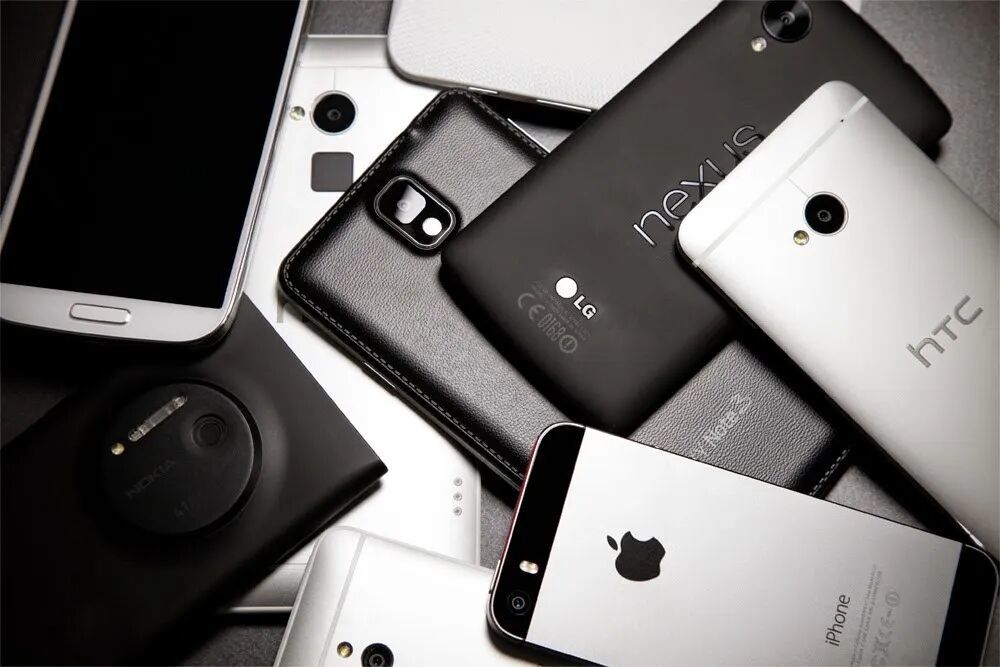
Which brands stepped off the board this year?
Three decisions frame the cycle. In February, two days after shutdown rumours had been circulating, Meizu confirmed it was suspending China-domestic new-product development and reworking its strategy; the Meizu 22 Air had already been withdrawn before the rumours, and Meizu 23 will not reach the market. Asus let its handset line wind down as channel inventory cleared. Black Shark closed its community in June and its official phone repair channel in July.
A fourth move, made later the same year, is the one worth benchmarking. In July, realme's China chief Xu Qi published an open letter suspending domestic product updates to concentrate resources on overseas markets, while existing handsets' sales, warranty and system updates were transferred to OPPO's service network. Pulling out of the device race and honouring the installed base are separable decisions — a distinction Asian boards are now being judged on.
The previous purge, around 2019, was competitive rather than cost-driven:
- Gionee collapsed within a year of its liquidity blow-up, carrying total liabilities of nearly RMB 21.1 billion at bankruptcy;
- Meitu posted a farewell letter on Weibo and licensed the Meitu phone brand outright to Xiaomi Group;
- Smartisan was absorbed by ByteDance, swapped its legal representative and lost its entire core team, closing Luo Yonghao's chapter in handsets;
- 360's phone business was reported paused; the official answer was "temporarily", and no successor model ever arrived.
Those brands lost because they could not win shelf space against a closing top tier. This cohort is losing because the bill of materials moved underneath them.
How do the three exit scripts differ?
| Brand | Decision taken this year | Structural position | Signal for Asia-Pacific teams |
|---|---|---|---|
| Meizu | Halt China-domestic new-product R&D; Meizu 22 Air dropped, Meizu 23 shelved | 23 years old; taken over by Geely three years ago and re-formed as Xingji Meizu Group | Fan loyalty and design reputation cannot fund a memory bill that doubles |
| Asus | Phone line withdrawn once inventory cleared, ending a rough two years | Handsets long below 10% of group revenue and persistently loss-making; PC, motherboard and AI-server businesses offer a life raft | Diversified hardware groups prune first instead of fighting |
| Black Shark | Black Shark community shut in June; official handset after-sales stopped in July | Last phone shipped in 2022; Black Shark 6 died after warm-up in 2023 | Vertical categories collapse once mainstream flagships copy the feature set |
| Transsion (stayed) | Bought memory aggressively and stockpiled | Ships at a tens-of-millions scale, yet cash flow swung to an outflow of nearly RMB 9.9 billion in the first three quarters of this year | Scale buys time, never savings |
Meizu: a brand kept alive by nostalgia until the cost curve closed it
Meizu's 23 years read like a case study in strategic drift: a brilliant opening, then missteps that blurred the brand's positioning and drained volumes; the founder's return brought friction between management rather than a hit product, and the company lived on affection until Geely took it over. Three years ago that acquisition created Xingji Meizu Group and was widely read as a fresh start; then chairman and CEO Shen Ziyu set out a three-year target of returning to China's mid-to-high-end top five. This year the role is still awkward, the ambition unmet, and the hardware project itself shelved.
Asus: out of both fights at once
Asus's phones had a rough two years. On the value front, the ZenFone line could not shake mainland Chinese rivals' mass-SKU "phone farm" tactics and their extreme cost control; on the innovation front it could not commit imaging or foldable R&D at the scale giants can absorb. Iteration slowed, and market noise with it. From last year the phone unit inside the company saw very few new moves; with channel inventory now cleared, the withdrawal was all but unavoidable — DIGITIMES reported in January that the smartphone unit would operate only through 31 December 2025, after which no new models would be launched.

Black Shark: an ending nobody noticed
In June, Black Shark published an announcement on server upgrades and service migration, temporarily closing access to the Black Shark community; in July, "Black Shark Xirui", a technical support engineer at Nanchang Black Shark Technology Co., Ltd., confirmed that a deep restructuring of the business had ended official repair and related services for the phone category. Its last handset shipped in 2022, and the Black Shark 6, prepared for 2023, was stillborn after its warm-up. Over the past few years nothing new arrived, attention drained away, and the closure moved no market needle. The gaming-phone track now has RedMagic as its sole survivor; across smartphones, little of the niche world outside big corporate backers remains.
Why does a memory spike hit thin-margin brands first?
Because allocation follows price, not friendship. An employee at a leading smart-hardware company put it plainly: industry chatter now says small vendors simply cannot win memory allocations at all, while even the big brands are forced to pay premiums that flow straight into downstream prices. Large vendors amortise that across tens-of-millions shipment volumes; niche vendors have no bargaining power and often no supply — and supply first turned tight last year, when chip prices began their run.
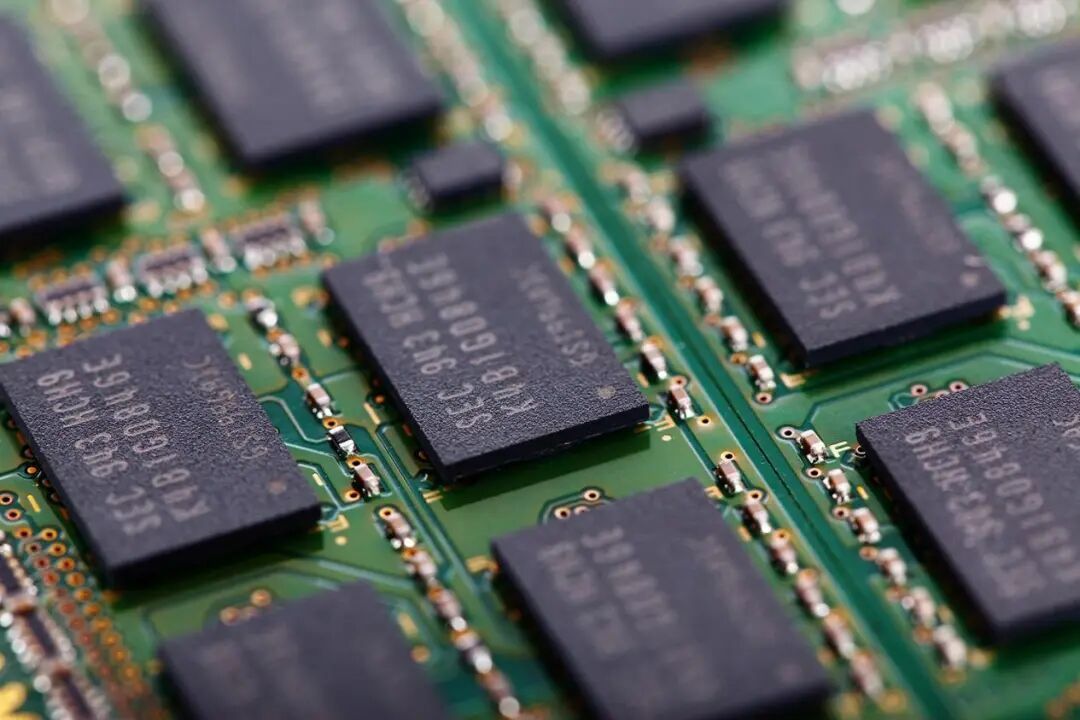
According to IDC's modelling, the storage share of a low-end handset's cost has climbed from 10% to 15% to 40% to 50% today; Omdia's estimate is harsher, putting the ratio above 64% for models priced under 99 dollars. Counterpoint Research's memory tracker shows smartphone memory prices rising more than 80% quarter on quarter in the second quarter of 2026, with low-end bill-of-materials costs up about 70% year on year and DRAM overtaking the system-on-chip as the most expensive single part in flagships. "Even after OEMs optimise product mix, mid- and low-end models still face eroding profitability or outright losses," said Shenghao Bai, senior analyst at Counterpoint Research.
Two coping tactics show how little room is left. First, contract prices are still climbing: TrendForce's 30 September outlook projected DRAM contract prices up 10% to 15% and NAND flash up 15% to 20% quarter on quarter in the fourth quarter of 2026. Second, in the same house's latest storage study, carried by IT Home, reballed memory — used dies re-ballined for reuse, mostly 4GB LPDDR4X — is expected to reach roughly 3% to 4% of smartphone memory use in 2026 and 7% to 9% in 2027, concentrated in 4G models sold below RMB 1,299. That is a component-quality risk pushed onto the most price-sensitive buyers in South-East Asia and South Asia. The same reallocation logic now eroding Apple's flash bargaining power is what starves small Android brands of supply.
Where has the demand actually gone?
Concentration is the second variable, and it plays out differently by region. IDC's 2025 China handset shipment ranking shows the top of the pyramid:
| Vendor | 2025 shipments in China |
|---|---|
| Huawei | 46.7 million units |
| Apple | 46.2 million units |
| vivo | 46.1 million units |
| Xiaomi and OPPO | take the remaining seats |
Those 5 vendors took 79.4% of China's total smartphone volume in 2025. North America shows the same drift in single-brand form: in the first quarter of 2022, Apple Intelligence-equipped shipments reached 19.9 million units for a 51% share, and by the fourth quarter of 2025 Apple had lifted its share to 69%, a record, extending a gain that has run for several years. Asia-Pacific outside the two giant markets faces contraction rather than simple consolidation: IDC's 2026 forecast puts worldwide shipments down 13.9% for the year and the Asia-Pacific-excluding-Japan-and-China region down about 14%, per its May outlook.
When top brands patch their weak spots and push into specialist territory, niche vendors have no defensive line — which is exactly how Asus, Black Shark and Lenovo's Legion lost the gaming niche. Transsion illustrates the cost of staying in: to lock in chips it emptied its own treasury and borrowed, with operating cash flow swinging from an outflow of less than RMB 5.9 billion in the first half of this year to an outflow of nearly RMB 9.9 billion across the first three quarters of this year, against a net inflow of RMB 3.285 billion in the same period last year. Stockpiling buys only a cost time window; the price increase and the product-mix reset still have to land inside it, or the balance sheet does the dying instead.
Is this only a phone problem?
No. Nearly 40% of a PC's build cost is now eaten by memory and storage, lifting retail prices and suppressing replacement demand, so the squeeze has turned from a cost issue into a structural one. Asus has long been a dominant name in motherboards, yet the PC rankings are frozen: the top three seats belong to Lenovo, HP and Dell, Apple holds its own closed ecosystem, and Asus leans on gaming laptops. DIGITIMES' latest report expects the four consumer PC motherboard suppliers — Asus, Gigabyte, MSI and ASRock — to ship 28% fewer boards in 2026, roughly 11.7 million units less in total; Asus shipped 15 million boards in 2025 but only just over 5 million in the first half of 2026, and is projected to barely clear 10 million for the full year, a 33% collapse. AI-server growth is the one offset.
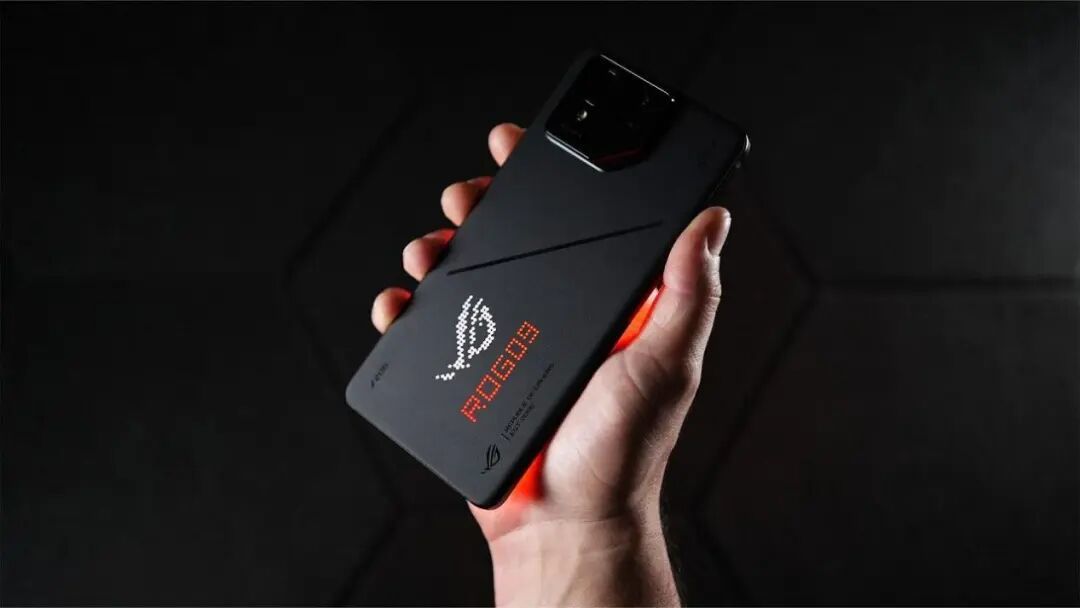
Against that backdrop, handsets were the cheapest thing to give up: they were long below 10% of Asus's revenue and never reliably profitable. In 2018 chairman Jonney Shih (Shi Chongtang) conceded the phone business had failed, and that year's accounts absorbed a one-off restructuring loss of about NT$6.2 billion, or roughly RMB 1.36 billion. Cutting a loss-maker to protect the core is an allocation decision, not a retreat — and Asia-Pacific hardware boards will keep copying it. Upstream confidence is fragile too, as Kioxia's flat December guide and the selling that followed showed.
Who is next on the watch list?
Lenovo is the closest mirror. Its AI phones grew, yet the brand still sits in the Others bucket on global smartphone rankings, with faint mass-market presence and volume only in pockets overseas; its AIoT catalogue is broad but has not produced a national-level hit. Compute momentum cannot hide uneven consumer-hardware development. A few days ago, reports said ZTE Corporation is in talks with an internet giant over a deal that would package its handset business. Growth, highlight, turn, decline — almost every niche brand is now in its closing act, having once written some of the most colourful pages in the industry's history. A composed exit may be the best ending left.

What should Asia-Pacific teams do now?
- Product and hardware leads: rebuild entry-level roadmaps around memory-first costing. Assume contract prices keep rising into 2027, cut SKU counts before cutting specs, and set a written policy on reballed or downgraded components instead of leaving that call to procurement.
- Channel and retail buyers: treat handset pricing as index-linked. Lock volume pricing earlier, shorten inventory ageing targets, and expect sub-RMB 1,299 devices to be delisted before they are discounted.
- Enterprise mobility and device-management owners: add vendor-continuity clauses to procurement — warranty transfer, patch horizon, parts availability. Black Shark's July shutdown of official repairs and the realme-to-OPPO service handover are the two reference cases to model against.
- Strategy and investment teams: screen hardware vendors on shipment scale, balance-sheet headroom and after-sales obligations rather than fandom or design awards; a profitable core business is now the best predictor of a survivable handset retreat.
Frequently asked questions
Why did a memory price rise finish off brands such as Meizu and Black Shark?
Because their cost base was storage-heavy and their margin thin. Storage moved from 10% to 15% of a low-end build to 40% to 50% (Omdia puts sub-99-dollar models above 64%), while niche vendors had neither the tens-of-millions order volumes that dilute the hit nor the allocation priority suppliers now grant to AI customers.
Does Asus leaving handsets weaken its core PC business?
It frees capital rather than weakening the core. Handsets were long below 10% of revenue and loss-making, while board and laptop lines face the same memory squeeze; DIGITIMES expects the four leading consumer motherboard makers to shrink 28% in 2026, about 11.7 million units, with Asus itself heading for a 33% decline.
Will smartphone prices keep rising into 2027?
The published contract-price path still points up — TrendForce alone forecast 10% to 15% DRAM and 15% to 20% NAND gains in the fourth quarter of 2026 — and entry-level models under 99 dollars are the likeliest to be withdrawn rather than repriced.
What happens to owners of discontinued phones?
It depends entirely on how the exit is designed. Black Shark closed the Black Shark community in June and stopped official repair service in July, leaving owners with no channel; realme instead routed sales, warranty and system updates to OPPO. Buyers should verify such a transfer arrangement before clearing old stock.
Sources referenced
- TrendForce memory contract-price outlook, 30 September: https://www.trendforce.com/presscenter/news/20260930-13258.html
- TrendForce reballed-memory smartphone penetration study, via IT Home: https://www.ithome.com/html/soft/1023756.htm
- Counterpoint Research smartphone memory and BOM tracker, via Tonghuashun Finance: https://www.10jqka.com.cn/20260729/c678512369.html
- IDC worldwide smartphone market forecast 2026: https://www.idc.com/resource-center/blog/worldwide-smartphone-market-to-decline-13-9-in-2026-as-memory-crisis-and-us-iran-war-constrain-growth/
- realme open letter and OPPO service takeover, via MyDrivers: https://news.mydrivers.com/1/1136/1136908.htm
- DIGITIMES reporting on Asus's smartphone line: https://www.digitimes.com/news/a20260102PD236/smartphone-asus-taiwan-mobile-market.html
- China 2025 shipment ranking, storage cost shares, Asus financials and the Meizu, Black Shark and ZTE timelines are drawn from the reviewed source briefing.