
Edge Rot Beyond Burn-In: What RTINGS' 18,000-Hour WOLED Result Means for Asia-Pacific Screens
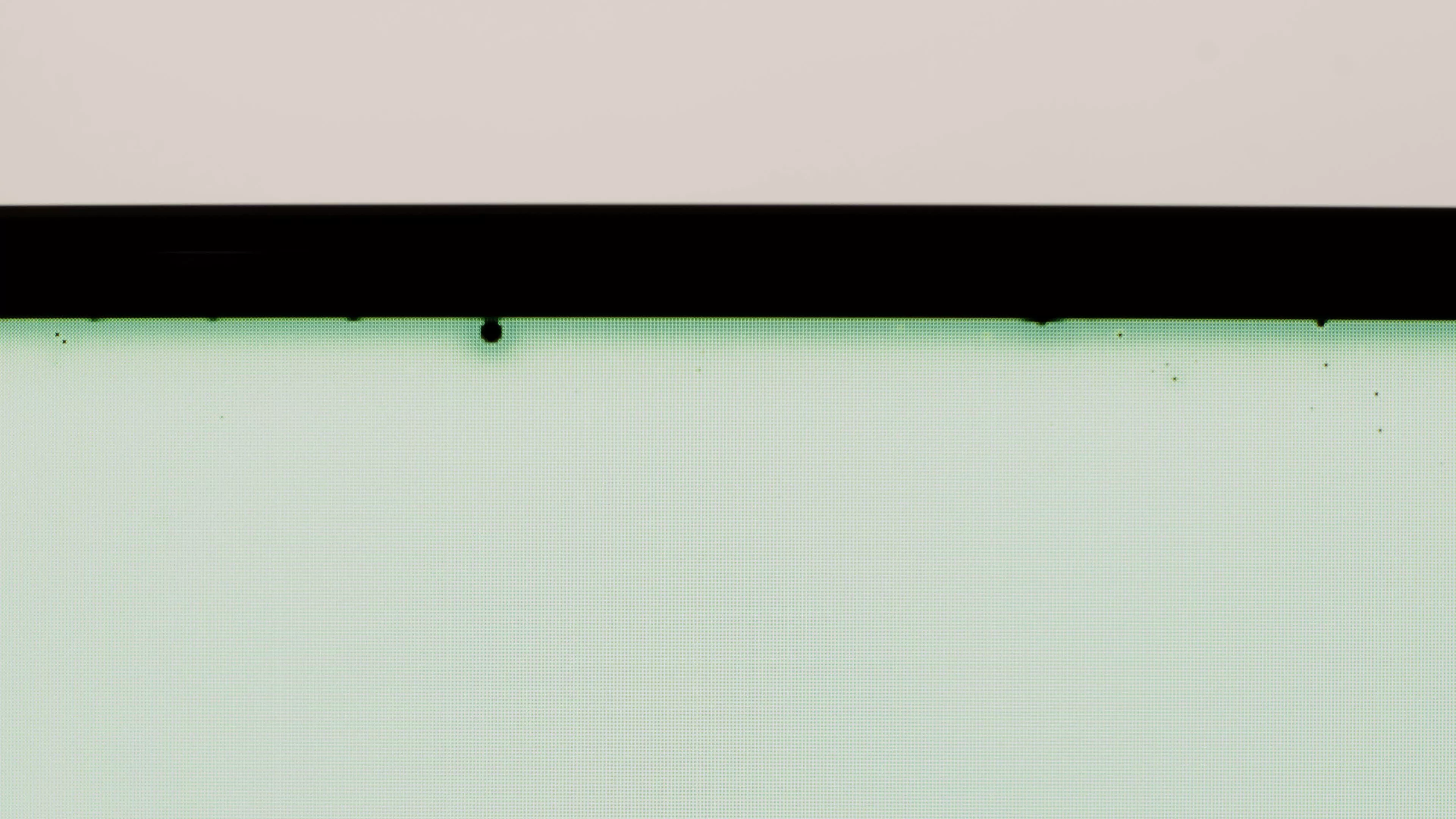
RTINGS' accelerated longevity test found that 14 of 16 WOLED TVs built with LG Display panels developed "edge rot" — scattered dead pixels and dark blotches creeping inward from the frame — after 18,000 hours of continuous running, roughly equivalent to ten years of average use in a US household. Unlike burn-in, the defect is not tied to what is displayed, and the three Samsung Display QD-OLED sets in the same programme logged no dead pixels at all.
Read as a procurement signal rather than a consumer scare, the result is narrow by model range but wide by consequence: the two panel generations involved shipped in volume into premium televisions, hospitality sets and meeting-room displays sold across Asia-Pacific, and the failure mode sits outside what firmware pixel-refresh routines are designed to counter.
What is edge rot, and why is it not the same as burn-in?
Short answer: burn-in is content-driven uneven wear; edge rot is a package-integrity defect driven by elapsed time and environment. RTINGS draws that line explicitly — varying what you watch does not protect a panel from it.
| Dimension | Burn-in / image retention | Edge rot |
|---|---|---|
| Root trigger | Static elements shown for long stretches | Perimeter sealing structure degrading over time |
| Depends on content? | Yes — logos, tickers, HUDs | No damage pattern tied to programming |
| Where it starts | Anywhere a fixed element sat | Screen border, then inward |
| Visible form | Ghost image of the static element | Isolated dead pixels plus dark patches |
| Firmware countermeasure | Pixel shift, refresh cycles, ABL limits | None; coverage falls to warranty |
After consulting industry specialists, RTINGS points to the thin sealing layer that wraps the outer edge of an OLED panel: where that seal carries a microscopic defect, moisture can migrate inward over years and kill pixels at the periphery first. For field diagnosis, the tell is the inward creep from the bezel rather than a ghost of a channel logo.
Which panels failed, and which survived the full run?
Conclusion first: incidence tracks panel lineage, not brand. All 16 WOLED sets came from models launched between 2020 and 2023, and the outcome splits cleanly across two LG Display generations.
| Panel generation | Units in test | Units showing damage | Clean at end of test |
|---|---|---|---|
| Early WBC | 10 | 9 | 2022 LG A2 |
| WBE (deuterium-strengthened) | 6 | 5 | 2023 LG G3 |
| Samsung Display QD-OLED | 3 | 0 dead pixels | All 3 (burn-in only) |
WBE uses deuterium to strengthen the OLED emissive materials and does improve durability on paper, yet five of the six WBE units still degraded. On the other side of the fence, the three Samsung Display QD-OLED TVs produced no dead pixels at all; the only defect observed was conventional burn-in caused by the long, continuous playback of CNN during testing.
Put the WOLED result in context before quoting it to a client: RTINGS' wider three-year programme covering 102 televisions, updated in December 2025, still ranked OLED as the least failure-prone panel type overall — only one of 24 LG OLED units failed outright, while thin edge-lit LCD sets carried the worst record. Edge rot is therefore best framed as a specific WOLED perimeter weak point inside an otherwise strong reliability story, not as evidence that OLED is unreliable.
Why does the panel border give way before the lit area?
Because encapsulation is weakest where the panel is sealed and scribed. OLED's organic emissive layers are destroyed by water vapour and oxygen, so manufacturers barrier them with alternating inorganic and organic thin films; reviews of thin-film encapsulation consistently identify the perimeter seal rather than the active area as the leak-prone zone, with performance judged at water-vapour transmission below 1E-6 g/m²/day.
- Uniform inorganic barrier layers are the engineering bottleneck — the same deposition know-how behind the sputtering and ALD process shift Samsung Display and LG Display are exploring for future iPhone and iPad panels.
- Thermal stress concentrates at the edges of slim displays, which is also why RTINGS found edge-lit LCD construction disproportionately failure-prone.
- APAC install conditions push closer to the harsh envelope: monsoon-season humidity, wall-mounted sets boxed into sealed joinery, and 24/7 lobby or hospitality duty cycles.
The third bullet is APACTechBriefing analysis, not a published test variable: the study did not stratify failures by climate, so no humidity-correlated rate can be quoted.
How large is the addressable exposure in Asia-Pacific?
The tested slice is small; the installed base it represents is not. Omdia figures cited by LG put global OLED TV shipments at about 6.47 million units in 2025, up 6.6% year on year, with LG Electronics alone holding 49.7% share on roughly 3.22 million units; Omdia separately forecast large-area OLED unit shipments to grow 19.0% in 2025. LG Display's WOLED panels supply a large share of premium sets sold under multiple brands in this region, so a perimeter-seal pattern is a supply-chain topic, not a single-vendor topic.
Scope limits matter for interpretation: the test covered WOLED models from 2020 to 2023 and did not include products from 2024 and later, so no data yet exists on the newest revisions.
What are LG and the tester doing next?
LG told RTINGS that cases like this appear on only a very small number of OLED TVs and generally require prolonged exposure to demanding conditions such as high temperature and high humidity. RTINGS nonetheless applied a small deduction to every WOLED TV in its newly published "Expected Reliability" score until long-term data proves the risk resolved, and has opened a Longevity 3.0 programme that includes LG Display's latest Tandem WOLED panels, as found in products such as the LG G5 and LG G6.
- LG Display markets Tandem WOLED at up to 4,500 nits peak brightness with 99.5% DCI-P3 coverage, stacking emissive layers so no single layer carries the full current — the mechanism it presents as the durability fix.
- Vendor durability claims should still be treated as provisional: when LG unveiled Tandem WOLED 2.0 at CES 2026, DisplayDaily noted that independent measurement of the 2025 panel (around 2,213 nits from FlatPanelsHD) fell short of the 4,000-nit headline.
- Because edge rot takes years to surface, the decisive question for buyers is coverage terms, not spec sheets.
What does a "five-year panel warranty" actually pay for?
In the US market, LG's five-year limited panel warranty applies only to G series, Z series and M series televisions, and after the first year the owner still bears repair labour costs; higher-volume products such as the C series remain on the standard warranty.
Terms are market-specific, which is what makes them a regional-operations issue. LG's published UK and Hong Kong warranty pages limit the multi-year extension to panel and parts on flagship lines with labour billed outside the initial period, while LG Australia has advertised five-year panel-parts cover across its 2026 OLED evo range. The same panel can therefore arrive with materially different entitlements depending on which market bought it.
Action checklist for buyers, resellers and IT teams
- Inspect before purchasing used: display a pure white or pure grey frame and scan the entire border for dark spots or abnormal patches — the check RTINGS recommends ahead of any second-hand LG CX or LG C1 deal.
- Log panel generation (WBC versus WBE) on the asset register next to the model name; the test outcomes separate by lineage rather than by brand.
- Class commercial duty cycles separately: signage and hospitality guidance already warns that static overlays, menus and channel bugs drive retention, and a perimeter defect would compound it.
- Control the installation environment — leave ventilation gaps above and behind the set, avoid sealed cabinetry, and keep the room out of prolonged high-humidity operation.
- Price warranty into total cost of ownership over six to seven years, and verify that the exact model carries extended panel cover in your market.
- Re-read reliability scores at refresh time: the Expected Reliability deduction is explicitly temporary and will move with Longevity 3.0 results.
FAQ: four questions APAC decision-makers are asking
Is edge rot just another word for burn-in?
No. Burn-in follows the content on screen; edge rot follows time and environment, starting at the sealed perimeter and creeping inward, which is why no amount of varied programming prevents it.
Does this make OLED the wrong choice for humid markets?
Not on current evidence. LG maintains that such degradation needs prolonged heat-and-humidity exposure, and RTINGS' 102-television programme still ranked OLED ahead of LCD on outright failure. The defensible position is stricter installation hygiene, not panel avoidance.
Are QD-OLED panels immune?
Not immune — differently exposed. The three Samsung Display QD-OLED units showed no dead pixels in this test, but did burn in under sustained CNN playback, so static-content management remains mandatory.
What should I check on a panel that is two or three years old?
Run full-field white and grey frames, photograph the border line for a baseline, and confirm the remaining warranty window and whether labour is still covered — the five-year promise in most markets covers panel parts only.
Trend call: three signals to watch into 2027
First, expect perimeter sealing and barrier deposition, not brightness, to become the headline differentiator in large-area OLED as Tandem architectures mature. Second, expect reliability scoring to fragment by panel generation, so procurement documents should cite generation-level data rather than brand-level averages. Third, the warranty gap between flagship and volume lines is where the cost of this defect will actually land — most exposed fleets are those running three-to-five-year-old WBC and WBE sets beyond their covered window.
Reference sources
- RTINGS — "Edge Rot Plagues WOLED TVs: Burn-In Isn't OLED's Only Risk": https://www.rtings.com/tv/learn/research/edge-rot-plagues-woled-tvs
- RTINGS — Longevity test results and Longevity 3.0 methodology: https://www.rtings.com/tv/learn/longevity-3-0 and https://www.rtings.com/tv/tests/longevity-burn-in-test-updates-and-results
- RTINGS three-year, 102-television longevity update (December 2025), as reported by IT之家: https://www.ithome.com/html/win8/906650.htm
- LG Display — Tandem WOLED product technology page: https://www.lgdisplay.com/eng/product/tv-display/tandem-woled
- DisplayDaily — LG Display brings Tandem WOLED 2.0 to CES 2026: https://displaydaily.com/lg-display-brings-tandem-woled-2-0-to-ces-2026-pushing-tv-panels-to-4500-nits/
- Omdia large-area display forecast (October 2025): https://omdia.tech.informa.com/pr/2025/oct/omdia-forecasts-large-area-display-shipments-to-grow-2point8-percent-yoy-in-2025-mobile-pc-displays-lead-the-growth
- LG Electronics OLED TV warranty terms, UK: https://www.lg.com/uk/tvs-soundbars/oled/warranty/ and Hong Kong: https://www.lg.com/hk_en/tv-soundbars/oled/2022/oled-warranty/
- MDPI Materials — "Thin-Film Encapsulation for OLEDs and Its Advances" (2025): https://www.mdpi.com/1996-1944/18/13/3175
- Digital Signage — screen burn-in prevention for deployed displays: https://digitalsignage.com/digital_signage/docs/technical/screen-burn-prevention/
Prepared by Lynn Zhou for APACTechBriefing at APACTechDigit. For procurement questions on this briefing, contact contact@apactechdigit.com.