
APACTechDigit VentureCapital Q&A: Anthropic's US$1.4 Trillion Nasdaq IPO — Five Decisions for Founders, Angels and APAC Funds
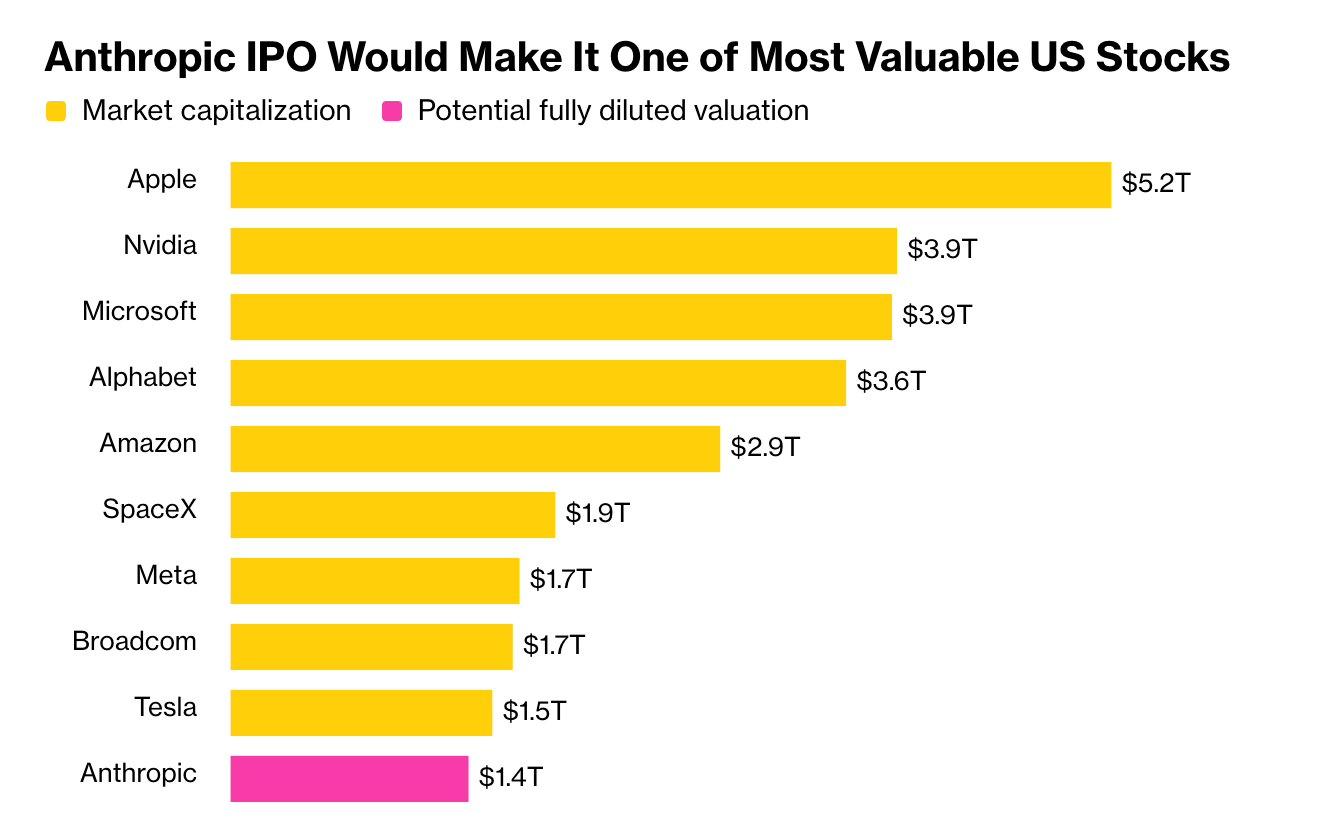
For APAC founders and angels, Anthropic's Thursday Nasdaq listing is not a buy signal but a pricing benchmark: treat US$1.4 trillion as the new ceiling for AI marks, not a floor. The regional split is stark. In Singapore and Japan, funds hunt indirect exposure through listed backers; in mainland China and Hong Kong, institutional orders were refused outright.
What is actually being priced on Thursday?
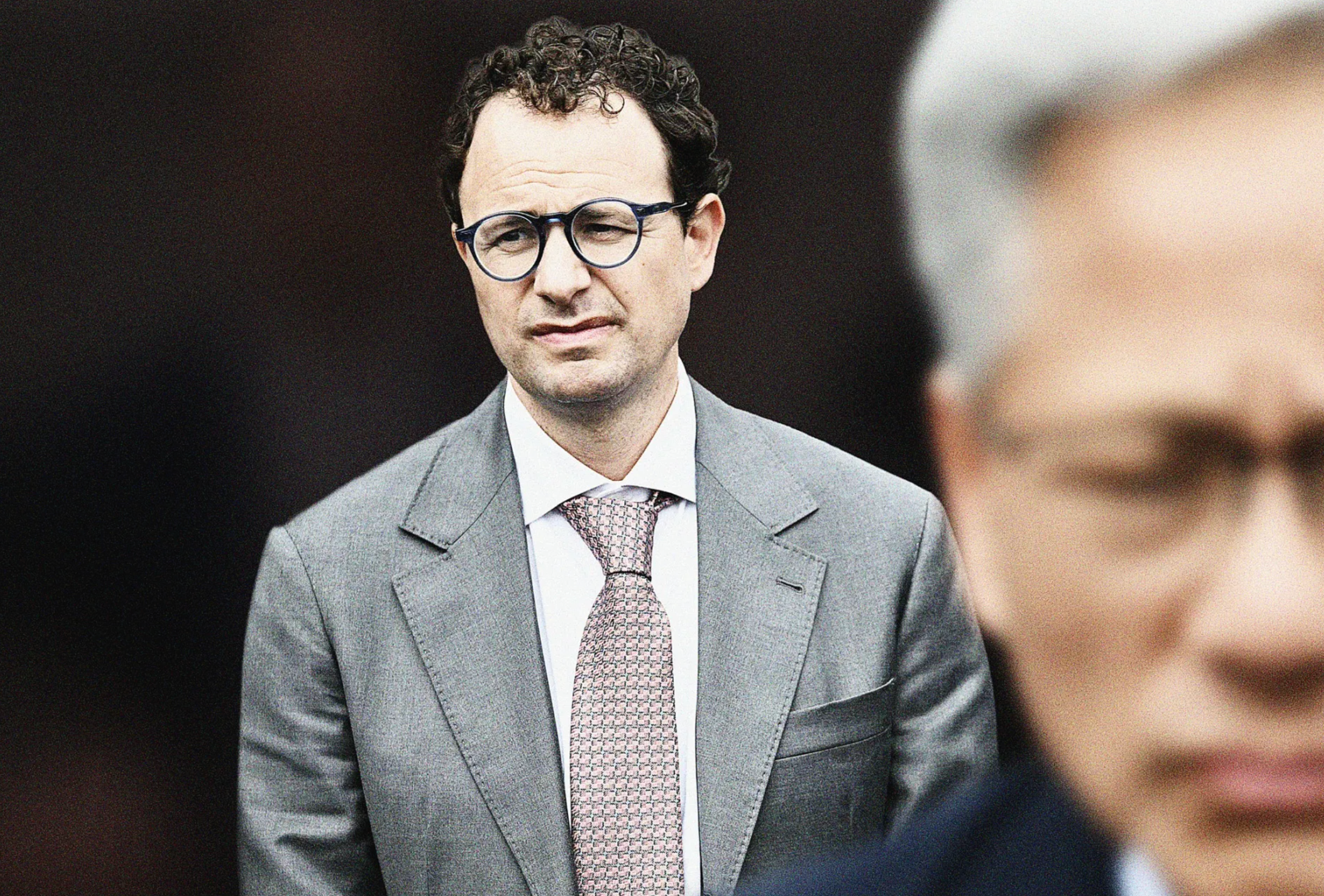
Conclusion first: this IPO prices a monetization test, not a chip story. Anthropic is listing on Nasdaq on Thursday, and the market is asking whether AI has moved beyond the "sell shovels" phase into real revenue. Shovels did make a fortune — Nvidia once reached a US$5.8 trillion market capitalisation selling them.
That history is why the question lands on Amodei. As Jensen Huang steps back, chief executive officer Dario Amodei inherits the role of AI's chief spokesperson and must argue that people are digging real gold with these tools. Goldman Sachs analysts estimate Anthropic will not post a full-year free-cash-flow positive result until 2030; its spending commitments stretch through 2045 and already exceed US$900 billion.
Data-centre build-out is now tied to circular arrangements: Nvidia is arranging funding for Anthropic and for other large buyers of its own AI chips. Whether Nvidia's new management can match Huang's appetite for risk is an open question — one that matters for anyone marking a private AI book in Asia.
Why should an APAC fund care about a New York listing?
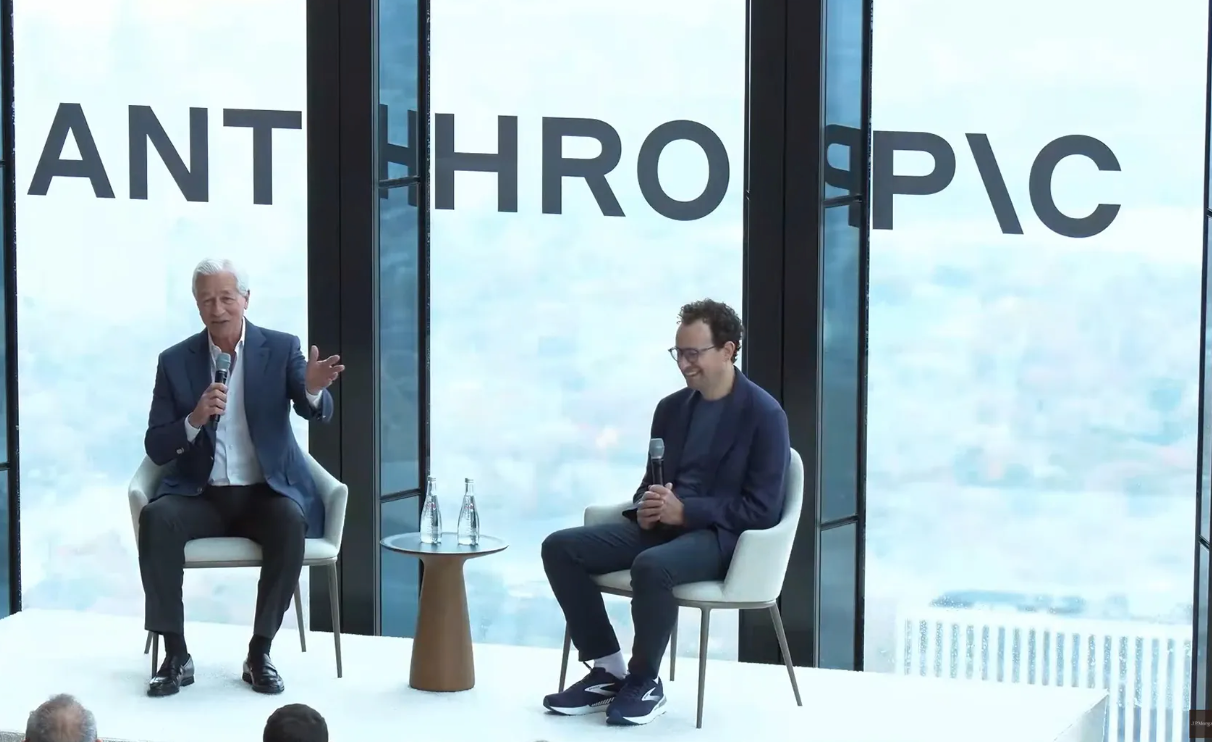
Conclusion: because access is now a regional inequality, and it changes your entry strategy. Last Friday, at an IPO presentation at JPMorgan's new headquarters in New York, Amodei took the stage alongside JPMorgan CEO Jamie Dimon, wearing his trademark running shoes, white socks and a blue blazer.
Amodei told Dimon: "We don't particularly care about the specific listing time, which month, which day, or what the market environment is like when we list." In the room were fund managers Paul Singer, Bill Ackman and Ron Baron. He said the best advice he received while preparing was: "Never let the company's valuation exceed its actual value by even US$1."
Here is the APAC difference most US coverage skips. Bloomberg reported that institutional investors based in mainland China and Hong Kong were excluded from placing orders, a function of US restrictions; Huang, by contrast, spent years pushing Nvidia products into China and cultivating ties there. Nikkei Asia reported that Asian investors chasing indirect access through funds were warned those vehicles most likely would not receive an allocation. For a regional fund, the proxy route is a gamble, not a workaround.
NEPC, an institutional investment consultant, noted the IPO could set a valuation benchmark for other private AI companies and shift capital flows across the venture ecosystem. That benchmark is exactly what a founder in Jakarta or Bengaluru will be measured against at their next term sheet.
Is US$1.4 trillion cheap, or expensive?
Conclusion: it is a discount to the hype and a premium to the fear — and that is the whole signal. Anthropic is targeting a US$1.4 trillion valuation, far below the US$2 trillion circulating months earlier, but well above the US$1.1 trillion some on Wall Street shouted during the worst of the recent tech sell-off.
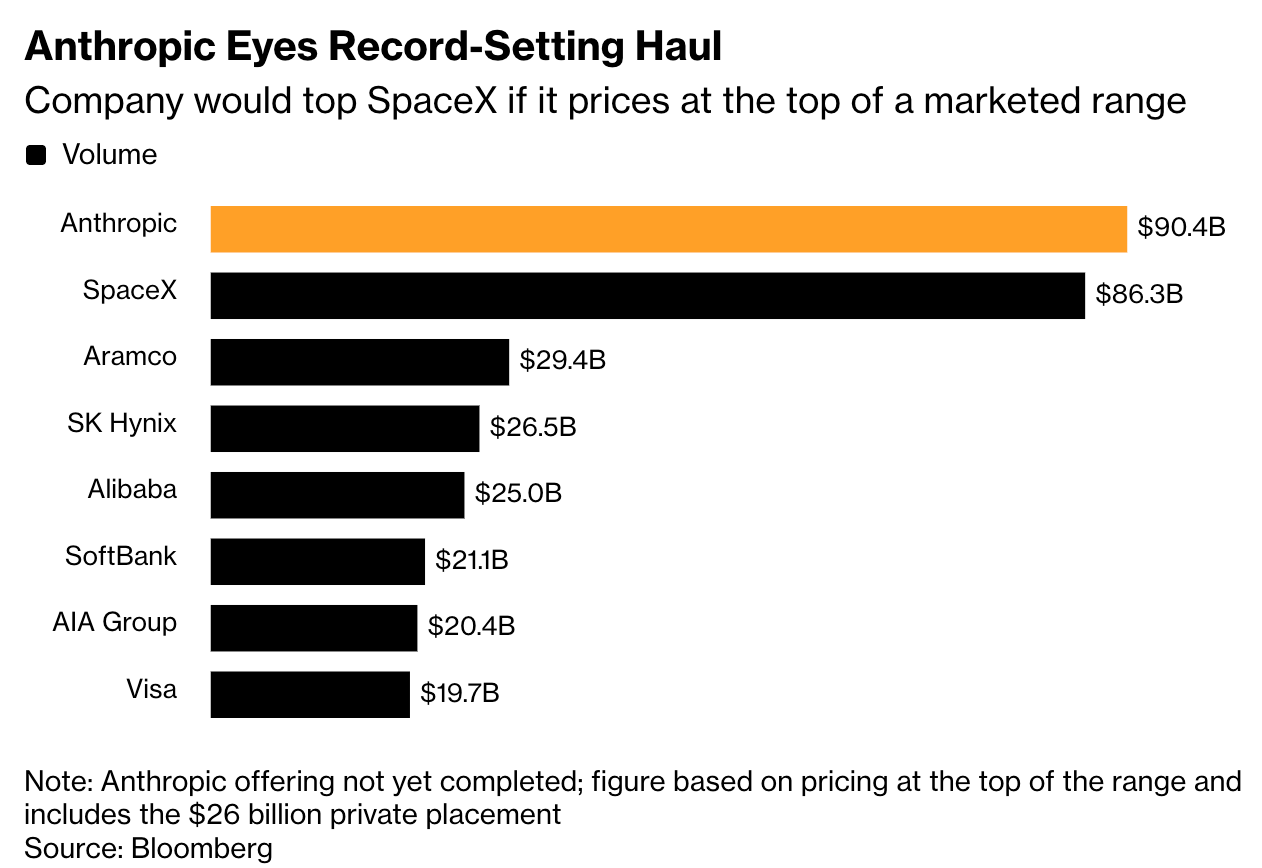
Anthropic and some backers hope to raise up to US$90.4 billion through the IPO plus a separate private placement. Together, the two would exceed the US$75 billion SpaceX raised in its IPO and become the largest listing deal on record. The deal is oversubscribed nearly seven times; one person familiar said demand is far hotter than SpaceX's, with the only comparison being Snowflake's 2020 US$3.9 billion IPO, whose shares jumped 112% on day one.
| Reference point | Figure | What it tells a VC |
|---|---|---|
| Anthropic target valuation | US$1.4 trillion | Ceiling for current AI marks |
| Peak market rumour | US$2 trillion | Hype already priced out |
| Sell-off lowball | US$1.1 trillion | Fear floor |
| IPO plus private placement | US$90.4 billion | Liquidity on offer |
| SpaceX IPO | US$75 billion | Prior record broken |
| Snowflake 2020 IPO | US$3.9 billion, +112% | Day-one pop reference |
Founded less than six years ago, Anthropic already has serious scale: annualised revenue reached US$81 billion on October 31, up US$10 billion from end of September. At that run rate it would outrank analyst revenue expectations for hardware suppliers such as Intel and ASML.
Wellington Management's Matt Witheiler, a late-growth investor holding the stock, said: "Public-market investors are racking their brains trying to figure out just how big AI demand really is, which is why everyone is watching the ARR (annual recurring revenue) figures published at the end of each month." He added: "There is no metric yet for measuring public-market AI demand, because these companies have been private until now. But as Anthropic leads the way into public capital markets, that will change." For the mechanics of how the midpoint re-prices marks, rounds and cap tables, see our companion note on how the IPO midpoint resets private marks.
Amodei
Where does the cash actually run out?
Conclusion: the runway is long in years but brutal in cash intensity — model it in cash, not in revenue. Anthropic still holds more than US$130 billion in cash and equivalents after raising about US$141 billion to date. About US$71 billion of spending must be paid by September 2027.
Relief will not last. Goldman Sachs projects free cash flow of roughly US$33.6 billion in 2030, after a net outflow of about US$65.7 billion in 2027 — a timetable that tests a circle famous for watching quarterly returns. Bloomberg Intelligence's Mandeep Singh cautioned: "Increasing price competition could make it harder to maintain gross margins. They also need to generate enough enterprise-level token consumption to earn enough to cover these infrastructure investment commitments."
For a VC, the lesson is to diligence the quality of revenue, not just its quantity: how much of the ARR is enterprise, how much is related-party demand created by vendor financing, and how fast delivered compute converts to cash. That same lens turns the Nvidia–Anthropic funding loop into a valuation question, not a governance footnote.
Jensen Huang
Who is the real bellwether — Anthropic or Nvidia?
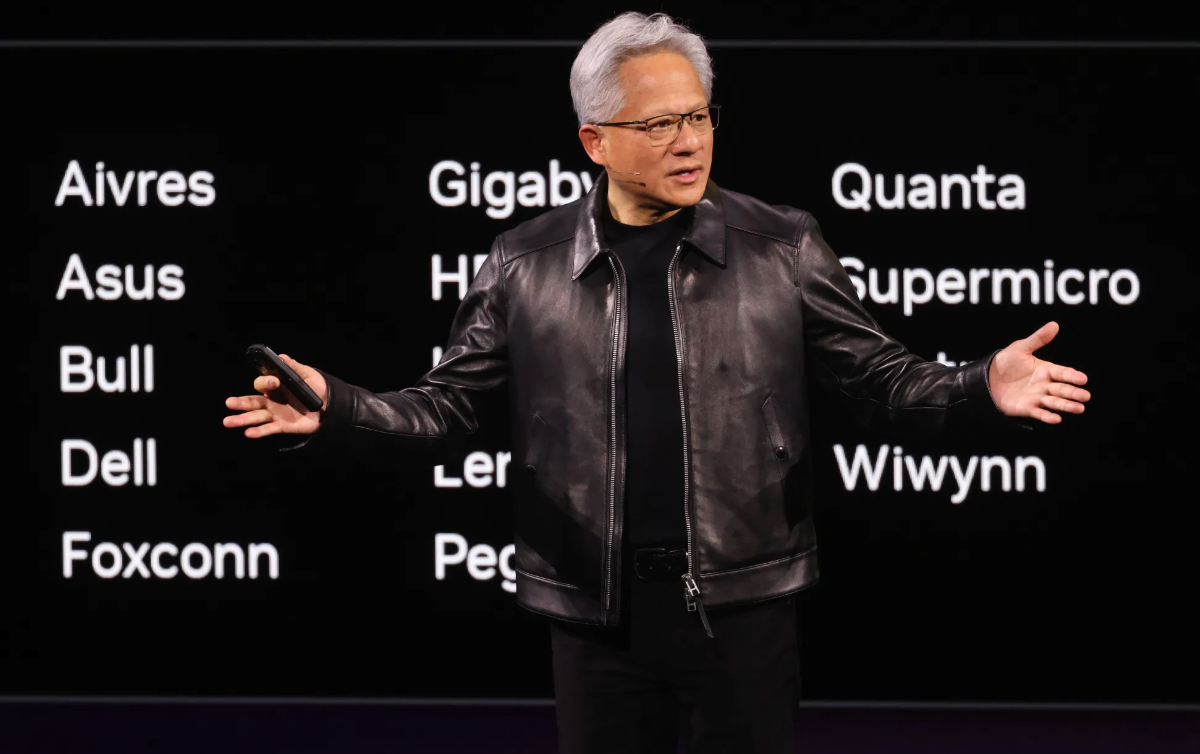
Conclusion: for commercial application it is Anthropic; for infrastructure risk, Nvidia still matters. CFRA's Angelo Zino said: "This IPO is extremely important because Anthropic may be the best gauge of the health of the entire AI ecosystem. In my view, their take on how to monetize AI is now as important as—or even more important than—Nvidia's, given that Jensen Huang is no longer at the helm."
The contrast is personal as well as strategic. Tech stocks have dropped over the past month; even with the US midterms over, the AI trade stayed clouded. The result hands the next Congress to a Democratic Party unfriendly to tech, and Huang's forced exit added uncertainty. Huang had been the constant cheerleader of AI since the wave began four years ago, until reports of multiple extramarital affairs emerged.
News of that kind drove Nvidia's worst week since the tariff-driven sell-off under Trump in April 2025, and forced Wall Street to re-rate the AI outlook. If investors now demand confidence from Amodei rather than Huang, they will see a study in contrasts: the Nvidia chief a globetrotting star in his Tom Ford black leather jacket, the Anthropic co-founder low-key and academic.
The gap runs deeper than clothing — Amodei has warned of existential risk from AI, while Huang's public persona is relentlessly upbeat. The split sharpened last week when Anthropic declined subscription orders from institutional investors in mainland China and Hong Kong, even as Huang long championed Nvidia's push into China.
Allspring Global Investments' Mike Smith said: "Market expectations are clear, and very high; the question is whether the company can stay on the trajectory needed to meet them." He added: "Unfortunately for them, trillions of dollars are riding on their shoulders. It is one of the key bellwethers of whether AI commercialization can succeed."
FAQ: the questions we hear most from APAC readers
Q: Should a founder re-mark their AI startup off this IPO?
A: Yes, but as a ceiling. US$1.4 trillion is the reference; the US$2 trillion chatter is not a guide. Bokeh Capital Partners' Kim Forrest said: "Anthropic could become the most important company in the public market, because it will be the archetypal representative of AI's commercial applications. In fact, from the very beginning, everyone's attention should have been on the companies that use AI and use AI chips."
Q: Can an APAC angel buy in directly?
A: Mainland China and Hong Kong institutions were excluded; other APAC investors are chasing indirect routes that may not get allocation. Check a vehicle's actual access before writing a cheque.
Q: When will this stop being a cash-burn story?
A: Goldman Sachs models full-year free cash flow turning positive in 2030. Allspring's Smith said: "In my view, nothing matters more right now than watching whether the infrastructure already built can actually be monetized. To make this really work, they have to generate more revenue than anyone else within two to three years."
Q: Is this just a leadership cult around Amodei?
A: Partly narrative, mostly numbers. The roadshow matters, but so do quarterly filings. Goldman Sachs and Morgan Stanley are underwriting; subscription books were due to close on Tuesday — the same day Nvidia reported earnings and held its first call since Huang left the CEO role. This week's focus is fixed on Anthropic.
Q: Why the grand ambitions?
A: Amodei told Dimon last Friday: "I hope we can ultimately prove the skeptics wrong, and let humanity look at every disease you can think of—heart disease, Alzheimer's, cancer—the way we now view plague or smallpox, as things of the past. That may sound overly idealistic, even a bit crazy, but I truly believe—I truly believe—it can be done."
Three common misconceptions
- "A record raise means cheap money." US$90.4 billion across IPO and placement comes with US$71 billion due by September 2027 and US$900 billion of commitments through 2045.
- "All ARR is equal." Related-party demand and vendor financing can inflate the number; enterprise token consumption and margin quality matter more.
- "APAC can buy like Wall Street." Access is region-gated. Treat indirect funds with care.
Your localisation checklist (APAC edition)
- Channel: in Japan, lead with relationship-led, face-to-face introductions; in Indonesia, WhatsApp-first distribution; in Singapore, institutional sponsors. The same AI pitch needs a different route to capital in each market.
- Currency and terms: mark rounds against the US$1.4 trillion ceiling, not the US$2 trillion rumour; price in USD but hedge local-currency exposure.
- Access: confirm whether your fund vehicle has direct allocation or is an indirect proxy before committing.
- Diligence: split ARR into enterprise versus related-party, track delivered compute and gross margin, and model cash outflows out to 2030.
- Patience: align LP expectations with a 2030 free-cash-flow timeline, not the next quarter.
For the wider set of decisions facing every founder, angel and fund, see our IPO-week decision questions for founders, angels and funds.
Sources
- Bloomberg — Anthropic IPO share orders from China said to be rebuffed: https://www.bloomberg.com/news/articles/2026-11-13/anthropic-ipo-share-orders-from-china-are-said-to-be-rebuffed
- Nikkei Asia — Asian investors chase indirect access to Anthropic shares: https://asia.nikkei.com/business/markets/trading-asia/asian-investors-chase-indirect-access-to-anthropic-shares-amid-ipo-fever
- Reuters — Anthropic's soaring sales, steep losses put AI frenzy to IPO test: https://www.reuters.com/legal/transactional/anthropic-opens-books-ais-explosive-growth-staggering-costs-2026-10-26/
- NEPC — When Private AI Goes Public: https://www.nepc.com/when-private-ai-goes-public-anthropic-ipo-poses-new-test-for-institutional-investors/
- Goldman Sachs forecasts, via KuCoin: https://www.kucoin.com/news/flash/goldman-sachs-forecasts-anthropic-s-2030-revenue-to-reach-685-billion-150x-2025-estimate
Author: Ethan Rivera — APAC Tech Observer, Regionalist desk, APACTechDigit. Contact: contact@apactechdigit.com