
Anthropic's $1.75 Billion Founder Sale Before November 18: A Decision Guide for VCs, Angels and Pre-IPO Founders
Direct answer first: seven Anthropic co-founders will sell about $1.75 billion of stock in the initial public offering that opens next week — roughly $250 million each, measured at the midpoint of the price range. At that same valuation, the Bloomberg Billionaires Index puts each founder's personal net worth at about $18 billion.
In the operating companies I sit with, the argument on the eve of a liquidity event is almost never about the product or the pitch deck. It is about who owns the number: the revenue leader who booked the pipeline, the finance chief who has to defend a float, the founders who want cash now, and the board that has to live with the story afterwards. This week's filing turned that private argument into a public one.
Tuesday's updated prospectus shows San Francisco-headquartered Anthropic seeking up to $90.4 billion through the offering plus private placements, at a valuation of about $1.4 trillion. Under the terms seen so far, pricing lands on November 18, with the shares expected to start trading the next day.
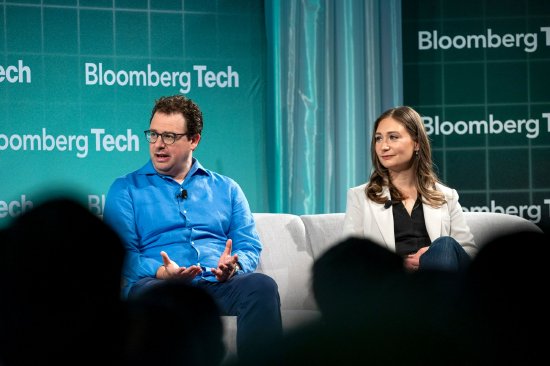
Anthropic co-founders Dario and Daniela Amodei
What is actually being sold — and what it is not
Conclusion first: this is a scheduled, disclosed distribution by seven named insiders, not a dash for the exit.
- Size. Roughly $1.75 billion across the seven co-founders, or about $250 million each at the midpoint of the offer range.
- Timing. The shares leave inside the offering itself, cleared by the same book that sets the price, instead of being dumped into the aftermarket months later.
- Residual skin. A net worth near $18 billion per founder, per the Bloomberg Billionaires Index, is the difference between diversifying and walking away.
- Control. The filing keeps founder voting control in place, while the co-founders' letter repeats a pledge to give away 80% of their personal equity and states that their increased voting power is not permanent.
Why that much insider selling may not scare buyers
Conclusion first: two things defuse the signal — the scale of the deal, and an investor base that has stopped reading founder sales as betrayal.
Selling by founders during a public offering, especially at this size, can look like a bearish tell. Jay R. Ritter, an emeritus professor at the Warrington College of Business at the University of Florida, does not expect that reaction here: given the relative size of this IPO and the changed attitude the market now has toward insider selling, he considers it unlikely that these sales will scare off potential buyers.
The plumbing explains the difference. Standard lock-ups bar insiders from selling for three to six months and often carry milestone windows for partial early release; Business Insider's late-October breakdown of Anthropic's unusually layered share-lockup plan made exactly that machinery the story. When holders know the date and the quantity, an insider sale stops being a rumour and becomes a calendar entry.
For a fund, that distinction is the transferable lesson. A sale printed in a prospectus is a question about aftermarket depth. A sale discovered later is a question about trust — and trust is the only asset you still hold when marks move against you.
Is $1.4 trillion a price or a promise
Conclusion first: the filed ceiling reads as a clearing price, not the number anybody on either side of the table originally wanted.
- The book. Anthropic set its offer at 825 million shares in a $70 to $78 range, as CNBC reported on November 10, which is how the raise reaches the up-to-$90.4 billion figure once private placements are stacked on top.
- The multiple. PitchBook data republished by Morningstar placed the annualised revenue run rate above $65 billion by late July. My own arithmetic on those two figures puts the filed ceiling at roughly 20 times that run rate — an entry price that leaves very little slack for a soft first year in public hands.
- The drift. The Wall Street Journal reported institutional investors pressing for a $1.5 to $1.6 trillion valuation, well below the near-$2 trillion optimism some backers had carried into the process.
We ran the same numbers against portfolio marks in our breakdown of what a $1.5 trillion to $1.6 trillion floor changes for founders, angels and fund marks.
What each reader should actually underwrite here
Conclusion first: the same filing is four different decisions, depending on what you hold and what your clock looks like.
| Position | What you really own | Decision before November 18 | What I would watch |
|---|---|---|---|
| Growth VC on a 2023–24 basis | A mark and an exit clock | Whether this clears your cash-return test or only refreshes the headline valuation | Distribution timing, not the ticker |
| Angel or seed holder | A thin, hard-to-trade position | Sell into this demand or ride the float | The discount or premium versus the offer price you can actually get |
| Founder or CFO of a pre-IPO company | Concentrated paper and a public story | What you sell, what you disclose, what you keep | A written liquidity policy that exists before the filing, not after |
| Employee with options | A release schedule, not a price | After-tax reality and tranche dates | Blackout windows and milestone release dates |
| Crossover or index buyer | A fresh float | Whether supply survives the first insider release | Volume around each unlock milestone |
One correction to the usual framing: a listing is one door out of several. J.P. Morgan Private Bank's growth-equity research puts roughly 60% of US venture exits by value in buyouts and acquisitions, and notes that more than half of late-stage growth rounds in the six months to September 2026 carried a secondary component. Read this IPO as a reference price for that whole exit stack, not as the only way a position closes.
Four misconceptions that keep showing up
- "The founders are selling, so nobody believes it." About $250 million against a net worth of roughly $18 billion each is concentration management, not abandonment.
- "A $90.4 billion raise is $90.4 billion of growth money." Separate primary from secondary proceeds before you model anything; cash handed to selling holders never reaches the operating budget.
- "Valuation is the return." Entry multiple and holding period are the return. A high print with a long clock is a low outcome.
- "Day one is the finish line." For most early holders the finish line is cash out of the fund, and the first real test of this deal sits in the lock-up calendar, not the opening trade.
FAQ: the questions that landed in my inbox this week
Are the seven co-founders really taking $1.75 billion out at once?
Yes — inside next week's offering, at roughly $250 million each using the midpoint of the price range. That is disclosed in Tuesday's prospectus, which is the point: it is a priced, published transaction rather than a quiet secondary.
Does founder selling at this scale mean the deal is overpriced?
Not on its own. Ritter's read is that relative deal size and a changed investor attitude make these sales unlikely to frighten buyers. Judge pricing against the multiple you are paying and the depth of the aftermarket, not against the fact that insiders took money.
Will the offering still go ahead if the tape stays weak?
The current terms answer that operationally: pricing on November 18, trading the next day. Sentiment is the open variable — prediction-market traders on Kalshi had swung from close to 90% odds of a listing this year to under 60% earlier in November, a move we tracked in our Q&A on the below-60% listing odds and the $1.2 trillion talk.
What should a Series B founder copy from this, and what should they skip?
Copy the disclosure discipline: a written schedule of who may sell, when, and in what size. Skip the theatre — a liquidity calendar published on someone else's timeline is not a strategy for yours.
Should LPs change what they ask their managers?
Ask one question differently: not "what is your mark" but "what is your path to cash between now and your next fund raise". This deal sharpens that question for every AI-heavy portfolio.
Close with a map: five stages to run before your own pricing day
- Twelve months out — set the incentive arithmetic. Agree in writing who is paid on bookings, who on retention and who on free cash flow. If the founders' personal outcome and the company's reported outcome move in different directions, that gap shows up later as a story problem, not a spreadsheet problem.
- Six months out — fix the secondary policy. Right of first refusal, cap per holder, approved buyer list, one price reference. Decide it before anyone has a reason to negotiate it.
- Ninety days out — design the release calendar. Lock-up length, milestone windows, blackout rules, and the exact language you will publish. Ambiguity here is what turns an ordinary sale into a headline.
- Pricing week — separate the ask from the offer. Know which of your proceeds are growth capital and which are liquidity for holders, and be able to say both numbers out loud in the same sentence.
- Day one to day 180 — manage the aftermarket, not the ticker. Publish the calendar again when the first milestone arrives, and keep the reporting cadence you promised. The companies that survive their first unlock are the ones that never made their sellers guess.
The number in this story that should change behaviour is not $1.75 billion. It is the distance between what a company promises its market and what it told its own team they could sell, when. Close that distance first, and pricing day takes care of itself.
Sources referenced
- Anthropic co-founders' letter filed with the IPO documents: https://ipo.anthropic.com/documents/us/founders-letter.pdf
- CNBC, "Anthropic sets price range of $70 to $78 in upcoming IPO" (November 10, 2026): https://www.cnbc.com/2026-11-10/anthropic-sets-price-range-of-70-to-78-in-upcoming-ipo.html
- The Wall Street Journal, on institutional investors pushing for a valuation closer to $1.5 trillion: https://www.wsj.com/finance/stocks/anthropic-investors-push-for-cautious-valuation-closer-to-1-5-trillion-2f2df9cf
- Morningstar, PitchBook commentary on Anthropic's financials and the revenue run rate: https://global.morningstar.com/en-eu/markets/pitchbook-anthropics-leaked-financials-reflect-fast-growth-not-2-trillion-valuation
- Business Insider, explainer on Anthropic's share-lockup structure: https://www.businessinsider.com/anthropics-stock-lockup-ipo-valuation-ant-dario-amodei-2026-10
- J.P. Morgan Private Bank, "4 reasons for a resurgence in growth equity": https://privatebank.jpmorgan.com/latam/en/insights/markets-and-investing/ideas-and-insights/4-reasons-for-a-resurgence-in-growth-equity