
Anthropic IPO Q&A: Below-60% Listing Odds and $1.2 Trillion Talk — What Founders, Angels and VCs Should Decide
Short answer: stop underwriting a November listing as the base case. Kalshi traders cut the odds of an Anthropic IPO this year from nearly 90% before the U.S. midterms to below 60%; investor discussion slid from about $2 trillion to a $1.2 trillion–$1.3 trillion band; and Claude Code lost three key people within two weeks. For venture readers the question is not whether the technology is strong, but what a reset price means for your own round, secondary marks and exit model.
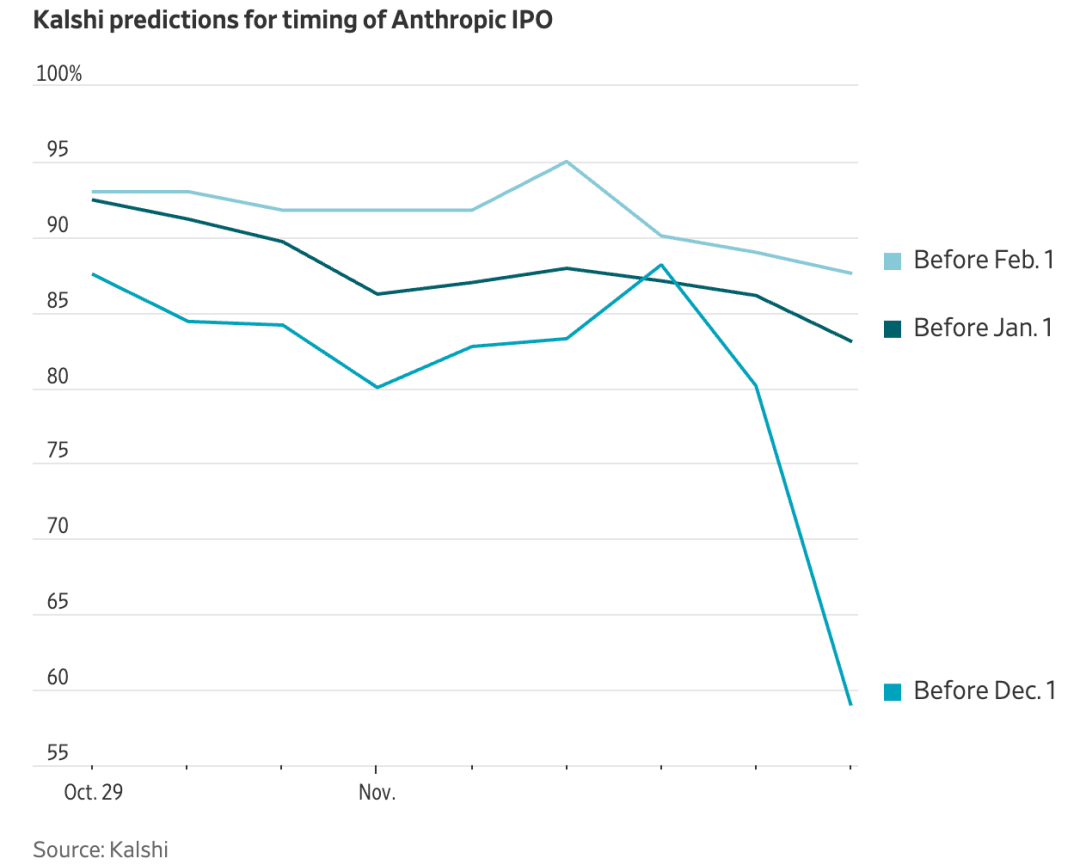
What changed in two weeks — four signals ranked by decision value
Conclusion first: the repricing is driven by three independent inputs that hit in sequence — slowing growth disclosure, an equity-market drawdown, and a talent story. Any one of them is manageable; together they moved the expected clearing price.
- Probability: foreign media reported that Kalshi participants repriced a same-year IPO from close to 90% to below 60%. Kalshi runs a U.S. CFTC-regulated exchange for event contracts, which is why fund desks increasingly treat its odds as a semi-professional sentiment read rather than novelty betting (Galaxy Research).
- Price: valuation expectations discussed at Anthropic's October 14 investor day and afterwards fell from about $2 trillion to $1.5 trillion, then to $1.5 trillion–$1.6 trillion, and now to $1.2 trillion–$1.3 trillion, with some pushing toward $1.1 trillion.
- Market: on November 5, U.S. equities sold off across the board, and the AI chain led the retreat.
- People: on U.S. time November 3, Claude Code former product lead Cat Wu left after about two years at Anthropic; two days later she joined OpenAI, reporting to Tibo Sottiaux. The same day, Austin Lau, Anthropic's first growth marketing hire, also announced his move to OpenAI.
A second prediction venue tells a similar story: Polymarket odds on Anthropic's eventual IPO valuation cluster between $1.5 trillion and $2 trillion rather than at the top of that range — useful corroboration that the reset is a market-wide judgement, not one exchange's order flow.
Why is the valuation being cut from $2 trillion to $1.2 trillion?
Conclusion first: growth deceleration reset the multiple, and the equity drawdown reset the discount rate applied to it.
Anthropic's own numbers are still strong. Disclosed at the October 14 investor day, third-quarter revenue rose about 45% sequentially to $16.8 billion, but that was a sharp slowdown from roughly 145% sequential growth in the second quarter. The prospectus update on November 2 put the quarter at $16.956 billion, up about 47%, alongside long-term compute purchase and lease commitments of $895.4 billion. Reporters at the investor day left with a lower number: the next day, media reported that some investors moved their IPO valuation expectation from about $2 trillion to $1.5 trillion, and $500 billion of expected value evaporated before a single share was sold.
| Node | Who is talking | Valuation discussed | Trigger |
|---|---|---|---|
| September this year | Deal chatter | Up to $2 trillion | Peak growth narrative; the $2 trillion figure flashed only in September this year |
| October 14 and the next day | Investor-day attendees | About $2 trillion → $1.5 trillion | Q3 revenue up about 45% vs about 145% in Q2 |
| November 2 | Prospective IPO buyers | $1.5 trillion–$1.6 trillion | Prospectus update; commitments of $895.4 billion |
| November 5 | Institutional buyers | $1.2 trillion–$1.3 trillion, some $1.1 trillion | U.S. equity and AI-chain sell-off; doubts about a roadshow in the week of November 9 and a listing inside November |
| Still pending | Wait-and-see buyers | Undecided | October revenue not separately disclosed in the November 2 prospectus update |
Scale compounds the problem. Anthropic was previously expected to raise as much as $100 billion in a trillion-dollar IPO, a size that requires deep institutional demand. If subscription does not clear, the company has to choose: accept a lower valuation, shrink the raise, or wait for calmer markets. Anthropic has published no official offer price or listing date; the prospectus only states that the company "plans to conduct a public offering as soon as possible after the SEC registration statement becomes effective," and the November timetable came from people familiar with the matter. Anthropic declined to comment.
How does a bad week in the stock market change a private IPO price?
Because institutional subscribers mark new issues against listed comparables — and those comparables fell hard.
On November 5, the Dow fell 1,833 points in a single day, down 3.44%; the S&P 500 dropped 4.36%, its worst day since the April 2025 U.S. tariff shock; and the Nasdaq Composite fell 5.52%, its largest one-day loss in 19 months. The Philadelphia Semiconductor Index sank about 12.3%, its biggest single-day drop since March 2020. Nvidia fell about 9% and AMD about 17%. Neocloud names took the direct hit: CoreWeave dropped about 10% and Nebius about 15%, with both shares halved from their October 6 highs. Microsoft declined 3.6%, while Amazon and Alphabet each fell 2.2%.
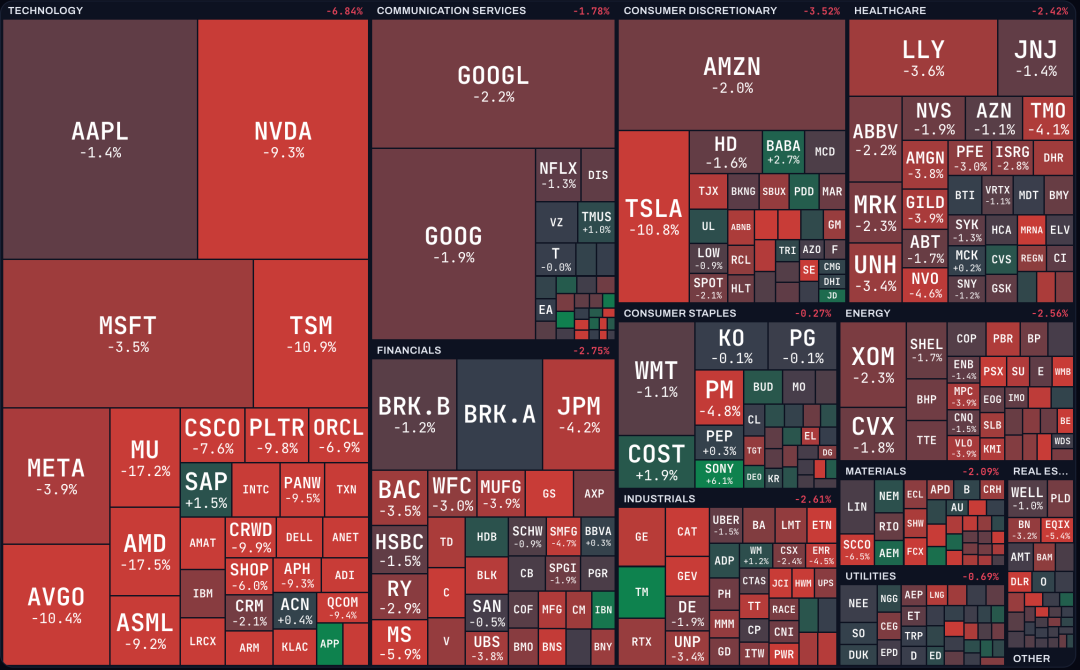
Politically, the selling had a local angle. One main trigger was concern that the new U.S. Congress and local governments could constrain AI data-center construction, because power draw, water use and infrastructure strain have become live issues in U.S. local politics. UBS estimates that about 30% of the data-center capacity the United States had scheduled to add by 2028 could be affected by potential construction pauses.
For pricing, the transmission is mechanical: buyers judge an IPO against listed tech valuations, earnings expectations and overall risk. If AI-linked stocks re-rate lower, even funds that remain bullish on the long-term case can demand a bigger discount or write down their commitment.
Do the Claude Code departures change the investment case?
Conclusion first: three important Claude Code members leaving within two weeks matters less for product continuity than for the talent-conviction signal Anthropic put in its prospectus.
Anthropic wrote that its overall "regretted attrition" rate was only about 1% over the 12 months ending September 30 — a statistic that does not yet capture departures since late October. Cat Wu helped turn Claude Code from an internal experiment into a commercial product; Austin Lau built Claude's user-growth system, and in January this year Anthropic itself highlighted how he used Claude Code to build marketing tooling, cutting creative production from 30 minutes to 30 seconds. Both men joined the rival that Anthropic is fighting for enterprise budgets.
Neither has tied the exit to IPO conditions, and Cat Wu said explicitly that the ability to sell shares early was not a factor in her decision. That claim is worth stress-testing against the liquidity record. Bloomberg reported that an employee tender offer completed in April 2026 at a $350 billion valuation fell short of the roughly $6 billion investors had lined up, because staff chose to hold ahead of a listing; Business Insider reported in August 2026 that secondary trades were being bid as high as $1.5 trillion, well above the $965 billion May 2026 round. "The few sellers on our books are around $1.5 trillion. Even at that number, there aren't a lot of sellers out there," said Glen Anderson, chief executive of Rainmaker Securities. When the illiquid upside is that large, a senior departure is a stronger conviction signal than the 1% headline number.
OpenAI vs Anthropic: how do the two financing paths compare now?
Same investor pool, same discount, different instruments.
| Dimension | Anthropic | OpenAI |
|---|---|---|
| Instrument | IPO, previously expected to raise up to $100 billion | Private round, accelerated to lock in money before Anthropic lists |
| October 19 | Investor day figures circulating; roadshow expected in the week of November 9 | Raising about $30 billion at a target valuation above $1.4 trillion |
| October 30 | Valuation expectations at $1.5 trillion–$1.6 trillion | Target cut to about $20 billion and a $1.25 trillion valuation |
| November 5 | Investors question the roadshow week and a listing inside November; some want $1.1 trillion | — |
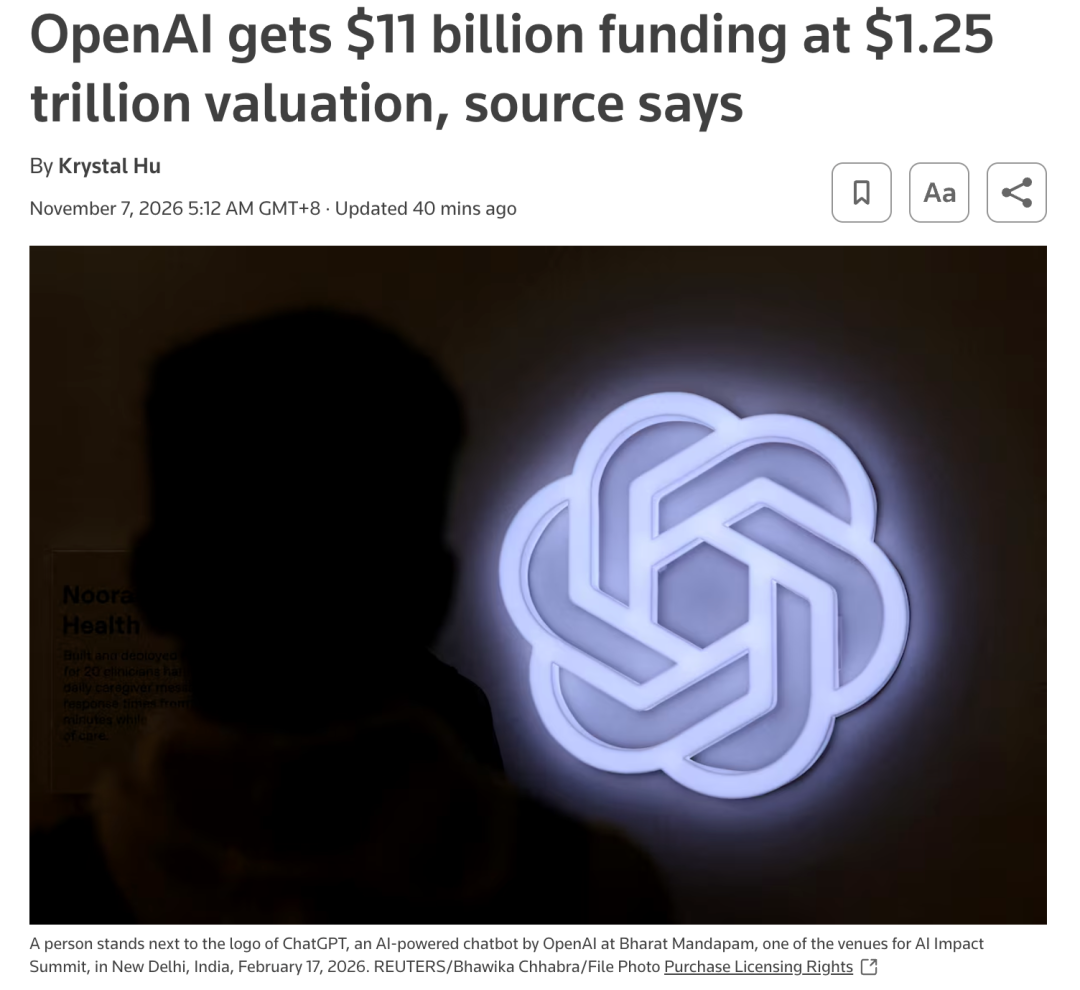
| November 6 | Investors discussing $1.2 trillion–$1.3 trillion | First tranche of about $11 billion reportedly closed; rest still being raised |
If the IPO slips, is Anthropic running out of money?
Conclusion first: no immediate cash squeeze, but the option value of a listing is not free.
The latest prospectus shows about $131.9 billion in cash and short-term investments as of September 30 — a substantial buffer. The exposure sits on the obligation side: nearly $900 billion of long-term compute purchase and lease commitments, with about $69.8 billion due before the end of September 2027. If financing costs keep rising and new capital is slow to arrive, the company may have to slow expansion or restructure investment plans — and the data-center, chip and lending counterparties that booked future orders would feel it too. Missing one listing window is recoverable; a change in how public markets value AI economics is not.
Who else left the listing queue — and what does a priced Anthropic deal prove?
Anthropic is now one of the few AI names still attempting to list. As of October 22, data-center operator Switch, AI infrastructure company Nscale and SoftBank-backed SB Energy had all postponed IPOs, while Nvidia-backed Firmus and Blackstone-backed AirTrunk REIT withdrew or suspended offerings. At the time, some companies were reportedly unwilling to compete with Anthropic for institutional money and attention, since many large investors still see it as one of the few chances to invest directly in a frontier AI company. Two weeks later, Anthropic's own timetable is in question.
OpenAI and Anthropic still lack a public-market comparable, and Anthropic was set to become the first frontier model lab listed on a U.S. exchange. If it prices, investors finally get a live reference for revenue growth, profitability and compute cost — which is precisely what deep-tech underwriting has been missing. We mapped that problem in a different category in our file on how venture capital underwrites deep tech before revenue. Morningstar's base case is that the debut "will cast a long shadow over private AI stocks," noting secondary bids on Anthropic shares reached $2.0 trillion and then fell to a more recent $1.5 trillion range: "Expectations for those companies come down, or the market decides Anthropic's valuation assumed too much."
Decision playbook: what founders, angels and GPs should do this month
- Re-mark pre-IPO AI positions. If your carry model assumes a $1.5 trillion print, run it again at $1.2 trillion and at $1.1 trillion. A 20%–40% valuation gap between primary entry and exit changes DPI far more than a six-month timing delay.
- Test secondary pricing, don't trust it. April's tender cleared below the $6 billion investors offered; August's secondary bids printed $1.5 trillion. Both were supply-constrained auctions, not demand curves.
- Founders: reset expectations on the next round. If Anthropic and OpenAI both accept markdowns in the same fortnight, growth-stage term sheets in the same investor pool will follow within a quarter.
- Build IPO-contingent terms. Expectation step-ups, secondary windows and lock-up-linked tranches are now worth negotiating explicitly — Anthropic's employee liquidity story shows how much behaviour shifts around a listing.
- Diversify AI beta away from model labs. Index data shows the drawdown hit compute and infrastructure first: about 12.3% in the Philadelphia Semiconductor Index, about 17% in AMD, about 10% in CoreWeave and about 15% in Nebius.
- Watch one number, not the headlines. Investors are explicitly waiting for October revenue to see whether growth re-accelerates after the third-quarter slowdown.
Common misconceptions about the Anthropic IPO signals
- "A valuation cut means the business broke." Revenue still grew about 47% sequentially to $16.956 billion. The debate is about the multiple, not the direction.
- "A delay means a cash crisis." About $131.9 billion in cash and short-term investments says otherwise; the risk is commitment-driven, not payroll-driven.
- "Prediction markets are gambling noise." Kalshi is a CFTC-regulated U.S. event-contract exchange, and its odds moved the same direction as institutional conversations.
- "Two employee exits equal a talent collapse." The prospectus still reports about 1% regretted attrition over the past 12 months — but that window closes before late October.
- "Whoever lists first wins the narrative." Switch, Nscale, SB Energy, Firmus and AirTrunk REIT show the queue is thinning, which raises the scrutiny on the one deal still standing.
FAQ: short answers on the Anthropic IPO reset
Has Anthropic confirmed a listing date or price?
No. There is no official offer price or trading date; the company only states that it plans to conduct a public offering as soon as possible after the SEC registration statement becomes effective. The roadshow in the week of November 9 and a listing inside November came from people familiar with the matter, and by November 5 some potential investors were doubting both. Anthropic declined to comment.
Which valuation range should a VC use today?
Treat $1.5 trillion–$1.6 trillion as the range institutions asked for on November 2, $1.2 trillion–$1.3 trillion as the range being discussed after the November 5 sell-off, and $1.1 trillion as the aggressive tail some buyers still wanted.
Is the Anthropic story about AI demand or AI supply costs?
Both, but investors are pricing the second. The company buys compute at scale and sells AI services directly to enterprises and consumers; the open question is whether that spending converts into durable revenue and profit. The $895.4 billion of long-term commitments and the near-$900 billion total obligation are what make the revenue curve so sensitive.
What does the OpenAI round tell me about my own raise?
Speed matters more than size now: OpenAI moved from about $30 billion at above $1.4 trillion on October 19 to about $20 billion at $1.25 trillion by October 30, reportedly closing a first tranche of about $11 billion on November 6. Cash that was marketed as a growth premium was re-sold as certainty within two weeks.
What should I read next on the timing risk?
Our Q&A on whether Anthropic can defend a $1.5 trillion IPO in the week before Thanksgiving breaks down the same three-investor account, including the call to postpone.
Sources
- Galaxy Research on Kalshi's status as a CFTC-regulated U.S. event-contract exchange — https://www.galaxydigital.io/insights/research/weekly-top-stories-6-27-25
- Polymarket market "What will Anthropic's IPO valuation be?" — https://polymarket.com/event/what-will-anthropics-ipo-valuation-be
- FinanceFeeds summary of Reuters reporting on the $1.5 trillion valuation discussion after the October 14 investor day — https://financefeeds.com/anthropic-ipo-valuation-1-5-trillion-not-2-trillion/
- Bloomberg on Anthropic's completed employee tender offer at a $350 billion valuation — https://www.bloomberg.com/news/articles/2026-04-08/anthropic-completes-tender-offer-but-employees-hold-onto-shares
- Business Insider on secondary-market bids of about $1.5 trillion and the May 2026 round at $965 billion — https://www.businessinsider.com/anthropic-1-5-trillion-valuation-on-secondary-markets-2026-8
- Morningstar on the IPO's read-across to private AI stocks — https://www.morningstar.com/stocks/anthropics-wall-street-debut-cast-long-shadow-over-private-ai-stocks
- SEC EDGAR full-text search for the registration statement referenced above — https://www.sec.gov/edgar/search/
- Anthropic newsroom, including the January post on Claude Code marketing workflow — https://www.anthropic.com/news