
OLED Reaches Apple's Mid-Tier Tablet: Reading the 2027 iPad Air Rumour for Asia-Pacific Buyers
Apple is expected to move the iPad Air to OLED in the first half of 2027, taking both sizes off LCD at once — but without ProMotion, so the payoff lands unevenly across our region. In Tokyo, higher contrast and a thinner panel justify a mid-cycle refresh for content teams; in Jakarta or Mumbai, a 60Hz OLED still loses to a price cut. Here is what the supply-chain reporting actually supports.
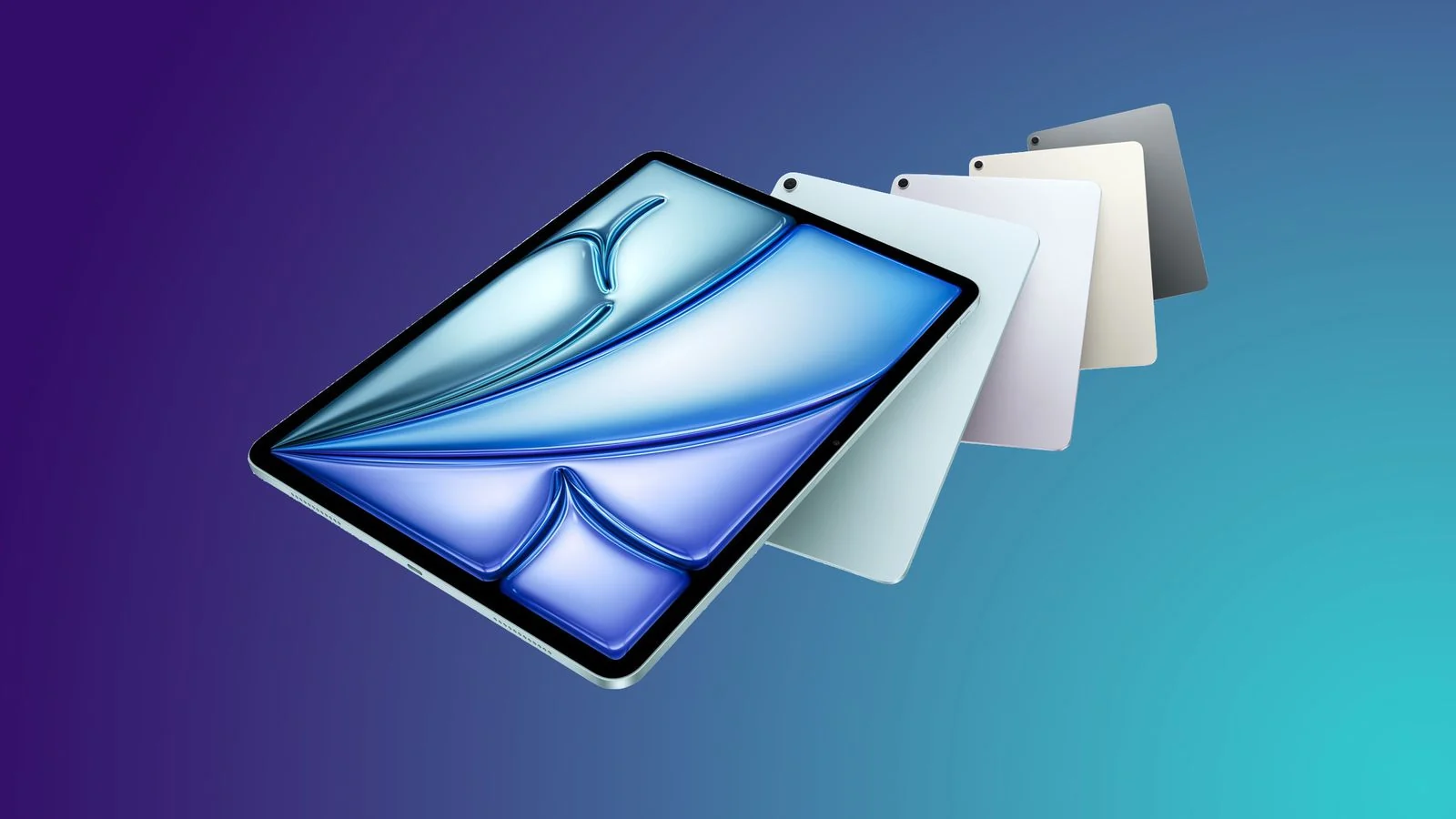
What is being reported, and how firm is it?
The iPad Air display story has now been running for more than a year. In October 2025 the first reports said Apple was developing an OLED iPad Air and that launch would not come earlier than 2027. Newer supply-chain accounts narrow that window to the first half of 2027, extend the switch to the full line so that two sizes leave LCD behind together, and add what the early chatter lacked: a panel-supplier split plus shipment forecasts.
Read it as a supplier signal, not an Apple announcement. No date is confirmed, and the same rumour stream has drifted by quarters before.
Why the launch window is set in a fab, not in Cupertino
Samsung Display is lined up to carry most of the OLED panel work for the iPad Air. BOE is still chasing the order for one of the two size models, but has yet to pass Apple's supplier qualification. Reporting from The Elec on 13 October 2026 explains why that step takes so long: glass substrates have been cracking repeatedly at BOE's B16 8.6-generation IT-OLED line in Chengdu for roughly six months, and even two or three broken substrates in 1,000 can stall a mass-production ramp.
Capacity is moving on the other side, too. The Elec reported in July 2026 that Samsung Display is adding around 15,000 substrates a month of IT-OLED capacity at its A4 plant in Asan. If Samsung wins both the iPad Air and iPad mini orders, it stands to become the largest supplier of OLED iPad panels to Apple, while LG Display is expected to keep leading iPad Pro OLED supply.
Our regional read: a dual-sourced panel line rarely reaches every market at the same time. Expect early Japan, Korea, ASEAN and Australia units to come from the qualified supplier first, with a second-sourced size arriving later or in narrower channels. That part is analysis, not reported fact.
Do the shipment numbers fit the real OLED tablet market?
- OLED iPad Air: 4 million to 5 million units forecast for 2027
- OLED iPad mini: 4 million to 5 million units
- OLED iPad Pro: roughly 3 million to 4 million units
- Both the iPad Air and iPad Pro counts cover two screen-size models.
iPad Pro's current forecast sits clearly below the roughly 10 million units a year target set before its launch, and industry figures point to its higher price as a major reason demand has underdelivered.
Category context from outside Apple: Omdia estimated tablet OLED panel shipments at about 10.9 million units in 2025 and forecast 15 million in 2026, a 39% increase credited almost entirely to Apple's transition. Counterpoint Research's display tracker expects tablet OLED shipments to grow 13% in 2026 even as component inflation hits other device classes. Summing the three Apple forecasts gives 11 million to 14 million OLED tablets in 2027 — by our arithmetic, close to the whole OLED tablet market of 2026. In Asia-Pacific terms, any brand that has not locked IT-OLED allocation is now bidding against Apple on the same production lines.
What Apple is deliberately keeping for the iPad Pro
The M4 iPad Air still ships with an LCD display. If this upgrade goes ahead, iPad Air becomes the third iPad line to use OLED: the iPad Pro adopted the technology in 2024, and the new iPad mini with an 8.5-inch OLED panel went on sale this November.
| Spec | OLED iPad Air (reported) | OLED iPad Pro |
|---|---|---|
| Emissive structure | Single-layer (single stack, similar to the OLED iPad mini) | Double-layer (two-stack tandem) |
| Backplane | LTPS (low-temperature poly-silicon) | LTPO (low-temperature polycrystalline oxide) |
| Refresh rate | Expected to stay at 60Hz | ProMotion, variable 10Hz to 120Hz |
The backplane is where the difference is felt in use. LTPO's oxide transistors let pixels hold charge longer between refreshes, so a static page can refresh far less often and burn less power; that is what enables the iPad Pro's ProMotion system to move between 10Hz and 120Hz. With the OLED iPad Air expected to remain at 60Hz, high refresh stays a Pro-exclusive feature and Apple's tablet tiering holds.
Panel makers are also trying to close the brightness gap by process rather than by adding a second emissive layer — Samsung Display and LG Display are reportedly exploring new routes involving high-mobility oxide, sputtering and atomic layer deposition, a shift we tracked earlier in our breakdown of Apple's OLED manufacturing shift and what iPhone and iPad buyers should expect.
What a 60Hz OLED is worth in each Asia-Pacific market
Start from the price floor Apple holds today: the M4 iPad Air sells from $599 for the 11-inch model and $799 for the 13-inch model, according to Apple's March 2026 newsroom. OLED panels cost more than LCD, and Counterpoint's deputy director David Naranjo has noted that rising memory costs are forcing OEMs to prioritise higher-margin devices while rationing price-sensitive ones. That is an awkward combination for a mid-tier line whose entry price is the reason fleets buy it.
- Japan: OLED is a refresh argument for creators and education pilots, where contrast, HDR video and a thinner chassis are evaluated in showroom visits and vendor demos. The 60Hz limit is tolerable until the price moves.
- ASEAN and India: purchases are decided on landed price and instalment terms, often through chat-group reseller channels rather than storefront demos. If the OLED Air pushes the entry tier upward, buyers will hold M4 LCD units a cycle longer.
- Korea and Australia: the Air is the Pro substitute for note-taking and mobile office work, so single-stack OLED plus 60Hz is the exact configuration where reviewers will ask what ProMotion is worth.
- Fleet, kiosk and classroom MDM buyers region-wide: long static display time shifts risk from battery to panel life. Our note on RTINGS' 18,000-hour WOLED result for Asia-Pacific screens is worth reading before signing multi-year refresh contracts.
Action checklist before the first half of 2027
- Do not schedule a 2026–2027 fleet upgrade around a display rumour; qualify on price, storage tier and warranty terms, all of which are already known.
- If your teams use Apple Pencil for mark-up, lecture capture or timed exams, test whether 60Hz is acceptable now — the reports do not suggest ProMotion is coming to the Air.
- Ask resellers which panel supplier and which of the two size models are allocated to your market; early batches in APAC are usually size- and quarter-specific.
- Lock pricing or purchase volumes before memory-driven adjustments ripple into tablets; IDC reported a 31.6% year-on-year drop in US tablet shipments in Q2 2026 on the memory crunch, and similar pressure is showing on Asian distribution.
- Put static-image retention terms (burn-in coverage, refresh-cycle caps) into enterprise contracts for any OLED tablet that will run dashboards or signage.
Quick answers
Is the OLED iPad Air confirmed?
No. It is supply-chain reporting, consistent for more than a year since October 2025, with the current version placing launch in the first half of 2027 across two sizes.
Will the OLED iPad Air get 120Hz?
Not according to current reports, which keep it at 60Hz with an LTPS backplane, leaving ProMotion at 10Hz to 120Hz for the iPad Pro.
How many OLED iPads is Apple expected to ship?
4 million to 5 million units each for the OLED iPad Air and OLED iPad mini, and roughly 3 million to 4 million units for the OLED iPad Pro, counting two screen-size models for the Air and the Pro.
Should Asia-Pacific buyers wait?
Wait only if contrast, HDR video or thinness is the reason you buy. If you need a faster panel, more memory at a low price, or a fixed budget for a fleet, the LCD M4 iPad Air is the safer purchase this cycle.
Sources
- Apple Newsroom, "Apple introduces the new iPad Air, powered by M4" (March 2026) — https://www.apple.com/newsroom/2026/03/apple-introduces-the-new-ipad-air-powered-by-m4/
- Counterpoint Research, "Tablet growth pulled forward in 2025; memory cost pressures to weigh on 2026 while OLED advanced tablets accelerate" — https://counterpointresearch.com/en/reports/tablet-growth-pulled-forward-in-2025-memory-cost-pressures-to-weigh-on-2026-while-oled-advanced-tablets-accelerate
- Omdia, "Tandem penetration forecast to reach 36% share of OLED tablet and notebook panel market in 2026" — https://omdia.tech.informa.com/pr/2025/apr/tandem-penetration-forecast-to-reach-36-percent-share-of-oled-tablet-and-notebook-panel-market-in-2026
- The Elec, "BOE struggles with glass substrate cracking at 8.6-gen OLED line" (13 October 2026) — https://www.thelec.net/news/articleView.html?idxno=14560
- The Elec, "Samsung Display to expand 6th-generation OLED line in Asan" (July 2026) — https://www.thelec.net/news/articleView.html?idxno=11820
- DigiTimes, "Samsung Display wins first MacBook order, BOE eyes iPads" (August 2025) — https://www.digitimes.com/news/a20250805PD253/boe-sdc-apple-macbook-ipad.html
Compiled and analysed by Nina Roberts, APACTechBriefing. Contact: contact@apactechdigit.com. Speculation about launch timing and panel allocation remains unconfirmed by Apple.