
APACTechBriefing Deep Dive: What Samsung SDI's Early Atlas Battery Share Means for Asia-Pacific Robotics Supply Chains
Samsung SDI is expected to cover almost all battery demand for Boston Dynamics' Atlas humanoid in the programme's opening phase, with LG Energy Solution also selected but constrained by available capacity, South Korea's The Elec reported recently. Each robot takes 70 cylindrical 2170 cells into a pack of roughly 1.3kWh — about enough for 4 hours of general-duty work — and the cells are expected to roll off an existing Malaysian line that already runs this exact format.
By Lynn Zhou · APACTechDigit | APACTechBriefing — Asia-Pacific technology and digital-supply intelligence for decision-makers.
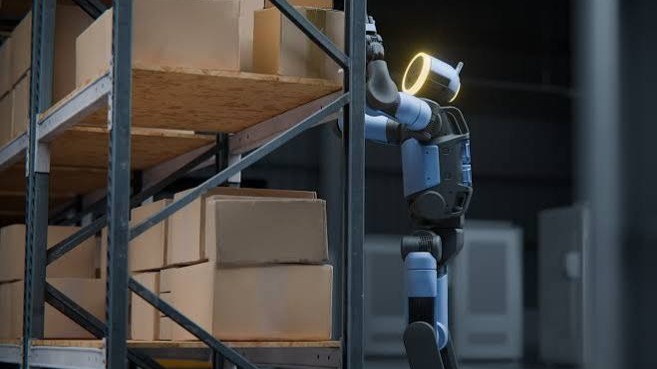
Who wins the Atlas battery slot, and why does it matter?
Conclusion first: this is a "who defines a new category" outcome, not a volume order. Samsung SDI is set to ship nearly all initial Atlas packs while LG Energy Solution waits in the queue.
Per The Elec's report, Atlas will use 70 cylindrical 2170 cells — 21mm in diameter and 70mm tall, each rated 5000mAh — assembled into a battery pack of about 1.3kWh. LG Energy Solution has also been chosen as a supplier, but because demand in the first phase is limited, Samsung SDI is expected to take the bulk of early shipments and keep the leading position for a period.
The strategic motive is as important as the order itself. Bloomberg reported in October 2025 that Samsung SDI was holding talks with humanoid and multi-role robot makers to diversify revenue as US tariffs and soft electric-vehicle demand squeezed its conventional cell business. A flagship humanoid programme therefore buys the company two things: a reference design before the market standardises, and margin optionality outside EV cells.
Programme ownership has also shifted. South Korea's Electronic Times reported that Hyundai Mobis, the parts arm of Hyundai Motor Group, handles Atlas-related work such as actuators, that mass production is planned for 2028 or later, and that Boston Dynamics has already started product-version manufacturing, with Hyundai Motor Group phasing the robot into parts-sequencing duties in vehicle plants from 2028.
How much energy does one Atlas actually carry?
Conclusion first: Atlas runs on a smartphone-sized energy budget, not a vehicle-sized one, and the duty cycle is what makes it workable.
| Specification | Atlas figure | Reference point |
|---|---|---|
| Cell format | 2170 cylindrical, 21mm diameter x 70mm height | Same format used in EVs, power tools and storage cabinets |
| Cells per robot | 70 cells | 5000mAh each, roughly 18Wh per cell |
| Pack energy | About 1.3kWh | Approximately 1.6% of the 84kWh pack in a long-range Hyundai IONIQ 5 |
| Runtime, general duty | Up to 4 hours | Boston Dynamics published product specification |
| Runtime, heavy lifting | About 2 hours | Halves when the robot carries its maximum load |
| Battery swap | About 3 minutes, performed by the robot itself | Autonomous walk to the workstation, no human intervention |
| Recharge | About 1.5 hours | Off-robot charging at the station |
The numbers reconcile cleanly: 70 cells at 5000mAh and a nominal 3.6V work out to about 1.26kWh, which is consistent with the roughly 1.3kWh pack figure. Against the 84kWh battery of a long-range Hyundai IONIQ 5, one robot carries about 1.6% of the energy of one electric car.
Uptime, not capacity, is the real product. Boston Dynamics' own Atlas page says the robot "autonomously navigates to a charging station and swaps out its own battery before getting right back on task", and its spec sheet (revised 15 October 2026) lists 4 hours of general-duty runtime, 2 hours under heavy lifting, a 3-minute swap and a 1.5-hour recharge. APACTechBriefing's arithmetic on those published figures: because 1.5 hours of charging replenishes 4 hours of work, a single charging bay can keep roughly two to three robots in continuous rotation across a day, while the 3-minute swap consumes barely 1% of a 4-hour work window. That is what turns a small pack into a 24-hour shift.
Why the Malaysia-to-United States supply split matters for Asia-Pacific
Conclusion first: the plant choices tell you more than the supplier names do.
Earlier reporting by South Korea's Electronic Times indicated that Samsung SDI intends to supply Atlas batteries from its Malaysia facility, while LG Energy Solution may serve the programme from its plant in Georgia in the United States.
Malaysia is not a stopgap line. Samsung SDI's global newsroom says the company committed KRW 1.7 trillion to cylindrical battery lines at SDI Energy Malaysia, with Plant 2 starting mass production of 2170-format cylindrical cells in 2024; Reuters reported the site as a USD 1.3 billion plant at its July 2022 groundbreaking. Because the Atlas format already exists in volume at that site, the robot programme can be served without a dedicated new line — which is exactly why a "limited early demand" deal is comfortably absorbed by one supplier and why exclusivity can persist for years.
For Asia-Pacific readers, three consequences follow:
- Regional sourcing is now a tariff variable. Malaysia-built cells feeding a robot assembled for US factories keeps the supply chain outside the China-centric battery lanes that US trade measures target; LG Energy Solution's US plant offers the domestic-content alternative.
- Malaysia has become the cylindrical cell hub. Buyers of humanoid, autonomous mobile robot and power-tool packs in ASEAN should assume that 2170 allocation decisions in Gurun ripple across their own lead times.
- Automotive suppliers are the real integrators. With Hyundai Mobis in charge of actuators and Atlas-related engineering, the value pool splits between cell makers and parts makers rather than concentrating in the robot brand.
Is a 1.3kWh pack enough? Benchmarks and the format question
Conclusion first: 2170 cylindrical appears to be the emerging default for humanoids precisely because it trades peak energy for serviceability and existing capacity.
Independent designs point the same way. An MIT thesis on humanoid battery pack design describes a torso pack built from 48 cells of the 2170 format, chosen for power density, safety and maintainability — the same logic that leads Atlas to carry 70 of them and swap rather than wait. Alternative routes exist too: Tesla's Optimus is widely reported to lean on larger 46-series cylindrical cells, and Samsung SDI itself displayed a pouch-type all-solid-state sample aimed at robotics at InterBattery 2026, hinting at a higher-density successor track.
Scale puts the "big win" in perspective. Hyundai Motor Group and Boston Dynamics have said they want a US production system capable of 30,000 robots a year by 2028. APACTechBriefing's estimate from the published pack figure: 30,000 robots at about 1.3kWh each is roughly 39MWh of cells annually — around 0.039GWh, or a rounding error for a gigafactory. Even Goldman Sachs's sharply raised 2035 outlook, reported in September 2026 as about 6.5 million humanoid units against an earlier February 2024 estimate of a US$38 billion market, converts to only around 8.5GWh of robot packs a year at this pack size. The prize is specification leadership, not tonnage.
That volume-versus-runtime logic is not confined to robots. It is the same trade-off behind Apple's iPhone 18 battery plan, where reclaimed internal volume rather than new chemistry is the lever for more endurance.
What could go wrong with a single-supplier start?
Conclusion first: the risks are commercial before they are technical.
- Scarcity pricing. When one supplier effectively owns an early slot, spec lock-in can outlast the reason for it — the pattern we tracked when the RTX PRO 5500 priced above the RTX PRO 6000 on tight supply.
- Secondary-supplier attention is elsewhere. LG Energy Solution's own Q3 2026 release (3 November 2026) reported KRW 9.6 trillion in consolidated revenue, KRW 756 billion in operating profit and a 160GWh energy-storage order backlog — a queue that makes a small humanoid order a low priority.
- Cycle-life, not energy, is the wear item. A pack swapped and recharged roughly every 4 hours around the clock faces 500-plus cycles a year, so warranty and degradation data will decide fleet economics well before 2028.
- Safety certification for unattended swapping. Robots that handle their own charged packs in shared factory space raise cell, connector and thermal-test obligations that buyers must verify per market.
- Back-loaded revenue. With Atlas production starting in 2028 or later, order visibility for suppliers is thin, and early volumes are already absorbed by internal pilots.
Action checklist for Asia-Pacific technology and procurement leaders
- Benchmark energy per duty cycle, not per robot. Use Atlas' published 4 hours general duty, 2 hours heavy lifting, 3 minutes swap and 1.5 hours recharge as the reference for comparing humanoid and autonomous mobile robot quotes.
- Price 2170 cylindrical cells with robotics demand in the model. Malaysian cylindrical allocation now serves EVs, power tools, storage and humanoids from the same lines.
- Ask suppliers for cycle-life data, not just capacity. Request warranty terms expressed in full-equivalent cycles under shift patterns, given short-charge intervals.
- Map your tariff exposure to plant geography. Malaysia versus Georgia is now a sourcing decision as much as a quality decision.
- Treat 2028 as a pilot window. Budget for parts-sequencing deployments in vehicle plants rather than headline robot sales volumes.
FAQ: the Atlas battery questions readers are asking
Which company supplies Atlas batteries?
Samsung SDI is expected to take nearly all early shipments under the arrangement reported by The Elec, with LG Energy Solution also selected but limited by available capacity, so Samsung SDI may remain the dominant source for a period.
How big is the Atlas battery pack?
Seventy cylindrical 2170 cells, each 21mm in diameter, 70mm tall and rated 5000mAh, assembled into a pack of about 1.3kWh — roughly 1.6% of the 84kWh pack used by a long-range Hyundai IONIQ 5.
How long does Atlas work before it needs a swap?
Up to 4 hours in general duty and about 2 hours during heavy lifting. The robot walks itself to a workstation for a swap that takes about 3 minutes, while a full recharge needs about 1.5 hours.
Where will the cells be made?
South Korea's Electronic Times reported Samsung SDI planning to supply from Malaysia and LG Energy Solution possibly serving from its Georgia plant in the United States, with Hyundai Mobis supplying actuators and other key components.
When does this become a real volume business?
Not immediately. Atlas mass production is planned for 2028 or later, with Hyundai Motor Group phasing the robot into parts-sequencing tasks in vehicle manufacturing from 2028.
The bottom line for Asia-Pacific
Read the Atlas battery arrangement as a standard-setting move: a 1.3kWh, 70-cell 2170 pack that is technically modest but commercially decisive, because it lets an existing Malaysian cylindrical line define what humanoid energy storage will look like while demand is still measured in thousands rather than millions of units. Suppliers should plan for a long exclusivity window; buyers should plan for duty-cycle maths and certification checks; and investors should note that the robot battery story is a margin-mix story for cell makers, not a volume one — at least until the 2028 ramp arrives.
APACTechDigit's APACTechBriefing desk tracks Asia-Pacific hardware and digital-supply moves in this format: facts first, then the decision. Corrections and briefing requests: contact@apactechdigit.com.
References
- The Elec — Hyundai's Atlas Robot to Use 70 Samsung SDI Battery Cells: https://www.thelec.net/news/articleView.html?idxno=15385
- Boston Dynamics — Atlas product page and specification sheet (rev. 15 October 2026): https://bostondynamics.com/products/atlas/ ; https://bostondynamics.com/wp-content/uploads/2026/01/atlas-spec-sheet.pdf
- Boston Dynamics — CES 2026 Atlas unveiling, 56 degrees of freedom and 50 kg lifting: https://bostondynamics.com/blog/boston-dynamics-unveils-new-atlas-robot-to-revolutionize-industry/
- Hyundai Motor Group — AI robotics strategy, US production system of 30,000 robot units annually by 2028: https://www.hyundai.com/worldwide/en/newsroom/detail/0000001100
- Samsung SDI newsroom — KRW 1.7 trillion cylindrical investment at SDI Energy Malaysia; 2170 production from 2024: https://news.samsungsdi.com/global/articleView?seq=7
- Reuters — Samsung SDI breaks ground for USD 1.3 billion battery factory in Malaysia: https://www.reuters.com/technology/samsung-sdi-breaks-ground-13-bln-battery-factory-malaysia-2022-07-21/
- Bloomberg — Samsung SDI looks to robot batteries to cushion tariffs blow: https://www.bloomberg.com/news/articles/2025-10-28/samsung-sdi-looks-to-robot-batteries-to-cushion-tariffs-blow
- LG Energy Solution — 2026 third-quarter financial results: https://news.lgensol.com/company-news/press-releases/5549/
- Goldman Sachs Insights — humanoid robot market outlook: https://www.goldmansachs.com/insights/articles/the-global-market-for-robots-could-reach-38-billion-by-2035
- MIT DSpace — Battery Pack Design and Transient Performance Modeling for a Humanoid Robot (48 x 2170 cell torso pack): https://dspace.mit.edu/bitstreams/28a66698-7f1f-46b8-a9f0-5e43f798119e/download